Backlash against data centers in the US grows
It's getting both personal and national.
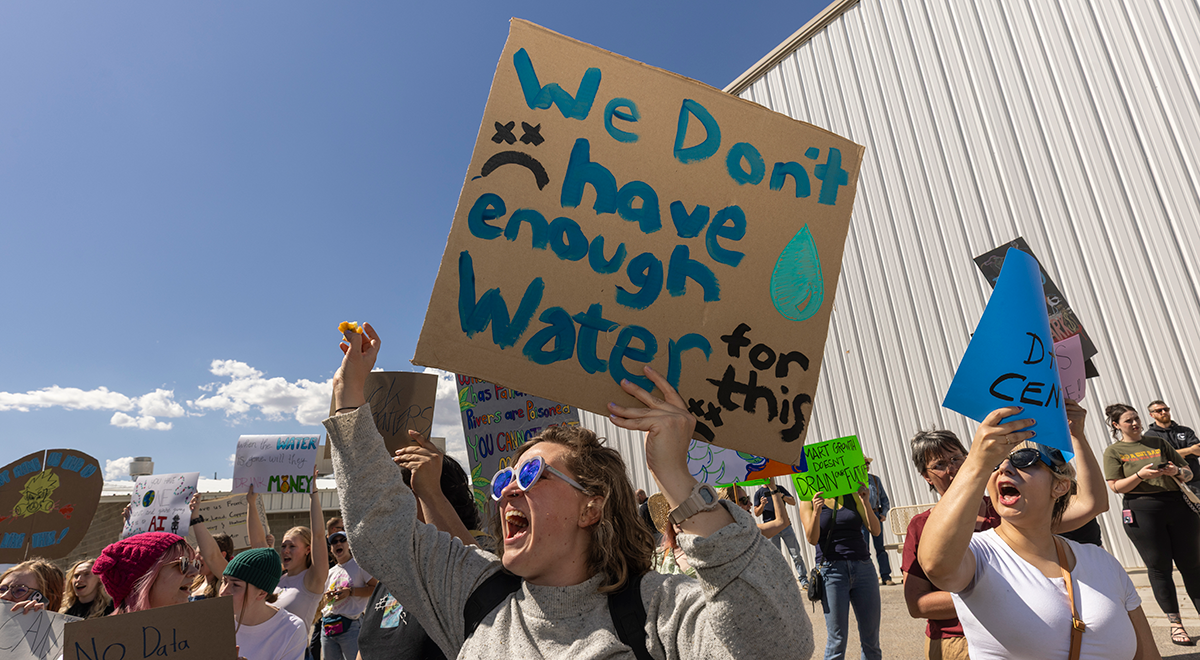
Protest in Utah. By Getty Images

 Follow us
- Nearly 150 protests across dozens of US states opposed data center expansion and related land seizures.
- Residents say utilities are using eminent domain for private data center projects, raising questions about public benefit.
- The Trump administration is pushing rapid data center growth to compete with China in artificial intelligence.
- Planned data centers are mostly in rural areas, increasing pressure on communities over land, power, and accountability.
Key Takeaways by nexos.ai, reviewed by Cybernews staff.
Protests against the expansion of data centers in the US reached the national level last weekend. While Donald Trump seeks to outpace China in the AI race, Americans are trying to protect their homes and land from being seized.
July 18th was marked by almost 150 protests across dozens of US states, as multiple media reports from different counties said people were trying to protect their interests from the expansion of data centers.
Per Reuters, the protests were coordinated by Humans First, co-founded by a former leader of the modern-day Tea Party, as they demanded transparency, resource safeguards, community benefits, and developer accountability.
Stories about land being seized for data center buildouts have appeared in the US media from time to time, but nationwide protests happened for the first time. Among the multiple reported examples is a 56-meter pole planned for a homeowner's property after regulatory approval, while in another case, a woman is losing around a third of her land to an easement.






Meanwhile, a more recent report by CBS News tells the story of a woman who agreed to sell her home after being told the utility could otherwise take the property via eminent domain because it lies in the path of Georgia Power's 56km transmission line. This story went viral on TikTok, attracting the attention of musician John Rich, while state Sen. Greg Dolezal called the use of eminent domain for data centers absurd.
Eminent domain allows the government to seize private property for public use without the owner's consent. The states delegate this power to private utilities. Of course, it requires public use and just compensation. However, the tension in the US now centers on whether this use of eminent domain is really for public use or simply serves a handful of companies.
In any case, the cited reports show that power companies claim eminent domain is always "the last resort."



Stay updated with our latest stories and follow us on social media
Be the first to discover new stories, ideas, and updates from our team.
Meanwhile, in April, the Pew Research Center said that at the time, 67% of planned data centers were in rural areas, while 87% of existing data centers were in urban areas, suggesting rural populations could face stronger pressure from energy giants. In turn, those companies are under pressure from the current Trump administration, which frames rapid buildout as essential to beating China in AI.
In any case, as data centers become a more political issue, this could become another important card for politicians competing in the US midterm elections in November this year.