Travel eSIM vs roaming vs local SIM: what’s the difference, and which offers better value?
Our in-house expert researchers and journalists conduct independent, unbiased testing of eSIM services, assessing their real-life effectiveness and usability.
By staying current with industry developments and openly sharing our transparent testing methodologies, we ensure readers receive accurate, up-to-date insights so they can make informed choices about eSIM solutions.
Learn more
Deciding how to connect your phone abroad typically boils down to a travel eSIM vs roaming vs local SIM decision. Each option handles connectivity differently, but the best choice depends on where you travel, how long you stay, and how much mobile data you need.
Local SIM cards offer generous data plans. However, buying one may involve a store visit, identity checks, and inserting a physical SIM card into your phone. International roaming lets you use your existing carrier plan without extra setup, but costs can add up quickly. Travel eSIMs are the middle ground: you get generous data at an affordable price, usually from the same local providers, without buying physical SIM cards or removing your original one.
In this article, I look at these three options in more detail and explain which one offers the most value for different use cases.




Our team of researchers thoroughly tests eSIM services using a clear and consistent process. We combine first-hand experience with expert analysis to evaluate features, performance, coverage, and pricing - so you can make confident decisions before your trip. Learn how we test eSIMs.
The quick answer
Local physical SIMs often offer the lowest cost per gigabyte. They are usually the choice for travelers who plan to stay longer, since the price often drops the more data you buy. Unfortunately, they are the least convenient option because you have to find a store that sells them, often wait in line to purchase them, and then remove your original SIM card to replace it with the new one.
Roaming is typically the simplest choice, so it's best for travelers who want immediate connectivity without extra hassle. Still, costs can get high when you compare roaming vs local SIM or eSIM, especially for longer trips.
Travel eSIMs are the top choice for most travelers because they balance value and convenience. You can buy and install a prepaid plan at home, which activates as soon as you land. However, travel eSIMs are usually data-only and may occasionally have lower speeds during peak hours.
What each option means
Before we discuss how each option fits your habits, we first need to cover what each method means and how it works.
Travel eSIM
A travel eSIM is a digital SIM profile you download directly to your smartphone. You buy a data plan for a specific destination from a vendor through its site or app, and then you install the eSIM by following the platform’s instructions.
The key benefit is that you get to set all of this up from home, so you get immediate internet access when you arrive. The drawback is that speeds vary by network, location, and congestion, while routing traffic through another country can increase latency.
Carrier roaming
International roaming is your carrier’s data plan when you’re abroad. Your carrier partners with foreign telecom carriers to route your messages, calls, and internet traffic through foreign networks. To use it, you don't need to do anything beyond buying roaming data, if needed.
The key advantage is its simple setup and use. However, prices can be steep, so check your included allowance and any available packages or daily passes.
Local physical SIM
A local SIM is the traditional plastic chip you insert into your phone. A local operator makes it, but it’s often designed for international travelers, so it usually comes with lots of data. You can buy one at a local carrier store or airport kiosk or order it before departure, where available. Identity checks and activation procedures vary by country and provider.
The key advantage is often a lower per-gigabyte price, while the downside is that it’s a hassle to get and install.
Comparing the three options on the factors that matter most
Let’s compare the three options on the three factors you’ll care about most: cost, convenience, and trip flexibility.
Cost and value
Carrier roaming can be expensive when your plan doesn’t include international usage. For example, AT&T’s International Day Pass costs $12.00 per day for land travel in covered international destinations. Other options might give you enough data for a multi-day trip for this price.
A local physical SIM card usually offers the lowest cost per gigabyte, especially for larger plans. For instance, in Latin America or across Southeast Asia, you might get up to 30GB of data for barely $10.00, or about $0.33 per GB.
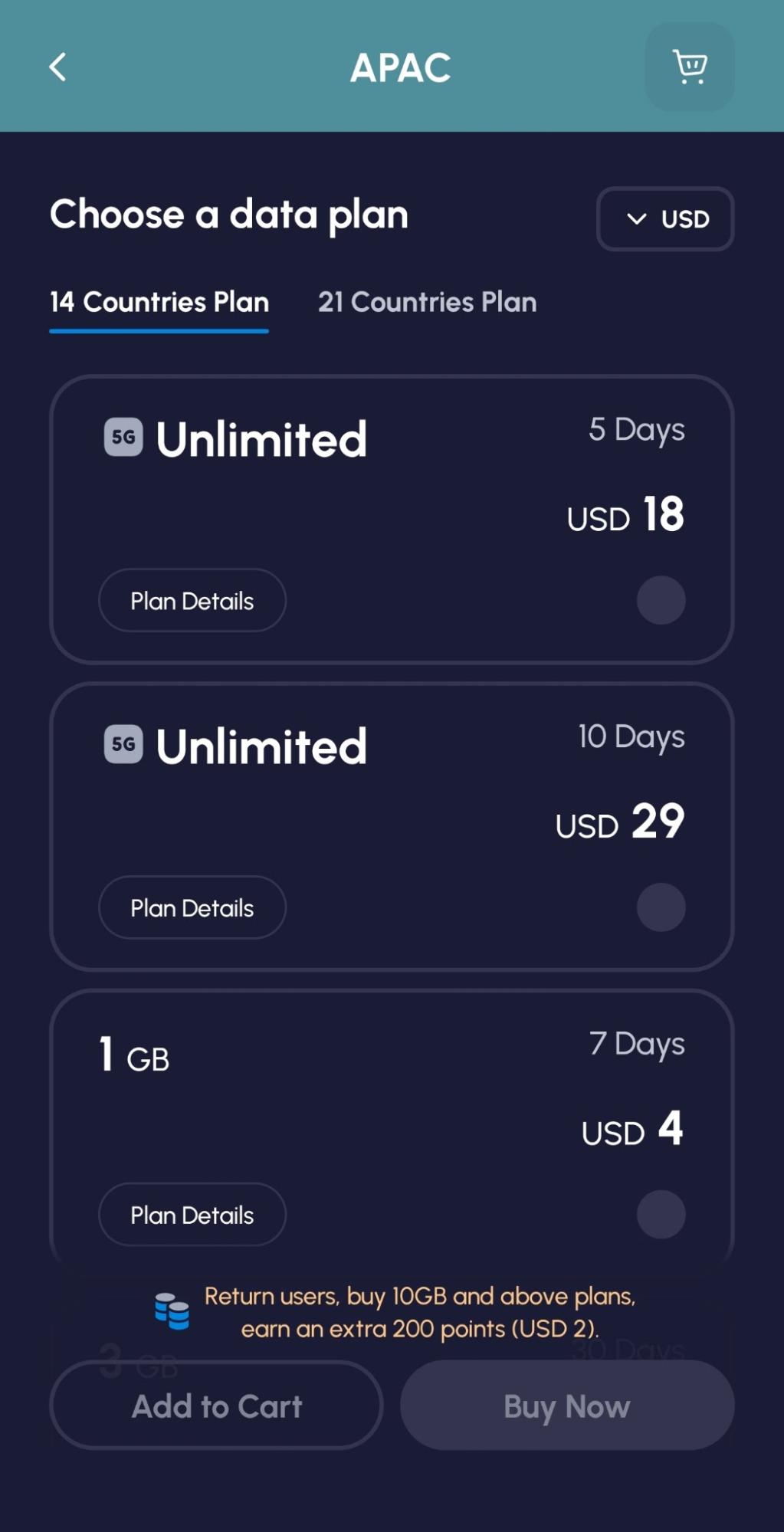
Travel eSIMs can closely match physical SIMs in price, especially when you account for the constant promotions they offer or benefits from loyalty programs. You can even get unlimited plans, like the ones Nomad eSIM offers on its APAC regional plans, while standard plans are usually just $1.50 to $3.00 per GB.
Convenience and setup
Roaming requires the least active effort before you leave and after you land. Your carrier does the work, and it starts running automatically. You just need to remember to turn on data roaming.
Travel eSIMs require minimal setup before you leave and virtually no effort when you land. You buy the package and install the eSIM at home. When you arrive, select the eSIM for mobile data, enable data roaming if instructed, and complete any required activation steps.
Local SIMs are the least convenient. Some providers let you order a physical SIM before departure, while others require a store visit and identity checks after arrival. Airport kiosk opening hours vary, so check them if you arrive late.
Coverage and trip flexibility
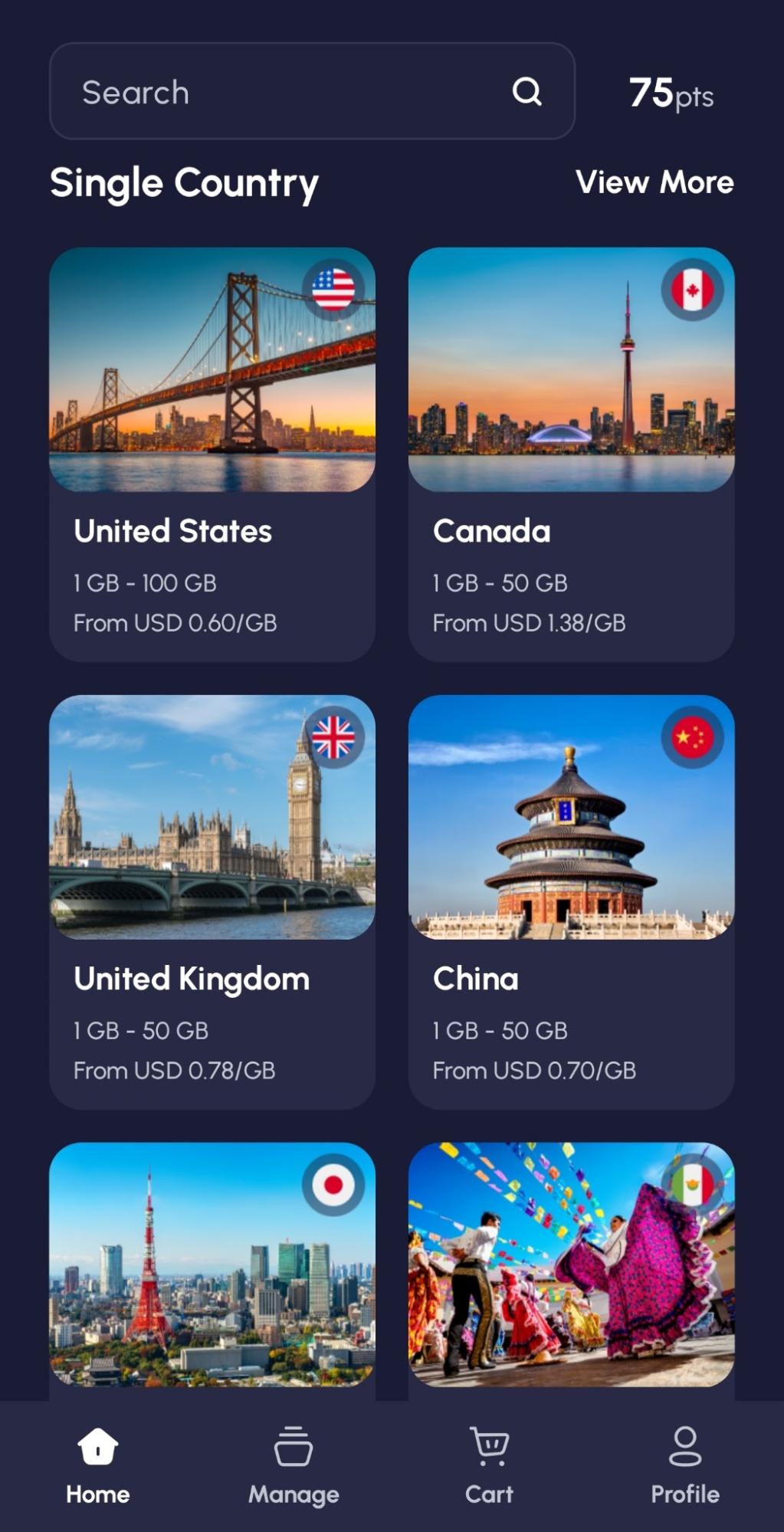
Travel eSIMs excel at coverage if you plan to visit multiple destinations. Options like Nomad eSIM often offer both single-country and regional plans for places like Europe and Southeast Asia.
Local physical SIMs can suit single-country trips, but coverage depends on the carrier’s network. Also, their included data typically doesn't cover other countries, so check roaming coverage and charges before crossing a border.
Carrier roaming can cover multiple countries, but coverage and charges depend on your home carrier’s agreements and plan.
If your itinerary changes, check whether the new destination is included in your eSIM or roaming plan or if your local SIM needs a roaming add-on.
Which option is best for different trip types?
Here’s how I think you should evaluate your best fit depending on the trip you’re taking:
- Short weekend getaways. Carrier roaming can be a convenient choice for a two- or three-day trip, especially if your plan includes roaming data. If roaming isn’t included, compare its total cost with a small travel eSIM plan before deciding.
- Multi-country vacations. A travel eSIM is ideal here as most eSIM providers offer multi-country packages. It’s typically cheaper than paying daily roaming fees, and you don’t have to find a new SIM every time you cross a border.
- Extended stays and digital nomad trips. If you plan on staying for several weeks or even months in a country, it’s best to get a local SIM. You’ll only have to go through the hassle once.
- Light and emergency connectivity. If you don’t really need data and are mostly content with what you get from various Wi-Fi networks, then a small, fixed-data travel eSIM package is the way to go or roaming if you don’t mind the somewhat higher price.
Important trade-offs travelers often overlook
Any of the three can cause operational headaches that show up only when you start using them. Here’s what you need to know:
- Keeping the primary number active. In the eSIM vs local SIM comparison, a travel eSIM can make keeping your main number active easier, although a compatible dual-SIM phone can also use a local physical SIM alongside your main line.
- Device compatibility and carrier locks. Travel eSIMs can only work on unlocked phones with eSIM support. A local physical SIM may work if your phone lacks eSIM support but is unlocked and has a SIM slot, while a carrier-locked phone generally needs carrier roaming or unlocking first.
- The hassle of swapping SIMs. SIMs are small and easy to lose or damage. If that worries you, go with eSIMs or carrier roaming.
- Immediate connectivity after landing. Skip local SIMs in this case and use carrier roaming or a travel eSIM, as long as you set it up before you leave.
- Avoiding store visits. If you don’t want to waste time looking for kiosks at the airport or carrier stores, avoid getting a SIM and stick to an eSIM or carrier roaming.
Why Nomad eSIM can be a practical option in this comparison
For travelers who want prepaid data without swapping SIM cards, a travel eSIM is the best option for international travel without the hassle. That’s largely because they are almost as cheap as local SIMs but much easier to set up. Plus, you can often get small plans for barely a few dollars, making them useful for short trips too.
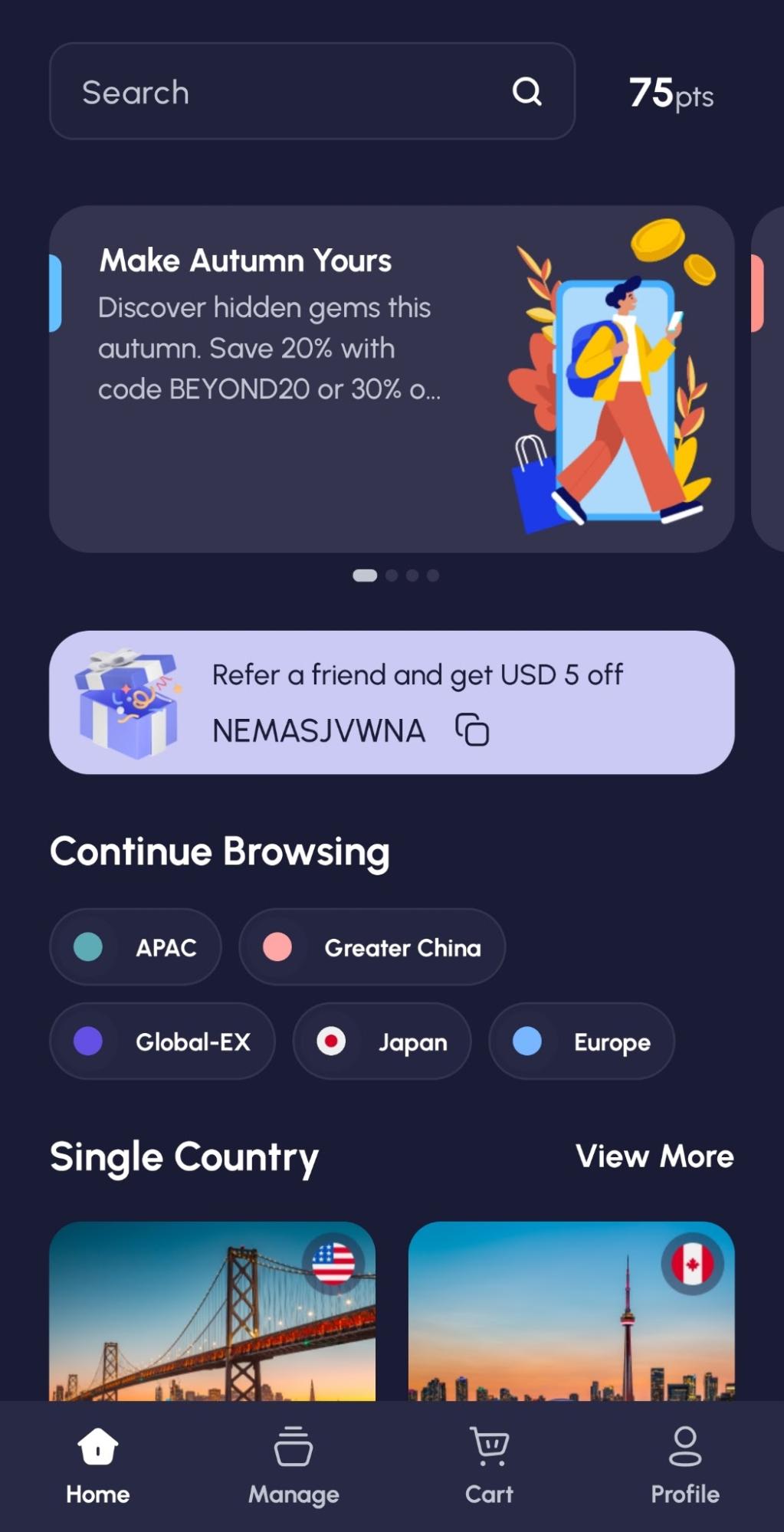
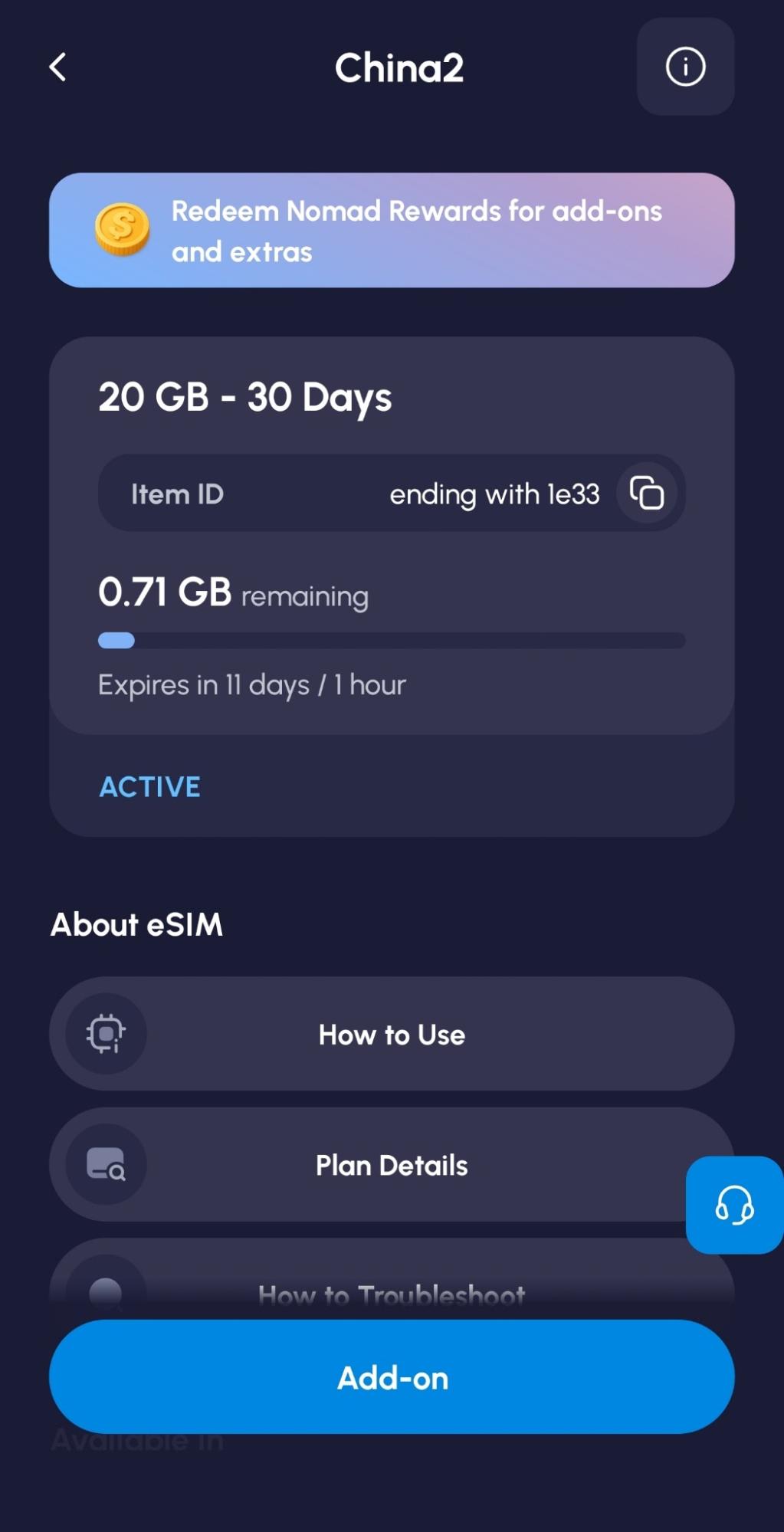
Nomad eSIM is a solid choice here. It lets you choose fixed or unlimited data plans covering over 200 destinations, and you can go for single-country, regional, or global plans. You can purchase and set them up easily from a single app within a 60-day activation window, and get all the necessary instructions and troubleshooting steps.
Nomad eSIM is also fully upfront about its costs, and you often get promotions, including a free 1GB trial in 76 destinations. There’s a weekly rewards program called Weekly Wins, where you can check in and collect points or discount codes, as well as Membership Tiers, which is a free, automatically enrolled loyalty program where users get points for every purchase. You can exchange these points for cash value when purchasing new plans or add-ons.
One possible limitation is that it might not work in certain locations, especially in more rural areas. However, the speeds are excellent in major cities and towns. What’s more, Nomad eSIM ranks at the top, with some of the fastest global median download speeds.
Nomad eSIM has dedicated apps for both Android and iOS. On the respective stores, it enjoys a very high rating of 4.8 on both the App Store and Google Play.
Conclusion
Choosing the right mobile connectivity option for travel comes down to evaluating cost, convenience, and most of all, your travel plans. Carrier roaming is usually the most convenient option for short trips, while longer stays often call for a travel eSIM or a local SIM. The latter can be a hassle, but it can offer good value for a longer stay, so compare total plan prices before choosing.
A travel eSIM from a provider such as Nomad eSIM can offer predictable prepaid data without swapping SIM cards.
FAQ
Is a travel eSIM better value than roaming?
Yes, a travel eSIM typically offers better value than roaming. Compare a prepaid plan from a provider such as Nomad eSIM with any roaming allowance or daily pass your carrier offers.
Is a local SIM cheaper than a travel eSIM?
Yes, a local SIM is usually cheaper than a travel eSIM. Local SIMs typically cost less per gigabyte, but eSIMs are usually close in price. If you have a good promotion with a certain eSIM provider and some loyalty benefits, it might be cheaper than a local SIM.
Which is best for a short trip?
Carrier roaming is often the best choice for short two- or three-day trips, especially if your plan includes roaming. Otherwise, a small travel eSIM package may cost less.
Which is best for long-term travel?
Local physical SIMs are often best for long-term travel, but only if you’re staying in one country. If you plan on crossing borders, a travel eSIM is better.
Is roaming ever worth it?
Yes, roaming is worth it if you're planning a short weekend getaway or just need data for emergencies.
Can I keep my main number while using a travel eSIM?
Yes, you can keep your main number while using a travel eSIM. Modern smartphones let you install eSIMs without changing how you make calls and send texts. On compatible dual-SIM phones, you can use the travel eSIM for data and keep your main line active for calls and texts, which may still incur roaming charges.