Best red light therapy for hip pain in 2026: Top devices for relief & recovery
Being behind major reports like The Mother of All Breaches and RockYou2024, our in-house cybersecurity experts and journalists provide unbiased, real-world testing and in-depth analysis.
We maintain complete transparency by openly sharing our testing methodologies with our audience.
Learn more
Have you ever pushed yourself at the gym and felt sore hips the next day? Or maybe after a run, you noticed some discomfort? Maybe you spend hours sitting at work, and afterward you end up with stiff hips.
Trust me, you’re definitely not alone. Hip pain can happen for many reasons, whether it’s from exercise, daily activities, sitting too much, or dealing with persistent pain.
That’s why I wanted to see if red light therapy (RLT) could support people with hip discomfort and which devices are actually worth trying. So, with the Cybernews research team, I checked out some of the most popular RLT devices and brands available.
We do understand that while RLT isn’t a cure-all for hip pain, it could be a helpful part of a bigger recovery plan. With this in mind, we compared things like wavelength, coverage, strength, ease of use, comfort, portability, and value to find out which red light therapy is best for hip pain.
Top five red light therapy devices for hip pain: shortlist
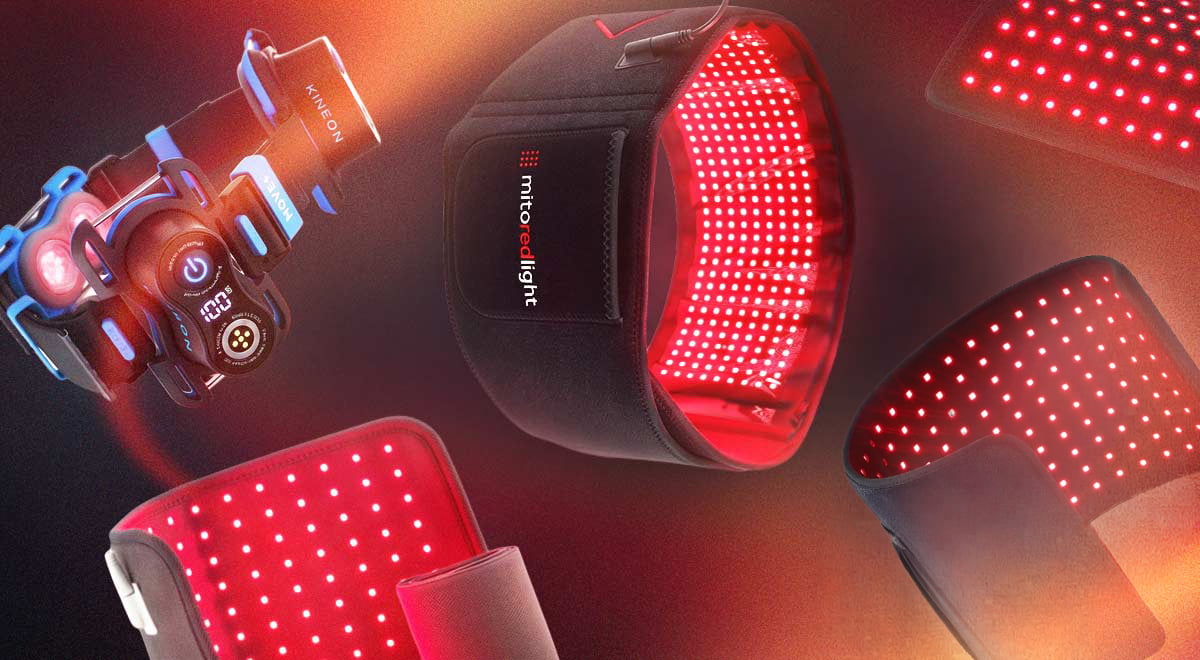
- Kineon Move+ Pro – best for targeted hip pain management
- Glokore Red Light Therapy Wrap – best budget option for hip pain management
- MitoQUAD Wavelength Belt – best for broad hip coverage
- Megelin Red Light Therapy Belt Plus – best for versatile hip pain management
- Novaa Light Pad – best for joint-focused hip pain management


Our team of in-house researchers, writers and editors reviews and analyzes health tech products using a research-driven approach. We gather data from multiple sources, fact-check all information, and conduct our research based on peer-reviewed studies, expert opinions, consumer ratings, and regulatory approvals.
You can learn more about how we test health tech products here.
Red light therapy for hip pain compared
Before we look at each device and its pros and cons, here is a quick comparison of the main features. This overview will help you see how the devices differ in terms of wavelength, session time, irradiance, FDA clearance, and price.
| Device | Kineon MOVE+ Pro | Glokore Red Light Therapy Wrap | MitoQUAD Wavelength Belt | Megelin Red Light Therapy Belt Plus | Novaa Light Pad |
|---|---|---|---|---|---|
| Wavelengths | 660nm, 808nm | 660nm, 850nm | 630nm, 660nm, 810nm, 850nm | 660nm, 850nm | 660nm, 850nm |
| Irradiance | 50 mW/cm² | 40 mW/cm² | 18 mW/cm² | 120 mW/cm² | 150 mW/cm² |
| Session lengths | 10–15 minutes daily | 10 minutes daily | 10–15 minutes daily | 15–30 minutes daily | 10–20 minutes daily |
| FDA-cleared | Yes | No | Yes | Yes | Yes |
| Price | $449.00 | $109.99 | $349.00 | $179.00 | $314.91 |
Best red light therapy devices for hip pain - detailed list
Now that we’ve finished the quick comparison, let’s look at our top red light therapy devices for hip pain management and review each one in detail.
1. Kineon MOVE+ Pro – best for targeted hip pain management
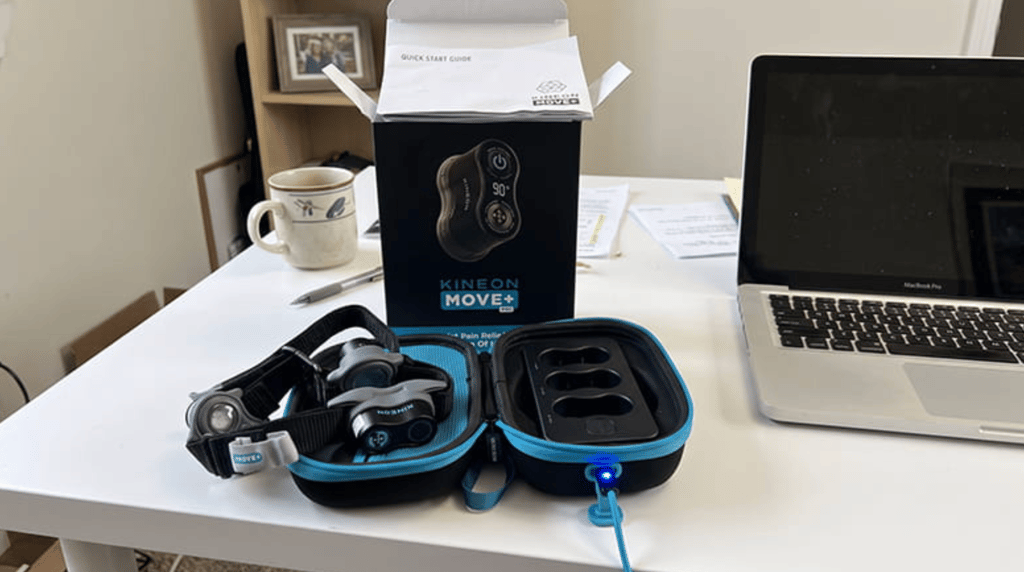
| Wavelengths: | 660nm red light + 808nm near-infrared laser |
| Session time: | 10–15 minutes |
| Price: | $449.00 |
Instead of a simple wrap or pad, Kineon MOVE+ Pro uses three modular units combining red-light LEDs with near-infrared laser diodes. You place them directly over your joint, including the hip, strap them in place, and start a session. And because the modules sit against the skin, the light is focused on the targeted area.
The best part is that sessions only take 10–15 minutes, so you don't need to spend much time wearing it.
However, there is one catch when using it on the hip. Even though the standard strap works well for smaller joints like the knee, elbow, or ankle, it’s not long enough to wrap comfortably around an adult hip. You’ll need an extender strap for a more comfortable, hands-free fit. But being honest, we think it’s worth it.
And if we are talking about battery life, it’s really decent. Each module lasts about four hours of continuous use or roughly twenty-four 10-minute sessions. If you're using it over both hips twice a day, though, you'll go through those sessions much faster.
2. Glokore Red Light Therapy Wrap – best budget option for hip pain management
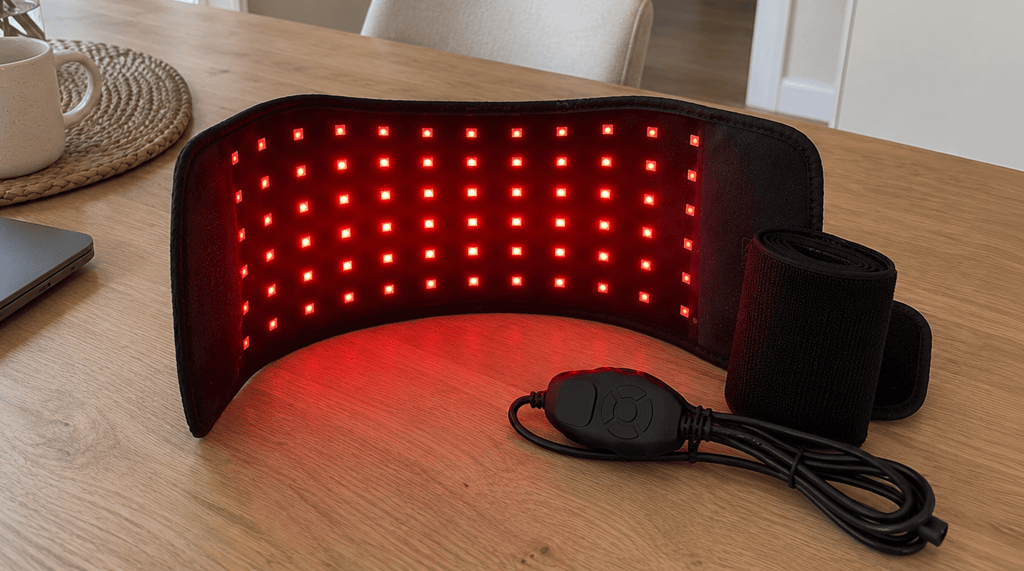
| Wavelengths: | 660nm red light + 850nm near-infrared |
| Session time: | 10 minutes |
| Price: | $109.99 |
Glokore Red Light Therapy Wrap is the cheapest device on our list, but that doesn't mean it doesn't deliver.
At $109.99, you get a red and near-infrared light therapy wrap for your hip, other joints, or even your lower back. It has adjustable straps to keep it in place while you relax.
The main compromise is irradiance. At around 40mW/cm², it is one of the lower-powered options, so it won't deliver light as intensely as some more expensive devices. However, higher irradiance doesn't automatically mean better results.
Session time and total energy dose also matter. For example, a 150mW/cm² device used for a short session could deliver a similar dose to a 40mW/cm² device used longer.
That said, according to Glokore, you only need to use it for 10 minutes a day, three to five times a week. So I guess it doesn’t differ much from other devices on the list.
3. MitoQUAD Wavelength Belt – best for broad hip coverage
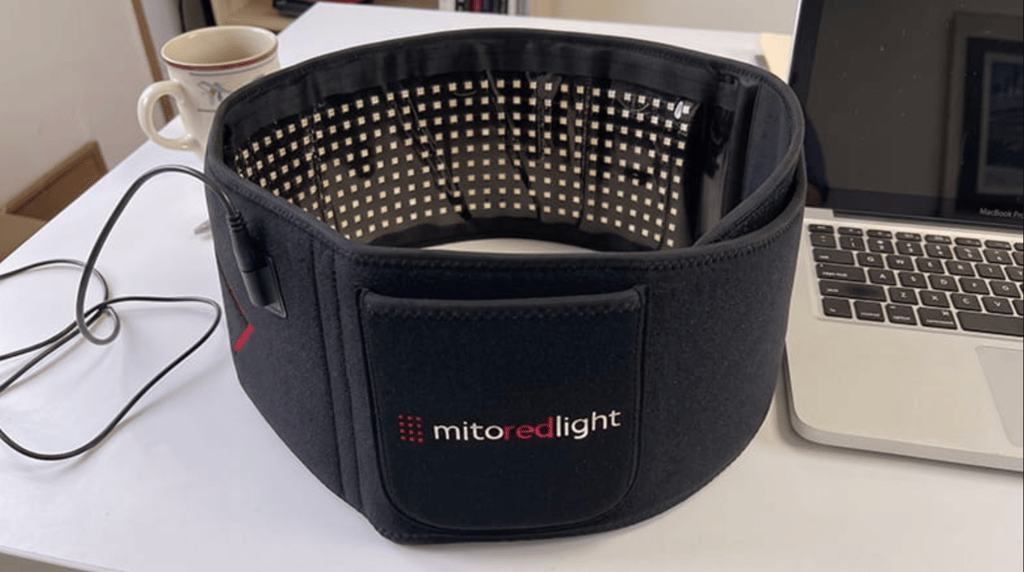
| Wavelengths: | 630nm, 660nm, 810nm, and 850nm |
| Session time: | 15–20 minutes |
| Price: | $349.00 |
MitoQUAD Wavelength Belt stands out from the other devices on this list with four wavelengths instead of the usual two. You get two red-light and two near-infrared wavelengths, with the 810nm and 850nm light designed to reach deeper tissue.
Like the other RLT devices we've tested for this piece, it's comfortable to wear. The flexible design wraps around different parts of the body, so you can use it on your hip, lower back, thighs, or other larger areas. It also has five intensity levels, giving you some control over how strong each session feels.
One downside is the battery. The belt can only be used when plugged into an outlet, as the rechargeable battery, which is sold separately, is currently unavailable. On the other hand, if you're happy to use it at home, plugging it in means you never have to worry about charging between sessions.
4. Megelin Red Light Therapy Belt Plus – best for versatile hip pain management
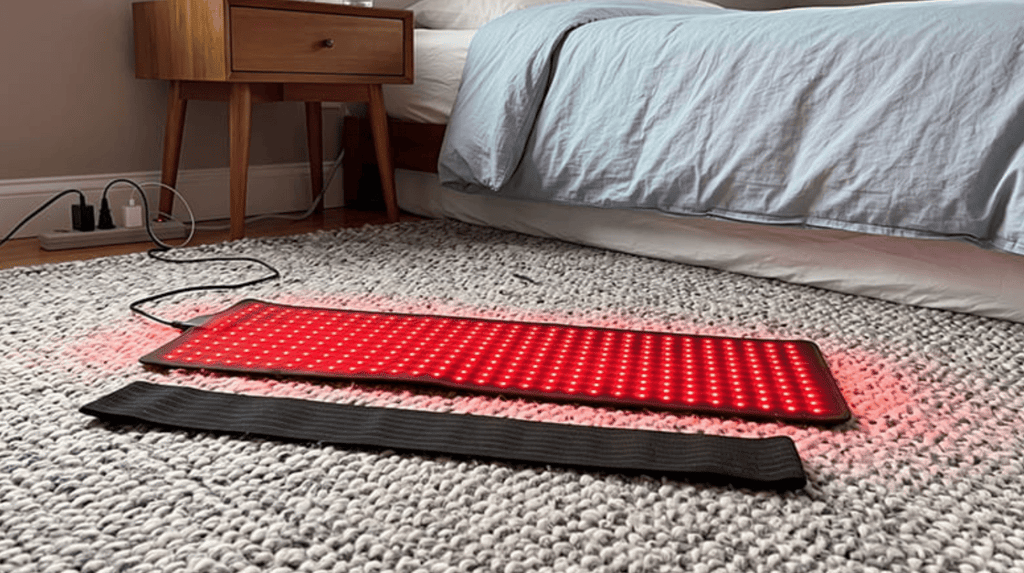
| Wavelengths: | 660nm red light + 850nm near-infrared |
| Session time: | 15–30 minutes |
| Price: | $179.00 |
If your budget is tight, but you want to try RLT not only for hips, we've got you covered. Megelin Red Light Therapy Belt Plus is one of the more affordable options here. At $179, it costs much less than many RLT devices while targeting larger body parts.
However, you have to consider one thing: you can wrap the belt around your hips, but the session won't feel as targeted as with something like Kineon MOVE+ Pro. And that is because the Megelin belt is larger and designed to cover different body parts. This can be useful if you want to use RLT on your back, legs, abdomen, or arms without buying separate devices.
For hips specifically, however, we would choose a smaller device if you want the light concentrated directly over the joint. But if you are concerned about other body parts, Megelin is a great option.
5. Novaa Light Pad – best for joint-focused hip pain management
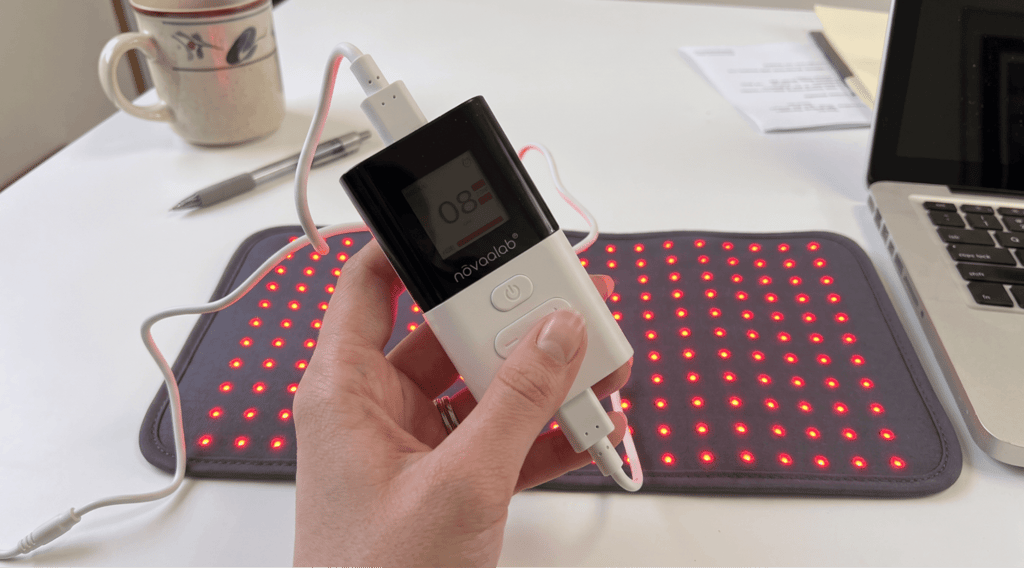
| Wavelengths: | 660nm red light + 850nm near-infrared | |
| Session time: | 10–20 minutes | |
| Price: | $314.91 |
Last but definitely not least is Novaa Light Pad. It stands out for its focus on joints. It is designed to wrap around areas like the hips, knees, wrists, and elbows, allowing you to place the light directly where you want it.
The strap, which is attached, keeps it in place while you sit or relax. However, we noticed that because the pad is wider than Kineon MOVE+ Pro, it can sit a bit awkwardly around the hip. We found it most comfortable to use while lying down, where it stayed in place better. This is not an issue on smaller joints like the knee or elbow, where the pad feels more secure and comfortable.
The real downside is that, like MitoQUAD, it must be connected to a power source instead of running on a built-in battery. This makes it less convenient if you want to move around while having a session. But if you’re okay with lying down for 10–20 minutes, that shouldn’t be an issue.
How we evaluated red light therapy devices for hip pain
There are many RLT devices available, but not all of them support hip pain management in the same way. To create our list, I teamed up with the Cybernews research team. We checked out the devices, read expert reviews, and listened to real users.
We focused on the features that matter most when you use one at home. So, here is a quick overview of important aspects that we paid attention to:
- Light wavelengths (30%). We checked which wavelengths each device uses, like red and near-infrared light. The number of LEDs is helpful, but the wavelengths tell us more about the kind of light the device gives off.
- Coverage (20%). Hip pain often spreads beyond a single spot. We checked if each device could treat just a small area or a larger part of the hip and nearby muscles.
- Comfort (20%). Even if a device has good features, you might not use it often if it feels stiff, heavy, or uncomfortable. We checked how comfortable the devices were during longer sessions.
- Portability (15%). Many people want a device they can take to work, the gym, or while traveling. We looked at the size, weight, and how easy each device was to carry.
- EMF output (15%). Some people worry about the electromagnetic fields (EMF) that red light therapy devices produce. We checked the EMF measurements for each device and rated models with lower levels higher.
How red light therapy may support hip pain management
RLT uses specific wavelengths of light that may help with pain and recovery. That said, researchers are still trying to understand how it works, so there is no clear answer yet. But we can still look at what some studies say.
For example, research suggests red and near-infrared light may affect how our cells produce energy and reduce substances linked to inflammation. This could help when the area around the hip is irritated after exercise or overuse.
Other research suggests red and near-infrared light may support local blood flow by helping blood vessels relax. Better circulation could deliver oxygen to the treated area.
Moreover, RLT may also help the body manage oxidative stress caused by exercise. This is a normal part of physical activity, but it can contribute to muscle soreness during recovery.
What red light therapy cannot fix
It's important to remember that RLT isn't a standalone treatment for hip pain.
What helps depends on what's causing the pain in the first place. If you have an injury, persistent pain, or a condition such as hip osteoarthritis, you should first seek a treatment plan.
That is because current research on RLT specifically for deep hip joint pain is still limited, so it should be viewed as a possible addition to your routine rather than a replacement for proper medical care.
What features matter most when choosing red light therapy for hip pain?
Right now, there aren’t official guidelines on which RLT devices are best for hip pain. Researchers are still figuring out the ideal wavelength, power, and session time.
So, instead of searching for the perfect device, we made a shortlist of things you should keep in mind before buying an RLT device:
- Red light vs. near-infrared wavelengths. Red light works better for surface-level tissues, while near-infrared light can reach deeper areas. Most quality devices use both types.
- Targeted pad, belt, panel, or mat. A small pad or wearable belt is handy if you want to focus on one hip. A panel covers a larger area while you stand or sit in front of it, and a mat is good if you want to treat a bigger part of your body at once.
- Safety certifications. Look for safety certifications like FDA clearance, which show the device has been reviewed by regulators. CE and RoHS certifications are also helpful. Keep in mind, though, that these certifications don’t guarantee better results.
- Irradiance and treatment time. Irradiance tells you how much light reaches your skin. Higher isn't automatically better, so check the manufacturer's recommended distance and session time rather than choosing a device based on this number alone.
- Portability. If you travel a lot or want to use RLT away from home, pay attention to size and battery life. A lightweight pad or belt is usually much easier to bring along than a big panel or mat.
How to use red light therapy for hip pain safely
RLT is usually safe to use, but there are a few things to remember if you want to add it to your routine.
- Always follow the manufacturer's instructions. Most devices suggest using them for about 10 to 20 minutes on each area, but this can change depending on the product. Doing more time does not always mean better results, so stick to the recommended session length. Using the device for too long could cause skin irritation or discomfort.
- Make sure you use the right position and distance. Check the instructions to see how far the device should be from your skin. Some pads and belts are meant to touch your body, but panels often need to be set farther away.
- If you are new to RLT, try shorter sessions at first to see how your body responds. If you notice redness, irritation, more pain, or any unusual discomfort, stop using the device.
- Protect your eyes when needed. Avoid looking straight at bright LEDs, especially if you are using a panel near your face. If your device includes protective glasses or suggests using eye protection, follow those directions.
Final verdict
It’s difficult to pick one RLT device as the absolute best for hip pain relief because the right one depends on your needs. That said, if we had to choose, we’d give the trophy to Kineon MOVE+ Pro. Its compact modules and strap make it comfortable for targeting the hip.
But that doesn’t mean the other options aren’t worth considering. For example, if budget is your main concern, Megelin Red Light Therapy Belt Plus and Glokore Red Light Therapy Wrap are the obvious choices.
We also liked Novaa Light Pad, which is a good option for supporting your hips and other joints. Don’t forget MitoQUAD Wavelength Belt if you want a larger treatment area and multiple wavelengths in one device.
FAQ
How often should I use red light therapy on my hip?
There isn’t a single rule that works for everyone. The right approach depends on your device, its power, and your recovery plan. We would recommend talking with a specialist first to develop a plan for sessions or to follow the manufacturer’s instructions.
What is the best red light therapy device for hip pain?
Based on our evaluation, Kineon MOVE+ Pro is our top pick. But it doesn’t mean it’s right for everyone. The decision should depend on your needs. If you want to support just one hip, a small pad or wearable device might be easier to use. For pain in a larger area, a bigger pad or mat could work better. Also, check the device’s wavelengths, coverage, treatment time, and how simple it is to use regularly.
Is red light therapy safe for hip pain?
For most people, RLT is safe when used as directed. Be sure to follow the manufacturer’s safety instructions and don’t look straight at the bright LEDs. If you take medication that makes you sensitive to light or have a medical condition, talk to a healthcare professional first.
Can I use red light therapy alongside other hip pain treatments?
Yes, and that’s often the best way. Hip pain can have many causes, so one treatment alone usually isn’t enough. Depending on what’s causing your pain, you might need stretching, physical therapy, exercise, medication, or other treatments. Red light therapy may be part of your overall recovery plan, but it shouldn’t replace proper treatment.
-
Effects of photobiomodulation on multiple health outcomes: an umbrella review of randomized clinical trials.
Systematic Reviews
-
Photobiomodulation and nitric oxide signaling.
Nitric Oxide
-
Low-level laser therapy (LLLT) in human progressive-intensity running: effects on exercise performance, skeletal muscle status, and oxidative stress.
Lasers in Medical Science.