Herz P1 Smart Scale vs Oxiline MD Pro: which smart scale should you buy?
Being behind major reports like The Mother of All Breaches and RockYou2024, our in-house cybersecurity experts and journalists provide unbiased, real-world testing and in-depth analysis.
We maintain complete transparency by openly sharing our testing methodologies with our audience.
Learn more
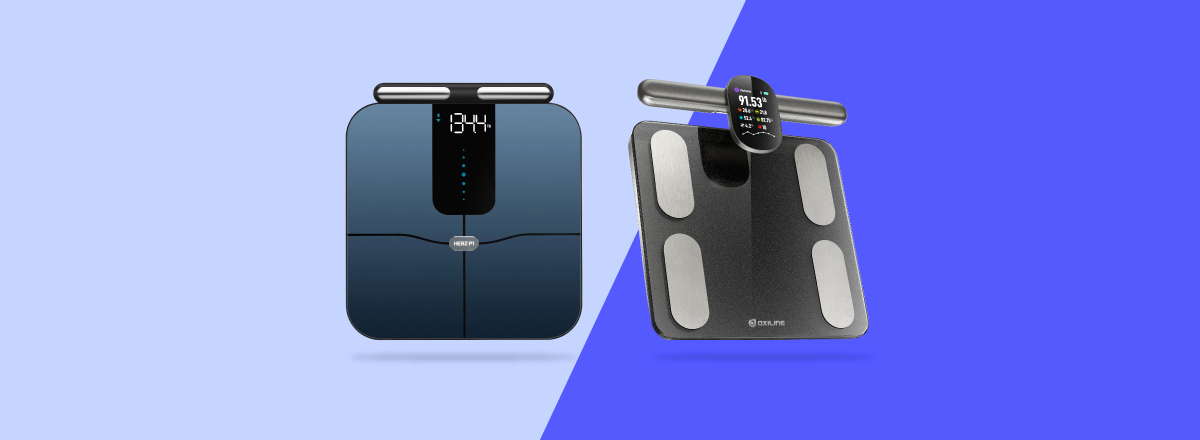
Herz P1 and Oxiline Scale MD Pro are smart scales designed to provide more insights into your wellness and fitness progress than weight alone. While they look and function similarly, Herz P1 is more suited for progress tracking, whereas the higher-priced Oxiline MD Pro provides premium features like Wi-Fi syncing, a rechargeable battery, and an OLED screen.
Users focused on training progress monitoring will likely prefer Herz P1, while those who favor premium features for general wellness tracking may lean toward Oxiline MD Pro.
Below, the Cybernews research team and I put both scales through meticulous testing to break down their features, value, and performance. Read on for our full comparison so you can make a better-informed buying decision.
Herz P1 Smart Scale vs Oxiline MD Pro overview
Before you dive into the detailed comparison, here’s a brief overview of the two smart scales, highlighting their similarities and differences.
| Herz P1 Smart Scale | Oxiline Scale MD Pro | |
| Price | $259.99 ($129.99 with current discount) | $399 ($179 with current discount) |
| Body composition metrics | 56 | 31 |
| BIA technology | dual-frequency BIA | dual-frequency BIA |
| Display | 76mm LED display | 3" OLED display |
| App support | Herz Health App (iOS & Android) | Oxiline Health App (iOS & Android; syncs with Apple Health & Google Fit) |
| Subscription requirements | None | None |
| User profiles | Supports 24 user profiles | Supports multiple user profiles |
| Connectivity | Bluetooth 5.0 | Wi-Fi + Bluetooth |
| Weight capacity | 400 lbs (180 kg) | 396 lbs (180 kg) |
| Warranty/guarantee | 1-year warranty + 90-day money-back guarantee | Lifetime warranty + 30-day money-back guarantee |
| Official website | Visit Herz P1 | Visit Oxiline |



Our team of in-house researchers, writers and editors reviews and analyzes health tech products using a research-driven approach. We gather data from multiple sources, fact-check all information, and conduct our research based on peer-reviewed studies, expert opinions, consumer ratings, and regulatory approvals.
You can learn more about how we test health tech products here.
Design and everyday use
Both scales have a tempered glass platform and a retractable handle, offering eight touchpoints in total. While their core features are similar, their designs differ slightly.
For instance, Herz P1 offers a sleeker, more minimal look by embedding its 76 mm LED display directly into the glass platform. The screen is there to show core health metrics without having to open the app. It also uses an Indium Tin Oxide (ITO) coating across the top, which eliminates visible metal plates while maintaining full conductivity across the entire surface.
In contrast, Oxiline MD Pro places its 3-inch OLED display on the handle so your metrics are visible without looking down or squinting. It also features four distinct metal plates on the platform. They serve as guides to ensure precise foot placement every time, while the exposed metal potentially offers improved conductivity.
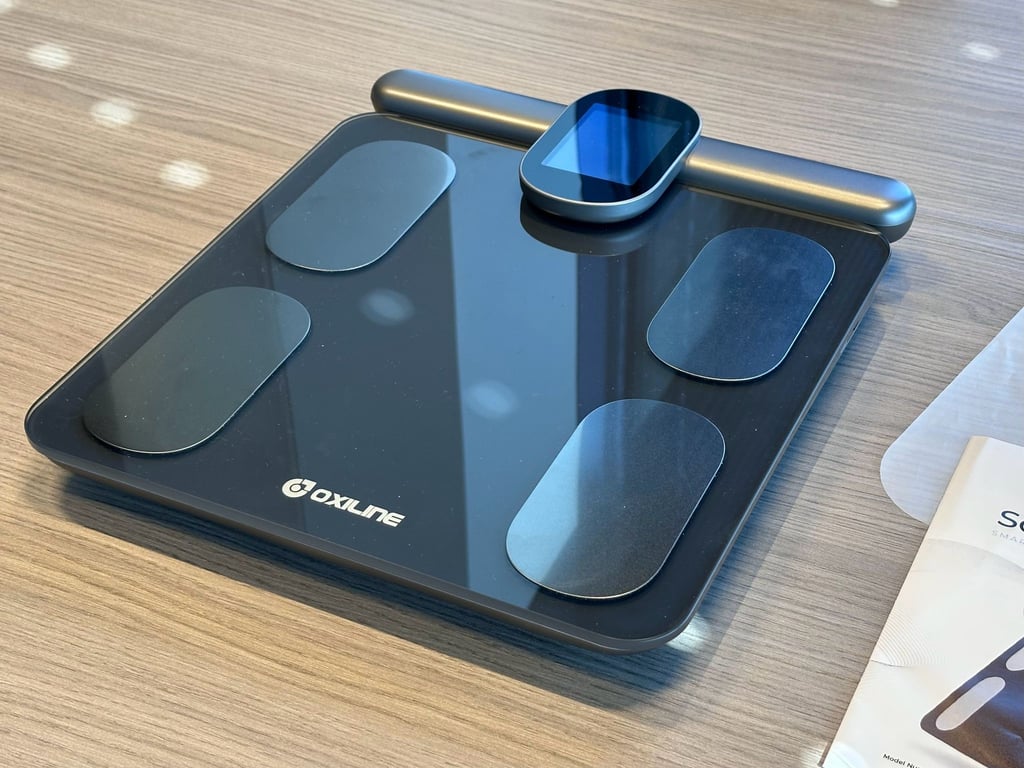
When it comes to size, Herz P1 is slightly taller (by 0.3 inches), while the Oxiline MD Pro gives slightly more standing surface area. Despite these slight differences, both feel sturdy and well-built.
For setup, both scales require downloading their respective apps. The process is similar for each one and fairly uncomplicated. Once you create an account, turn on Bluetooth, step on the scale, and pair the device through the app. Since Oxiline MD Pro also offers Wi-Fi syncing, during setup you’ll also have the option to connect the scale to your home Wi-Fi network, which eliminates the need to have your phone nearby when you weigh yourself.
The weigh-ins themselves are fast, though speeds vary. The Herz P1 takes about 20 seconds, while the Oxiline MD Pro can take up to two minutes. Even though the Oxiline takes longer, its Wi-Fi functionality means your data saves automatically without needing your phone on hand.
Regarding multi-user households, Herz P1 can recognize up to 24 individual user profiles, whereas the Oxiline MD Pro supports multiple users without a specified limit. Overall, both scales are user-friendly – if you are comfortable pairing Bluetooth devices with your phone, you will have no trouble using either one.
Herz P1 Smart Scale wins due to having a sleeker design and completing daily scans faster.
Body composition tracking features
Herz P1 Smart Scale claims to track 56 body metrics, while Oxiline MD Pro claims 31. However, when you look closer, these numbers are a bit inflated. In reality, the Oxiline MD Pro measures 21 general body metrics plus 10 segmental measurements for the core, arms, and legs. Meanwhile, Herz P1 seems to track around the same number of core metrics, using marketing math to appear as though it tracks much more.
Despite this, both measure essential baseline parameters, including:
- Weight
- Body Mass Index (BMI)
- Overall body fat percentage
- Muscle mass
- Skeletal muscle
- Body water/hydration percentage
- Estimated bone mass
- Basal Metabolic Rate (BMR)
- Metabolic/body age
- Subcutaneous fat
- Visceral fat
- Protein percentage
Together, these measurements may provide a much more complete picture of your body composition. Their estimates (with varying accuracy) might tell you whether you need to hydrate more, up your protein intake, how much of your total mass is made up of muscle versus fat, or how many calories your body burns at rest. If you want to track your wellness or training progress, they give you far more insight than just your weight alone. Just keep in mind that
Both scales also feature segmental body analysis, which breaks down your body composition into five distinct zones – both arms, both legs, and the torso – allowing you to spot any muscle imbalances from one side to the other.
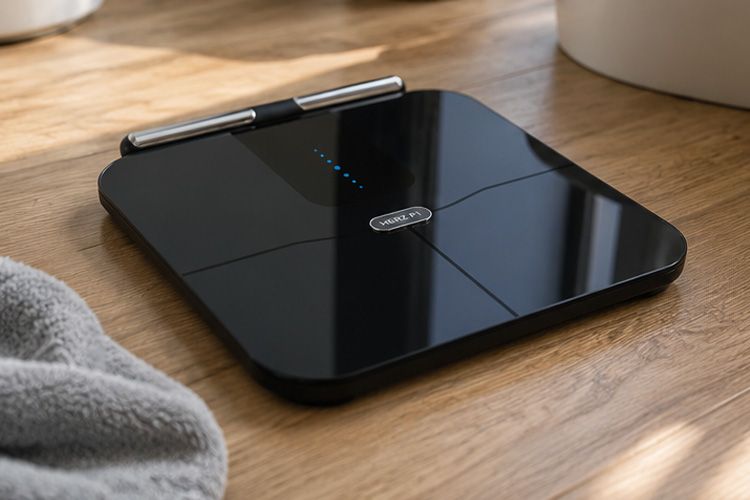
The only substantial difference in tracking capabilities is that the Herz P1 offers resting heart rate (BPM) monitoring. By including sensors in its platform and handle, it can actively log your heart rate during weigh-ins.
The measurements are presented clearly in their respective companion apps, using various charts to make the data easy to digest. Just note that neither smart scale provides personalized tips or AI-powered coaching. They simply calculate and display your wellness trends, leaving it up to you to decide how to act on the data.
All things considered, Oxiline MD Pro seems to be better suited for general wellness tracking, providing a streamlined experience with all the essential features you need for everyday readings.
Meanwhile, Herz P1 Smart Scale leans more toward fitness tracking, weight management, and body recomposition. It measures your resting heart rate and allows you to log your daily calorie intake directly on the app, which makes it much easier to align your diet with your training routine to hit specific goals.
Accuracy and measurement technology
Both Herz P1 Smart Scale and Oxiline MD Pro use dual-frequency BIA technology to estimate wellness metrics. This approach uses two distinct electrical frequencies to measure body composition compared to a single frequency, leading to a more precise body composition calculation.
To further improve measurement accuracy, consistency, and segmental analysis, both scales feature eight touch points across the handle and the platform. Eight sensors, rather than the standard four, allow the devices to collect better upper-body data.
Since the BIA technology relies on electrical currents, the scales have to ensure good conductivity – direct contact with your feet. This connection matters because it again affects measurement accuracy.
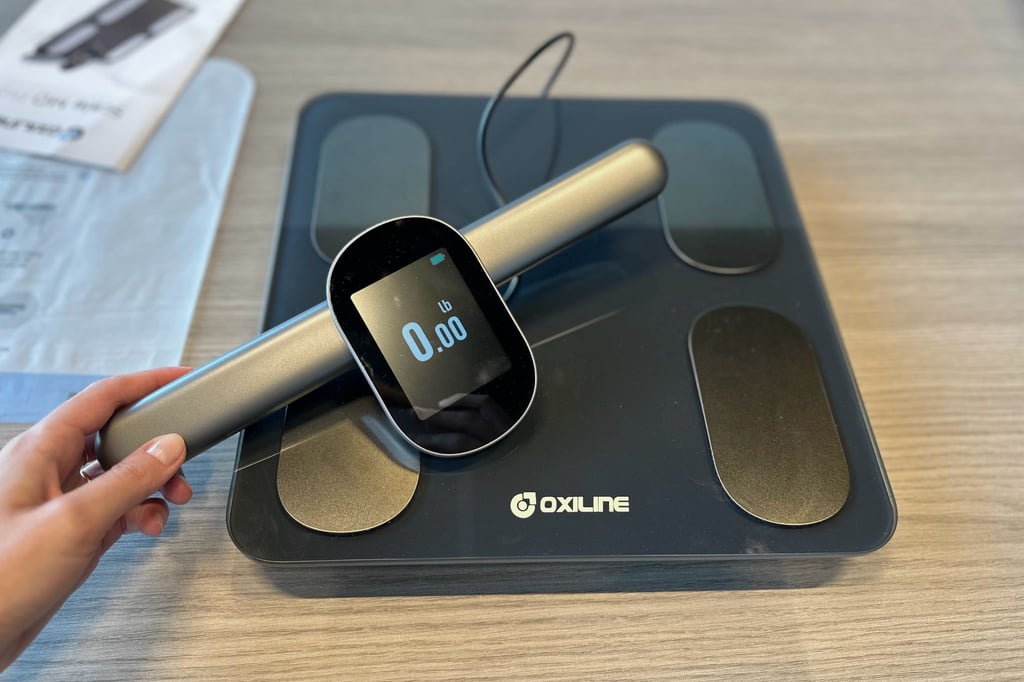
Each scale establishes this foot connection differently. Oxiline MD Pro uses traditional metal plates, while Herz P1 Smart Scale uses a surface coating that functions as a single large sensor. Herz P1 Smart Scale makes it much easier to get a connection even if your feet aren't perfectly aligned, though the overall signal might not be quite as strong as it is with metal plates.
In our team’s experience, measurements from both smart scales were quite consistent, as we haven’t noticed any drastic fluctuations in measurements – like sudden body fat swings overnight – which is usually a giveaway that the readings might not be the most accurate.
Still, we want to remind you that consumer smart-scale body composition measurements are estimates. It’s more useful to track trends over longer periods of time than to rely on a single daily metric
During weigh-ins, it’s also important to know that factors like hydration levels, recent meals, sodium intake, workouts, and even the time of day can affect readings. To ensure that the readings are as precise as possible, consistently weigh yourself under the exact same conditions and at the same time of day. It’s advised to step on the scale first thing in the morning, barefoot, before eating or drinking, and after using the restroom.
App experience and health trend insights
Herz P1 Smart Scale uses the Unique Health app, while Oxiline MD Pro relies on the Oxiline app (or a third-party app, Fitdays, for users in Europe) to display data from each weigh-in. As mentioned before, setup for both apps was straightforward, and they paired with their respective scales instantly.
The way each app presents data is also similar. Both favor a streamlined, clean design, displaying information through various charts and a 3D body model for better visualization. One slight difference is that the Herz P1’s Unique Health app puts more effort into explaining what the numbers mean. This makes the data less intimidating if you aren't already familiar with body-composition metrics. It also lets you set specific weight and body fat goals – a feature the Oxiline app lacks. That said, neither platform offers deep insights like AI coaching or personalized feedback.
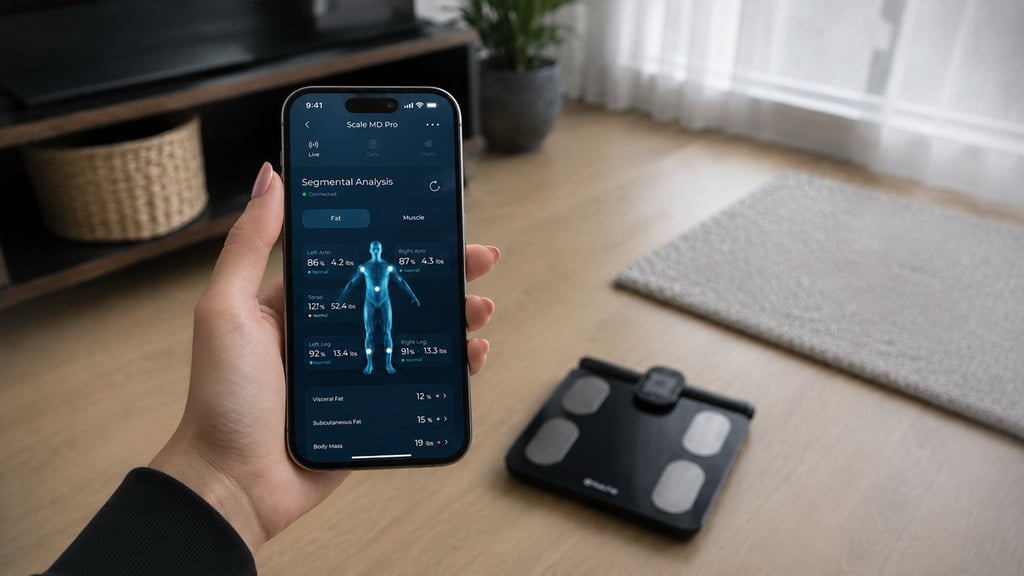
Both apps allow you to customize how your reports are displayed, letting you tailor the layout to your preferences. Your historical data and trends are also safely stored within the apps, making it easy to track your progress over time.
Both platforms support third-party health apps, though their compatibility differs slightly. The Herz P1 integrates with Apple Health, Google Fit, Fitbit, and Samsung Health, while the Oxiline supports Apple Health and Android Health Connect. Best of all, both apps operate entirely without subscription fees.
Overall, both smart scale apps are relatively basic and lack advanced wellness insights. They essentially act as data dashboards, leaving you to interpret the trends they show on your own.
Price and availability
The full price of the Herz P1 Smart Scale is $259.99, while the Oxiline MD Pro costs $399. The good news is that both often run substantial discounts. At the time of writing, you can purchase Herz P1 Smart Scale for $129.99 and the Oxiline MD Pro for $179. Both are available through their official websites.
Both scales also come with free companion apps, so you don’t need to pay a separate subscription to view and track your measurements.
Additionally, your Herz P1 Smart Scale purchase is backed by a 90-day money-back guarantee and a one-year warranty. Meanwhile, Oxiline MD Pro comes with a 30-day money-back guarantee and a lifetime warranty.
With the current discounts, the two scales are $50 apart, while their overall feature sets are quite similar. If you want to save money without compromising on features or if heart rate tracking isn’t negotiable, go for the Herz P1 Smart Scale. However, if you want a scale you can keep for life, and that also has Wi-Fi syncing and a rechargeable battery, Oxiline MD Pro may be worth the extra money.
Verdict: Herz P1 or Oxiline MD Pro?
The two scales are very similar in terms of core features, measured body metrics, usability, and even price (with current discounts). So our team took extra time to nitpick their differences and finalize our verdict:
Choose Herz P1 if heart rate tracking is non-negotiable and you want a calorie tracker to help hit your goals. It’s slightly more affordable and provides a bit more context for the data it displays, making it just a bit better for first-time smart scale users.
Choose Oxiline MD Pro if you appreciate more convenient features like Wi-Fi syncing and a rechargeable battery. Plus, it's a once-in-a-lifetime purchase backed by a lifetime warranty that might be appealing to those who want to save in the long run.
In our eyes, Herz P1 Smart Scale outperforms Oxiline MD Pro by a hair since it offers a slightly lower price, heart rate tracking, and a sleeker design.