How AI Voice Recorders Are Redefining Productivity for Professionals in 2026
 Follow us
The modern workplace moves faster than ever, forcing professionals to process massive amounts of information daily. Managing endless meetings, interviews, and brainstorming sessions has become a major bottleneck for career growth and daily efficiency.
Fortunately, artificial intelligence is changing how we capture and use spoken information. New AI voice recorders are helping professionals eliminate manual note-taking, allowing them to focus entirely on critical decision-making and creative tasks.
The Cognitive Load Crisis: Why Traditional Note-Taking Fails in 2026
In 2026, standard typing or handwriting during important meetings simply cannot keep up with the fast pace of hybrid corporate environments. Attempting to document every single detail manually splits your attention, forcing you to constantly choose between listening carefully and rushing to log words. This constant cognitive multitasking ultimately defeats the purpose of the meeting, causing professionals to miss crucial contextual nuances, subtle changes in tone, and vital teammate body language
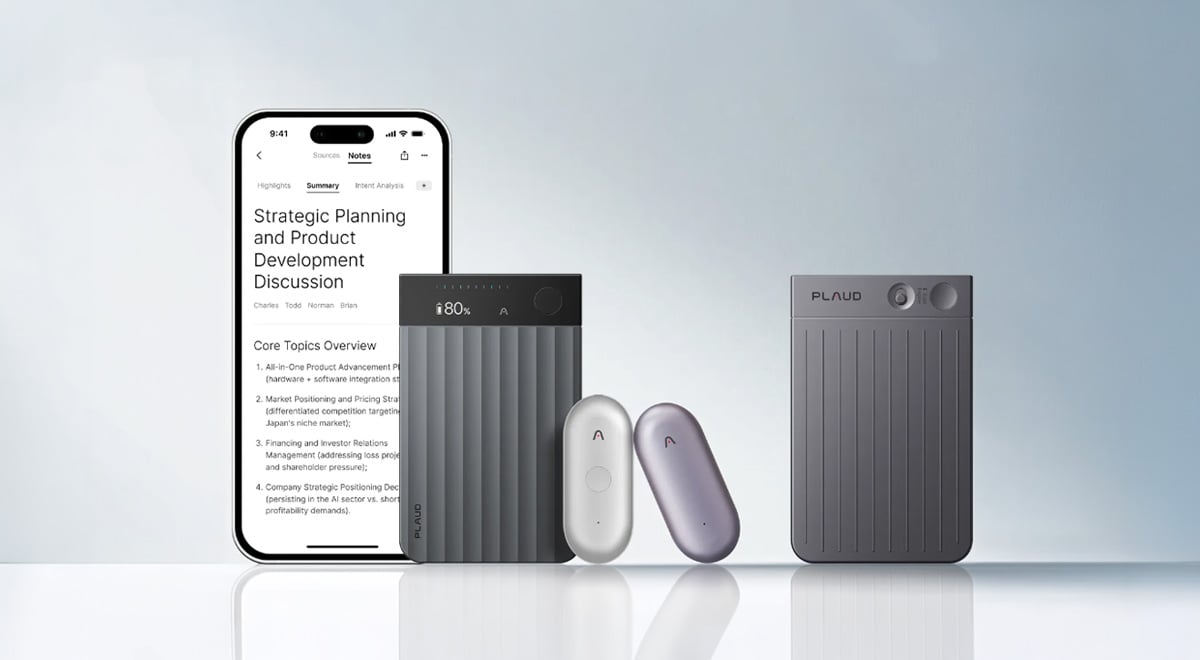
This is why dedicated AI hardware is replacing traditional recording methods for high-stakes work. Plaud Note Pro is an AI voice recorder that captures audio across phone calls, in-person meetings, and video sessions from a single device, returning transcripts, summaries, and action items automatically.
Beyond Transcription: How AI Voice Recorders Are Redefining Workplace Productivity
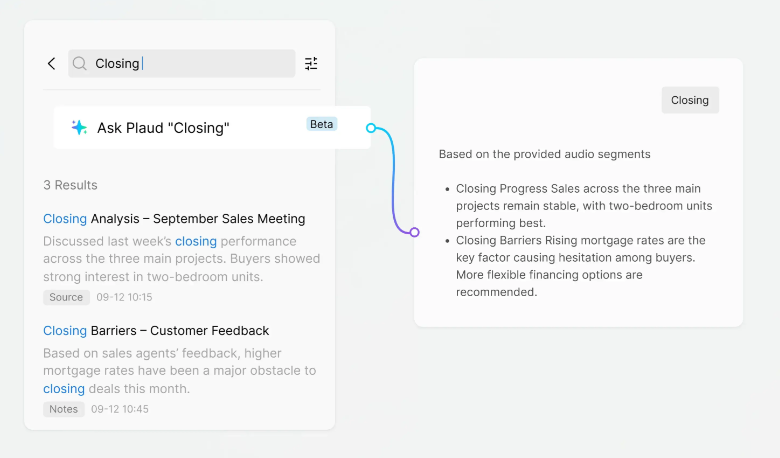
AI voice recorders now go far beyond turning speech into basic text documents; they serve as structured productivity tools that turn raw conversation into transcripts, summaries, and action items. While the market features both smartphone apps and dedicated hardware, finding the best AI voice recorder requires looking at how well the tool integrates advanced Large Language Models (LLMs) with professional workflows.
Using market leader Plaud Note Pro as a benchmark, we can see exactly how this specialized technology transforms day-to-day operations across various industries through practical applications:
Sales Automation and Client Onboarding: Sales executives can record client discovery calls without touching a keyboard. The AI automatically builds structured follow-up summaries, maps out client pain points, and exports can be integrated into CRM workflows, reducing manual entry across the sales cycle.
Legal Consultation and Compliance Audits: Lawyers and compliance officers use these devices to capture hours of rapid-fire testimony or depositions. The integrated AI instantly flags potential legal risks, indexes specific speaker contradictions, and generates highly accurate, timestamped case summaries.
Medical and Healthcare Documentation: Doctors and therapists can record patient consultations hands-free. The system accurately transcribes complex medical jargon and structures the dialogue into standard clinical notes, allowing practitioners to spend more time on patient care rather than paperwork.
Executive Boardrooms and Strategy Sessions: For corporate executives, multi-person board meetings are distilled into concise executive summaries and interactive mind maps. The tool isolates separate speakers and delivers a precise list of tasks and deadlines to distribute to teams immediately.
Academic Lectures and Executive Education: Students and professionals undergoing corporate training can capture complex lectures. The AI breaks down deep multi-hour seminars into organized study guides, key formulas, and bite-sized revision points.
Dedicated AI Hardware vs. Smartphone Apps: The Battle for Reliability
Choosing between a dedicated AI hardware device and a standard smartphone application comes down to balancing professional reliability against casual convenience. While mobile apps are highly accessible, they frequently fall short under strict professional demands due to hardware limitations and security gaps.

| Comparison Point | Dedicated AI Hardware | Smartphone Recording Apps |
| Data Security & Encryption | ISO 27001, ISO 27701, SOC 2 Type 2, GDPR, HIPAA, EN 18031 certified. Device-level encryption with end-to-end cloud transmission. | Medium (Vulnerable to OS tracking, cloud leaks, and third-party data mining) |
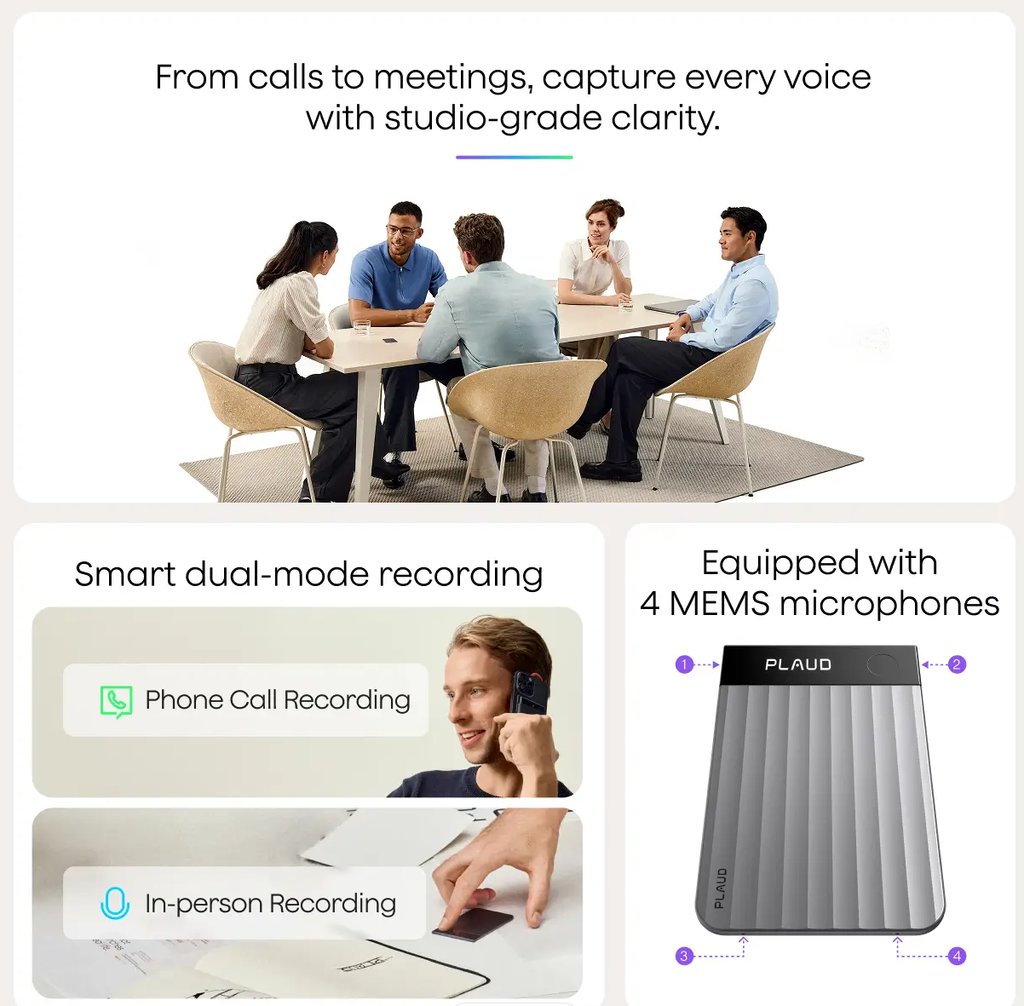
| Audio Hardware Quality | Premium (Multi-mic arrays with dedicated hardware noise cancellation) | Low to Medium (Standard phone mic prone to clothing rustle and background noise) |
| Interruption Resistance | Absolute (Will not stop recording for incoming phone calls or notifications) | Poor (Incoming calls, alarms, or app crashes can instantly terminate the recording) |
| Battery & Storage Autonomy | High (Massive dedicated battery and internal storage built for days of use) | Low (Drains phone battery rapidly, competes with photos and apps for space) |
| Operational Speed | Instant (One-touch physical button toggles recording in less than a second) | Slow (Requires unlocking the phone, finding the app, and tapping through menus) |
| Average Subscription Price | Plaud Starter Plan included (300 min/month free); paid plans from $99.99/year | Monthly fees via Apple App Store or Google Play |
| Best For... | Lawyers, executives, sales professionals, and high-stakes business environments | Casual note-taking, quick personal reminders, and low-priority tasks |
What to Look for in Next-Gen AI Voice Recorders
Investing in the right AI recording ecosystem requires a careful evaluation of both tangible hardware specs and backend software processing. The ideal device must operate flawlessly across diverse environmental types without adding friction to your established daily routine.
Advanced Hardware-Software Synergy: Look for devices with a minimum 4-microphone matrix capable of clear 360-degree pickup up to 16.4 feet (5 meters) away. The physical unit must match the software engine to enable multi-language transcription and automatic speaker identification.
Enterprise-Grade Compliance and Security: Ensure the manufacturer adheres to strict global data privacy regulations, including ISO 27001, ISO 27701, SOC 2 Type 2, GDPR, HIPAA, and EN 18031. Look for features like local file encryption on the physical device and secure end-to-end cloud data transmission.
Physical Design and Operational Form Factor: A truly useful device should be ultra-slim and highly portable, fitting effortlessly into a wallet or clipping to a laptop. It should feature physical, intuitive controls that let you start recording blindly without needing a smartphone screen connection.
Conclusion: Safeguarding the Future of Enterprise Productivity
The rise of AI voice recorders reflects a larger shift in how professionals manage information and workplace communication. In 2026, productivity is no longer defined by how much information people can manually record. Instead, success increasingly depends on how efficiently teams can capture, organize, and act on knowledge.
AI voice recorders are helping businesses reduce cognitive overload, improve collaboration, and streamline decision-making across industries. As organizations continue adopting AI-powered workflows, dedicated solutions like Plaud Note Pro demonstrate how intelligent voice technology can support more efficient and sustainable workplace productivity in the years ahead.