10th ESET European Cybersecurity Day: Building Europe’s cyber resilience in the age of AI
 Follow us
Coordinated cyberattacks targeted at least 30 renewable energy facilities and a combined heat and power plant in Poland. During the operation, ESET PROTECT blocked DynoWiper, malware designed to destroy data. ESET researchers attributed its deployment to the Russia-aligned Sandworm group with medium confidence.
The targeting of energy infrastructure in a NATO member underscores why the lessons of Russia’s war against Ukraine matter across Europe. How to apply them was a central question at the 10th ESET European Cybersecurity Day (EECD), held in Vilnius on 12 November. The event brought together 17 speakers from cybersecurity research, government and industry to examine destructive attacks, AI security and dependence on external technology providers.
Reading the evidence
Investigating an attack can help strengthen defences beyond the organisation directly affected. Understanding how intruders gained access and what they attempted to destroy can inform protection elsewhere. Assessing responsibility requires researchers to consider technical evidence, targets and geopolitical context.
Robert Lipovský, ESET’s Principal Malware Researcher, examined these questions using findings from ESET investigations into Russia-aligned and China-aligned operations against European targets. His session explored destructive attacks, long-running espionage campaigns and evolving tactics, highlighting what defenders can learn from them to recognise intrusions earlier.
AI as a tool and a target
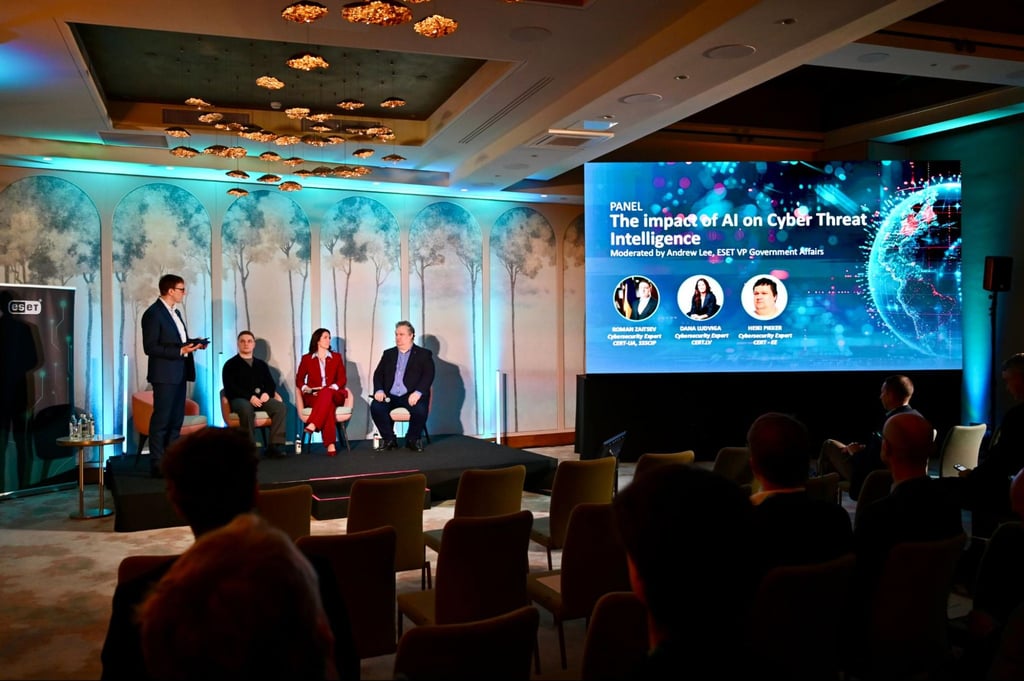
Acting on these findings requires analysts to connect events quickly enough to recognise an unfolding attack. AI can help reconstruct that sequence and reduce time spent reviewing alerts. Attackers can use it to research vulnerabilities and develop phishing campaigns.
ESET NeoCortex, the company’s specialised foundational cybersecurity model, powers ESET LiveCortex, which connects fragmented security signals into incidents for investigation. NeoCortex helps reconstruct missing context and assess how an attack may progress. This supports ESET’s “minus-one-day defence” approach: helping defenders anticipate an attacker’s next move and intervene before it happens.
Organisations adopting AI must also account for the risks introduced by the systems they deploy.
Filip Mazán, ESET’s Director of AI Security Labs, examined how malicious instructions embedded in content can manipulate agents, alongside risks from excessive permissions and compromised software dependencies. Safeguards include monitoring agent behaviour, protecting sensitive data and identifying where AI is used.
Keeping essential services running
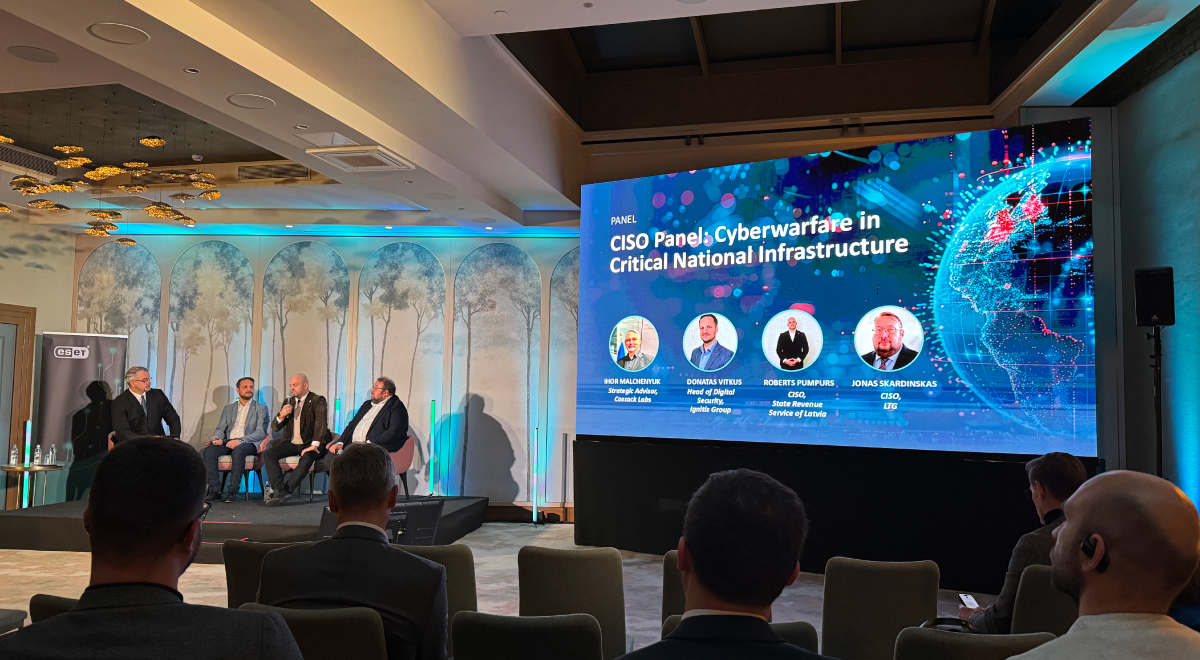
For infrastructure operators, managing these risks is part of a wider responsibility to maintain essential services. Jonas Skardinskas, CISO at LTG (Lithuanian Railways), and Donatas Vitkus, Head of Digital Security at Ignitis Group, joined a panel examining Europe’s infrastructure defences and the challenges remaining since Russia’s full-scale invasion of Ukraine.
That preparation depends on operators, researchers and public authorities sharing information and experience. ESET’s strategic, non-commercial partnership with NATO supports this cooperation through information sharing, best practices and coordinated activities on shared security concerns.
Alongside this cooperation, organisations need to understand how their technology choices affect continuity. For essential service providers, control over data and technology has a practical test: whether they can maintain operations if access to a critical supplier’s services is interrupted. Understanding those dependencies is as important to continuity as understanding the threats to their own networks.