Best golf simulator for home: complete buyer's guide


If you're a consistent golfer or you're a newbie, you may struggle to improve or learn quickly due to a lack of consistent practice time, reliable feedback, or easy access to quality facilities.
Home golf simulators solve this by offering instant shot data, realistic virtual courses, and on-demand practice, all from the comfort of your home. These simulators allow you to practice year-round regardless of weather, time constraints, or access to a golf course.
While there are many options to choose from, you don't have to worry because the Cybernews research team and I have narrowed down the best golf simulator for home use. In this article, you'll learn how golf simulators work, what features matter, and the best value golf simulator on our list.
Best golf simulator for home – shortlist
- Rapsodo MLM2PRO PROV1 – best indoor golf simulator
- ZEALFEEL – best affordable golf simulator
- GoSports Golf Simulator – best value golf simulator with balanced performance
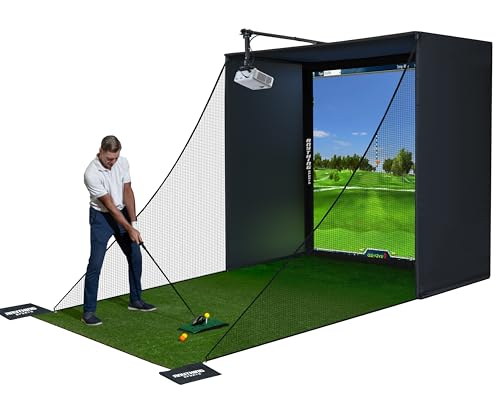
- ANYTHING SPORTS Simulator Cage – best immersive golf enclosure
The best golf simulators for home compared
Before diving into individual reviews, take a look at the comparison table below. It highlights key differences in features, setup style, and suitability to help you choose which option best fits your space, skill level, and budget.
|
|
|
|
|
| Title | Rapsodo MLM2PRO PROV1 | ZEALFEEL | GoSports Golf Simulator | ANYTHING SPORTS Simulator Cage |
| Price | $549.98 $699.99 -21% | $349.99 $369.99 -5% | $1,299.99 | $699.99 |
| Connectivity | Bluetooth | N/A | N/A | N/A |
| Map type | North America | N/A | N/A | N/A |
| Best for | Beginners to mid-handicap golfers | Budget-conscious golfers | Balanced performance and value | Immersive home setups |
| More info | Buy on Amazon Details | Buy on Amazon Details | Buy on Amazon Details | Buy on Amazon Details |
4 best golf simulators for home – our detailed list
In this section, I explain each model in detail and highlight its standout features to help you make an informed decision.
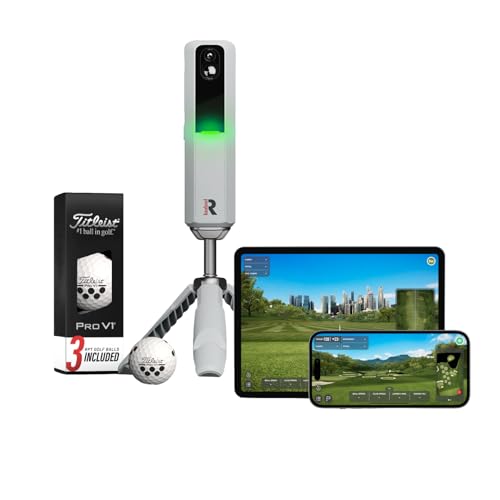
1. Rapsodo MLM2PRO PROV1 – best indoor golf simulator
The Rapsodo MLM2PRO PROV1 is the best indoor golf simulator. It is perfect for anyone who wants accurate shot data without investing in a full enclosure setup. I picked it because it delivers professional-level metrics in a compact, mobile-friendly form.
It measures 13 core data points, including spin rate, spin axis, launch angle, ball speed, and swing speed, and provides real-time feedback that directly translates into on-course improvement. You can also pair it with a smartphone or tablet to create a mobile golf simulator experience.
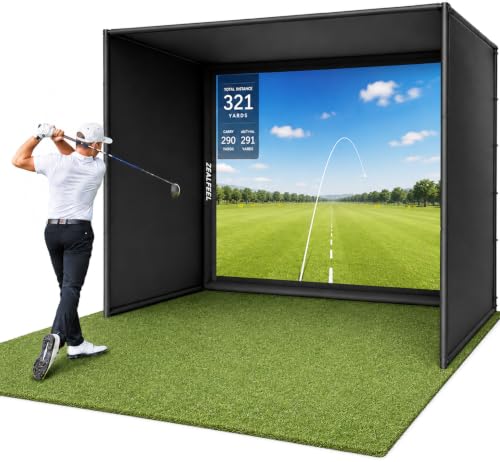
2. ZEALFEEL – best affordable golf simulator
The ZEALFEEL is one of the most affordable golf simulator models on this list. It features a dual-layer HD impact screen, reinforced netting, side barriers, and blackout curtains for safety and visual clarity.
The foam-padded steel frame helps absorb impact while reducing rebound and noise. The enclosure supports a 4:3 aspect ratio and is compatible with most golf simulator software and projectors.
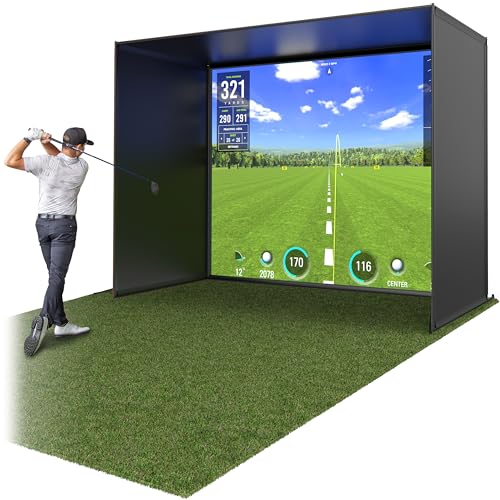
3. GoSports Golf Simulator – best value golf simulator with balanced performance
The GoSports Golf Simulator is the best value-for-money option in our list. It offers a professional-grade look and feel at a more accessible price point.
The enclosure includes a reinforced HD impact screen, sturdy steel frame, and internal foam padding to reduce rebound. It is easy to set up, and most users report assembly times under 30 minutes.
4. ANYTHING SPORTS Simulator Cage – best immersive golf enclosure
The ANYTHING SPORTS Simulator Cage uses heavy-duty netting to absorb stray shots while minimizing light bleed. Its precision-sized screen delivers crisp visuals and is rated for repeated ball strikes.
Despite its premium feel, the cage is easy to assemble and doesn't require special tools. It’s a strong choice for anyone building a dedicated simulator room or garage bay.
Our methodology
To help you choose the best golf simulator for home use, I worked together with the Cybernews research team to draw insights from a combination of manufacturer specifications, verified customer reviews, expert commentary, and provider claims. Here are the factors we considered.
- Accuracy and tracking technology (30%). We assessed ball-tracking methods, shot realism, spin and launch data accuracy, and overall measurement consistency, as they directly affect training quality.
- Features and software (20%). We considered whether the models offered various game modes, course libraries, swing analytics, third-party app compatibility, and support for future updates.
- Ease of setup and use (15%). We evaluated installation time, calibration complexity, portability, and the intuitiveness of each system for both beginners and experienced golfers.
- Space and home compatibility (15%). Golf simulators were assessed based on how well they fit into common home environments, such as garages, basements, spare rooms, or dedicated studios, considering ceiling height and safety.
- Price and value for money (20%). We weighed cost against features, durability, expandability, and long-term usability to determine which options deliver the best return on investment.
What is a golf simulator and how does it work?
A golf simulator is a technology-driven system that lets you practice and play golf indoors by hitting real golf balls, while the software recreates your shot in a virtual environment. Instead of traveling to a golf course or driving range, players can take full swings at home and immediately see how each shot would perform on a real course. Golf simulators are commonly used for skill improvement, casual play, and even competitive rounds.
Golf simulators work by using a combination of sensors, high-speed cameras, radar, or infrared technology to track what happens when the club strikes the ball. From this, the simulator measures critical data, including ball speed, launch angle, spin rate, shot direction, carry distance, and, sometimes, club speed and impact position. The accuracy of this data is what determines how realistic the simulator feels.
Once the shot data is collected, the simulator's software instantly processes it using physics-based algorithms. These calculations predict how the ball would travel under real-world conditions, including its trajectory, curvature, and landing behaviour. The result is displayed visually on a screen, TV, or projector, showing the ball flying down a virtual fairway or landing on a digital green.
Different types of golf simulators
There are different types of golf simulators, and understanding them can help you choose the best home golf simulator setup for your needs.
- Camera-based simulators. Camera-based simulators use high-speed cameras to capture the ball and club immediately after impact. They offer excellent accuracy, especially for spin and short-game shots, and work reliably in compact home setups. However, these systems tend to be more expensive and may require careful lighting and calibration to maintain accuracy.
- Radar-based simulators. Radar-based simulators use Doppler radar technology to track the ball's movement through the air. Radar systems are extremely accurate outdoors and provide realistic full-flight tracking. They are often portable and versatile for both range and home use. However, indoors, radar-based systems may require more depth to track the ball accurately, which can be a limitation in smaller rooms.
- Infrared sensor simulators. Infrared-based simulators use infrared light sensors embedded in mats or frames to detect when the club passes through a sensing area. While they are generally affordable, easy to set up, and work well in tight spaces, their accuracy is more limited than that of camera or radar systems, especially for spin and shot shaping.
- All-in-one consumer systems. All-in-one consumer simulators combine multiple tracking technologies. They balance accuracy, ease of use, and affordability. Setup is usually straightforward, and ongoing updates improve features over time. The only con is that they may not match the precision of professional-grade systems and often rely on subscriptions for full software access.
Reasons to get a golf simulator for home
Here are a few reasons to consider getting a golf simulator for home use.
- Practice anytime, regardless of the weather. A home golf simulator lets you train year-round without worrying about rain, heat, or limited daylight. You can practice whenever it fits your schedule, even for short sessions.
- Improve swing consistency and accuracy. You get instant shot feedback, which helps you understand ball flight, correct mistakes, and build more consistent swings using real data instead of guesswork.
- Entertainment for family and friends. The virtual courses and game modes turn practice into fun. This makes golf enjoyable for guests and non-golfers as well.
- Long-term savings compared to range fees. Over time, a home simulator can reduce spending on driving ranges, lessons, and course visits.
Features to consider when choosing the best golf simulator for home
Here are the key features to look out for when choosing the best golf simulator for home use.
- Shot accuracy and data metrics. Look for simulators that track key data such as ball speed, launch angle, spin rate, and shot direction. You need accurate data for meaningful practice and improvement.
- Software realism and course variety. Choose models with high-quality software, realistic ball physics, and a wide selection of virtual courses.
- Compatibility with clubs and devices. Ensure the simulator is compatible with your existing golf clubs and with your smartphone, tablet, PC, or projector for a smooth setup.
- Setup requirements and calibration. Consider how much space is needed, how complex the installation is, and whether the system requires frequent calibration to maintain accuracy.
- Subscription fees or ongoing costs. Make sure to find out if there are any ongoing costs. Some simulators require monthly or annual subscriptions for full access to software, courses, or advanced analytics.
- Durability and build quality. Choose models with strong frames, quality impact screens, and reliable sensors. They are important for safety, longevity, and consistent performance in a home environment.
How much space do you need for golf simulator at home?
Setting up a home golf simulator requires careful consideration of room dimensions to ensure safe and realistic play. Most setups require a minimum ceiling height of 8 to 9 feet to allow for full swings, with taller ceilings preferred for drivers and longer shots. Room width should ideally be 10 to 12 feet to accommodate swings without risk of hitting walls, while depth typically ranges from 12 to 15 feet for compact setups, and up to 18 feet or more for full-size simulators that allow full ball flight.
Compact simulators, such as camera- or sensor-based portable systems, can fit in smaller spaces, such as a spare room or apartment, often using a mat and a small launch monitor. Full-size enclosures, however, require more space to accommodate a proper impact screen, safety nets, and enough room for a projector or monitor. Garages and basements are popular locations because they usually provide sufficient ceiling height and depth.
Best golf simulators for home according to users
Based on insights gathered from Reddit discussions, Trustpilot reviews, and several golf simulator reviews, here’s what I found.
- The Rapsodo MLM2PRO is often recommended for its accuracy, real-time shot data, and portability, making it a top choice for golfers focused on training.
- Users also praise GoSports and ANYTHING SPORTS enclosures for durability, ease of setup, and full coverage.
- Recurring complaints include space limitations, additional costs for projectors or software, and occasional calibration requirements.
Final verdict: is golf simulator for home worth it?
A home golf simulator can be a valuable investment for a wide range of golfers, from casual players wanting year-round practice to serious enthusiasts seeking detailed swing analysis.
After extensive research, I can confidently recommend the Rapsodo MLM2PRO PROV1 as the best golf simulator for home use. It is compact, offers professional-level metrics such as measuring up to 13 core data points and is one of the most affordable golf simulator for home use.
While the upfront cost can be significant, simulators often provide long-term savings compared to repeated trips to the driving range and offer entertainment value for family and friends. Choosing the right system depends on space, budget, and intended use.
FAQs
How accurate are home golf simulators?
Modern home golf simulators can be very accurate, especially mid- to high-end models that track ball speed, launch angle, spin, and shot direction, though results can vary by system and setup.
Can I use a golf simulator in a small room?
Yes, compact or camera-based simulators can work in small rooms, but full swings may require at least 8-9 feet of ceiling height and enough depth to safely swing.
Do golf simulators require a subscription?
Some simulators require subscriptions for full access to software, courses, or analytics, while others offer basic functionality at no ongoing cost.
Are home golf simulators suitable for beginners?
Yes, they are suitable for beginners, providing instant feedback, swing data, and practice opportunities in a safe, controlled environment.
What is the average cost of a home golf simulator?
Prices vary widely. Compact launch monitors start around $500–$1,000, while full enclosures with software and projectors can range from $2,000 to $10,000 or more.