Female AI agents paid less than male agents for the same work
Even bots can’t escape the pay gap.
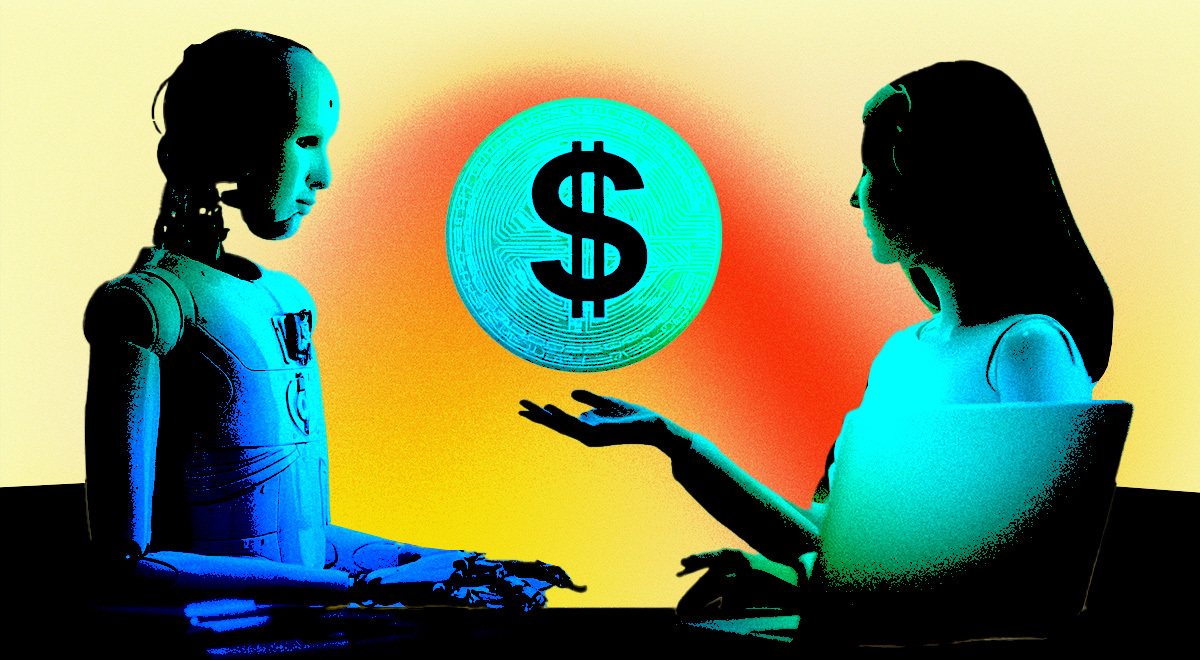
Male bot, female worker, and a digital dollar. Image by Cybernews.

 Follow us
- A University of Limerick study found female AI agents received 10.25% less pay than male agents.
- Researchers gave 189 people real money to divide between themselves and AI assistants after shared tasks.
- The AI assistants used the same technology, but participants treated male and female avatars differently.
- Researchers warned that gendered avatars could carry workplace stereotypes into new AI systems.
Key Takeaways by nexos.ai, reviewed by Cybernews staff.
Gender bias is apparent even in AI avatars, according to one study. Researchers at the University of Limerick found that female agents were paid over 10% less than their male counterparts.
Researchers placed 189 human participants in a virtual-reality office simulation to examine whether their treatment of AI assistants varied based on their appearance.
Participants worked with AI assistants presented in different forms, including human-like agents with male or female appearances, while the underlying AI technology remained the same.
The goal was to “recreate a real-world transaction and examine how much people were willing to pay AI for its work,” said the study.





After completing tasks, the humans were given real money to compensate themselves, along with the AI agents.
The male assistant, Johan, was given 10.25% more than Johanna for completing the same tasks, showing a clear bias toward the male gender, even in the context of an agentic workflow.
Tellingly, the researchers also found that people perceived Johan to be more human-like.

Check if your data was exposed
Find out if your email and related personal information have appeared in known data breaches.
Is AI inheriting workplace prejudices?
There’s a general consensus among AI users that it is gender-neutral, explained Dr. Mary Hausfeld of the University of Limerick.
The striking finding, however, was that participants “did not treat them (agents) in the same way,” Hausfeld said.
The conversation on this topic is live. Join in the discussion.
Simply giving an AI agent a gendered avatar triggers real-world stereotypes, influencing how humans value, compensate, and rely on digital assistants.
Hausfeld warned against treating avatars and personalities as merely decorative.
As AI agents become more common in the workplace, we need to think carefully about the characteristics we give them and the behaviors those choices may encourage. We don’t want to inadvertently reproduce existing inequalities in a new technological setting.
When delegated a task, the underlying operation of a “gendered” assistant would be the same as that of the powering AI model.
Nevertheless, it seems that AI assistants reveal a mirrored effect of how institutionalized workplace stereotypes propagate.