China accused of churning out AI-generated scientific papers en masse
These papers rely on secondary analysis only.
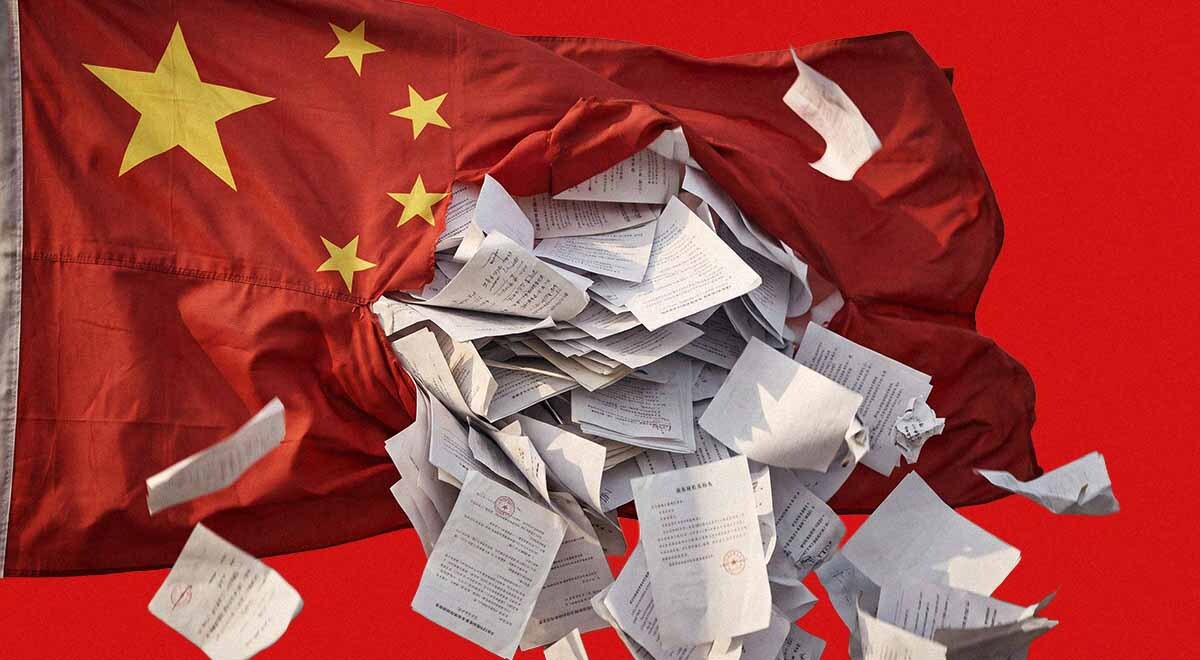
China flag spilling papers. Image by Cybernews.

 Follow us
- Academics found a China-linked system that promises ready-to-publish research papers in 2 hours.
- The tools use public health datasets, including Global Burden of Disease and CDC survey data.
- Researchers worry because some data packages lack documentation, public code, or clear verification.
- The academics could not confirm whether the papers came from paper mills or independent authors using AI.
Key Takeaways by nexos.ai, reviewed by Cybernews staff.
AI slop seems to be spreading within the scientific community after a group of academics discovered a Chinese operation mass producing ready-to-publish research papers.
A small group of academics has uncovered a research paper machine based in China that promises to generate ready-to-publish papers in just 2 hours, undermining months and sometimes years taken to produce research in the field.
The trio, Dr. Andrea Riebler, Dr. Leonhard Held, and Dr. Peter Methys Degen, found that their research papers were being heavily cited. While this should’ve been cause for celebration, the number and frequency raised suspicions.
What they discovered was a China-linked ecosystem that included commercial tools and services designed to mass-generate scientific papers from public health data.





They discovered these tools only because the generated papers cited the work of these 3 academics.
The data primarily comes from the Global Burden of Disease (GBD), the “largest and most comprehensive effort” to track and quantify declines in health resulting from specific diseases, including cancer and strokes.
Other publicly available datasets, like those from the US Centers for Disease Control and Prevention National Health and Nutrition Examination Survey (NHANES), have been heavily mined to produce similar articles en masse.
These papers exclusively feature secondary analyses, which is data collected by someone else.
While they couldn’t say whether the papers are methodologically sound, their concern stems from the lack of verification of this information. Particularly when data packages are undocumented in scientific literature, hidden behind paywalls, or the source code isn’t public.
“Paper mill”
The findings in this paper suggest that the increase in GBD publications originating in China is, in part, driven by independent authors rather than a fraudulent academic operation known as a “paper mill.”
“This is corroborated by the identification of an online ecosystem of proprietary tools and services specializing in streamlined do-it-yourself workflows for conducting, writing, and publishing secondary analyses of public health data,” the paper reads.
While the academics were unable to definitively say whether these papers came from paper mills or from independent authors using AI to mass-produce research, they encouraged the scientific community to look further into these claims.


Stay updated with our latest stories and follow us on social media
Be the first to discover new stories, ideas, and updates from our team.