Proton issues an apology, says its AI use will never come at the expense of security
The apology follows threats from users to cancel Proton subscriptions
The Proton logo magnified. IB photography via Shutterstock.

 Follow us
- Proton apologized after a leaked AI strategy triggered user backlash and cancellation threats.
- Proton denied tracking employees’ AI-generated code and said the claim came from a misunderstanding.
- The company says AI use will not weaken security and promises more transparency about code reviews.
- Some users remain unconvinced, while others say AI is changing how software engineers work.
Key Takeaways by nexos.ai, reviewed by Cybernews staff.
Proton has apologized to the community after its leaked AI-use strategy sparked backlash among users.
The Swiss-based company offering privacy-focused tools, including ProtonMail, issued a public statement on October 31st, 2026, in response to concerns raised by its current and former employees in 404 Media publications.
Proton denied installing tracking software on employees’ laptops to measure how much AI-generated code they produce, saying the rumor stemmed from a “misunderstanding” about how mobile device management (MDM) software works.


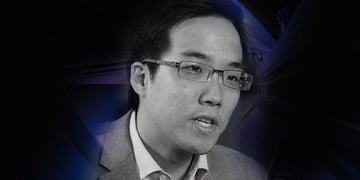



The firm emphasized that its “use of AI will never be at the expense of security,” following reports that CEO Andy Yen rushed newly written code without proper testing.
“In the past year, contrary to what has been alleged, additional layers of security review have been added to meet the threat posed by hostile AIs scanning Proton’s open-source code for vulnerabilities. Our code is open source, and its security remains open for all to verify,” the post reads.




Stay updated with our latest stories and follow us on social media
Be the first to discover new stories, ideas, and updates from our team.
Proton promised more transparency over the company’s AI use, such as publicly releasing and open-sourcing several of its internal tools, including more advanced versions of Lumo, a chatbot and an AI assistant.
The company said it would publish how Proton conducts code and security reviews and detail its AI policies.
Instead of just being able to see the final open-source code that we produce to verify security, you will also be able to assess how that code was produced,Proton's statement on X
According to Proton’s AI manifesto, the job of engineers has fundamentally changed. Instead of writing code themselves or using LLMs to do it faster and better, they now have to supervise AI models.
“Your job is to help the LLM write better code faster. Every engineer is now a team leader, a manager, and your direct reports are the models and agents you use," the manifesto reads.
In a recent X post, Proton said it wasn’t re-interviewing staff about AI use, and there are no job losses resulting from AI re-interviews.
404 Media reported on October 26th, citing a leaked email, that interviews about AI use may impact employees’ future at the company, potentially leading to changes “in roles, responsibilities, and continued employment.”
We’re aware that we haven’t lived up to the high standard you ought to hold us to, and for that we can only apologize; we are sorry,Proton's statement on X
Some critics aren’t convinced
The statement comes amid user reports that they are canceling their subscriptions for Proton services and calls for Yen to step down to save the company’s reputation.
It remains unclear how many users canceled their Proton subscriptions, and whether the backlash resulted in a financial loss for the company.
Nevertheless, Proton’s explanations didn’t convince some of the critics. Redditors accused the company of censorship, claiming it deleted threads in the /ProtonPublic subreddit, where users discuss alternative tools.
Some industry insiders, however, sided with Yen, who, according to an employee, is “in full AI psychosis.”
Peter Steinberger, the creator of OpenClaw, an open-source autonomous AI agent, said he sympathizes with the difficult “loss of identity” some engineers feel as AI redefines their jobs.
He wrote on X, “I also understand that he runs a business and might have limited patience when we now had two years to process, learn, change, and grow.”