Sovereign AI plan ‘makes no sense,’ German MP says
Investing in sovereign technology is still necessary.
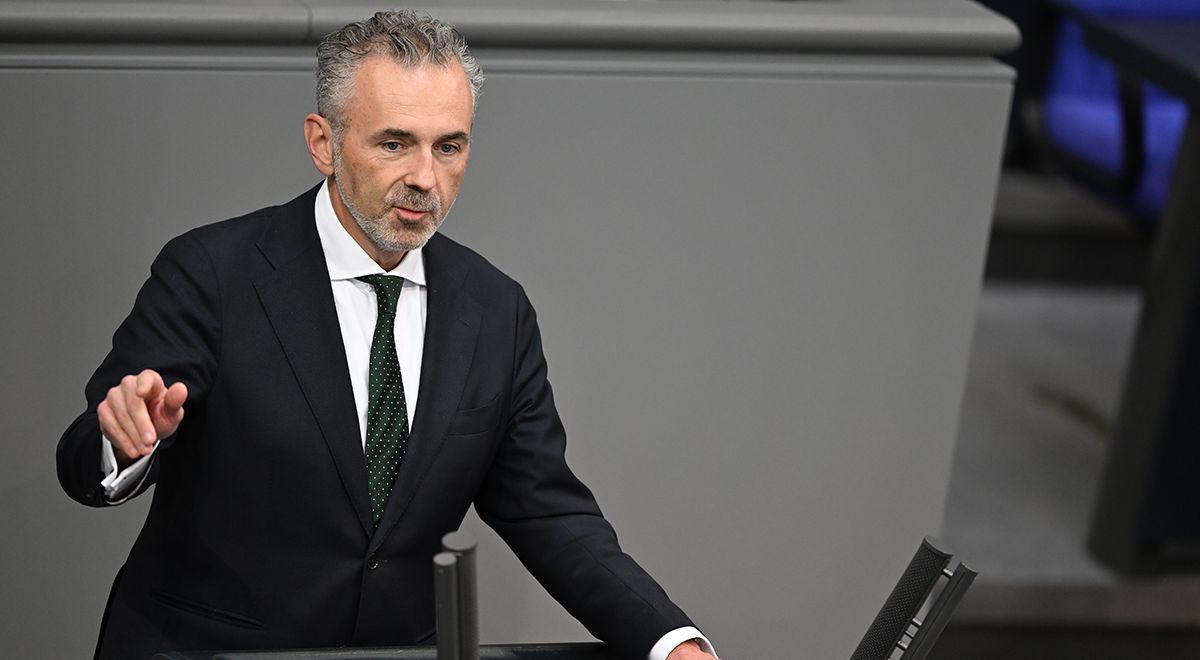
Thomas Jarzombek. Photo by Michael Brandt/picture alliance via Getty Images

 Follow us
- Thomas Jarzombek says Germany should not build a fully sovereign AI system with total national control.
- Germany still plans major sovereign tech investments, including more than €40 billion for data centers.
- Berlin supports German AI model development, including the open-source Soofi S research project.
- Jarzombek says Europe must capture AI’s economic value instead of losing it to the US or China.
Key Takeaways by nexos.ai, reviewed by Cybernews staff.
Thomas Jarzombek, a member of the German parliament, favors the country operating in the global system.
Jarzombek is a parliamentary state secretary to the Federal Minister for Digital Transformation and Government Modernization.
Speaking at the Web Summit 2026 Lisbon, one of the largest tech events globally, he said Germany shouldn’t aspire to create a completely sovereign AI with its own models, infrastructure, and full data control.
I don't think that makes any kind of sense,he said.






Jarzombek, a known proponent of European tech sovereignty, pointed out Germany’s automotive industry, with German companies building cars around the world and buying the best products in the global system.
Nevertheless, he emphasized that Germany invests in sovereign technology, with over €40 billion ($44.37 billion) in looming investments in data centers.
The United Arab Emirates promised Germany in 2026 to invest €40 billion in the country’s economy, including data centers with a capacity of up to 1 gigawatt.
In addition, Jarzombek says that Berlin supports the development of AI models, including the open-source Soofi S, developed by the German research consortium Soofi. Following its release in July 2026, some experts declared that Berlin was back in the AI race.


Stay updated with our latest stories and follow us on social media
Be the first to discover new stories, ideas, and updates from our team.
According to its creators, the model outperforms European and US open-source rivals in English, German, coding, maths, and regional knowledge. It was fully trained on Deutsche Telekom's AI cloud infrastructure.
Despite rejecting completely sovereign AI aspirations – whether it’s possible or not – Jarzombek underlined the importance of Europe being part of the economic value created by AI, rather than seeing that value move to the US or China.
Jarzombek remarks come as Germany’s federal and state governments are increasingly looking for ways to reduce their dependencies on US tech.
European tech sovereignty map:
This year’s Web Summit welcomes a number of leading experts and stakeholders to discuss European tech sovereignty efforts and the continent’s place in the US-China AI race.