AI labs “sitting on bombshells” that can break encryption systems, a scientist warns
Bitcoin could become worthless.
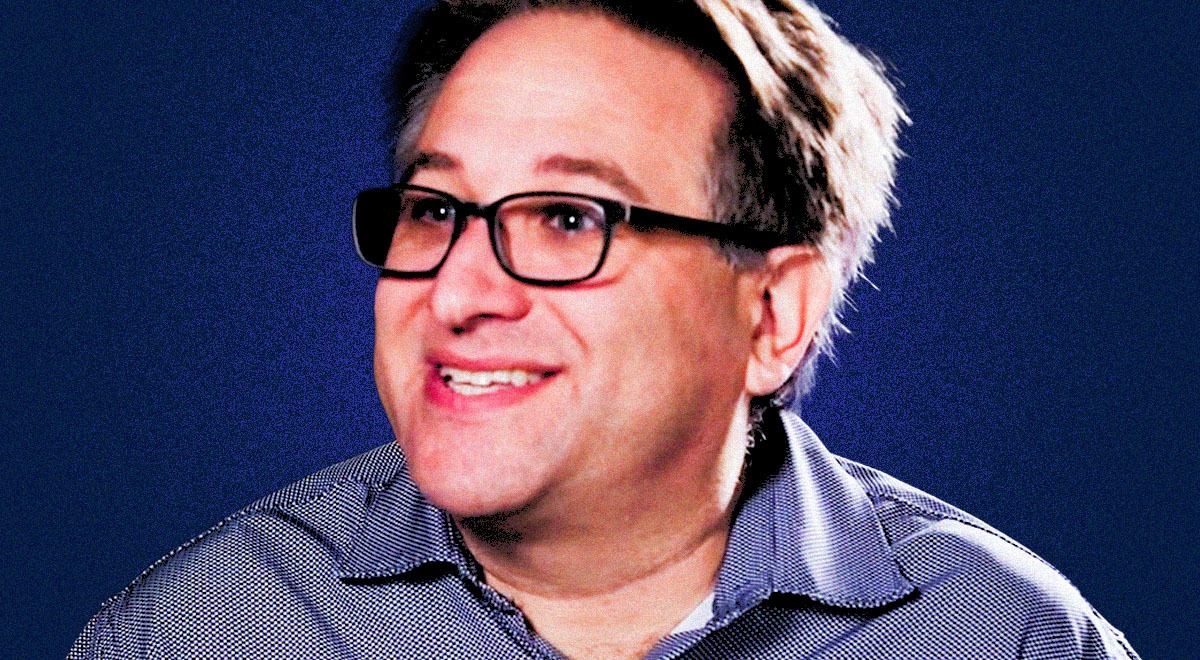
Screenshot from World Science Festival YouTube channel

 Follow us
- Rumors claim AI labs may have made cryptography breakthroughs, but no lab has confirmed breaking RSA encryption.
- Scott Aaronson says fast factoring could compromise HTTPS, digital signatures, credit card security, and cryptocurrencies.
- Ledger CTO Charles Guilleme says proving fast factoring would simply break RSA encryption.
- OpenAI and Anthropic employees reportedly say some unreleased AI models are too powerful to release safely.
Key Takeaways by nexos.ai, reviewed by Cybernews staff.
Renowned quantum computing scientist Scott Aaronson says that if AI actually managed to break a widely used encryption algorithm, entire signature schemes and HTTPS websites could be compromised.
Aaronson, a founding director of the Quantum Information Center at the University of Texas at Austin, wrote in his blog on November 24th, 2026, that he heard “many rumors” of OpenAI or Anthropic – or both – cracking factoring in polynomial time (P), which allows breaking down large numbers in a fast manner.
This prompted fears that at least one of the companies now has the ability to break Rivest-Shamir-Adleman (RSA) encryption, the public-key encryption algorithm widely used in government systems, banking, and websites, as it secures HTTPS.


Stay updated with our latest stories and follow us on social media
Be the first to discover new stories, ideas, and updates from our team.




RSA encryption rests on the notion that it is currently impossible to quickly identify the prime factors of very large numbers.
In a subsequent blog comment on November 25th, 2026, Aaronson addressed the rumors, saying he believed the AI labs had achieved breakthroughs in cryptography, though he wasn’t sure about their nature.
Because people have been hounding me about it: yes, I’m virtually certain, from multiple reliable sources, that the AI labs are now sitting on one or more bombshells in that area,Scott Aaronson, a founding director of the Quantum Information Center
Charles Guilleme, a CTO at Ledger, a digital-asset security company, wrote in his X post that the capability of factoring in P would “simply break” RSA encryption.
“If a frontier lab did find something like this, a clean, responsible disclosure that avoids mass exploitation would be very hard to pull off. All of this helps the rumors spread,” Guilleme said.
Two years before AI breaks cryptographic codes
As rumors on social media continued to spread, the episode of Curt Jumaingal’s podcast featuring Aaronson resurfaced, in which the scientist was asked whether AI labs should publish proof of P=NP, an unsolved mathematical problem that would imply fast factoring.
Aaronson answered that it would break all cryptography used on the internet, rendering bitcoin and other cryptocurrencies worthless, and could also break and forge all digital signature schemes that protect people’s wallets.
All the cryptography that is behind HTTPS or that protects your credit card number when you put it into a webpage, that would be broken as well,Scott Aaronson, a founding director of the Quantum Information Center
The renowned scientist addressed the observation that while nearly 400 of OpenAI’s scientific papers cover most areas of math, there is a “conspicuous omission of cryptography,” which may reflect the company’s cautious approach.
“We do need to think seriously about the prospect that AI models will discover breaks of 1 or more widely deployed cryptographic codes within the next year or 2,” he said.
Models “too dangerous” to be released
Leading AI labs didn’t confirm claims that RSA encryption can now be broken. However, the companies would still greatly benefit from the rumors, which would add to the narrative of extremely dangerous AI that should be self-policed by these tech firms.
The timing, too, is well-suited to these unconfirmed claims, as leading AI labs recently announced that their frontier AI models had solved major mathematical problems, including the nearly 170-year-old Riemann hypothesis.
Meanwhile, employees at Anthropic and OpenAI say that internal, unreleased AI models are becoming so powerful that they cannot be safely released, Axios reports.
It is worth noting, however, that OpenAI’s GPT-2 was also considered too dangerous to roll out to the public.
Jack Clark, who was OpenAI’s head of policy at the time, told The Guardian in 2019 that the then-non-profit’s goal was to prepare the world for the “escalator from hell” – the AI-related risks coming into the mainstream in a year or two’s time.