Top zero trust vendors compared for mid-market companies
Backed by leading cybersecurity experts and investigative journalists, we deliver independent, real-world antivirus testing and analysis, guaranteeing objective evaluations without undue influence or bias from outside parties.
Our transparent and consistent methodologies ensure objective, up-to-date reviews, empowering readers to make well-informed decisions.
Learn more
Mid-market companies are caught in a difficult spot in today’s cybersecurity world. They face the same threats as major enterprises twice their size, yet have a modest security team of one or two people trying to do the job of a dozen.
Now, with hybrid work being the norm, security is even harder to manage, since a traditional VPN opens the entire network once an employee logs in. Plus, the SaaS sprawl has turned every new app into another door to guard, and compliance demands never stop rising.
The old security model of installing a firewall around the office network doesn’t cut it anymore because your finance team now works from home, and you have suppliers logging in from multiple time zones. Modern attackers know this, and that’s why zero trust is the way forward.
Zero Trust Network Access (ZTNA) is a security model that assumes no user or device is trustworthy by default, even within the corporate network. Below, I look into the five top zero trust vendors for mid-market companies in 2026.
Best zero trust vendors – shortlist
- NordLayer – best zero trust vendor for mid-market organizations
- Zscaler – best for large-scale cloud-native environments
- Palo Alto Networks – best zero trust vendor for security ecosystem integration
- Cloudflare – best zero trust vendor for small teams needing wide coverage at a low cost
- Twingate – best zero trust vendor for speed and ease of deployment





Our team of researchers thoroughly tests antivirus software following a well-established testing process. In unison, our experts combine in-house and independent testing lab findings with first-hand experience to help you make informed decisions about each product. Learn how we test antivirus software.
What is a zero trust vendor?
A zero trust vendor provides a business with tools that verify every user and device before granting access to a resource, then limit that access to only what’s needed.
This is not a single product you buy and switch on. It’s a security model that combines different systems to protect your business, including identity-aware access proxies, network segmentation, single sign-on and MFA, device posture checks, and IP allowlisting.
Some sell just one system, while others bundle several into a platform. But ultimately, what separates a genuine zero trust vendor from a traditional security tool is that it works on the assumption that nothing is trusted by default and everyone must earn access per request rather than being granted it once at login.
Why zero trust matters for mid-market companies
Zero trust is critical for mid-market organizations because it helps small IT teams manage security more effectively with limited staff and resources. Remote and hybrid access means employees are now logging in from home networks, coffee shops, and even airports, where you have no control over what else is on that connection.
Plus, mid-market companies often rely on third-party contractors, agencies, and vendors, and they should have access only to specific internal resources, not to everything. Cloud applications have also multiplied to the point where your data lives in a dozen different environments, and internal resources are split between on-premises servers, private clouds, and SaaS platforms, all of which need protecting.
Every one of those access points is a potential attack surface. Zero trust shrinks it by granting each user and device access only to the resources they actually need, with access verified each time.
This gives mid-market companies a chance to achieve enterprise-grade protection without having to build their own security stack. Even better, these organizations get to scale as they please, starting off with identity and access controls and expanding coverage as the team and budget grow.
The top zero trust vendors
The zero trust vendor you choose for your mid-market company depends on what you value the most. You have teams that prioritize deployment simplicity, others that need broader SSE depth, enterprise scale, fine-grained segmentation controls, or network reach. Here are my reviews of the best zero trust security vendors.
1. NordLayer – best overall zero trust vendor for mid-market companies

| Starting price: | $8.00/user/month |
| Key strengths: | DPS, Cloud Firewall, SSO/MFA, network segmentation, IP allowlisting, gateways, device posture checks |
| Main tradeoffs: | Advanced features like device posture checks require upgraded tier licensing |
NordLayer is my top pick for mid-market companies that want practical zero trust access without turning it into a transformation project. It offers dedicated private servers with fixed IPs and dedicated gateways for IP allowlisting and traffic isolation.
You also have a Cloud Firewall that filters inbound and outbound traffic to Virtual Private Gateways and the members connected through them. SSO and MFA integrate with Okta, Entra ID, Google Workspace, OneLogin, and JumpCloud, so identity checks happen through the tools your team already uses.
Also, I like that NordLayer combines all crucial components into a single dashboard so small teams don’t get overwhelmed. There’s network segmentation, which lets admins split users by department so a breach stays contained and threats cannot move laterally across your network.
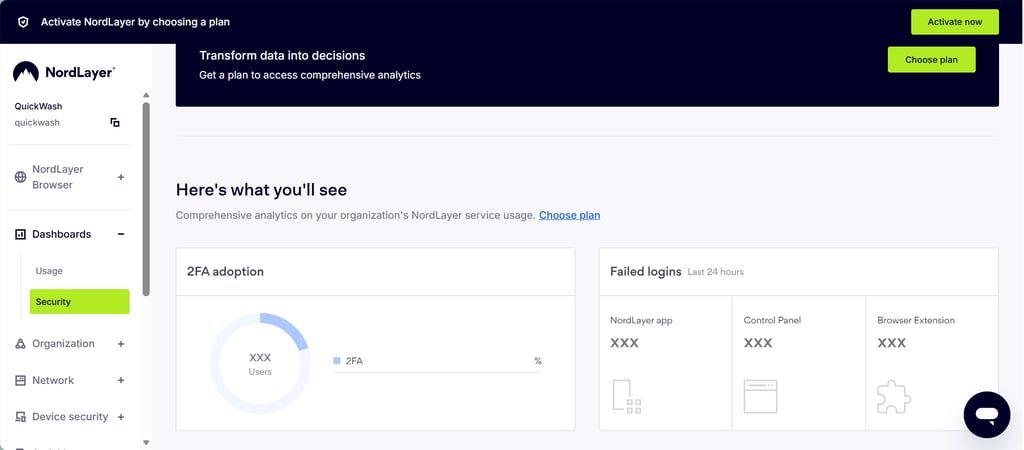
Even better, the control panel configuration and platform deployment for NordLayer take around 10 minutes, so the systems should be up and running in no time.
2. Zscaler – best zero trust vendor for cloud-native scale
| Starting price: | On demand |
| Key strengths: | AI threat detection and highly mature, globally distributed cloud infrastructure |
| Main tradeoffs: | Complex for lean teams; premium pricing model |
Zscaler is one of the most recognized names in zero trust, and it earns that recognition through its Zero Trust Exchange platform. It’s genuinely cloud-native, with traffic inspected and policies enforced from a global network of data centers rather than on-premises equipment.
Another standout is Zscaler Private Access (ZPA), which is perfect for organizations that want to completely do away with VPN architecture. Users get to connect to specific authorized applications based on identity and device health, never to the network itself. This eliminates lateral movement.
Alongside ZPA, there’s Zscaler Internet Access (ZIA) for outbound traffic, with SSL inspection, URL filtering, malware detection, and CASB. Zscaler also uses AI to identify more than 200 categories of sensitive information. It scans your files and network traffic frequently to detect and flag confidential data or source code before it leaks.
This scope is why large enterprises choose it, and it’s also why you should think carefully as a mid-market buyer. Yes, you get unparalleled, granular policy enforcement, but configuring and maintaining these rules often demands hands-on envolvement. For a small IT team of one or two people, trying to handle Zscaler’s complex architecture can feel overwhelming.
3. Palo Alto Networks – best for companies standardizing on one security vendor

| Starting price: | On demand |
| Key strengths: | Prisma Access ZTNA 2.0, NGFW, Cloud Identity Engine, agentless access for contractors |
| Main tradeoffs: | Heavy platform for mid-market needs |
Palo Alto Networks is a top choice for mid-market organizations that want to build their zero trust capabilities inside a much larger, interconnected security ecosystem. The platform brings together endpoint security, cloud workloads, and remote users under unified dashboards like Strata Cloud Manager that feed all traffic telemetry into an enterprise-grade AI threat detection system.
Prisma Access handles the zero trust layer on Palo Alto and delivers ZTNA 2.0 with Layer 7 least-privilege access, continuous trust verification, and data protection for remote users. You then have next-generation firewalls that enforce App-ID and user-based policies, while also handling internal microsegmentation.
There’s also Cortex XDR and Cortex Cloud for behavioral monitoring, and with Secure Agentless Access, there’s clientless zero trust entry for third-party contractors on unmanaged devices.
Palo Alto Networks is massive, though, and can be heavy for your small teams. If you just want a system you can quickly deploy and use to monitor and control remote access, this is a bit much, and you might end up paying for capabilities you don’t even need yet.
4. Cloudflare – best zero trust vendor for distributed teams on a budget

| Starting price: | $7.00/user/month |
| Key strengths: | Highly generous free tier, browser-based access options, and fast connection speeds powered by a massive global edge network |
| Main tradeoffs: | Might not be suitable for organizations seeking traditional, deep network-level systems |
Cloudflare is the pick for distributed workforces that want zero trust without a procurement conversation. The free plan covers up to 50 users permanently with full ZTNA, a secure web gateway, digital experience, monitoring, the WARP device client, and app connectors. That’s an unusually big feature set at zero cost, and it’s why small teams tend to start here.
Another standout with Cloudflare is its frictionless, clientless deployment. It allows administrators to securely present internal web applications directly through the user’s web browser, entirely bypassing the need to install or configure heavy local software agents on unmanaged devices.
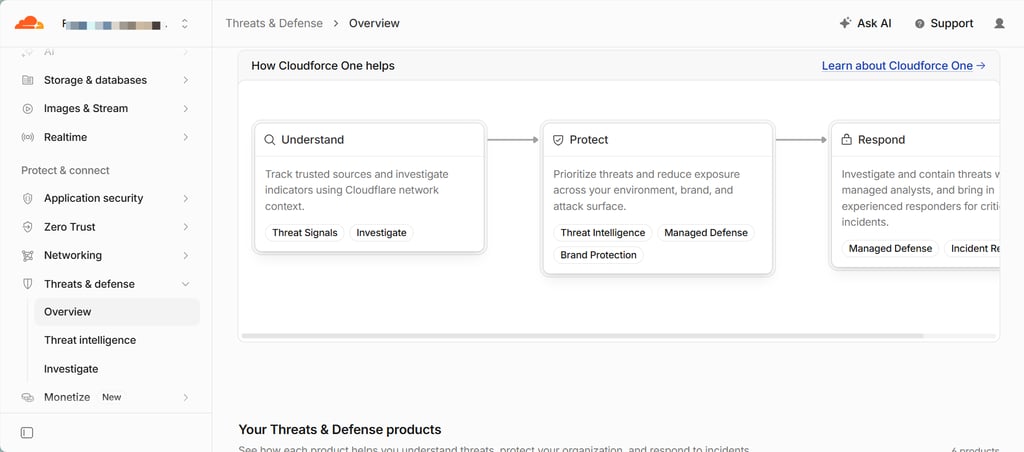
But while Cloudflare excels at securing web traffic and SaaS environments, its architecture may require an adjustment for certain IT teams. Companies that want deep network-level tunnelling or VPN replacements might not want to deal with Cloudflare's reverse-proxy system.
5. Twingate – best zero trust vendor for fast, simple deployment
| Starting price: | $5.00/user/month |
| Key strengths: | Incredibly fast, hardware-free setup that takes minutes to configure and smooth user experience |
| Main tradeoffs: | Not a broader security platform |
Twingate clinches the final spot on my list today by making zero trust something a small IT team can actually deploy. It separates identity, control, and data planes, so there’s no single point of failure, and it connects users directly to specific resources rather than routing everything through a central gateway.
Every connection is verified against identity, device security status, time of login, and geolocation, then checked against admin-defined policies. SSO integrates with Google Workspace, Okta, Entra ID, and JumpCloud, and MFA is built in natively, even if your identity provider doesn’t support it.
But again, simplicity is still the biggest draw, and it works for both IT teams and employees. It runs quietly in the background and only connects users to company applications when they need access. Employees don't have to manually connect or disconnect as they do with a traditional VPN.
However, Twingate mainly focuses on secure remote access and hiding company networks from threats. Businesses that need a wider range of security features like cloud security monitoring (CASB) or even web filtering will have to go for more advanced zero trust platforms.
Zero trust vendor comparison table
Here’s how the five vendors compare across the factors that matter most to mid-market buyers.
| Vendor | Best for | Mid-market fit | Identity and access controls | Segmentation support | Deployment complexity | Ideal company profile |
| NordLayer | Practical zero trust access without enterprise overhead | Excellent | SSO/MFA, device posture checks, IP allowlisting, app-level access | Network segmentation | Low | Mid-market teams wanting one platform covering identity, access, and segmentation |
| Zscaler | Cloud-native scale and architectural maturity | Moderate | ZTNA, IdP integration, device health checks | Workload segmentation | High | Organizations retiring VPN at scale |
| Palo Alto Networks | Security ecosystem standardization | Moderate | Cloud Identity Engine, Prisma Access ZTNA 2.0 | NGFW-driven microsegmentation | Medium | Companies looking to settle with one security vendor |
| Cloudflare | Distributed teams on a budget | Strong | Identity checks, clientless access | Limited east-west segmentation | Medium | Small to mid-market teams with technical staff |
| Twingate | Fast, simple ZTNA deployment | Strong | SSO, native MFA, device posture checks, per-resource policies | No network segments, only resource-level access | Low | Teams replacing VPN with minimal friction |

How to choose the right zero trust vendor for a mid-market company
Choosing a zero trust vendor for your organization can be tough, especially if you’re new to the concept or not overly familiar with it. Here are a couple of factors to consider.
The first is the size of your team and the number of users who need secure access. Some ZTA platforms are perfect for small teams with generous free tiers, while others work best with larger organizations. If you’re at 40 users today and hiring, consider what happens at 60 before you commit to any plan.
Next up, consider all the apps your company uses. If you generally have private apps behind your firewall, you might need ZTNA-first tools. A heavy SaaS footprint with outbound traffic to inspect calls for a platform with a stronger secure web gateway and CASB components. For mixed environments, both are required.
You then have to be honest about your IT capacity. If your security team is just two people, you don’t want to be going for tools with burdensome deployment. Platforms that require dedicated admins, migration projects, or weeks of configuration will likely tire everyone out and end up half-finished.
Decide whether identity controls alone are enough. Almost every ZTA platform will give you the identity-based access feature, but the real question is what happens after authentication. If you need segmentation between departments, firewall policy enforcement, or containment when a device is compromised, you’ll need a platform that goes beyond access gating.
Next, check your timeline because compliance deadlines and audit findings don’t wait. If you need working access controls this quarter, go for vendors that can be live in days rather than months.
Then ask the vendor about the total cost. It’s not just about seat pricing, but also about bandwidth charges, log retention limits, support tiers, and what happens when you exceed a usage cap.
Zero trust vs traditional VPN-centric security
Traditional VPN security works on a simple assumption that once a user is authenticated at the door, they are trusted inside. That used to be enough when everyone worked in the same building, and you could build firewalls around the general network perimeter. But that doesn’t make sense now, when staff and contractors log in from home or even from other countries.
A VPN grants network access, not application access, so once someone is connected, they can explore far more than their job requires. If someone steals your staff details, they can move laterally through the network and get anything they want.
Zero trust changes this by working under the assumption that nothing is trusted by default, even the users already inside. Every request gets verified against identity, device posture, and context before access is granted. Even that access is limited to the specific resource the user requested and not the whole network.
Conclusion
There’s no zero trust vendor that’s generally recognized as the best for all mid-market organizations. The right one depends on how complex your environment is, how much internal resources you can dedicate to running it, and how much control you actually need.
That’s why I organized my top zero trust vendor comparison list that way. Zscaler suits businesses that want cloud-native maturity and can handle the complexity, while Palo Alto Networks makes sense when you want zero trust as part of a broader suite of systems.
Cloudflare is strong for distributed teams with technical staff and tight budgets, and Twingate is the fastest path to ZTNA for small teams that are replacing VPN access.
But for most mid-market companies, NordLayer is the strongest all-around recommendation. It covers identity, access, segmentation, and network-level control in one platform. Deployment also takes minutes, and businesses get to benefit from Cloud Firewall, private gateways, and more.
FAQ
Who are the top zero trust vendors?
The best zero trust vendors include NordLayer, Zscaler, Palo Alto Networks, Cloudflare, and Twingate. NordLayer is best for mid-market access security with manageable deployment, Zscaler for cloud-native scale, Palo Alto for ecosystem integration, Cloudflare for distributed teams on a budget, and Twingate for fast, simple ZTNA rollouts.
What is the best zero trust vendor for mid-market companies?
NordLayer is the best fit for most mid-market companies. It combines SSO and MFA, device posture checks, department-level network segmentation, Cloud Firewall, private gateways, and IP allowlisting in one platform, and it deploys in minutes. You get the balance of capability and depth, which is ideal for small security teams.
What features should a zero trust vendor include?
The basics should be identity-based access with SSO and MFA, device posture checks that block unhealthy devices, and least-privilege policies that grant access per resource rather than per network. As your team grows, you can add more advanced features like network segmentation, cloud firewall enforcement, IP allowlisting, and detailed logging.
Is zero trust better than a traditional VPN?
Yes, for most modern work environments. A VPN grants broad network access once someone authenticates, so a stolen credential or compromised device can reach far more than it should. With zero trust, every request is verified, and access is limited to the specific resource, which limits lateral movement.
Can zero trust help with hybrid work security?
Yes, that’s one of the main reasons the entire architecture even exists. Zero trust verifies identity and device posture regardless of login location and grants access to only what’s needed. It also keeps the same enforcement standards for someone in the office and someone hundreds of miles away.