Safety or surveillance? Child location tracking is becoming the new normal
Being behind major reports like The Mother of All Breaches and RockYou2024, our in-house cybersecurity experts and journalists provide unbiased, real-world testing and in-depth analysis.
We maintain complete transparency by openly sharing our testing methodologies with our audience.
Learn more
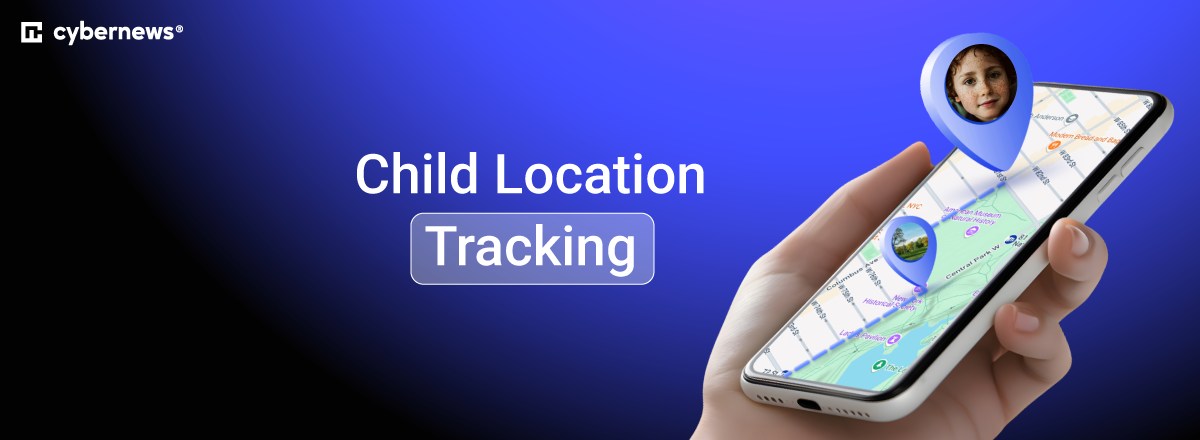
What once used to feel extreme now feels routine for many families: parents see child location tracking as protection. They feel better knowing where their children are, and they can stay connected and respond quickly if something goes wrong. Yet, critics worry that location tracking normalizes constant surveillance, raising important questions about trust and privacy.
As child location tracking tools become more and more common in everyday family life, it’s no longer about whether one should use them but how to do it safely.
I decided to conduct in-depth research, exploring why child location tracking is rising, what families gain from it, what they risk, and how to use tools like HeyPolo or Aura responsibly. So, let’s learn more about it together.
Why child location tracking has become so common
The growing popularity of the child location tracking apps reflects the changes in how families live and stay connected. For one, using smartphones has become a normal part of our daily lives, which makes it easier for parents and children to share their locations through built-in features and dedicated apps.
Modern family life is also busier than ever. Parents need to balance work while coordinating school pickups, extracurricular activities, sports practices, and visits to friends and relatives. Instead of relying on repeated phone calls or texts, location-sharing tools like HeyPolo confirm that everyone has arrived safely where they need to be.
Another important driver is the growing number of safety concerns. Thus, it’s normal that you wish to know your kid is safe at all times. Just knowing your child’s location can give you peace of mind without having to flood them with texts and calls.
With all of this in mind, family location sharing is not viewed only as emergency technology. Instead, it’s become a tool for managing busy schedules, staying informed, and keeping an eye on everyone from afar. Ultimately, the focus is on finding the right balance between convenience, safety, and your child’s privacy.
What parents actually want from a child location tracking app
Most parents use child location tracking apps for reducing everyday uncertainty, not for spying on their kids. Basically, they want reassurance rather than control, which is something I find important as well.
Usually, tracking your child’s phone location is for getting reliable information about successful arrivals and general safety. Instead of sending multiple messages asking, “Where are you?” or “Have you arrived yet?”, you can just check the location when you need it. This makes pickups smoother, helps you stay on schedule, and reduces unnecessary anxiety.
Ultimately, kid location tracking also provides peace of mind in unexpected situations. For example, if your kid is late or loses their phone, you can easily get insights into what’s going on before thinking the worst.
The case for safety: when child location tracking is genuinely useful
The strongest case for child location tracking is situational awareness, not total control. So, if you’re still wondering whether child location tracking is good for safety, let’s check out some of the most prominent use cases. These include:
- Commuting to school. The first use of a child safety app is that you can receive a notification when your kid arrives at school and when they leave. You get reassurance that everything’s okay and, simultaneously, encourage age-appropriate independence.
- Commuting alone for the first time. I still remember how worried my parents were when I went to my friend’s house alone for the first time. This is where GPS tracking for kids comes in handy for feeling more confident when your kids travel independently. And it doesn’t matter whether they walk, ride a bike, use public transport, or even catch a ride with their friends’ parents.
- Sports practice pickups. Thanks to real-time location updates from tools like HeyPolo, you can easily coordinate pickups when practices finish early, run late, or move to a different venue.
- Crowded public spaces. Imagine you’re at a festival, theme park, shopping mall, or another busy location. With location sharing, you can quickly reunite if you separate from your kids.
- Emergencies. If your kid is not on time, loses their phone, or you simply can’t get in touch, tracking the child’s phone location will give you useful information. Thus, you’ll be able to respond appropriately without panicking.
- Managing multiple caregivers. Last but not least, parental location monitoring can help when children spend time with grandparents, relatives, or babysitters. Thus, you can coordinate trusted family members or caregivers for pickups and drop-offs. As a result, you’ll reduce any confusion.
When safety turns into surveillance
The benefits of using a child location tracking app depend more on how you use the tool, not so much on the tool itself. In other words, you can easily undermine trust if you use the tool for monitoring every moment of your kids’ lives.
One of the biggest issues arises when you start constantly checking the location. If you initially open the app during school pickups, for example, you may start checking throughout the day, even when you don’t have a specific reason for concern. This can create more anxiety over time, instead of reducing it. Plus, you may start relying more on the app rather than open communication.
You must also keep in mind that silent monitoring can lead to mistrust. If your children feel like you’re always watching them, without clearly stating why, they may begin to see location tracking as a sign of mistrust. That can make it harder to build independence, responsibility, and confidence that you want the best for them.
Constant monitoring can also make it more difficult for children to become responsible and independent. This is especially important as your kids grow and become responsible for making good decisions. Note that you may unintentionally limit these opportunities if you start overusing the child safety app.
So, while child location tracking doesn't need to be intrusive, things can go awry quickly. It all depends on whether you use location tracking to support your family’s relationship or to replace communication with constant observation. If you use it with clear boundaries, transparency, and a focus on security, you can strengthen your kids’ trust.
What child development and family trust have to do with location tracking
As I briefly mentioned, location tracking is not just about managing your family’s safety. It can also affect how your kids develop independence and how trust grows over time. More precisely, children and teens need gradually increasing autonomy.
This can involve walking to school, visiting friends, or navigating local neighborhoods on their own. Regardless of the case, each of these experiences helps them build confidence, judgment, and decision-making skills.
When you use location tracking without discussing it with your kids, or without setting clear expectations, they can take it as a sign you don’t trust their choices. And while younger children may accept this as part of their routines, teens definitely value privacy and autonomy more. Feeling like they’re monitored without their knowledge can only create frustration and make them start hiding things from you.
On the other hand, tracking doesn’t have to destroy trust. If you talk openly about why location sharing is beneficial and when you’ll check it, it can create a healthier relationship and balance between safety and independence. Such conversations will help your children understand that your goal is to protect them during certain situations, not to constantly supervise them.
How to use child location tracking responsibly
Here’s a quick list of tips that will help you track your children’s phone location without becoming invasive. These worked well in my family when I was a teen:
- Tell children when tracking is on. Always inform your kids that you track their location. Open family communication is crucial for trust and showing that you care for their safety.
- Explain why it is being used. Make sure you highlight your safety concerns and explain that you check their location from time-to-time only so you can react if there’s some emergency.
- Use it for safety and logistics rather than constant monitoring. Avoid checking the location constantly. This will only frustrate your kids and ruin your relationship with them. Instead, use such apps for safety and coordination of daily activities.
- Set age-appropriate boundaries. Make sure that you don’t intrude on your kids’ privacy and independence. For example, if you have teenagers at home, use the app only for emergencies or driving alerts. However, if you have younger kids, you may choose to use it to occasionally check their whereabouts.
- Reduce reliance as children become more independent. Tightly related to the previous point, you should reduce the usage and reliance on location-sharing apps as your kids become more independent. For example, turn off the arrival alerts when they graduate from high school.
- Pair tracking with communication, not replace it. Last but not least, you should always talk openly with your loved ones. By having honest discussions, location-tracking can result in unbreakable bonds and trust.
What to look for in a child location tracking app
To evaluate whether the tool is supportive and family-friendly rather than intrusive, you should look for the following features in a child location tracking app:
- Real-time location updates. First of all, look for real-time updates. You want an app that has little to no delay in updating your child’s location. Some apps can update every few seconds, which enables you to react quickly if there’s any need.
- Easy check-ins. Search for simple navigation within the app, so your kids can easily check-in when they arrive. This will reduce the need for repetitive messages and calls.
- Simple family use. Make sure the dashboard lets you change the settings according to your needs and preferences. Also, look for family groups or circles, so you can communicate with all your members from the same platform.
- Privacy-conscious design. Always check the location privacy of the app you’re using to ensure your confidential data stays safe and is not shared with third parties. Also, establish whether the app deletes the location history after a while.
- Battery efficiency. Go for an app that’s gentle on your phone’s battery life, so you can go through the day without worrying whether your kids are safe or not.
- Clarity around permissions. Explore whether your kids can choose with who, when, and how they’ll share their location. Such clarity will make the whole experience better and non-intrusive.
- Low-friction communication features. Lastly, search for communication features, such as built-in messaging and alerts. This will help you coordinate from the same app without needing to download additional tools.
How HeyPolo fits the modern family safety model
If you’re looking for a location tracking app that will help your family stay connected without feeling invasive, you should check out HeyPolo. This is a modern, balanced option that’s built around family coordination, visibility, and peace of mind. More precisely, HeyPolo supports communication and safety rather than fear-based surveillance.
To achieve this, it utilizes customizable privacy controls. Therefore, your kids can choose whether they’ll share an accurate or an approximate location. Also, they can select with who and for how long they want to share it, which is perfect for staying safe and independent.
Aside from this, HeyPolo provides location updates every 5 seconds, as well as a one-click SOS button that sends alerts to the dedicated members in case of an emergency. You can also track driver reports, which monitor speed – great for families with driving teens.
There are also arrival and departure notifications, which let you know when your kid arrived or left a certain location, such as home, school, or a friend’s house. You can easily set geofencing from HeyPolo’s dashboard.
Thanks to all of this, HeyPolo helps you stay informed about your kids whereabouts, while leaving room for trust, routine, and age-appropriate independence. And with pricing that starts at just $1.99/month, keeping your family safer is more accessible than ever. If you want to learn more about this tool, check out our full HeyPolo review.
The future of child location tracking: normal, necessary, or overdone?
With all the evolving cybersecurity risks, busy family lives, and smartphone adoption, child location tracking is here to stay. In other words, family tech is becoming increasingly normal, but just because something has become standard, that doesn’t mean that boundaries should not exist.
Child location tracking can be genuinely helpful, but only when you use it intentionally and transparently. Luckily, HeyPolo can help you with this, as its features and privacy customization provide the right balance between ultimate safety for your kids and trust.
FAQ
Is child location tracking safe for families?
Yes, child location tracking is safe for families. You can stay on top of your kids’ whereabouts at any given time, which helps you react if there’s a need. However, you need an app that keeps your data safe and doesn’t sell it or share it with third parties. HeyPolo is my top recommendation.
What is the difference between child location tracking and surveillance?
Child location tracking is an intentional way of keeping your loved ones safe. It usually refers to checking their location only when they need to arrive somewhere or when you need to pick them up. In comparison, surveillance is about constantly monitoring where they are, which can cause a negative effect on trust and independence.
Can I track my child’s phone location without damaging trust?
Yes, you can track your child’s phone location without damaging trust. To achieve this, make sure you communicate openly, explain why you may check their location, and tell them about your goals of keeping them safe.
What should I look for in a child location tracking app?
When deciding which child location tracking app to use, look for features like real-time updates, easy check-ins, simple family use, privacy-conscious design, battery efficiency, clarity around permissions, and low-friction communication. These features will provide you with the right balance between screen-free safety habits and trust.
Why are more parents using kid location tracking apps now?
More parents are using kid location tracking apps due to the increasing number of safety concerns, technology evolution, and busy lifestyles. Such apps make coordination much easier and provide you with both convenience and peace of mind.
Is tracking a child phone location better than texting all the time?
Yes, tracking a child’s phone location is better than texting all the time. You’ll avoid sending repetitive texts and just be able to see where your kids are. However, make sure you do this only when your kid needs to, for example, arrive at a certain location, not all the time.
At what age should parents stop tracking their child’s location?
It’s best for parents to stop tracking their child’s location around the age of 18. This is when your teens are already becoming independent and require more autonomy. Plus, it’s crucial for them to make their own decisions without being monitored. However, ultimately, it all depends on the child and their needs.