NordLayer vs Tailscale: which secure remote access platform is better?
Our in-house cybersecurity experts and journalists, renowned for major reports like The Mother of All Breaches, conduct transparent, unbiased VPN testing and in-depth analysis.
With 750+ articles crafted based on real-world research, we empower readers to make informed purchasing decisions through first-hand expertise.
Learn more
NordLayer and Tailscale are among the most popular tools for users who want to access devices remotely. Both aim to replace legacy, hardware-based VPNs through modern networks, robust encryption, and identity-based access controls. Moreover, both are good choices for remote and hybrid teams, though they focus on different aspects.
NordLayer combines managed remote access with security controls, creating a user-friendly tool for connecting and protecting remote workforces of all sizes. Tailscale is all about device-to-device connections and offers features better suited to individuals and smaller, dev-first teams. But that’s just the tip of the iceberg.
In this article, I dig into both platforms to see what they offer and help you make an informed decision. Below is an in-depth NordLayer vs Tailscale comparison covering pricing, features, ease of use, compatibility, and customer support.




We spare no effort to test the products & their features. All information is gathered by our in-house research team & fact-checked by our team of experts. Discover the ins and outs of our testing procedures.
NordLayer vs Tailscale at a glance
Before I get into the nitty-gritty, let’s take a quick look at both NordLayer and Tailscale and see how they stack up against each other in key areas:
| NordLayer | Tailscale | |
| Rating | ||
| Pricing | From $10/user/month (monthly pricing); From $8.00 /user/month (with an annual plan) | Free for personal projects and teams of up to six users; From $8/user/month for larger teams |
| Network model | Hub-and-spoke, cloud gateways, central management | Peer-to-peer mesh networks |
| Key features | Cloud firewall, Shared and Private Gateways, central admin dashboard, website filtering, DPI, device posture checks | Automatic NAT traversal, DERP relays, fine-grained ACLs, Tailscale SSH, MagicDNS, subnet routers |
| Ease of use | High (beginner-friendly setup within 10 minutes) | Moderate (advanced DNS routing and ACL policies require technical teams) |
| Platform support | Windows, macOS, Linux, Android, iOS, NordLayer browser, browser extensions | Windows, macOS, Linux, Android, iOS, ChromeOS, tvOS, Amazon Fire OS, Docker, Kubernetes, TrueNAS, Synology, QNAP, UniFi, pfSense, OPNsense |
| Customer support | 24/7 live chat and email | Business hours (Standard support) and paid SLAs for 24/7 coverage |

About NordLayer
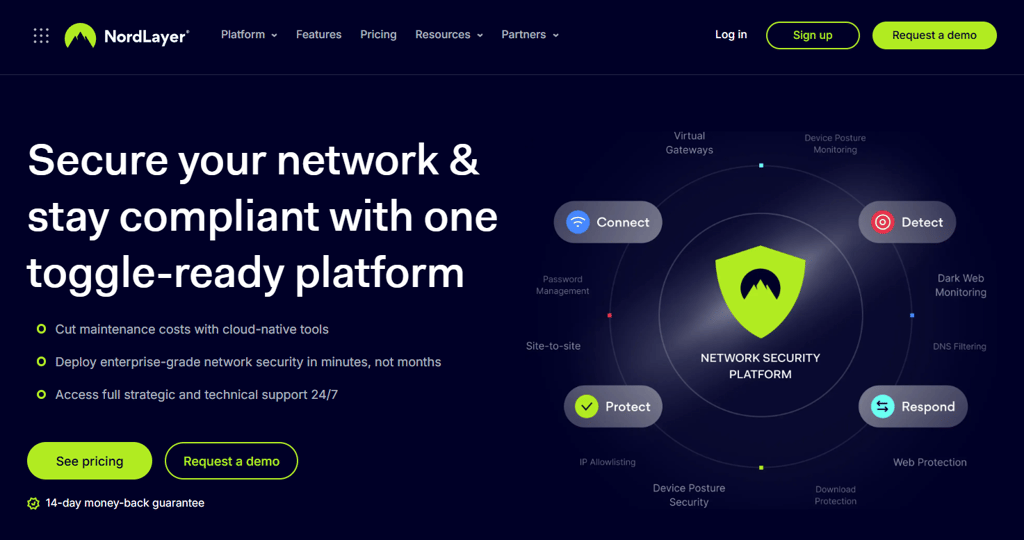
NordLayer is a cloud-based network security and business VPN platform that provides private app access and safely connects remote workers and hybrid teams to company resources. Built on zero-trust principles, it provides granular identity- and role-based access controls, supports NordLynx and OpenVPN protocols, and integrates with identity providers like Google and Okta.

The all-in-one platform gives teams a centralized admin dashboard to connect users to private organizational resources and apps, segment office networks, and control access through virtual private gateways and policies. Overall, it’s a robust option for teams that want business VPNs, zero trust network access (ZTNA), and security features in a single service.
About Tailscale
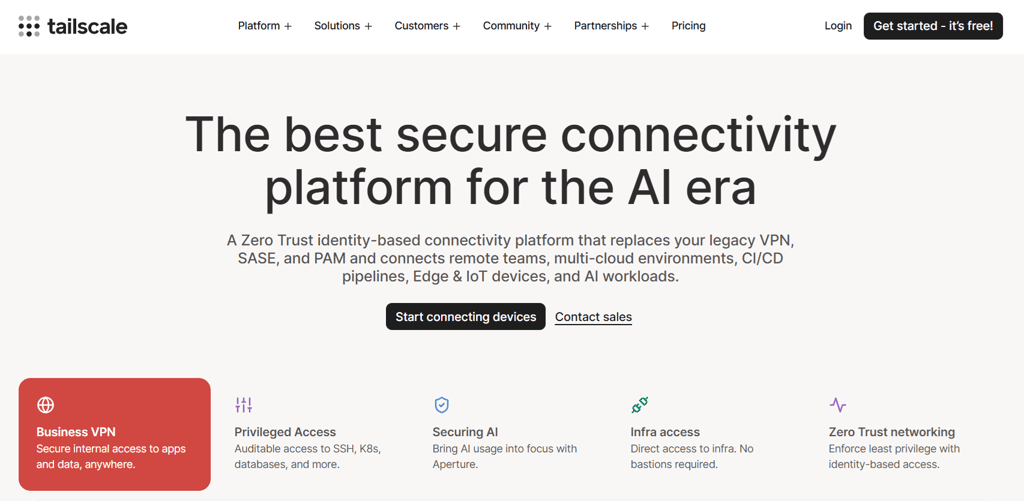
Founded in 2019 by former Google engineers, Tailscale focuses on simplifying secure network access. This zero-config, zero-trust, identity-based platform replaces legacy virtual private networks (VPNs) by leveraging the WireGuard protocol to create secure peer-to-peer (P2P) mesh networks called tailnets.
With Tailscale, you get to link your PCs, laptops, phones, tablets, TVs, home servers, and virtual machines (VMs) into a single private network. Any of these devices can connect to one another from anywhere in the world because a tailnet makes them appear to be next to each other. You can also set any of these up as an exit node and use Tailscale as a traditional VPN.
How I evaluated NordLayer and Tailscale
To keep this comparison as unbiased as possible, I reviewed each platform’s website, pricing pages, setup guides, and official documentation. Then, I compared NordLayer and Tailscale across these key areas:
- Pricing (30%). Price is a major factor for both individuals and businesses, so I started there. I first compared NordLayer and Tailscale’s plans, billing options, and minimum user counts, and I also looked at add-on costs.
- Features and security (25%). Networking tools rarely stop at connecting two devices. They verify users, control access, encrypt traffic, and safeguard networks. Some even prevent threats through DNS filtering and AI-powered malware/ransomware detection.
- Ease of use (20%). It’s not only about what a tool can do. How easy it is to use matters just as much. With that in mind, I examined each platform’s setup guides to see how quickly both non-technical individuals and tech-savvy teams can roll them out, configure networks and connections, and set up advanced features.
- OS support (15%). A Windows-only tool won’t do much good for a team of Linux devs and vice versa. That’s why I checked how each fares in terms of compatibility, including which platforms they’re available on, whether there’s an app for that operating system, and whether any devices lack certain features.
- Customer support (10%). Last but not least, I examined each provider’s contact channels, support hours, and the quality of their technical documentation. I also looked at whether the plan choice affects customer support quality and deducted a few points if it does.
Key differences between NordLayer and Tailscale
While both NordLayer and Tailscale let you securely connect to other devices anywhere in the world, the way they do so differs significantly.
Network architecture
NordLayer started as a business VPN solution but has since evolved into a cloud-based secure service edge (SSE) platform. Remote users connect through NordLynx (WireGuard-based) or OpenVPN, while site-to-site connections use IPsec with IKE. The platform also integrates ZTNA, firewall-as-a-service (FWaaS), and secure web gateway (SWG) features, including device posture monitoring and DNS filtering.
In contrast, Tailscale focuses on direct connections. Its WireGuard-based P2P mesh networks (tailnets) link authorized devices node-to-node, bypassing central gateways in most cases. They only operate differently when NAT constraints prevent direct P2P WireGuard connections. In that case, Tailscale falls back to the designated encrypted relay for packet (DERP) servers.
Primary use cases
How these two platforms approach connections also determines what they’re used for.
NordLayer focuses on corporate remote access, using ZTNA protocols to provide secure, encrypted access to company servers and internal apps without exposing entire networks. It also routes traffic through dedicated IPs and cloud-based firewalls to satisfy compliance requirements like SOC 2 and HIPAA.
Meanwhile, Tailscale is geared much more toward personal use and development teams. For example, tech-savvy individuals often use it to access home network-attached storage (NAS) devices and media servers like Plex from outside the home network. Conversely, devs and engineers use it to connect distributed development environments and staging servers.
Management
Another key difference between them is how sysadmins control networks, users, and access rules.
With NordLayer, almost anyone can set things up after a bit of research and a few YouTube tutorials. You get a polished, beginner-friendly, point-and-click control panel that serves as a centralized admin dashboard. This works wonders for teams that need to manage policies, filtering, and logs for audit and compliance purposes.
On the other hand, Tailscale is a zero-config tool that lets almost anyone set up a P2P mesh network in a few minutes. That said, configuring advanced features like DNS routing and access control list (ACL) policies to define which users, devices, or services can access specific resources requires a more technical team.
Similarities between NordLayer and Tailscale
Although NordLayer and Tailscale have different architectures and target different users, they also share many features.
For starters, both leverage WireGuard technology. One of NordLayer’s two protocols, NordLynx, is based on it, while Tailscale is built directly on it. This means both platforms use the same high-security cryptographic foundation, including Curve25519 for key exchange, ChaCha20-Poly1305 for authenticated encryption, and BLAKE2s for hashing.
On another note, both platforms move away from traditional, hardware-based corporate VPNs toward cloud-managed solutions that adhere to zero-trust principles. In other words, when properly configured, no user or device gets automatic access to a network or its resources. Admins define who can access what, and each connection requires authorization.
NordLayer and Tailscale also share core identity and access management (IAM) philosophies, as both allow you to authenticate with an external identity provider (IdP). For NordLayer, that means Google, Entra ID, Okta, OneLogin, and JumpCloud, while Tailscale goes even further, offering integrations and support for custom OpenID Connect (OIDC) providers.
Another area both NordLayer and Tailscale excel in is device security. Both platforms assess operating system versions to stop outdated devices from accessing networks, resources, and internal apps. With a bit of configuration, they also evaluate the device’s health and state, rather than granting access solely based on user credentials.
Finally, both platforms bill per user, but they don’t cost the same, which brings us to the first important factor to consider when choosing between NordLayer and Tailscale.
NordLayer vs Tailscale: pricing
Though you can try both platforms before committing, with NordLayer offering a 14-day money-back guarantee and Tailscale offering a 14-day Enterprise trial, they still differ in price.
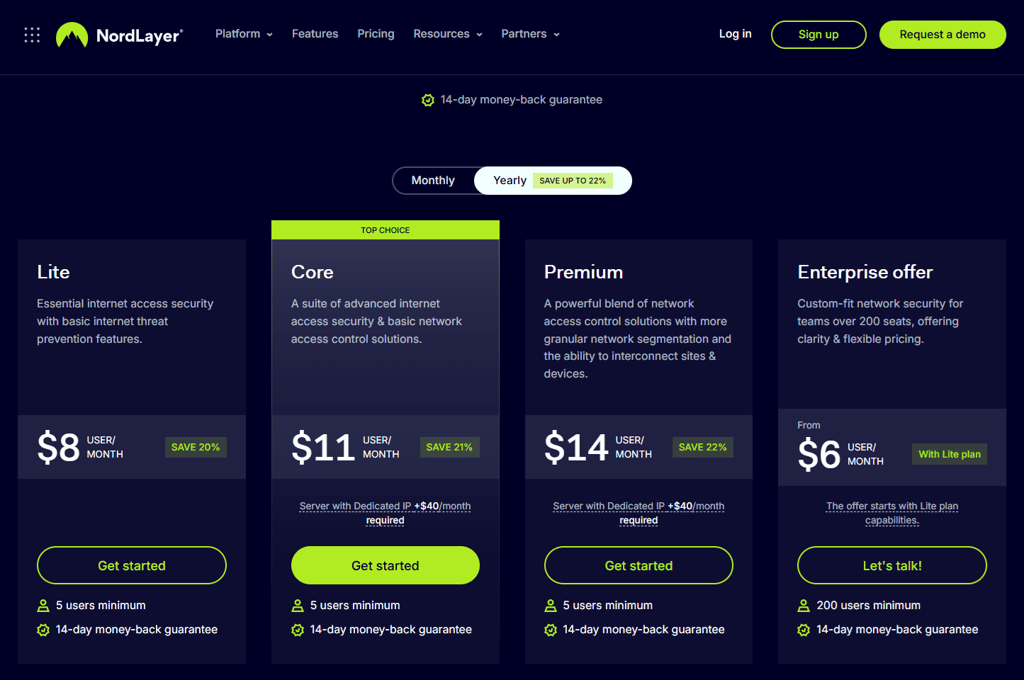
NordLayer’s Lite plan starts at $8.00/user/month with annual billing or $10.00/user/month with monthly billing, with a five-user minimum. It includes:
- NordLynx and OpenVPN (UDP and TCP) protocols up to 1Gbps
- Access to 40+ locations for Shared Gateways
- Automated malicious domain detection and anti-malware protection
- Multi-platform support with up to six devices per license
- Multi-factor authentication and single sign-on (SSO) authorization
- 24/7 live chat and email support
If you want cloud firewalls (FWaaS), device posture security and monitoring, split tunneling capabilities, DNS filtering or custom DNS, or a dedicated account manager, you’ll have to upgrade to one of these tiers:
- Core starts at $11.00/user/month with annual billing, plus a required Server with Dedicated IP at $40.00/month
- Premium starts at $14.00/user/month with annual billing, plus a required Server with Dedicated IP at $40.00/month
- Enterprise requires 200 seats and starts at $6.00/user/month for Lite
A Virtual Private Gateway requires a Server with Dedicated IP, available with Core, Premium, or a custom subscription.
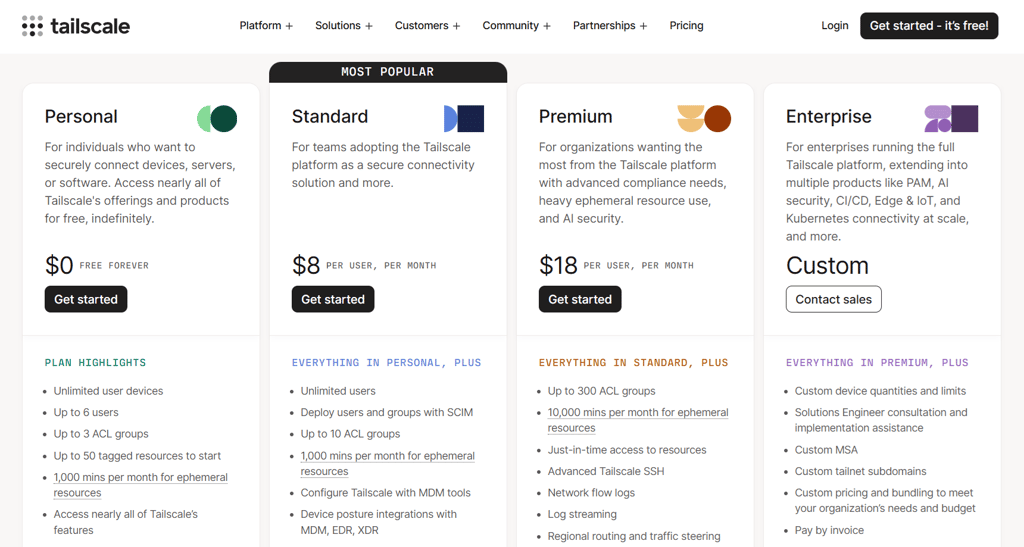
On the other hand, Tailscale kicks things off with a free Personal tier for up to six users. It’s intended for individuals, personal projects, and even smaller teams, and it supports:
- Unlimited number of devices
- ACLs and up to three ACL groups
- Relays
- Basic SSH connections
- Basic device posture security
- SSO with any IdP
- Standard customer support
When it comes to paid plans, Tailscale gives you three options:
- Standard ($8/user/month). Increases the number of ACL groups to 10 and adds device posture integrations and advanced user roles
- Premium ($18/user/month). Ups it to 300 ACL groups and adds advanced SSH, regional routing, and network flow logs
- Enterprise (custom pricing). Offers custom tailnet subdomains, MSAs, and pay-by-invoice options
Beyond accommodating teams of more than six users, the three paid plans also let users purchase SLA-backed support in Silver, Gold, and Platinum tiers, with only Gold and Platinum offering 24/7 coverage.

NordLayer vs Tailscale: features
While both NordLayer and Tailscale use WireGuard-based encryption, they focus on different security aspects.
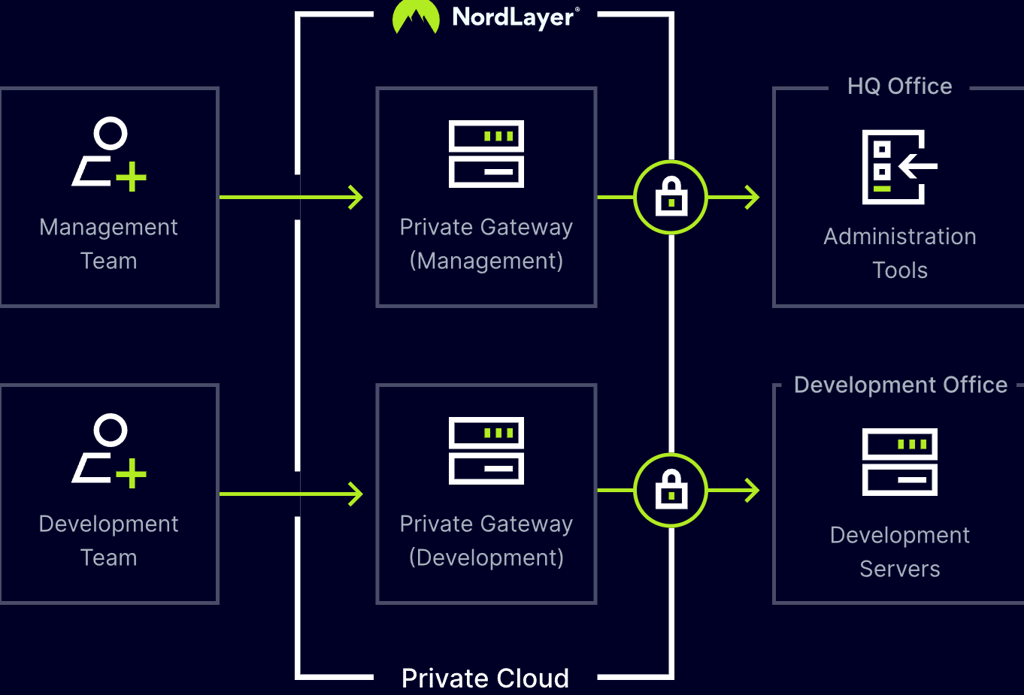
The former uses a hub-and-spoke network model with managed cloud gateways and is geared toward organizations that want to segment departments and networks. For instance, you could give finance staff access to accounting systems and keep the rest of the company from connecting to them.
NordLayer also blocks malicious sites and apps, provides web filtering and DPI, supports MFA and SSO, and allows admins to enforce network-level filtering and access rules. Combined with device posture security, it’s an excellent all-rounder for companies with remote teams that want to restrict access to internal resources while protecting their users’ day-to-day browsing.
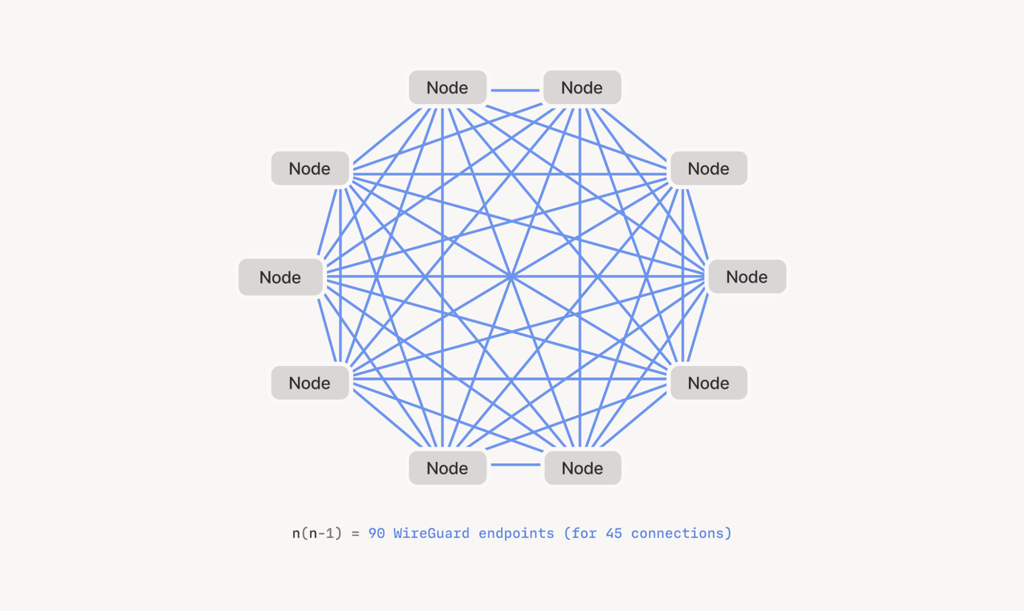
Tailscale’s features, by contrast, are P2P-first. Since traffic flows node-to-node, you control which users or devices can communicate with one another using ACLs and tags. There’s no DPI or web filtering here; the platform is end-to-end encrypted, and private keys stay on local nodes. If P2P NAT traversal fails, fallback DERP servers relay traffic without inspecting data.
Device posture checks are also available, and Tailscale enforces security policies based on said device attributes, not just the user’s credentials. Moreover, it integrates with most major SSO providers and offers MFA for node-to-node access controls.
NordLayer vs Tailscale: ease of deployment and management
A strong feature set is undoubtedly crucial, but how easy those features are to use matters just as much, if not more. With that in mind, let’s see how these two platforms stack up in terms of rollout speed and administration.
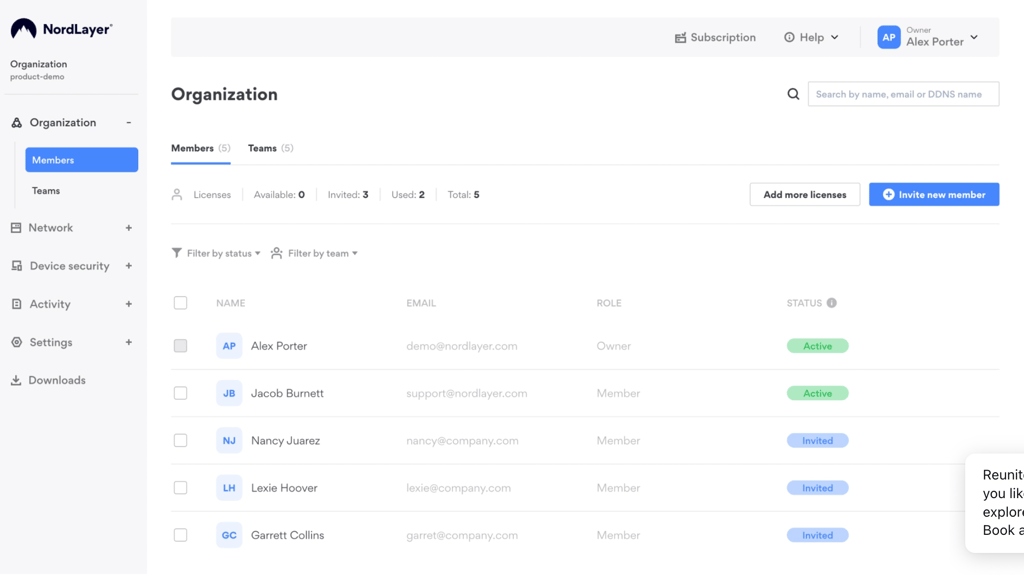
With NordLayer’s ZTNA and SSE platform being geared toward businesses, admins get a centralized dashboard to deploy the networking tool across all major operating systems. You create an organization, invite users to install a client on their devices, and decide what each one can reach: Shared Gateways for general security or Private Gateways for IP allowlisting.
Network segmentation can be configured as needed, but creating a Virtual Private Gateway requires a Server with Dedicated IP. But even with these, the whole setup shouldn’t take more than a few hours. From there, it’s smooth sailing, with a beginner-friendly dashboard for centralized oversight.
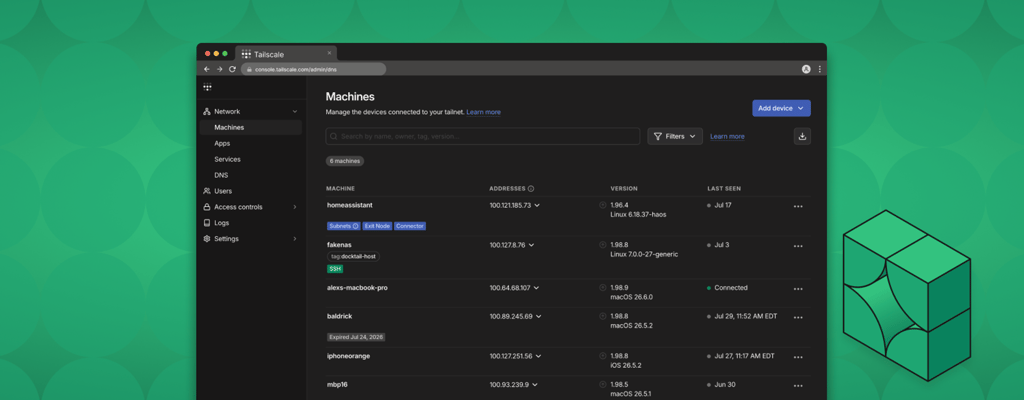
Tailscale can be even easier to use. I found its zero-config setup to be even faster than NordLayer, since you only need to set up a tailnet, install apps on your devices, and connect them via Tailscale IPs. MagicDNS gives each device a hostname, so you don’t need manual port forwarding, either. NAT traversal is automatic, and DERP relays take over if it fails.
The harder part comes after, though, as the platform offers minimal centralized policy management. A good ACL policy requires tech-savvy IT with real networking knowledge, as well. All in all, it’s a great fit for homelab users and small dev teams that just want to connect a few devices, but it’s certainly geared toward tech-comfortable users rather than generalists.
NordLayer vs Tailscale: compatibility
Platform support determines which devices and operating systems you’ll be able to use these tools and their robust features on.
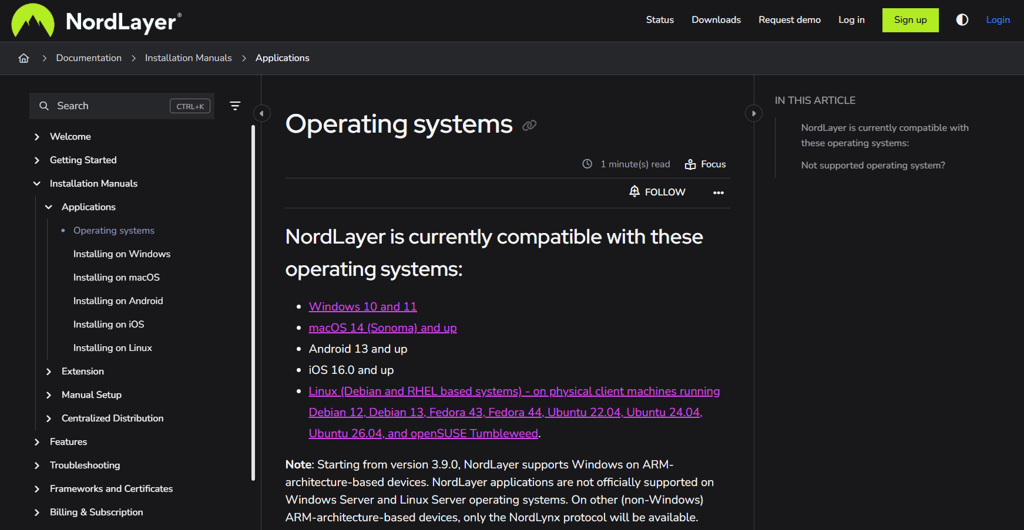
NordLayer works with most major operating systems, including:
- Windows 10 and 11 (x64 and ARM)
- macOS 14 (Sonoma) and up
- Android 13 and up
- iOS 16.0 and up
- Linux (Debian, RHEL, Fedora, Ubuntu, and openSUSE)
It also supports browser-based access through dedicated extensions for Google Chrome, Brave, Mozilla Firefox, and Microsoft Edge, as well as its own NordLayer Browser.
Beyond OSs, NordLayer handles SSO through various IdPs, including Entra ID, Google, Okta, OneLogin, and JumpCloud. Its security integrations include CrowdStrike Falcon Next-Gen SIEM for log forwarding, SentinelOne for disconnecting devices flagged as malicious, and webhook-based Custom Integrations for automated incident response.
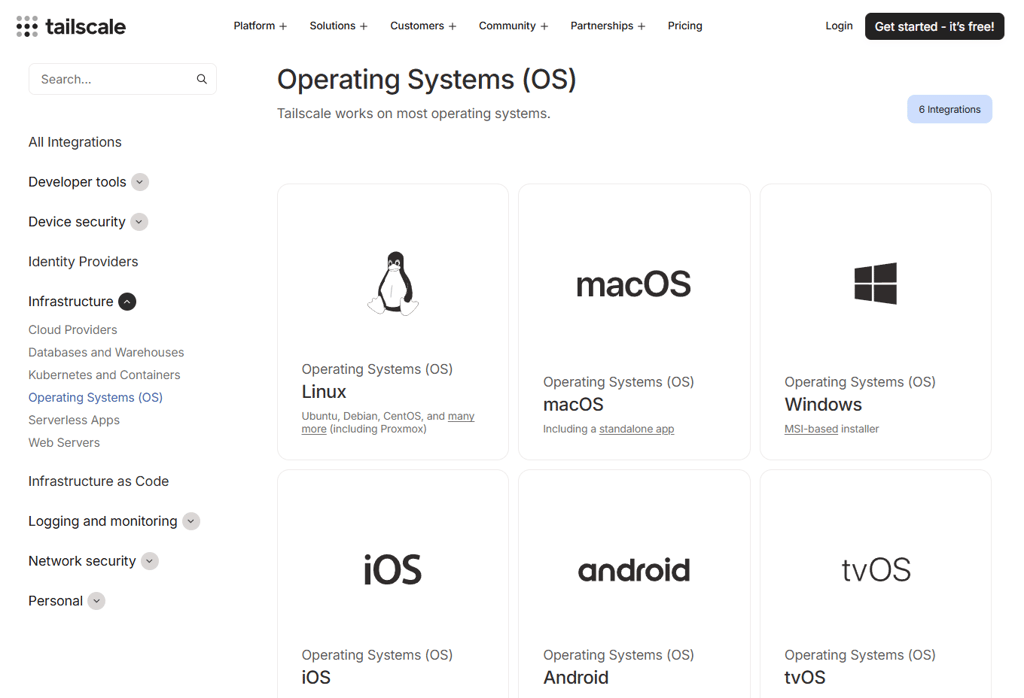
As for Tailscale, you get support for an even wider range of devices. These include:
- Windows (standard, MSI, and WSL 2), macOS, and Linux (Debian, Ubuntu, Fedora, RHEL, Arch, etc.) desktops
- Android and iOS smartphones and tablets
- Apple TV and Amazon Fire streaming devices
- Chromebooks
- Docker and Kubernetes containers
- Synology, TrueNAS, and QNAP NAS devices
- UniFi, OPNsense, and pfSense routers
Tailscale also works with a broader range of IdPs, adding GitHub and custom OIDC support on top of everything NordLayer offers. It also integrates with several mobile device management (MDM) solutions, including Jamf, SimpleMDM, and TinyMDM, to automate mass deployment and simplify policy enforcement.
NordLayer vs Tailscale: customer support
Though both NordLayer and Tailscale offer beginner-friendly setups, strong support can be instrumental for advanced configurations, management, and troubleshooting.
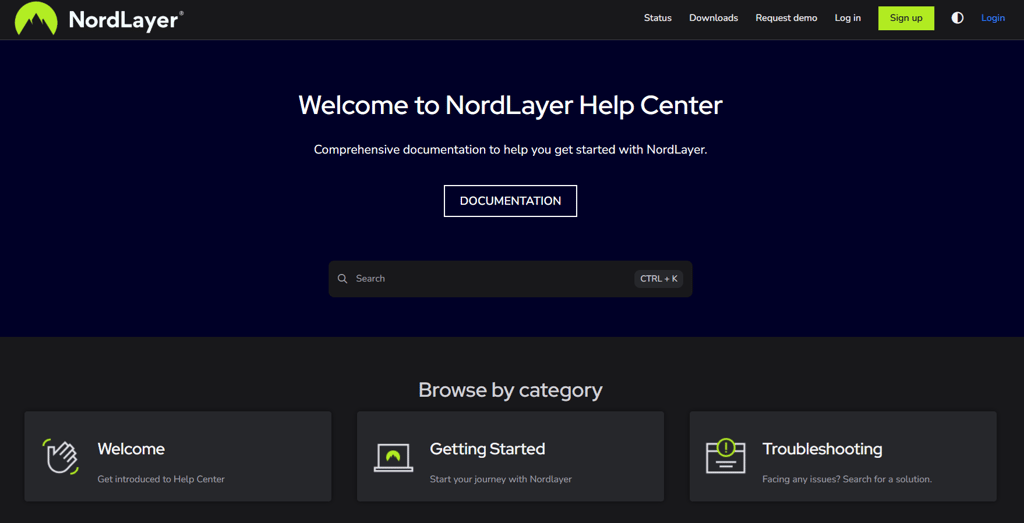
On the NordLayer side, you get a massive help center with comprehensive, neatly organized documentation. The same applies to its FAQs and tutorials.
If you don’t find what you’re looking for here, you can use the 24/7 live chat, which starts with AI assistance. The chatbot automatically routes complex issues to a human agent, though I never got that far, as the AI’s instructions were more than helpful.
And if you just have a non-urgent question, you can also use email support ([email protected]), which responded to me in less than an hour.
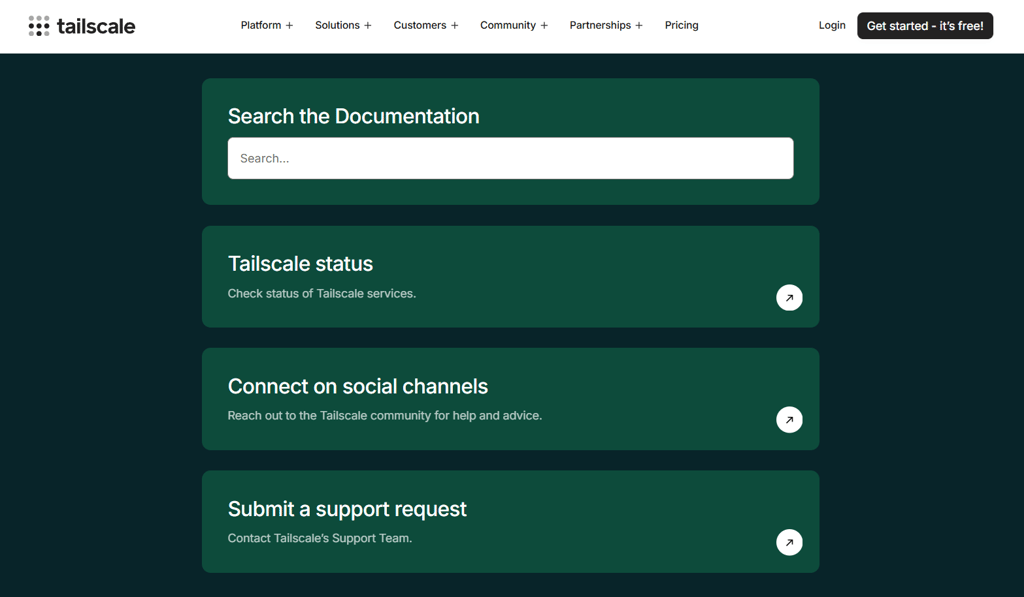
Tailscale’s customer support pales in comparison. Yes, there’s plenty of documentation here, too, and you can get support from the Tailscale community, on social media, or by filling out a contact form. You can also email support, though agents are only available between 9 AM and 6 AM Eastern Time, Monday through Friday.
After emailing Tailscale, I got a response within two hours and helpful instructions for my Raspberry Pi project. Still, this is essentially best-effort support during business hours, with no guaranteed response times. For more predictable support, Tailscale offers three tiers of SLA-backed support:
- Silver, which offers contracted first-response SLAs during business hours
- Gold, which includes faster first-response SLAs and 24/7 Severity 1 issue coverage
- Platinum, which includes 24/7 coverage for Severity 1 and Severity 2 issues and offers the fastest first-response SLAs
Final verdict: which one should you choose?
NordLayer and Tailscale are both excellent networking and secure remote access tools. Both support distributed teams and let you control which devices can interact with each other and which users can access which network resources. But they do so very differently and serve fundamentally different purposes as a result.
NordLayer is a better pick for organizations that need to manage workforce access to internal apps, sensitive data, and other business resources. It offers robust built-in security for day-to-day browsing, a centralized dashboard for easy administration, Shared and Private Gateways, and 24/7 support. All this makes it a strong fit for businesses.
Tailscale is a great choice for individuals and smaller teams. Its mesh P2P networks, Personal plan, zero-config setup, and support for a wide range of devices can be particularly appealing for home servers and homelabs. However, its management tools are undoubtedly geared more toward tech-savvy users, such as developers and engineers.
FAQ
Which is better for business, NordLayer or Tailscale?
While NordLayer focuses heavily on business use cases, the best choice still depends on your needs. Go with NordLayer if you want a cloud-managed service with Shared or Private Gateways and web filtering for day-to-day security. Pick Tailscale if you want to skip gateways and connect devices node-to-node.
Is NordLayer the same as NordVPN?
No, NordLayer and NordVPN are different products, even if both come from the same parent company, Nord Security. The former is a network security, ZTNA, and SSE platform built for businesses, whereas the latter is a consumer-facing VPN for personal online privacy.
Which is easier to set up, NordLayer or Tailscale?
Thanks to its zero-config setup, Tailscale is generally considered easier to deploy than NordLayer initially, especially for quick device-to-device linking and smaller networks. That said, NordLayer can be more convenient for larger setups, as its centralized dashboard makes it easy to mass-deploy parameters once configured.
Is Tailscale open source?
Yes, Tailscale is open source, but only partially. Its data plane is built on the open-source WireGuard protocol, and its Linux and Android apps, CLI, and DERP server code are also open source. However, its control server and GUIs for Windows, macOS, and iOS apps remain closed source.
Can I use NordLayer or Tailscale for free?
You can use Tailscale for free on its Personal, non-commercial plan, which supports unlimited devices and up to six users. NordLayer doesn’t offer a free tier, though it does include a 14-day money-back guarantee. After that, its entry-level Lite plan requires at least five users and costs $8/user/month with an annual subscription.