Hume Body Pod 2.0. review: What’s new?
Being behind major reports like The Mother of All Breaches and RockYou2024, our in-house cybersecurity experts and journalists provide unbiased, real-world testing and in-depth analysis.
We maintain complete transparency by openly sharing our testing methodologies with our audience.
Learn more

Hume Health has launched its latest 3D body scale, Hume Body Pod 2.0. We had our hands (and feet) on the older version, so naturally, we are excited about this product as well — not only to compare it with the older version but also against other similar products on the market.
This is an early review of the product, so the review will be updated as we learn more and test the device ourselves. Now, the focus of this article is to give you a better understanding of what upgrades you can expect with Pod 2.0.
What is new at a glance
Hume Body Pod 2.0 has several hardware refinements, but the added “intelligence layer” is the biggest change from the previous generation. Here are some key nuances regarding the upgrade:
- Hume HealthOS. Your body scans are now connected to your other health data, including sleep, activity, recovery, heart health, and nutrition.
- Hume AI. While Hume Health has been using AI to help its users understand data for a while, the brand is now placing even greater emphasis on interpreting scan results alongside connected health data.
- Digital twin. Hume is introducing a model of your body that updates as your body composition changes over time. It is one of the clearest signs that Pod 2.0 is leaning more into visual progress tracking, rather than simply presenting raw numbers.
- Heart-rate capture. A new metric tracked as part of each scan.
- New sensor technology. While the core technology remains familiar, Hume says the sensors themselves have been upgraded.
Visually, the two versions are also different, with Pod 2.0 feeling more refined and more distinctly Hume Health in its design language. It looks less like a generic smart scale and more like part of the brand’s wider health-tech ecosystem, helped by the prominent Hume logo on the device itself. It now also comes in two colors, black and white, so buyers can choose the one that best fits their home interior.
What is Hume Body Pod 2.0?
Pod 2.0 is best understood as an at-home 3D body scanner designed to track change beyond weight.
That means the scan itself is only one part of the pitch. The bigger idea is to make regular check-ins more informative, so you can follow changes in body composition over time rather than relying on weight alone.
In the Hume Health app, those scans sit alongside other health signals such as sleep, activity, recovery, heart health, and nutrition.
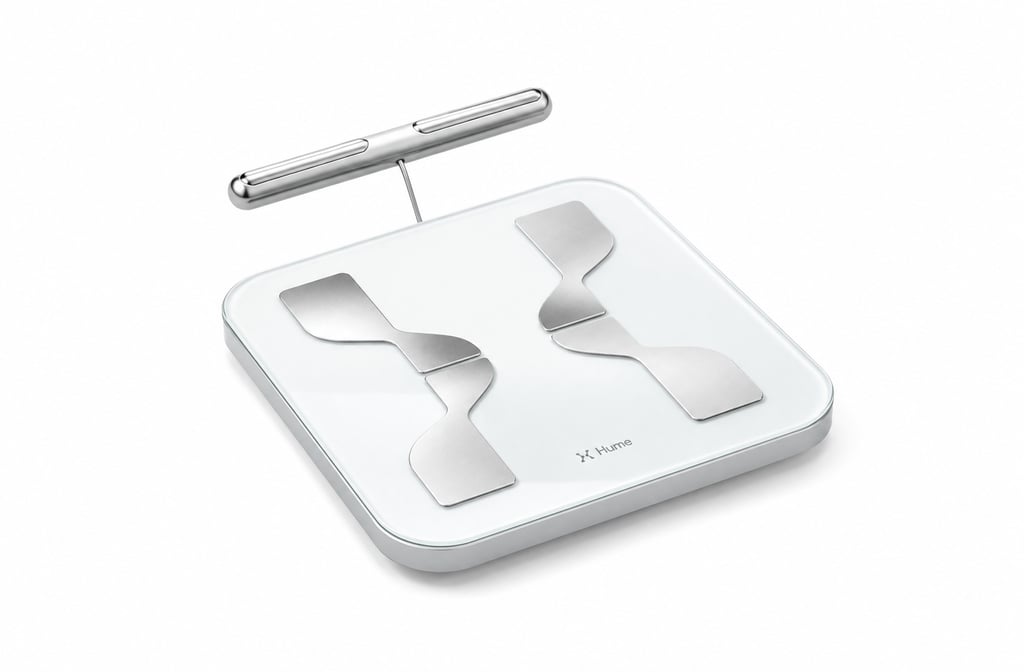
It works together with the Hume Band 2.0, making the scan feel less like a standalone device and more like part of a wider health system. In that setup, your 3D body scan does not sit in isolation: it becomes part of a fuller picture that combines body composition with the underlying patterns.
In other words, Hume wants this to feel closer to a health platform than just a bathroom scale. The original Body Pod already offered in-depth body composition tracking; now it should be even more connected to a broader system, so we are not just talking about weight or fat loss. This matches what the brand has been doing for years now: shifting the conversation from short-term weight management toward a broader, longevity-focused approach to fitness.
What seems unchanged?
The core body-composition tracking remains intact. Pod 2.0 is not being pitched as a radically different measuring device so much as a more refined and better-connected one.
For instance, we’ll still have 45 metrics, 8-frequency BIA, free base app, and tempered glass platform, although slightly different visually as well.
So if your main interest is still the raw numbers—body fat, muscle mass, water, segmental readings, and trend tracking—the upgrade this time will feel fairly modest. Pod 2.0 looks less like a complete rethink of the measuring hardware and more like a smarter, more connected version of the same core idea.
Accuracy-wise, the brand continues to claim 99% body-fat accuracy compared to DEXA and 97% lean-mass accuracy versus clinical-grade scanning. Keep in mind that while the 3D body scale is a great tool for tracking changes in your body composition, it should not be treated as a medical device, and the measurements shouldn’t be used to diagnose health conditions.
Features and specs
As mentioned, Hume Body Pod 2.0 is built around the same core promise, and most features and specs are the same — although with Pod 2.0, you will get more insights after the scan.
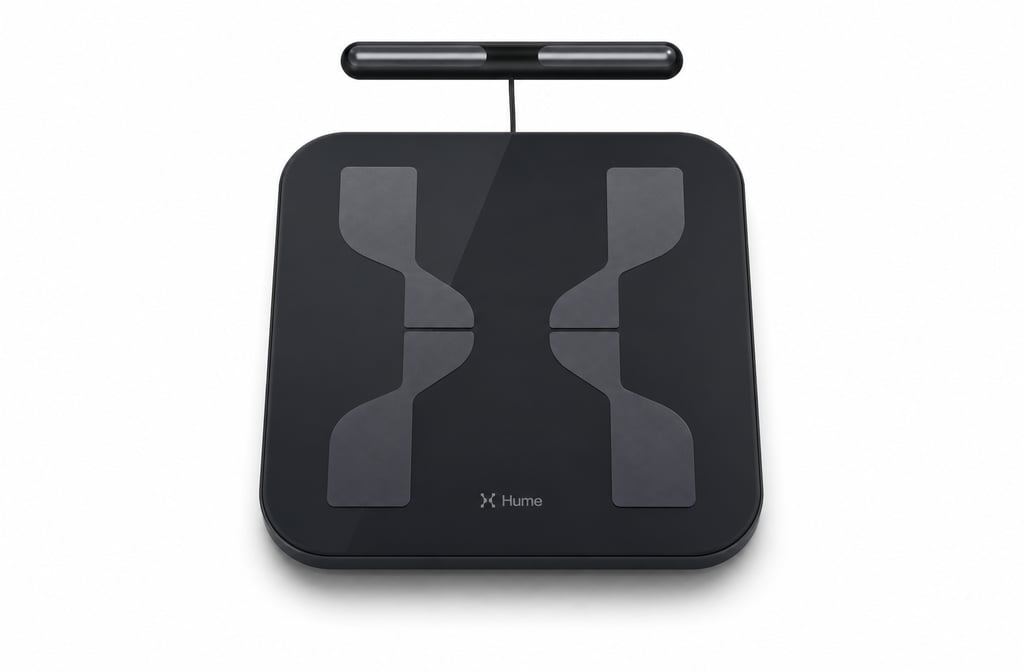
For instance, these remain the same:
- 45 body-composition metrics. These include weight, segmental muscle and fat mass, visceral fat, hydration, and bone density estimations.
- Multiple user support. Each user can have their own account and track their progress separately. At the moment, up to 24 users are supported.
- Segmented measurements. The scale uses both the footplates and a handheld sensor to take readings across the upper and lower body.
- Rechargeable. Both versions use rechargeable batteries, so you don't need to replace them.
Even before Pod 2.0, we ranked Hume Health Body Pod among the best smart scales we tested — so we expect the newer version to be a top contender as well.
Honest verdict: Should you upgrade?
The real upgrade in Hume Body Pod 2.0 is not that it suddenly measures far more than the old Pod — it’s that the Hume app is now doing more with the data once the scan is finished.
From what we know so far, upgrading from an older Body Pod doesn’t seem essential, but can be appealing for users who want their metrics explained and connected to sleep, activity, and recovery. The newer version is tailored to give more insights each time you scan, so you can better understand your progress and adjust accordingly.
Moreover, if you don't own a smart scale yet, Pod 2.0 is definitely a sleek, top-tier choice to consider. More than that, it feels positioned as a premium at-home 3D body scanner built around understanding progress beyond weight alone, rather than simply logging another weigh-in.