Plugging an LG monitor into a Windows computer installs a potentially unwanted program
Even a premium LG monitor forces unwanted software that peddles antivirus subscriptions.

Image by Shutterstock.

 Follow us
- LG monitors auto-install potentially unwanted software without user consent.
- The app aggressively pushes McAfee subscription ads, raising concerns about spyware and privacy.
- Removing the software is simple, but preventing re-installation requires complex manual configuration.
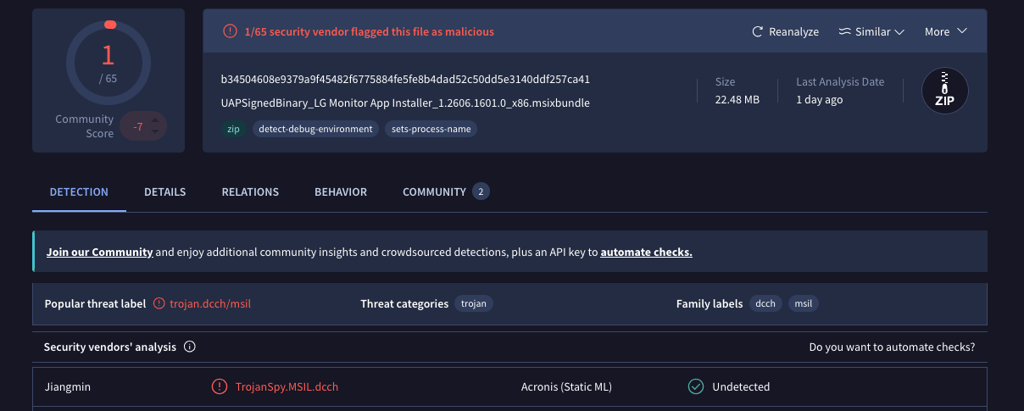
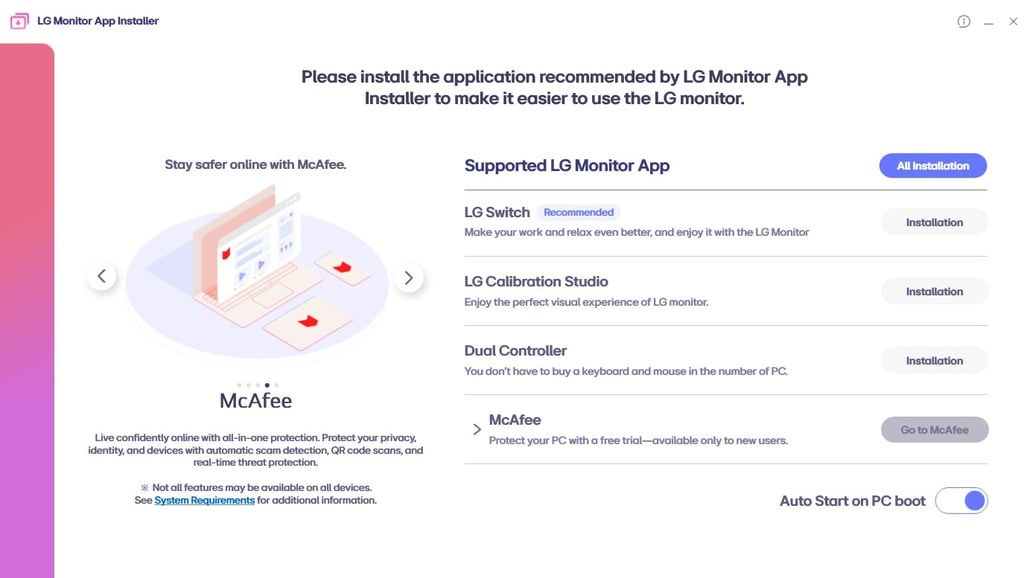
Users are expressing frustration over their LG monitors installing a potentially unwanted program that displays ads promoting McAfee subscriptions. Chinese antivirus vendor Jiangmin flags this installer as malicious spyware, suggesting it might also include data-collection behavior.
Simply plug an LG monitor into the computer, and Windows Update will pull a legitimately signed app “LG Monitor App Installer.” No user confirmation is ever requested, and there’s no notification. However, the app gains broad “All System Resources” and internet access, boots on startup, then injects ad pop-ups after each boot.
The shady auto-install practices were first reported by multiple Reddit users, who complained about being shown unwanted McAfee advertisements, which were traced back to the “LG Monitor App Installer.”




Gamers Nexus (GN), a PC hardware reviews YouTube channel, independently tested and verified this behavior. The host, Steve Burke, bought a premium OLED gaming monitor, the LG 34GX900A-B, costing over a thousand dollars, and the device installed the unwanted app without any prompt.
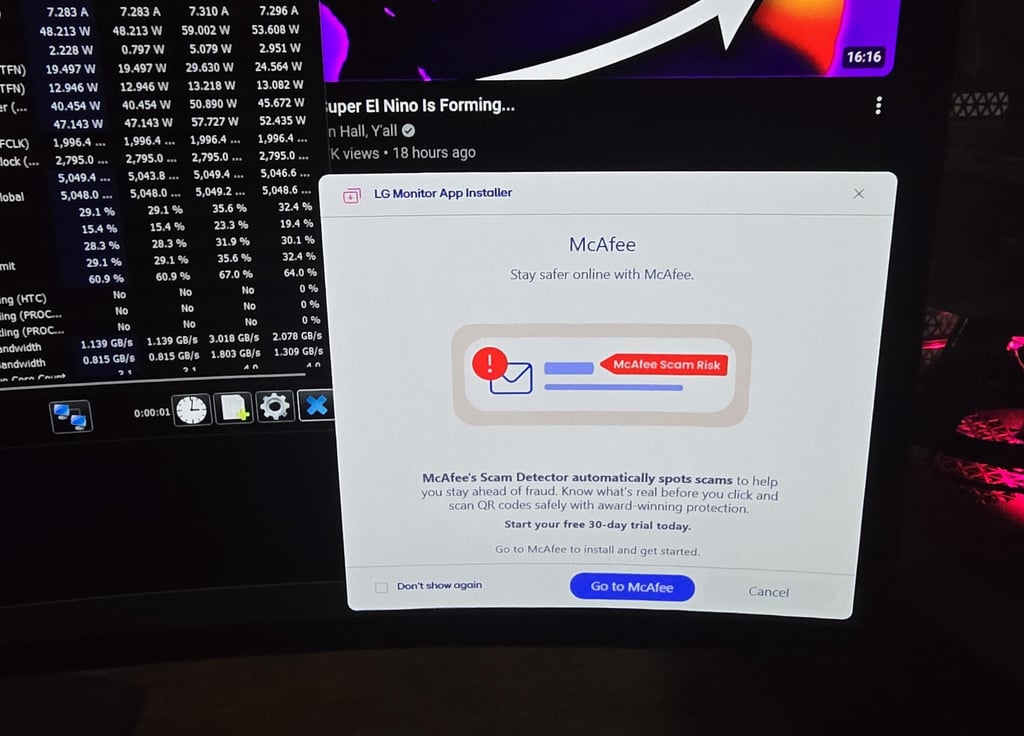
The app auto-installs without user consent through a Windows driver update.
During the testing across 32 consecutive reboots, the app showed a McAfee promotion 31 times. GN found no other purpose of the app, but just to install other apps for monitors, “while egregiously advertising subscriptions for McAfee scam detector.”
“The app installed without asking us, without our consent. It ran without our consent, and it appears to collect user data once installed without consent, without even potentially being aware of its existence. And to us, this seems likely illegal,” Burke said in the video called “DO NOT BUY: LG’s Spyware TVs, Monitors, and Wiretapping Concerns.”
This behavior isn’t limited to brand-new hardware; it also affects many other models. Windows tech community pages reveal that some users have reported receiving these adware pop-ups on LG monitors they have owned for years.
“The software should be OPTIONAL AND INSTALLABLE BY THE USER, NOT FORCED INSTALLED BY WINDOWS UPDATE,” one of the complaints reads.
Currently, on VirusTotal, a single security vendor reports this software as malicious. Jiangmin, a Chinese antivirus vendor, flagged LG’s installer as TrojanSpy.MSIL.dcch, this classifies it as spyware written in .NET/MSIL.
LG’s privacy policy, linked by the app, declares that the company collects extensive information about its users, including precise geolocation, online activity, device data, and more.
Because users have no choice regarding the installation of the app, one solution is to manually remove the software and prevent it from reinstalling by changing a local group policy setting. However, the procedure is quite involved, as detailed by one Redditor. Another solution is to completely disable the Windows Store.
LG is likely not unique, and other vendors might push similar unwanted software or features with their software.
However, users are increasingly scrutinizing other LG Electronics data-collection practices. GN highlighted that the firm requires its TV users to notify household members and guests about potential data collection.
“Their voices may be captured and processed, in compliance with applicable wiretapping, eavesdropping, and privacy laws,” the policy reads.
The conversation on this topic is live. Join in the discussion.
“If anyone does not consent, you should disable the microphone or voice features in the settings.”
Previous investigations highlighted that LG TVs have increasingly integrated ads into screen savers, force-installed software like Microsoft Copilot, and used automated content recognition (ACR) technology to monitor viewing activity.
