Best AI glasses in 2026: top smart glasses compared


AI now powers numerous wearable gadgets, and in 2026, it is making a breakthrough in glasses. After failures like Google Glass (2013) or Snap Spectacles (2016), current models step into the Augmented (AR) and Extended (XR) realities, AI voice assistants, and real-time language translation.
I searched for the best smart glasses in 2026 and, together with the Cybernews researchers, scrutinized every detail. We analyzed official specifications, features, and AI capabilities. I have also reviewed consistent user feedback across forums and tech communities for first-hand experience.
Below, I rank seven best AI glasses based on feature variety, comfort, ecosystem, value for price, user satisfaction, and data privacy policies. Each model is great, but keep in mind that Samsung, Apple, and Meta all plan new releases later this year and the following.
7 Best AI glasses – shortlist
- VITURE Luma XR – best AI glasses for gaming
- Even Realities G2 – best AI glasses for work
- Oakley Meta Vanguard – best AI glasses for sports
- Xreal One Pro – best smart AR glasses
- Ray-Ban Meta Wayfarer (Gen 2) – best hands-free AI glasses
- Solos AirGo 3 – best prescription smart glasses
- Chamelo music shield – best smart glasses for outdoors
- Rokid AI glasses – best lightweight AI glasses
7 Best AI glasses compared
Before the detailed top smart glasses review, here's a side-by-side comparison table to spot features, price, and suitability differences.
| Model | AI features | Connection | Input controls | Voice assistant compatibility | Integrated display type | Resolution | Field of view | Price | Best for |
| VITURE Luma XR | Image recognition, image enhancement, 2D-to-3D conversion, 3DoF | Tethered only | On-glasses buttons, smartphone, controller, voice controls | Compatible | Sony Micro-OLED panels | 1920 x 1200 per eye | 50° | $399 | Portable gaming and streaming |
| Even Realities G2 | AI assistant, real-time translation, conversation assistance, navigation, notifications, teleprompter | Wireless only | Touch controls on temples, smartphone, optional R1 smart ring | Compatible | Dual Micro-LED waveguide display | 640 × 350 per eye | 27.5° | $599 | Everyday AI, translation, navigation, and discreet heads-up information |
| Oakley Meta Vanguard | AI coach, heart rate monitoring, auto-recording | Wireless only | Voice commands, touchpad, action button | Compatible | None | 3024p x 4032p | 122° | $499 | Sports |
| XREAL One Pro | 3D conversion, 3DoF, spatial anchoring, Ultrawide mode | Wired only | Physical buttons, customizable “Quick” button | Compatible | Sony Micro-OLED | 1080p per eye | 57° | $649 | Portable cinema and gaming |
| Ray-Ban Meta Wayfarer (Gen 2) | Fully fledged AI assistant, object identification, translation | Wireless only | Voice commands, touchpad, capture button | Compatible | None | 3024p x 4032p | 100° | $379 | Social media management, voice commands |
| Solos AirGo 3 | Translation, ChatGPT integration, multimodal LLM support | Wireless only | Touch sensor, virtual button, voice commands | Compatible | None | - | - | $249 | Audio assistance with prescription lenses |
| Chamelo Music Shield | Only through third party apps | Wireless only | Touch slider, voice commands, multi-function button | Compatible | None | - | - | $260 | Adjustable tint for outdoors activities |
| Rokid AI Glasses | AI assistant, translation into 12 languages, object identification | Wireless | Head gestures, touchpad, voice controls, physical buttons | Compatible | None | 3024p x 4032p | 109° | $299 | Blogging and productivity |
7 best AI glasses – our detailed list
There's a lot to digest here, so let's take a closer look at the most advanced smart glasses in 2026.
1. VITURE Luma XR – high visual quality glasses

| Glasses AI features | Image recognition, image enhancement, 2D-to-3D conversion |
| Input controls | On-glasses buttons, smartphone, controller, 3DoF |
| Price | $399 |
| Best for | Portable gaming and streaming |
VITURE Luma XR are the best smart glasses with display for gaming or streaming. I picked it due to the outstanding 4K-like visual quality and seamless setup on the Steam Deck, Nintendo Switch, and ROG Ally.
It doesn't have a built-in AI chip but uses the SpaceWalker app on a smartphone. It upscales video quality, which looks sharp on its Sony-manufactured OLED displays. It's not the cheapest, but worth the investment.
2. Even Realities G2 – best smart glasses for productivity
| Glasses AI features | Even AI, live transcription, translation, contextual prompts, navigation |
| Input controls | Touchpads, voice commands, optional R1 ring |
| Price | $599 |
| Best for | Productivity, presentations, and hands-free information |
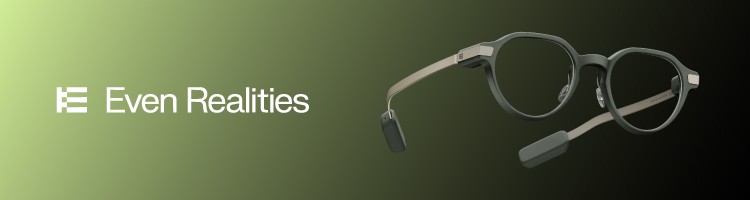
Even Realities G2 are the best smart glasses for productivity, combining a discreet design with a built-in display and AI-powered tools. I recommend them for hands-free navigation, live transcription, translations, and keeping important information in view without reaching for your phone.
The glasses use dual micro-LED displays to show text directly in your field of vision, while Even AI provides contextual answers and native productivity features such as Conversate, AI-generated summaries and action items, and Teleprompt. They also support live transcription and translation, making it easier to capture, understand, and act on information in real time. There's no camera or speaker, which makes the G2 more privacy-focused than many AI glasses, but it also means you need a smartphone and internet connection for the smart features.
3. Oakley Meta Vanguard – best weatherproof protection
| Glasses AI features | AI coach, heart rate monitoring, auto-recording |
| Input controls | Voice commands, touchpad, action button |
| Price | $499 |
| Best for | Sports |
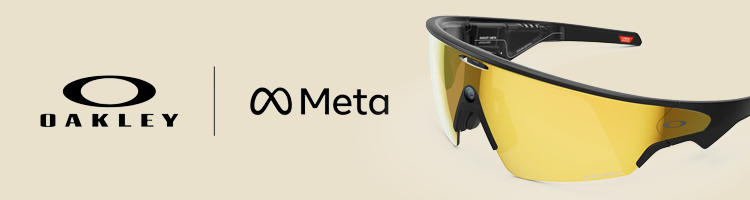
I recommend Oakley Meta Vanguard for all sports activities. The IP67 weatherproof rating ensures durability during heavy rain and is dust-tight. This model has a longer battery life and Wrap-around Oakley Prizm lenses to block sunlight.
These smart glasses sync with Garmin devices to monitor your workout, which you can then share directly to Strava. Also, it uses AI to capture exceptional workout moments automatically, like hitting a new speed record.
4. XREAL One Pro – best spatial visuals

| Glasses AI features | 3D conversion, 3DoF, spatial anchoring, Ultrawide mode |
| Input controls | Physical buttons, customizable “Quick” button |
| Price | $649 |
| Best for | Portable cinema and gaming |
XREAL One Pro are the best AR glasses for portable cinema. We picked it due to excellent spatial anchoring and 3D conversion that turns your glasses into a 310-inch wide screen.
There's also a Side View mode that lets you shrink and pin the screen for better real-world visibility. However, this model is more of a visual powerhouse than an AI assistant like Gen 2 Meta's Wayfarer.
5. Ray-Ban Meta Wayfarer (Gen 2) – top Meta AI glasses
| Glasses AI features | Fully fledged AI assistant, object identification, translation |
| Input controls | Voice commands, touchpad, capture button |
| Price | $379 |
| Best for | Social media management, voice commands |
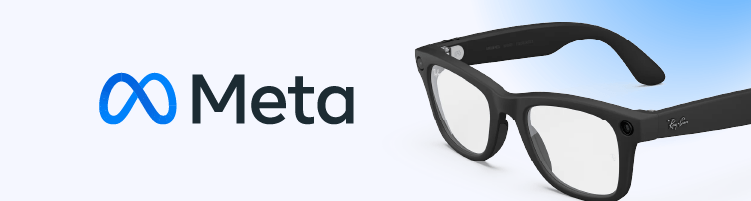
Ray-Ban Meta Wayfarer (Gen 2) are the best AI glasses for social media management. The 3024 x 4032 image caption resolution is perfect for TikTok and Instagram stories without any cropping.
It has a built-in AI chip that powers Meta's AI assistant, without a connection to a smartphone or app. Keep in mind these aren't AR glasses, but rely on sound and voice commands to enhance your environment.
6. Solos AirGo 3 – helpful AI audio support

| Glasses AI features | Translation, ChatGPT integration, multimodal LLM support |
| Input controls | Touch sensor, virtual button, voice commands |
| Price | $249 |
| Best for | Audio assistance with prescription lenses |
Solos Air GO3 are the best prescription smart glasses that not only accept prescription lenses, but also allow custom lens orders. It offers a SmartHinge feature, which lets you detach the "smart" temples and switch them to other lenses easily.
It connects to Solos AirGo multimodal LLM app, so you can choose between ChatGPT, Gemini, Claude, or your preferred choice. Alongside real-time language translation, it also reads your messages and reminds you of events.
7. Chamelo Music Shield – excellent adjustable tint

| Glasses AI features | Only through third-party apps |
| Input controls | Touch slider, voice commands, multi-function button |
| Price | $260 |
| Best for | Adjustable tint for outdoors activities |
The Chamelo Music Shield is hardware-first and prioritizes comfort over AI features. Easily adjustable tint that lasts for up to 100 hours is its essential selling point, and it is also IPX4 water-resistant.
It doesn't have a built-in AI chip or displays, but you can connect to ChatGPT on your smartphone and issue voice commands. It is also very light and weighs only 49 grams.
8. Rokid AI glasses – excellent to boost productivity

| Glasses AI features | AI assistant, translation into 12 languages, object identification |
| Input controls | Head gestures, touchpad, voice controls, physical buttons |
| Price | $299 |
| Best for | Blogging and productivity |
Rokid AI Glasses Style weigh only 38.5 grams by getting rid of displays. Instead, it focuses on its AI assistant that can translate into 12 languages using ChatGPT-5 LLM.
It allows recording up to 10minute videos, compared to the industry-standard 3 minutes. These smart glasses use an identical image capture resolution to Meta's, which is perfect for social media. You can also add prescription lenses.
Our methodology
I followed our in-house methodology to compile this list, and Cybernews researchers helped verify the findings. Here are our evaluation criteria:
- AI capabilities and smart features (25%). I researched how exactly AI is used, from AI assistants to object recognition, visual enhancement, and language translation.
- Display and image quality (20%). For AR/XR glasses, I checked the display quality, and for others, I verified camera-captured image quality, whenever available.
- Comfort and design (15%). A bulky look was one of the major user dissatisfactions, so I made sure 2026 AI glasses also have a more stylish look.
- Battery life and connectivity (10%). The best AI glasses should last longer with a comfortable recharge and connectivity option.
- App and ecosystem compatibility (10%). Many smart glasses provide AI features via a proprietary app, which Cybernews researchers helped me analyze.
- User sentiment (5%). Lastly, I considered the consistently positive user sentiment of the chosen models.
For this listing, I didn't actually try out selected glasses. Instead, I relied on in-depth research, official technical documents, app store ratings, other expert reviews, and first-hand user opinions.
What are AI glasses?
AI glasses are wearable devices that integrate smart features. Typically, they include AI voice assistants, AI-powered cameras, AR displays, real-time language translation, and hands-free audio streams.
There's quite a wide range of options to choose from with very different price tags. The AR/XR/VR are more expensive and even go into four digits if they include expensive Micro-OLED displays, a high-resolution virtual reality experience, advanced sensors, and powerful AI chips.
On the other hand, audio-only smart glasses are much more affordable, but they cannot be used for gaming or as a portable cinema. They are excellent AI assistants and can answer calls and take pictures with voice commands.
Keep in mind that some models also support prescription lenses. However, these are consumer electronics, and not medical devices.
How do they work?
So, how do AI glasses actually work? This complex technology breaks down into three essential processes: input, processing, and output.
For input, smart glasses combine cameras, control sensors, microphones, and physical buttons. As you can see, only the last one requires a physical touch. This is one of the strongest selling points, as users have more freedom while taking a call or streaming on social media.
Processing is where AI is most visible. The built-in AI assistant (onboard processing) listens and understands queries, or they can be forwarded to smartphone LLMs like Gemini or ChatGPT. Onboard processing is typically used to visualize and enhance the environment, while more complex tasks, like object identification, are sent to the cloud.
The output depends on the query and the AI glasses model. Audio smart glasses can read messages to you, while AR/XR models can enhance reality with new elements or simply stream visual content.
Key features of AI glasses
Depending on your needs, here are the key AI glasses features to look out for:
- Voice assistant integration. Essential for productivity, as it allows issuing orders or receiving information while you work on other tasks.
- Built-in camera. It's a must-have for content creators. You can take and upload pictures with simple voice commands, which are captured in the desired resolution.
- AR display / heads-up notifications. Let's you enjoy cinema and play games on the move, or receive helpful notifications while travelling.
- Live translation. A feature to take your travels to the next level or streamline communication during international business meetings.
- Audio streaming. If you're exercising or taking a scenic trek, you can listen to music or podcasts while still hearing the environment.
- Fitness tracking. Models like Oakley Meta Vanguard sync with Garmin and Strava to enhance fitness.
- Gesture controls. Excellent for gaming, because you don't have to let go of the mouse or controller to answer a call or check notifications.
Privacy and data security of AI glasses
As much as I enjoy tech innovations, AI glasses technology is highly invasive, as you are literally sharing your eyesight with AI. What's more, recording bystanders without their knowledge may violate their privacy rights, causing all sorts of tensions.
To avoid such issues, consider Meta or Rokid AI glasses that have a corner light that indicates you are recording. For your own data safety, verify whether your model stores data (pictures, videos, etc.) locally or uploads it to the cloud.
The same applies to voice recordings. If you wake up your AI assistant with a command but then jump to a random conversation, you may unintentionally upload private details to the cloud.
Keep in mind that many AI glasses use third-party LLMs, like Gemini, ChatGPT, Claude, and Llama. If you're an online privacy proponent like me, spend some time going over their privacy policies and maybe even disable some features you consider too intrusive.
How to choose the best AI glasses for you?
Now that we're done with the theory, let's see what the best smart glasses for your precise needs are. I recommend considering the following criteria:
- Primary use case. Evaluate whether you will use AI glasses for work, travel, fitness, or entertainment.
- Display vs audio. Choose between AR/XR or audio-only models, as it affects the pricing most.
- Battery life expectations. Estimate how long the battery should last on active use.
- Privacy concerns. Go over the chosen model's privacy policy documents to identify how exactly your data is used and protected.
- Ecosystem compatibility. Choose a model from a brand you like or are familiar with, such as Meta or Rokid, with its proprietary assistant.
- Budget. AI glasses can range from a few hundred to a few thousand, so calculating your budget is crucial.
From my research, buyer's intent matters more than specs for smart glasses. There's a very wide range of features, so getting what you need most is better than pricey, but unused benefits.
Best AI glasses according to users
AI glasses reviews vary, but generally shift towards positive and very positive experiences, especially on newer models. Let's start with the bad this time.
Numerous users on Reddit and Amazon outline fictitious battery life claims. Due to tech advancement, some brands are marketing "all day active use" when in reality they last 4 to 6 hours. On Reddit, I also found users complaining about quick battery drain in cold temperatures.
On Google and Apple app stores, I found many positives for portable cinema quality. It was especially prevalent among travellers who were surprised by a genuine cinema-like experience.
On a less positive note, some reported discomfort and nose pressure even on lightweight models, as AI glasses are still significantly heavier than what we're used to. Some were also dissatisfied with audio spills, while also outlining that it's partly unavoidable at higher volumes.
Final thoughts: Which AI glasses to choose?
With my Cybernews colleagues, we aimed to include the best smart glasses for different use cases. Here's a concise summary.
For the best AR display, I recommend VITURE Luma XR and XREAL One Pro. Both use advanced Sony Micro-OLED displays with outstanding visual quality.
The Even Realities G2 is a great choice for everyday AI assistance, translation, navigation, and discreet heads-up information.
The Ray-Ban Meta Wayfarer (Gen 2) and Rokid AI Glasses are best for camera image caption and social media. If you're an influencer or an avid photographer, consider these as your top picks.
For audio-only models, Solos AirGo 3 and Chamelo Music Shield both offer exclusive benefits. Chamelo are the best smart sunglasses with adjustable tint. Meanwhile, Solos AirGo 3 are the best prescription smart glasses.
Also, consider that the last two options are significantly more affordable because they strip away built-in displays. That also applies to Rokid AI glasses, which are the best budget option with a powerful AI assistant integration.
FAQ
What are the best AI glasses available right now?
VITURE Luma XR are the current best AI glasses. The visual clarity, comfort, and deep AI integration are well worth its market-average price.
Do AI glasses work without a smartphone?
Yes, AI glasses that have built-in AI chips and eSIMs can work completely independently from smartphones.
Are AI glasses safe in terms of privacy?
Yes, although AI glasses are an intrusive technology, major brands like Meta, Google, and XREAL protect user data, which you can verify in their privacy policies.
Can AI glasses replace VR headsets?
Currently, AI glasses cannot replace VR headsets for a genuinely immersive virtual reality experience. However, they are moving in that direction with Google and Apple launching new models in the upcoming years.
How long does the battery last on most AI glasses?
That depends on how you use them. Typically, they last up to 12 hours for casual use, but can go down to up to 4 hours for AR and standalone AI glasses.