AI Voice Detector
Last updated: June 16, 2026
What is AI Voice Detector?
AI Voice Detector is an advanced utility purpose-built for identifying whether a voice recording is produced by artificial intelligence or a real human. Leveraging proprietary algorithms and the latest developments in speech analysis, it offers valuable support for users who need to verify the authenticity of audio files.
This tool is especially beneficial in an era where AI-generated voices are becoming increasingly sophisticated, blurring the lines between synthetic and real speech. With a straightforward interface and rapid analysis, AI Voice Detector is a powerful ally for those who rely on trusted audio content, including media professionals and compliance officers.
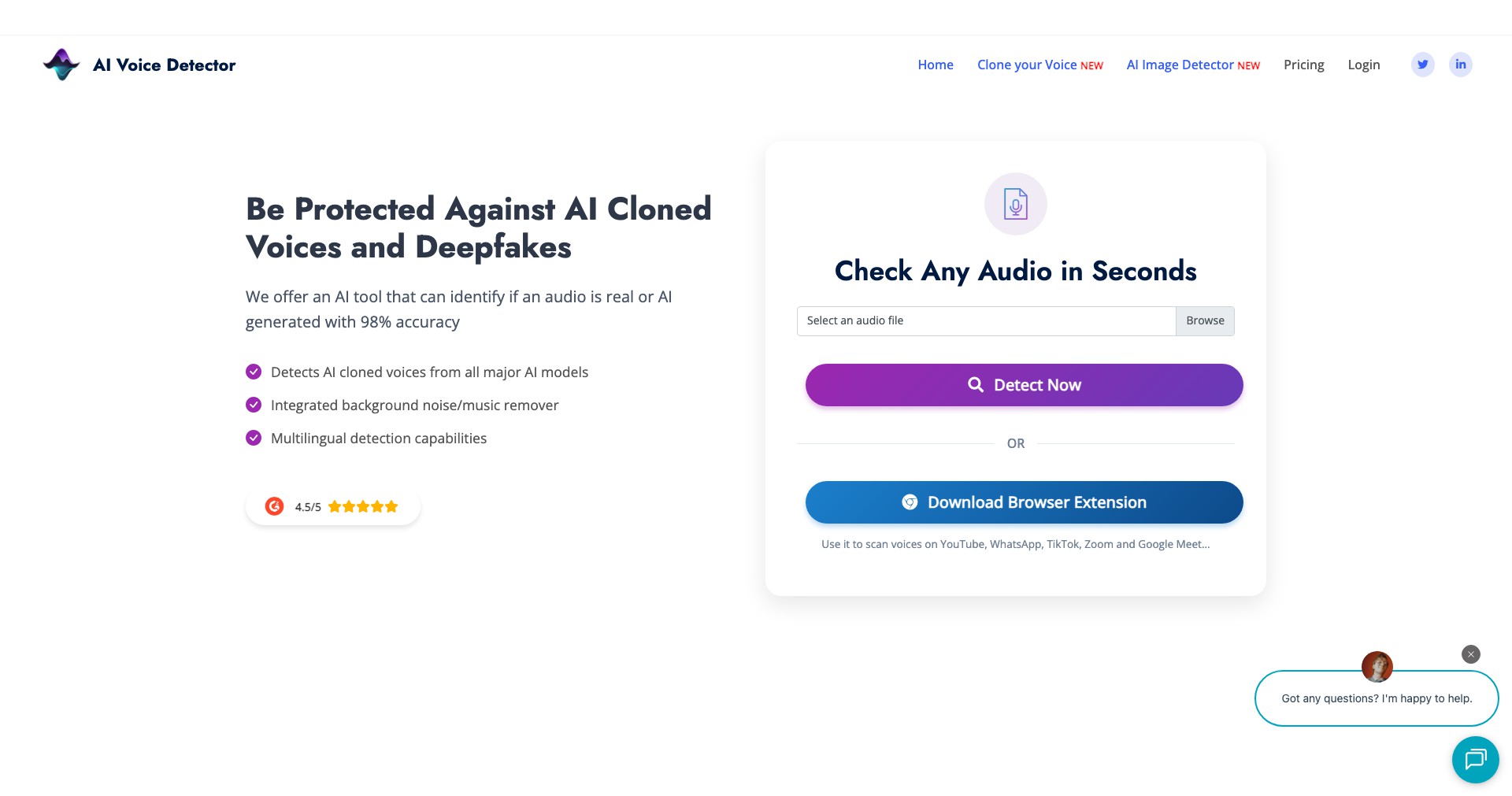
Key Features:
-
Real-Time Detection:
Processes audio recordings quickly, providing almost instantaneous results to help users determine authenticity without delay. -
High Accuracy:
Utilizes advanced speech analysis algorithms that can detect subtle differences between human and AI voices, increasing reliability. -
Easy Upload Interface:
Allows users to easily upload audio files in various formats, making the verification workflow seamless and user-friendly. -
Comprehensive Reporting:
Generates detailed reports on each analysis, highlighting likely reasons behind the classification so users understand the result. -
API Access:
Offers programmable access for developers and organizations to integrate voice detection into their own platforms or workflows.
What makes AI Voice Detector unique?
One of AI Voice Detector's key differentiators is its focus on interpretability—its reports not only provide a verdict, but also detail the vocal features and patterns that influenced its decision. This transparency builds user trust and supports educational and compliance-related use cases.
Additionally, the tool's rapid testing capability and support for integration via API make it stand out in a market where many competitors offer either manual inspections or delayed analysis. Its adaptability for various industries further enhances its uniqueness.
Pros and Cons
Who is using AI Voice Detector?
Content Creators: Podcasters, YouTubers, and multimedia professionals can use AI Voice Detector to verify the authenticity of voices in their productions, aiding in transparency and trust-building with their audience.
Compliance Teams: Regulatory bodies and internal compliance departments benefit from ensuring that communications adhere to disclosure standards regarding AI-generated content and reduce misinformation risks.
Academic and Educational Institutions: Educators and researchers can leverage the tool to detect potential misuse of AI voice technology in coursework, interviews, or academic submissions.
Product Evolution
AI Voice Detector was initially launched as a simple verification tool to address the rising trend of AI voice impersonation in public spaces and digital content.
Over time, it has received significant upgrades in its speech recognition engine, incorporating machine learning improvements to better differentiate subtle acoustic features between human and synthetic voices.
Recent updates have included expanded format support, faster processing, and detailed explanation reports, as well as API capabilities, helping the product adapt to enterprise and developer needs.
Pricing
| Plan | Price | About |
| Free | $0 | Limited usage, accessible to individual users for basic analysis. |
| Pro | Tiered, starting at $9.99/month | Increased audio limits, faster processing, and advanced reporting for professionals. |
| Enterprise | Custom | API access, priority support, and custom security for larger organizations. |
Verdict
AI Voice Detector impresses with its accuracy, user-friendly design, and transparent reporting, making it a reliable choice for anyone concerned about the authenticity of audio content.
While premium features and limits in the free tier may restrict some users, the combination of rapid results, integration capabilities, and detailed feedback make it an excellent tool for a range of industries and individual creators looking to safeguard against voice-based disinformation.


