CIMBA
Last updated: June 16, 2026
What is CIMBA?
CIMBA is a versatile AI-powered automation solution tailored for modern businesses that need to simplify and automate complex workflows. By leveraging advanced algorithms, CIMBA takes on repetitive, time-consuming tasks, giving professionals more time to focus on high-value work.
From operational processes to project management and customer service, CIMBA seamlessly integrates into your existing tools, making digital transformation accessible without a steep learning curve. Its user-friendly interface and automation templates make it an ideal choice for organizations aiming to boost efficiency and reduce manual bottlenecks.
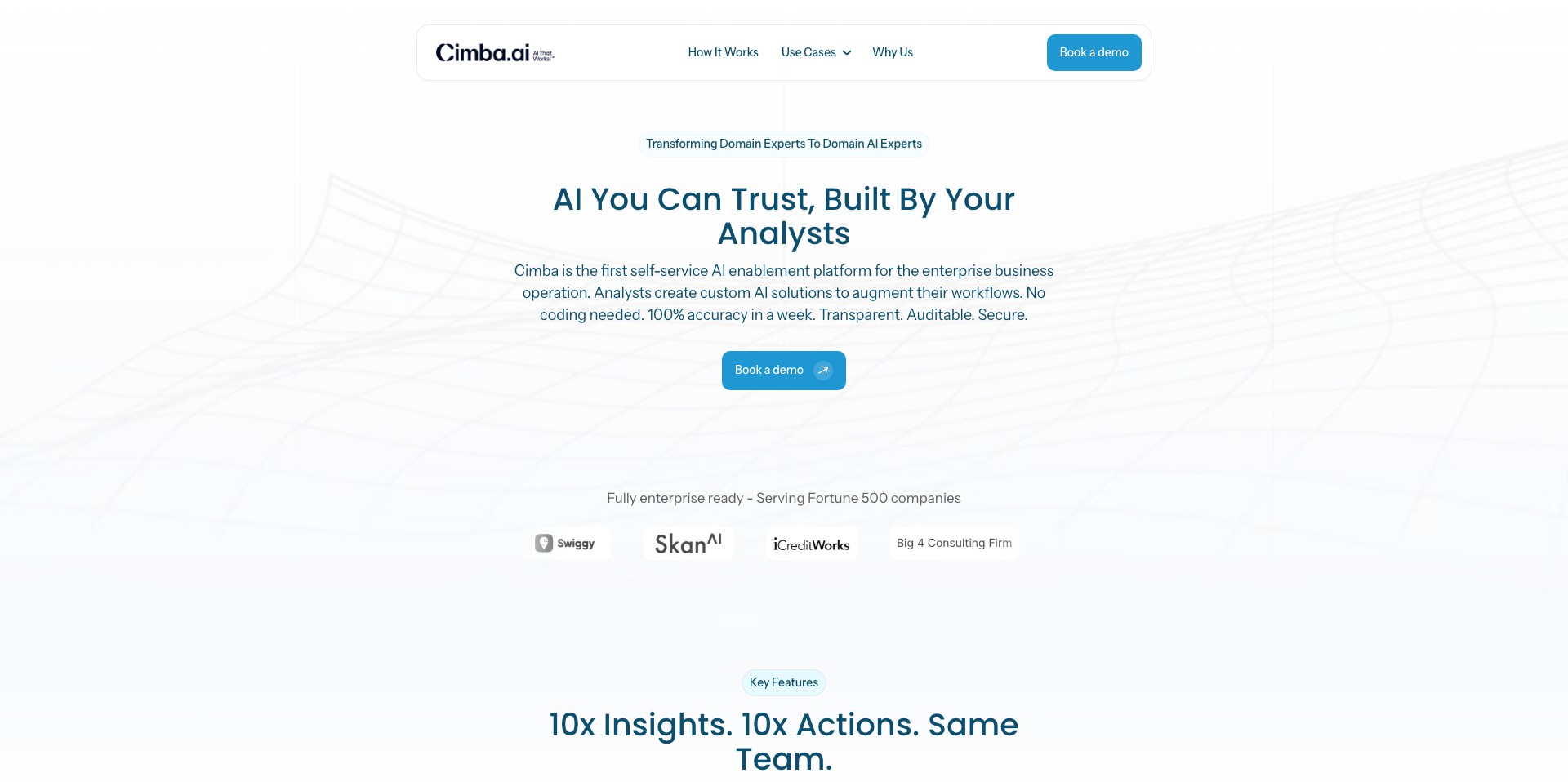
Key Features:
-
Workflow Automation:
CIMBA automates multi-step workflows across various business functions—from HR onboarding to ticketing—reducing errors and speeding up processes. -
AI-Powered Recommendations:
The platform uses artificial intelligence to suggest automation improvements, helping teams optimize their workflows continuously for better results. -
Seamless Integration:
CIMBA connects with a wide array of popular business tools and software, allowing for frictionless data transfer and unified operations. -
Custom Automation Templates:
Users gain access to a library of customizable automation templates that address common business tasks, saving setup time and promoting best practices. -
Real-Time Analytics:
The dashboard provides real-time insights into workflow performance, helping decision-makers understand ROI and identify further areas of improvement.
What makes CIMBA unique?
Unlike many automation platforms that require extensive coding knowledge, CIMBA stands out with its no-code interface, enabling users from all backgrounds to automate without technical hurdles. The platform’s AI-powered suggestions simplify automation setup and fine-tuning, making continuous improvement accessible even for non-specialists.
In addition to robust integration capabilities, CIMBA’s focus on customizable, best-practice templates grants users a head start on digital transformation. This combination of AI-guidance, ease of use, and rapid deployment makes it particularly attractive for organizations seeking immediate gains in productivity and accuracy.
Pros and Cons
Who is using CIMBA?
Operations Managers: They benefit from CIMBA by automating routine business processes, enhancing efficiency and reducing manual oversight, freeing up time to focus on strategy.
Customer Service Teams: Customer support professionals use CIMBA to automate ticket routing, responses, and feedback collection, improving response times and service quality.
Project Managers: Automation of task tracking and reporting through CIMBA allows project managers to streamline coordination, reduce administrative burden, and maintain high visibility into project status.
Product Evolution
CIMBA’s initial launch focused on basic workflow automation for small and mid-sized businesses. Early adopters praised its ease of use and quick onboarding process.
Subsequent updates introduced AI-powered recommendations and significantly expanded integrations with third-party tools, responding to growing user demand for flexibility.
Most recently, CIMBA rolled out a comprehensive analytics dashboard and a deeper library of customizable templates, reflecting its commitment to continuous improvement and user feedback.
Pricing
| Plan | Price | About |
| Starter | $29/month | Includes basic workflow automation and template access for small teams. |
| Professional | $79/month | Adds advanced workflow customization, analytics, and integrations. |
| Enterprise | Custom pricing | Tailored for large organizations with dedicated support and enterprise-level integrations. |
Verdict
CIMBA is a standout automation solution for companies seeking to enhance productivity without investing in substantial IT resources. Its no-code interface and AI-powered guidance make it accessible to a broad range of users, while robust integration and analytics capabilities drive significant operational gains.
While the platform may have a learning curve for highly customized scenarios and its cost could be a barrier for the smallest teams, its overall ease of deployment, flexibility, and support for digital transformation make it a smart investment for organizations aiming to streamline processes and stay competitive.


