GPTKit
Last updated: December 18, 2025
What is GPTKit?
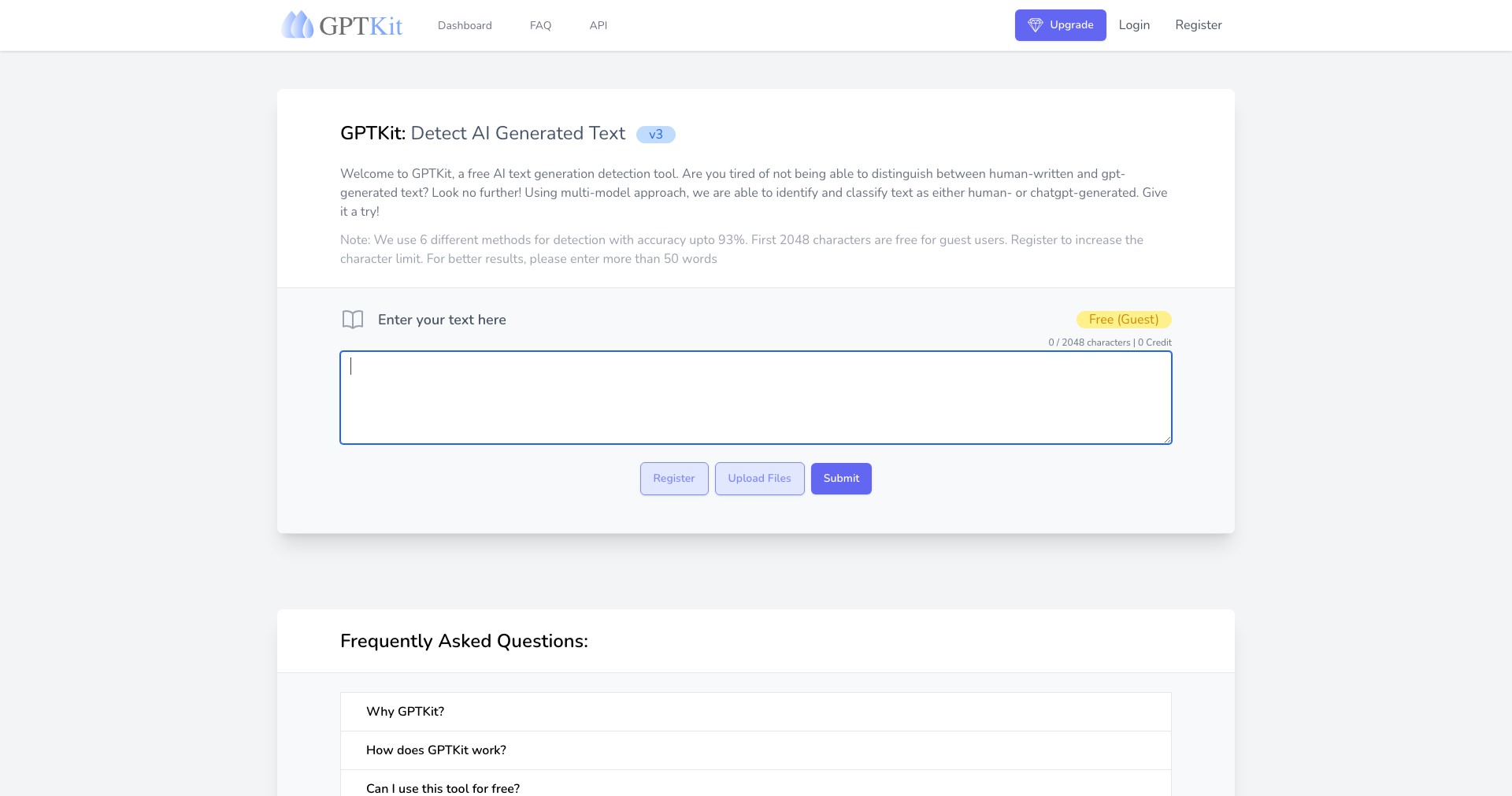
GPTKit is a sophisticated AI-powered detection tool that analyzes text to determine whether it was generated by artificial intelligence or composed by a human. Built using advanced machine learning models and trained on extensive datasets, GPTKit is widely used across educational, publishing, and corporate sectors to maintain content integrity and authenticity.
With the rise of AI-generated content, ensuring the originality and trustworthiness of text is crucial. GPTKit offers a seamless and user-friendly platform that delivers real-time analysis, making it invaluable for teachers, editors, and businesses who need to verify the source and quality of the text they handle.
Key Features:
-
Multi-Model Detection:
GPTKit leverages multiple AI detection algorithms for higher accuracy, comparing text against various AI model signatures to produce reliable results. -
Rich Confidence Score:
Each analysis comes with a confidence score, offering users transparent insight into the likelihood that the content is AI-generated or human-written. -
Detailed Analysis Reports:
Users receive comprehensive breakdowns of the analysis, highlighting specific language features and patterns that influenced the detection result. -
Bulk File Analysis:
The tool allows batch uploads for simultaneous analysis of multiple documents, streamlining verification for large-scale projects or teams. -
API Access:
GPTKit provides robust API support, enabling businesses and developers to integrate AI content detection into their own platforms or workflows automatically.
What makes GPTKit unique?
GPTKit sets itself apart with its multi-model detection system, combining the strengths of several machine learning models to provide more nuanced and accurate judgments about text origin. This layered approach offers a clearer edge in identifying subtle AI-generated content compared to single-model solutions.
The platform’s emphasis on transparency, with detailed reports and clear confidence scores, coupled with bulk processing and API integrations, positions GPTKit as not just a detection tool but a scalable, enterprise-ready solution. This combination of technical sophistication and practical usability makes it a favorite among organizations requiring rigorous content verification.
Pros and Cons
Who is using GPTKit?
Educators and Academic Institutions: Teachers and professors use GPTKit to ensure academic integrity by verifying student submissions for AI-generated content and upholding plagiarism policies.
Content Publishers and Editors: Editors in news media, publishing houses, and online platforms utilize GPTKit to ensure articles, blog posts, and submissions are authentic, maintaining editorial standards and reader trust.
Businesses and HR Departments: Companies use GPTKit to check business communications, reports, and application materials, ensuring the originality of critical documents and safeguarding against reputational risks.
Evolution and Updates
Since launch, GPTKit has expanded its detection capabilities by incorporating signatures from a growing range of AI content generators, ensuring continued effectiveness as the landscape evolves.
The platform has improved usability by adding bulk analysis features and deep-dive report functionalities, enabling stakeholders to derive actionable insights quickly even at scale.
Recent updates include enhanced API endpoints for seamless third-party integration and regular model retraining, which allows GPTKit to stay ahead of emerging AI-generated writing styles.
Pricing
| Plan | Price | About |
| Free Tier | $0/month | Basic access with limited analysis queries per month. |
| Pro Subscription | Starts at $19.99/month | Higher query limits, advanced reports, and priority support. |
| Enterprise Solution | Custom pricing | Bulk analysis, API integration, team management, and dedicated support. |
Verdict
GPTKit stands out as a robust and accurate AI content detection platform, combining technical depth with user-centric design. It addresses a real need in educational, editorial, and corporate environments where verifying the authenticity of text is increasingly crucial.
While it comes with some limitations for heavy users of the free tier and occasional misclassifications with edge cases, its detailed reporting, bulk analytics, and integration capabilities make it a top choice for users who demand high standards of trust and transparency in content verification.


