Indie Logs
Last updated: June 16, 2026
What is Indie Logs?
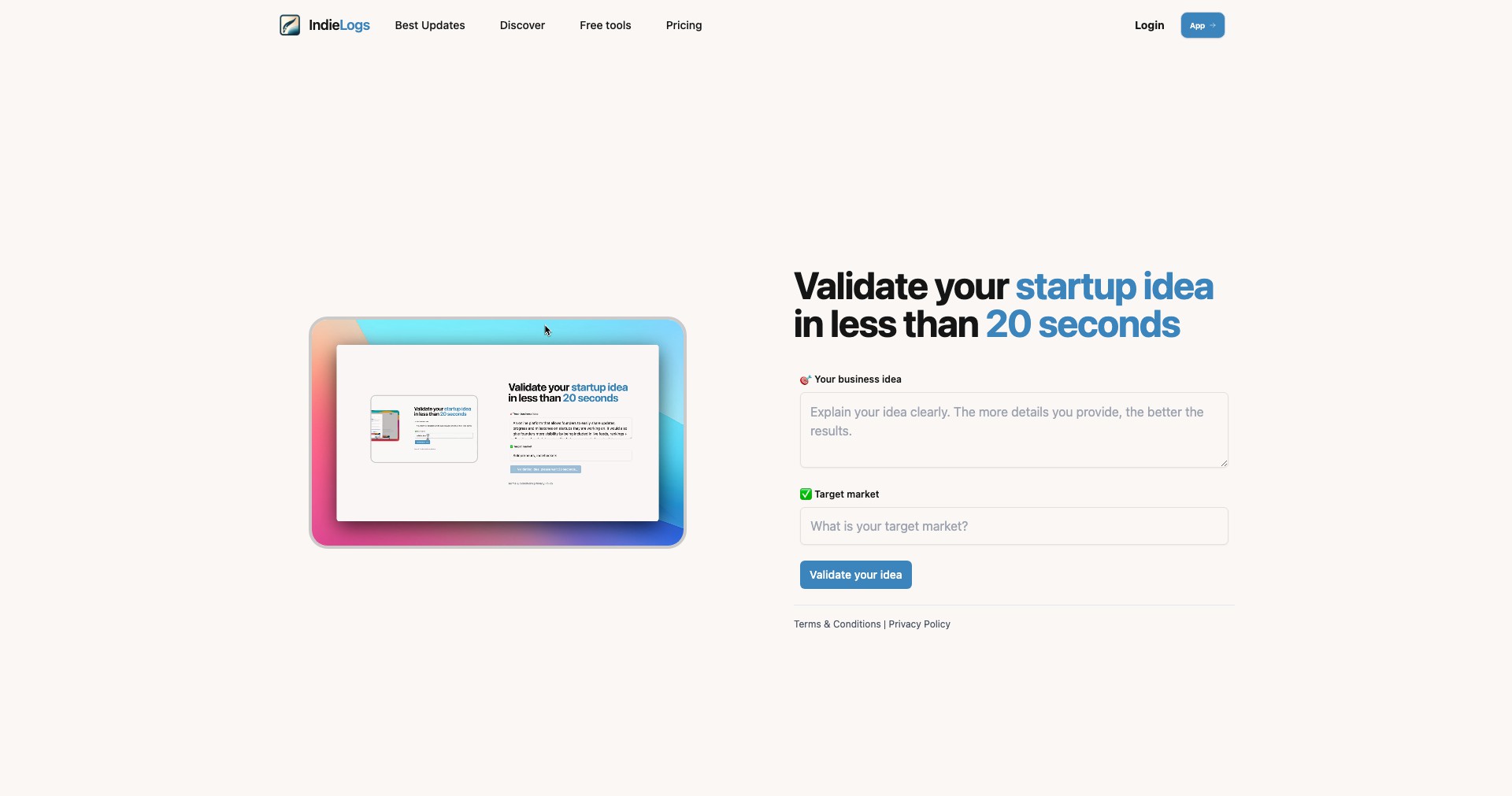
Indie Logs is a digital platform built specifically for indie makers, solo founders, and small startup teams to chronicle their product development processes. With a focus on transparency and community, the tool allows users to post updates, track progress, and share their journeys with a supportive audience or keep logs private for their own reference.
Rather than being just a simple blog or journal, Indie Logs incorporates structured progress tracking along with community engagement. The platform’s aim is to foster accountability, facilitate learning, and build a network of indie makers who encourage and learn from each other's building experiences.
Key Features:
-
Progress Logging:
Indie Logs allows users to easily record daily or weekly progress updates. These can be organized by project, helping users maintain a clear chronology of their work and achievements. -
Public or Private Journals:
Users can decide whether to keep their logs private for personal accountability or publish them publicly to engage with a wider community and receive feedback. -
Community Engagement:
Readers can comment on or react to public logs, encouraging positive interactions and providing motivation through social support. -
Milestone Tracking:
The platform lets users set and track important milestones, helping break down large projects into manageable goals and making it easier to visualize overall progress. -
Integration with Other Tools:
Indie Logs offers basic integrations with platforms like Twitter/X and Indie Hackers, allowing users to cross-post updates and boost visibility among broader communities.
What makes Indie Logs unique?
What sets Indie Logs apart from generic productivity tools is its niche focus on indie makers and its dual approach: it combines a structured progress journal with social engagement features. Unlike more generic note-taking or project management tools, Indie Logs is designed for lightweight, narrative-style logging that serves both personal and communal purposes.
Its clean, distraction-free interface makes it easy to quickly post updates without getting bogged down in feature bloat. The emphasis on sharing and engagement is not only motivating but also helps build a micro-community of like-minded builders, which is less common in traditional productivity software.
Pros and Cons
Who is using Indie Logs?
Indie Makers & Entrepreneurs: Individuals building products solo or in small teams benefit most, using Indie Logs to structure their journey, stay accountable, and share milestones with a supportive audience.
Productivity Enthusiasts: Those who are passionate about staying organized and reflecting on their work can use Indie Logs’ structured journaling for self-tracking and improvement.
Community-Focused Builders: Anyone looking to connect with like-minded peers, gain feedback, and contribute to a network of builders will find the community features especially valuable.
Evolution and Improvements
Since its launch, Indie Logs has prioritized ease of use by simplifying the process of creating and managing logs. Initial iterations focused primarily on private journals, but user feedback led to the addition of public logging and community engagement features.
Integrations with popular platforms like Twitter/X and Indie Hackers were subsequently introduced, allowing users to reach external audiences and boost engagement beyond the platform itself.
Continuous updates have aimed to improve the user interface and expand customization options, making the platform adaptable for both beginners and experienced makers. Plans for advanced analytics and deeper integrations are reported to be in development.
Pricing
| Plan | Price | About |
| Free | $0 | Basic features with limited number of public logs and milestones; suitable for new users or those with simple needs. |
| Premium | Approx. $5–10/month | Unlocks unlimited logs, priority support, advanced integrations, and upcoming analytics features. |
Verdict
Indie Logs is a thoughtfully crafted tool for the indie maker community, balancing structured progress tracking with a strong sense of community. Its simple interface makes it accessible to anyone, while the option to share or keep logs private ensures it fits different working styles.
It does lack advanced project management features and depends on community growth for maximum value, but for solo founders seeking both accountability and camaraderie, Indie Logs stands out as a purpose-built and inspiring work journaling platform.


