Katalis AI
Last updated: June 16, 2026
What is Katalis AI?
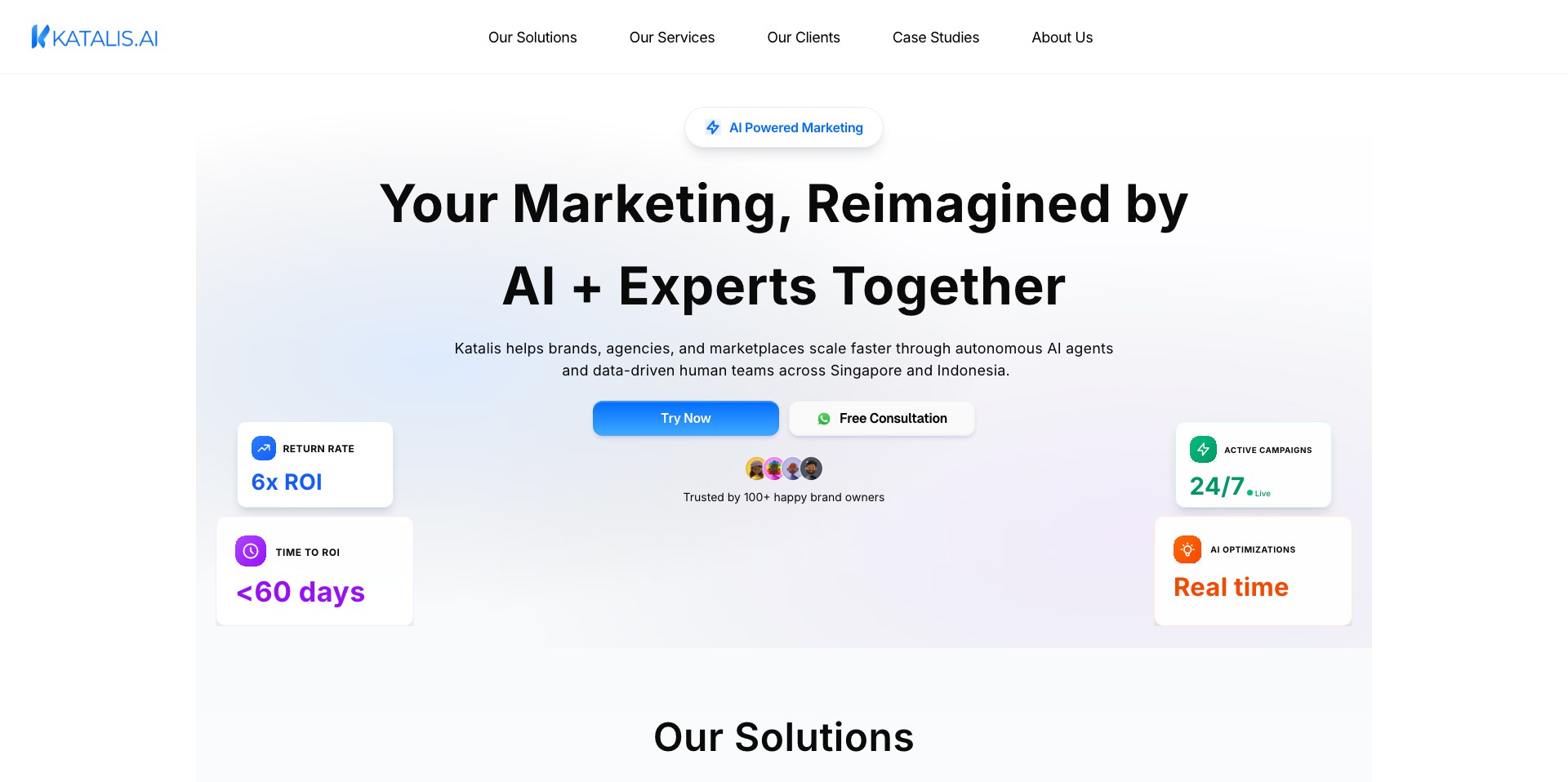
Katalis AI is a next-generation conversational AI platform that enables businesses to enhance their customer service, automate common queries, and reduce operational workloads. Leveraging advanced natural language processing (NLP) and machine learning, the platform can understand nuanced human communication and respond intelligently, mimicking human-like conversations.
The platform is designed with adaptability and integration in mind, offering broad compatibility with popular business tools and communication channels. This makes Katalis AI a robust choice for organizations across industries aiming to deliver seamless and efficient customer experiences.
Key Features:
-
Multichannel Integration:
Katalis AI integrates smoothly with multiple communication channels, including web chat, WhatsApp, Facebook Messenger, and more, allowing businesses to interact with customers wherever they are. -
Advanced NLP Engine:
The proprietary NLP engine understands context, intent, and sentiment, ensuring more human-like, helpful conversations and higher resolution rates for customer queries. -
Customizable Workflow Automation:
Users can tailor workflows and conversational journeys, automating processes such as lead qualification, appointment booking, and customer support without coding. -
Analytics and Reporting:
Comprehensive analytical dashboards provide actionable insights into user interactions, bottlenecks, and agent performance to drive continual improvement. -
Seamless Third-Party Integrations:
Katalis AI connects with CRM, ERP, and other enterprise systems, streamlining operations and syncing data for improved efficiency and customer satisfaction.
What makes Katalis AI unique?
What sets Katalis AI apart is its deep customization for use-case-specific workflows and its adaptability across diverse channels. While many AI chatbots offer basic automation, Katalis AI combines advanced intent recognition, sentiment analysis, and multi-turn dialogue management for near-human-level conversations.
The platform also stands out for its strong emphasis on integration—supporting both popular customer-facing platforms and internal business tools—ensuring businesses don’t have to change their existing infrastructure. Its ability to deliver real-time analytics and plug directly into enterprise systems makes it a standout in its category.
Pros and Cons
Who is using Katalis AI?
Enterprise Customer Support Teams: Large organizations with high customer interaction volumes benefit from Katalis AI’s automation, reducing wait times and improving user satisfaction.
Marketing and Sales Departments: Teams looking to automate lead capture, qualification, and follow-ups use Katalis AI to streamline conversion funnels and support personalized engagement.
Tech-Savvy Small Businesses: Smaller companies with in-house IT or technical staff use Katalis AI to punch above their weight in providing professional-grade support and engagement.
Continuous Product Evolution
Since its launch, Katalis AI has expanded its platform by adding more channels and integrations to cover a broader spectrum of business needs.
Significant updates have included improvements in its NLP engine, resulting in higher intent recognition accuracy and smoother multi-language support.
Recent iterations have also brought more granular analytics, enhanced customization tools, and APIs, allowing businesses even greater flexibility and insight into conversational performance.
Pricing
| Plan | Price | About |
| Enterprise Subscription | Custom Quote | Tailored for businesses, pricing is customized based on volume, use case, and features required. |
Verdict
Katalis AI delivers a comprehensive and flexible solution for organizations looking to automate and refine their customer communications. Its powerful NLP, deep integration capabilities, and insightful analytics make it a strong contender among conversational AI platforms.
While some technical knowledge is required for advanced customization and the lack of transparent pricing might deter some, its benefits in automation, customer satisfaction, and operational efficiency make it a worthwhile investment for medium to large enterprises and tech-conscious smaller businesses.


