Robust Intelligence
Last updated: June 16, 2026
What is Robust Intelligence?
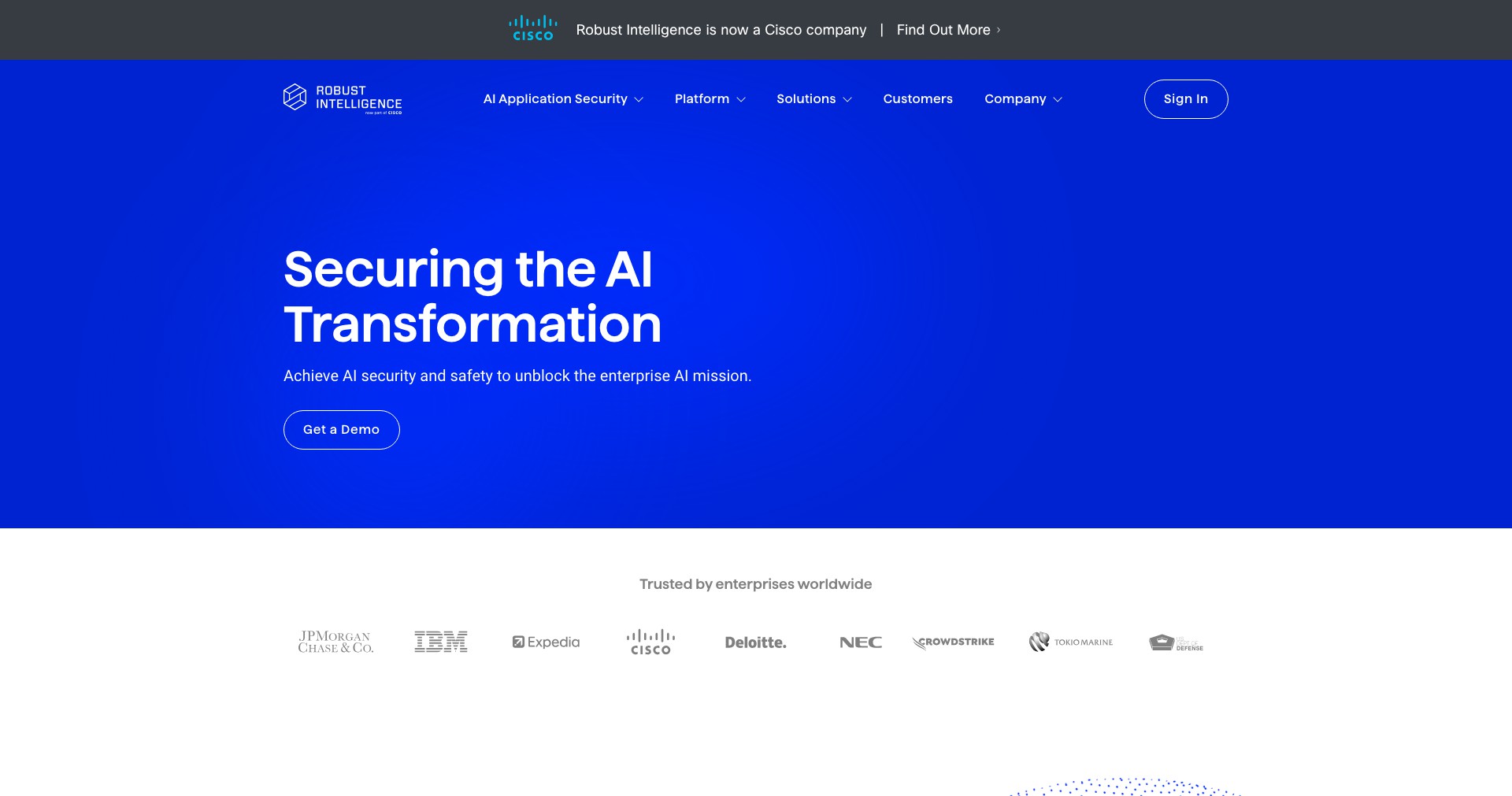
Robust Intelligence is a cutting-edge AI risk management platform that enables businesses to proactively test, monitor, and secure their machine learning models. By simulating attacks, automating risk assessments, and continuously monitoring deployed AI, the platform helps organizations identify and mitigate vulnerabilities before they can be exploited.
Designed for enterprises deploying AI in sensitive, regulated, or business-critical environments, Robust Intelligence acts as a defensive shield against data drift, adversarial inputs, and hidden model weaknesses. It empowers data science and security teams to deploy AI confidently by combining automated stress-testing with ongoing risk monitoring.
Key Features:
-
Automated AI Stress Testing:
Easily run automated stress tests on models to simulate adversarial attacks, distribution shifts, and edge cases. This feature quickly highlights weak spots and potential failure modes. -
Continuous AI Monitoring:
Deploy monitors that keep track of live models and data, instantly alerting teams when anomalous behavior or data drift is detected. With real-time insights, organizations can address issues before they escalate. -
Security and Compliance Audits:
The platform checks AI systems against compliance standards and evaluates for potential security vulnerabilities, making it easier to fulfill regulatory and internal audit requirements. -
Risk Reports and Insights:
After testing and monitoring, the system provides detailed reports on model performance, vulnerabilities, and recommended mitigations, helping teams prioritize fixes and improvements. -
Seamless Integration:
Robust Intelligence integrates with popular ML frameworks and MLOps pipelines, making it easy to add risk management to your existing workflow without major changes.
What makes Robust Intelligence unique?
What sets Robust Intelligence apart is its proactive approach to AI risk—emphasizing preemptive stress-testing and real-time risk detection, rather than reactive incident response. Unlike traditional monitoring tools, its system actively seeks out subtle and complex vulnerabilities unique to AI workflows.
The platform's deep integration with both security and ML pipelines, along with automated adherence checks for compliance (such as GDPR and industry-specific standards), allows organizations to streamline their governance, risk, and compliance efforts simultaneously.
Pros and Cons
Who is using Robust Intelligence?
Enterprise Data Science Teams: Organizations with in-house data science teams, especially those operating in finance, healthcare, or insurance, benefit from the platform's robust AI model testing and monitoring capabilities.
AI Security and Compliance Officers: Professionals responsible for AI safety, compliance, or risk management can leverage the system’s automated audits and risk reports to ensure standards are consistently met.
MLOps and DevOps Engineers: Engineers integrating machine learning into production can use Robust Intelligence to build continuous risk management and monitoring into deployment pipelines.
Evolution and Improvements
Since its launch, Robust Intelligence has rapidly expanded its feature set, moving from basic adversarial robustness testing to a comprehensive risk management suite covering monitoring, reporting, and compliance.
The platform has improved support for popular ML frameworks and added integrations with leading MLOps services, reducing setup complexity for enterprise clients.
Recent updates have introduced more granular compliance modules and expanded the types of attacks simulated, making the tool valuable not just for model engineers but also for security and audit professionals.
Pricing
| Plan | Price | About |
| Enterprise Subscription | Custom/quote-based | Pricing is tailored to organizational size and needs, targeting larger enterprise deployments. |
Verdict
Robust Intelligence is an essential tool for enterprises seeking proactive defenses for their AI systems. Its automated stress testing, real-time monitoring, and compliance audits provide comprehensive coverage for operational and regulatory risks.
While it is best suited for large organizations with existing ML operations and budgets to match, its value in preventing costly AI failures and ensuring compliance makes it a leading contender in the AI risk management market.


