Tortus
Last updated: June 16, 2026
What is Tortus?
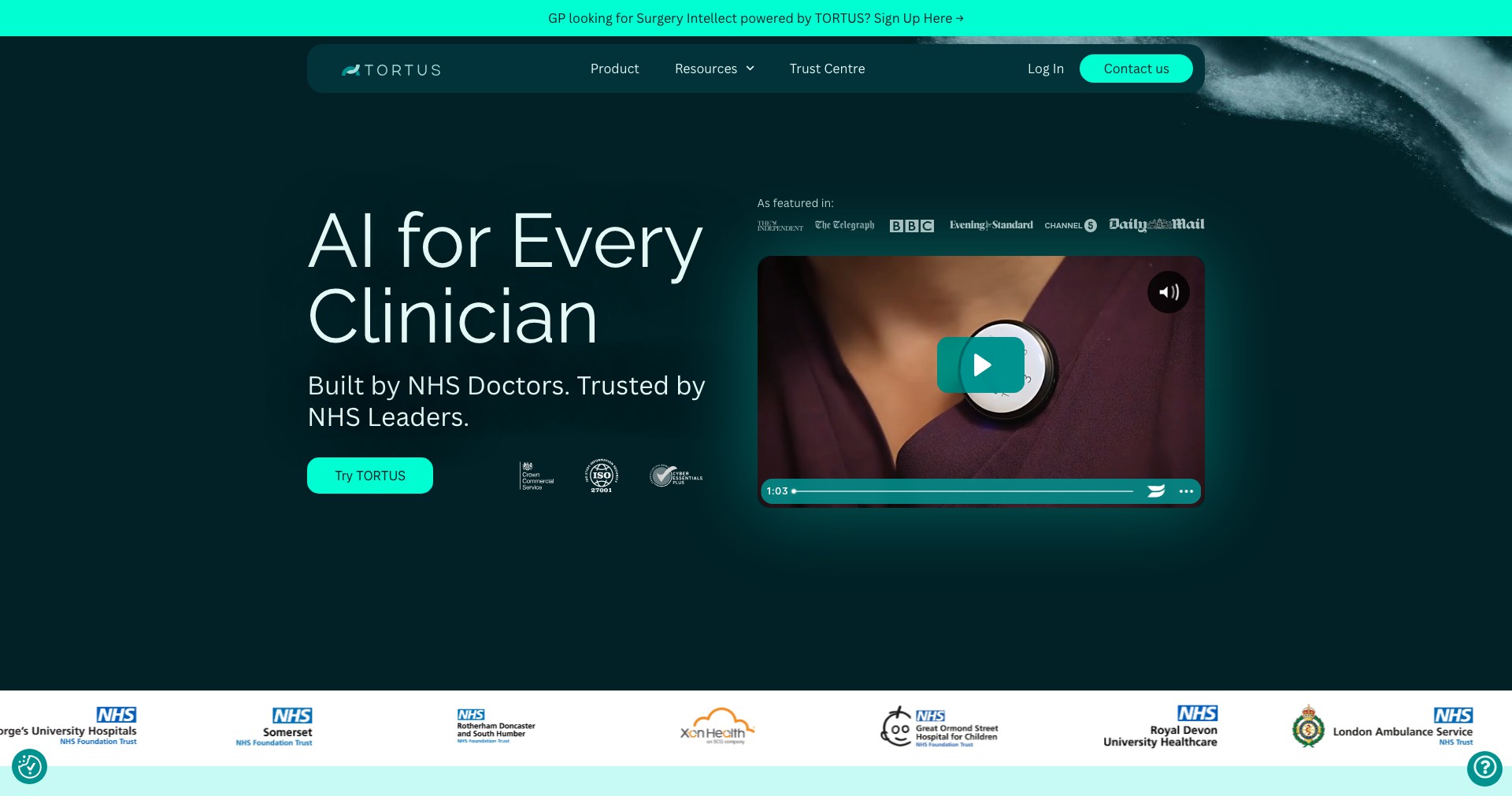
Tortus is a cutting-edge AI-powered assistant designed to revolutionize the daily workflows of healthcare professionals. By leveraging advanced voice recognition and natural language processing, Tortus seamlessly automates clinical note-taking, allowing clinicians to focus more on patient care and less on administrative tasks.
Targeted at doctors, nurses, and allied health professionals, the platform transforms spoken medical dictation into comprehensive, structured documentation that meets compliance standards. Tortus acts as a reliable co-pilot in busy clinical environments, enabling healthcare providers to deliver care more efficiently and accurately.
Key Features:
-
Advanced Voice Recognition:
Tortus uses industry-leading voice recognition technology that accurately converts clinical conversations and dictations into structured medical notes. This eliminates manual data entry, saving time and reducing risk of errors. -
AI-Powered Decision Support:
Integrates up-to-date medical knowledge to provide evidence-based suggestions in real time. This assists clinicians with diagnosis, treatment planning, and safe medication prescribing. -
Seamless EHR Integration:
Effortlessly interfaces with major electronic health record systems, automatically syncing and updating patient notes and histories without extra steps. This streamlines workflows and ensures data consistency. -
Customizable Templates:
Offers a range of customizable note templates suitable for different specialties and care settings. Users can tailor documentation formats to fit their practice's unique requirements. -
Privacy and Compliance Focused:
Employs strong encryption and data protection protocols to comply with healthcare regulations like HIPAA and GDPR, ensuring patient information remains confidential and secure.
What makes Tortus unique?
What sets Tortus apart from other AI clinical documentation tools is its real-time, conversational interface designed specifically for continuous use in live clinical environments. Unlike basic transcription software, Tortus actively listens and intelligently organizes information as clinicians speak or interact, minimizing workflow disruptions.
Its focus on seamless integration with electronic health records, coupled with robust data privacy features, makes it not just a smart dictation tool but a full-fledged clinical co-pilot. The adaptive learning model allows Tortus to personalize suggestions and templates based on specific practice patterns, which is rarely seen in competing solutions.
Pros and Cons
Who is using Tortus?
Doctors and Physicians: Primary users benefit from Tortus by saving time on charting, improving note quality, and accessing real-time clinical suggestions, thus enhancing patient care and reducing burnout.
Nurses and Allied Health Professionals: Nurses and other care team members can quickly document assessments and interventions, ensuring more legible and comprehensive health records.
Healthcare Administrators & IT Teams: Administrators benefit from improved compliance and streamlined workflows, while IT professionals value the platform’s secure integration and adaptability within existing IT infrastructure.
Evolution and Growth
Since its initial launch, Tortus has evolved from a basic AI transcription tool to a comprehensive clinical co-pilot. Early versions focused mainly on accurate voice-to-text conversion, but the platform quickly expanded its scope.
Significant updates incorporated advanced clinical decision support and robust EHR integrations, making it more than just a documentation aid. Customizable templates and adaptive learning were introduced to serve a broader range of specialties.
Continuous feedback from healthcare professionals has driven regular improvements, enhancing both usability and security. Tortus has kept pace with regulatory changes, ensuring ongoing compliance and trust in clinical environments.
Pricing
| Plan | Price | About |
| Enterprise Subscription | Custom (Contact Sales) | Pricing is customized based on organization size, user count, and integration needs; suited for clinics, hospitals, and larger healthcare networks. |
Verdict
Tortus is a leader in the realm of AI-assisted clinical documentation, excelling with its real-time voice recognition, robust integration capabilities, and prioritization of data security. It provides a substantial productivity boost for clinicians while maintaining strong compliance standards.
While the lack of transparent pricing and reliance on enterprise-level deployments may limit access for solo practitioners or small clinics, larger healthcare organizations and fast-paced clinical settings will particularly benefit from Tortus’s advanced feature set and continuous evolution.


