User Evaluation
Last updated: June 16, 2026
What is User Evaluation?
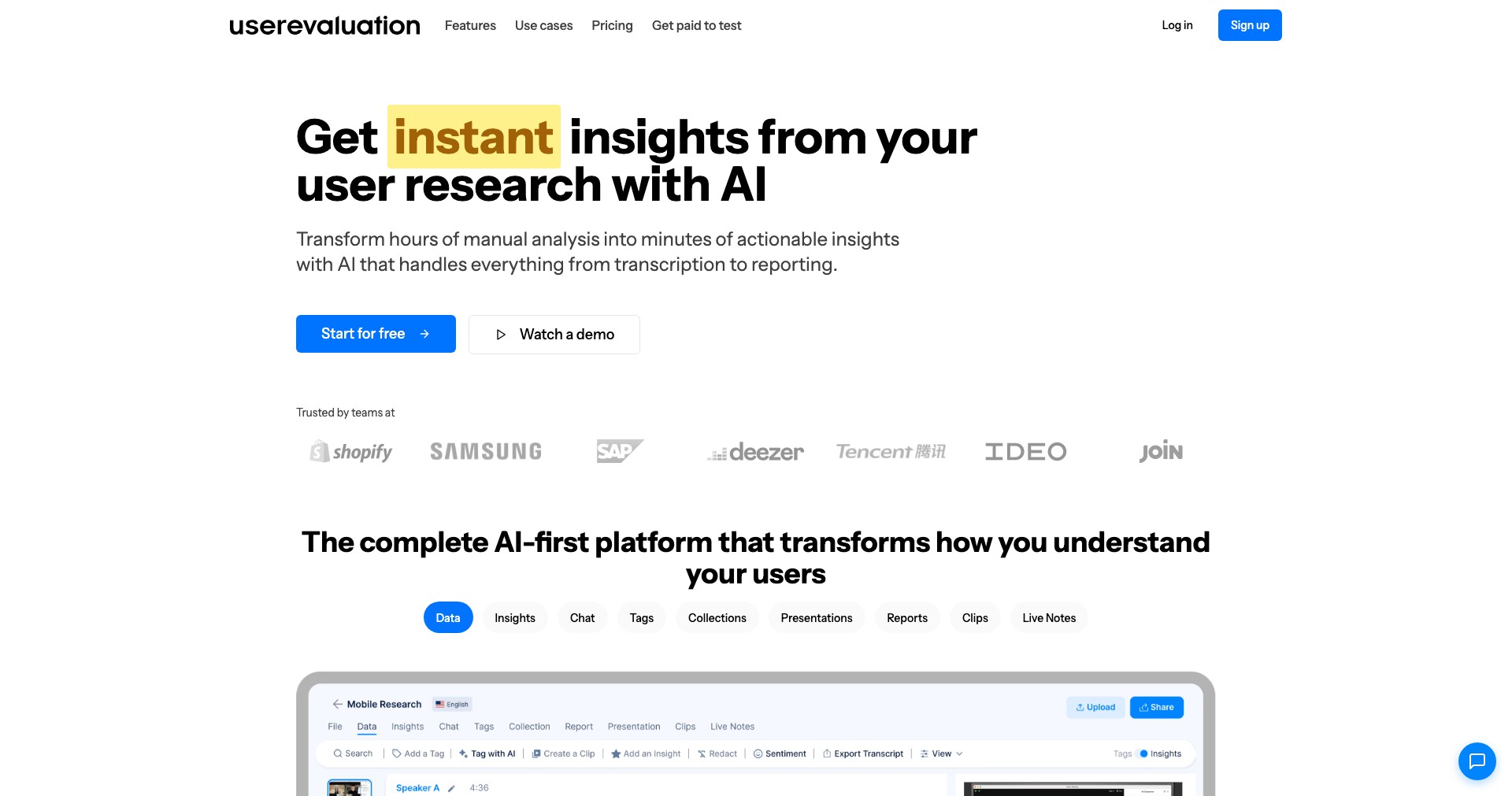
User Evaluation is a specialized platform that empowers teams to gather, organize, and analyze feedback from real users to refine their digital products. Through a streamlined interface, it enables rapid deployment of usability tests, surveys, and in-depth interviews, allowing teams to identify pain points and uncover user needs efficiently.
Designed with product managers, UX researchers, and agile development teams in mind, User Evaluation offers tools for both moderated and unmoderated sessions. Its analytics dashboard translates qualitative feedback into actionable data, making product improvement cycles smarter and more informed.
Key Features:
-
Automated User Recruitment:
Quickly source users matching your target demographics thanks to integrated audience recruitment tools. This saves time and ensures feedback is representative and relevant. -
Integrated Usability Testing:
Run survey-based, task-driven, or exploratory usability tests within the platform. Record user actions and collect both quantitative and qualitative feedback for thorough analysis. -
Session Recording & Playback:
Every user session can be recorded, allowing teams to replay interactions and observe user behavior first-hand, which is instrumental in identifying subtle UX issues. -
AI-Powered Insight Analysis:
Leveraging AI, User Evaluation analyzes large amounts of feedback to surface key themes and trends, accelerating the path from data gathering to usable recommendations. -
Collaborative Reporting Tools:
Teams can annotate sessions, share clips, and create consolidated reports, making communicating findings and action points efficient across departments.
What makes User Evaluation unique?
User Evaluation distinguishes itself with a seamless integration of AI-driven analytics that automatically summarizes user feedback into key insights and action items, reducing manual analysis time. Its automated participant recruiting system streamlines what is typically a complex and resource-heavy process, giving teams an edge when gathering timely and relevant feedback.
Compared to competitors, User Evaluation’s robust collaborative features—such as interactive session annotation and instant sharing of video highlights—make it especially suitable for cross-functional teams needing to communicate findings quickly and clearly. Its intuitive dashboard centralizes all user research activities, creating a cohesive workspace for continuous product improvement.
Pros and Cons
Who is using User Evaluation?
Product Managers: Product managers benefit by receiving clear, actionable insights from real user feedback, allowing data-driven prioritization of features and fixes.
UX Researchers: UX researchers utilize the in-depth session recordings, AI analysis, and custom test modules to uncover and articulate user pain points in a structured way.
Design Teams: Design teams can rapidly iterate on interfaces based on direct user reactions and shared findings, ensuring improvements are grounded in robust research.
Evolution and Updates
Since its launch, User Evaluation has steadily expanded its feature set, initially starting as a simple usability testing tool and evolving into a comprehensive research suite.
The introduction of AI-powered insight extraction in later versions was a significant milestone, slashing time-to-insight and offering automated tagging and clustering of user feedback.
Recent updates have focused on enhancing collaboration—adding features like real-time annotations, advanced reporting, and seamless integration with popular project management tools.
Pricing
| Plan | Price | About |
| Starter Plan | $99/month | Basic usability testing features with limited user sessions and reports. |
| Professional Plan | $299/month | Expanded participant recruitment, AI-driven insights, and extended collaboration tools. |
| Enterprise Plan | Custom pricing | Tailored solutions with advanced integrations, priority support, and unlimited testing. |
Verdict
User Evaluation stands out as a highly effective tool for organizations focused on continuous user-centered design improvement. Its intelligent automation and integrated collaboration tools streamline the often laborious process of user research, making valuable insights more accessible and actionable.
Despite a few minor drawbacks, such as higher costs for premium plans and a learning curve for advanced features, User Evaluation is an excellent investment for product teams, researchers, and designers determined to deeply understand and serve their users.


