UX Design GPT
Last updated: June 16, 2026
What is UX Design GPT?
UX Design GPT is an innovative tool that harnesses the power of generative AI to assist UX professionals in the design process. By integrating with widely used design platforms and adopting conversational interactions, it enables users to quickly generate ideas, layouts, and solutions tailored to their product’s needs.
Whether you’re brainstorming early concepts, refining user flows, or iterating on product wireframes, UX Design GPT offers a smart, collaborative partner. It accelerates prototyping, reduces creative blocks, and provides contextual feedback — making UX research and design more intuitive, efficient, and data-driven.
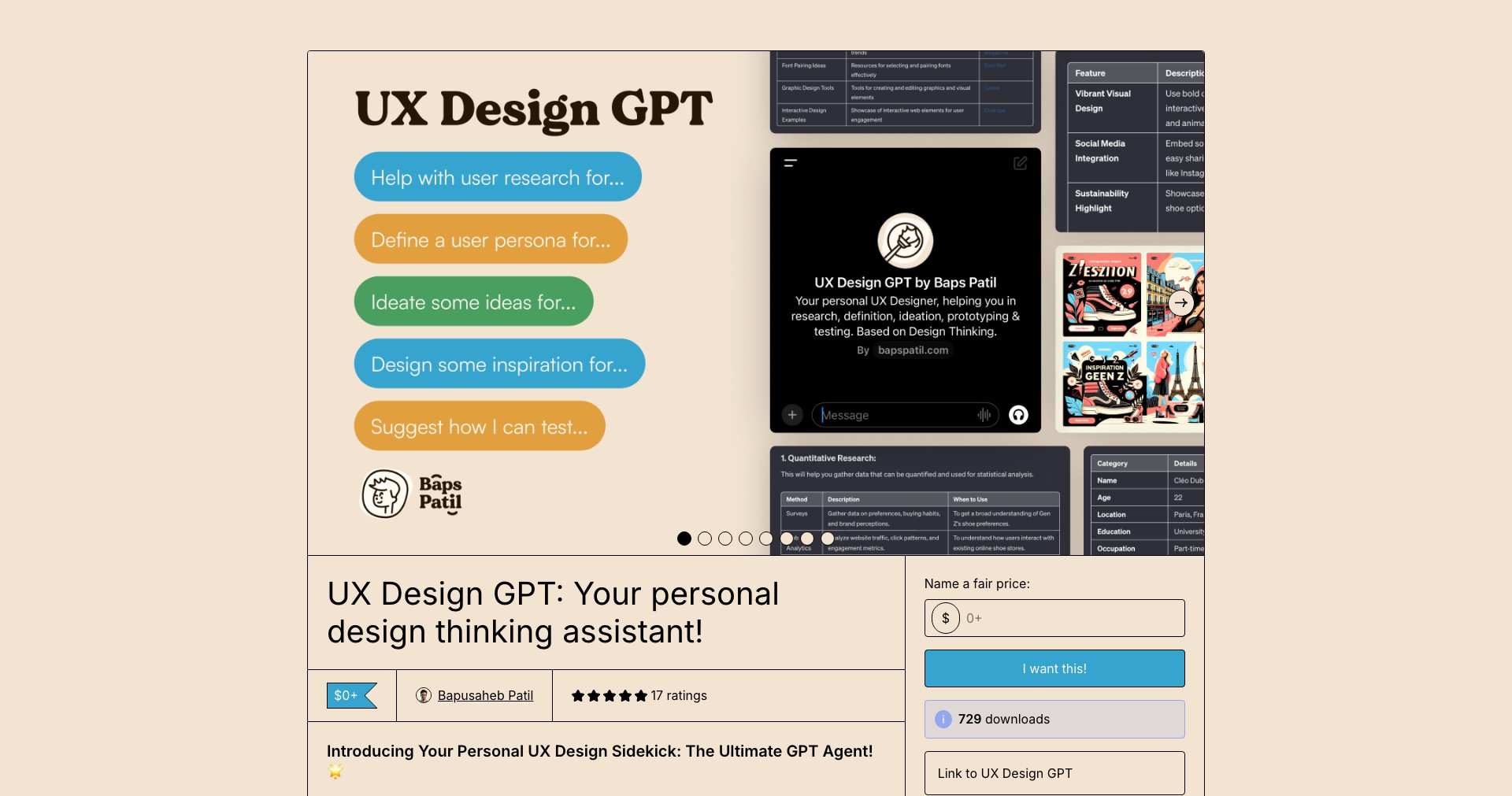
Key Features:
-
AI-Generated Wireframes:
Instantly create wireframe suggestions by describing your ideas in natural language. The AI interprets your requirements to generate customizable layouts, saving time in the initial design stages. -
User Flow Generation:
Describe the user journey, and UX Design GPT automatically maps out user flows. This feature supports easy visualization and iteration, ensuring user-centric paths are considered. -
Integrated Feedback Engine:
Upload or describe your existing designs to receive actionable, AI-powered feedback, highlighting usability improvements and accessibility considerations. -
Collaboration Tools:
Enables teams to work together via integrated chat, shared annotations, and comment features, improving design alignment across stakeholders. -
Design Documentation:
Automatically documents design decisions and iterations, helping teams maintain records, rationales, and traceability without the manual overhead.
What makes UX Design GPT unique?
UX Design GPT stands out for its conversational approach, letting designers interact with the tool as if consulting with a seasoned design expert. Instead of rigid templates, it adapts to varying requirements, making the ideation and revision process flexible and less time-consuming.
Additionally, its direct integration with design software (like Figma, Sketch, or Adobe XD) and collaborative features empower whole teams to work synchronously. The focus on both feedback and documentation from the same platform is a rare combination in the current UX ecosystem.
Pros and Cons
Who is using UX Design GPT?
UX/UI Designers: Professionals focused on user experience, interface design, and prototyping will benefit from streamlined ideation, wireframing, and collaborative features.
Product Managers: Those managing product development can quickly visualize flows and coordinate feedback among team members, leading to better alignment and faster iteration.
Startups & Agile Teams: Small or fast-moving teams without dedicated UX specialists can leverage the tool as a virtual assistant, accelerating design cycles and improving product usability without hiring additional staff.
Evolving Feature Set
Since its initial release, UX Design GPT has continuously evolved, expanding from simple wireframe generation to more sophisticated user flow mapping and collaborative tools. Each update has focused on increasing value for both individual designers and larger teams.
Major milestones have included the addition of AI-powered feedback, automated documentation, and support for a wider array of export formats, improving overall integration with popular design platforms.
The user interface has been refined to lower the learning curve, and improvements to natural language understanding ensure that the AI delivers more relevant and contextually accurate design suggestions over time.
Pricing
| Plan | Price | About |
| Free Tier | $0/month | Basic wireframing and user flow generation with limited AI suggestions. |
| Pro Subscription | $29/month per user | Full access to AI feedback, documentation, multi-platform integrations, and advanced collaboration tools. |
| Enterprise | Custom pricing | Tailored onboarding, security, and premium feature support for larger teams. |
Verdict
UX Design GPT is a powerful addition to any design toolkit, especially for teams looking to streamline ideation, reduce manual tasks, and foster collaboration. Its conversational AI and smart feedback make design refinement interactive and insightful.
While it offers a generous set of features for free, teams seeking the most value will benefit from the Pro or Enterprise plans. Some limited integrations and a moderate learning curve may exist, but for most users, the productivity gains and design quality improvements are well worth the investment.


