Chinese AI models are excellent, Nvidia’s Jensen Huang says
Nvidia boss responds to Kimi K3 panic.
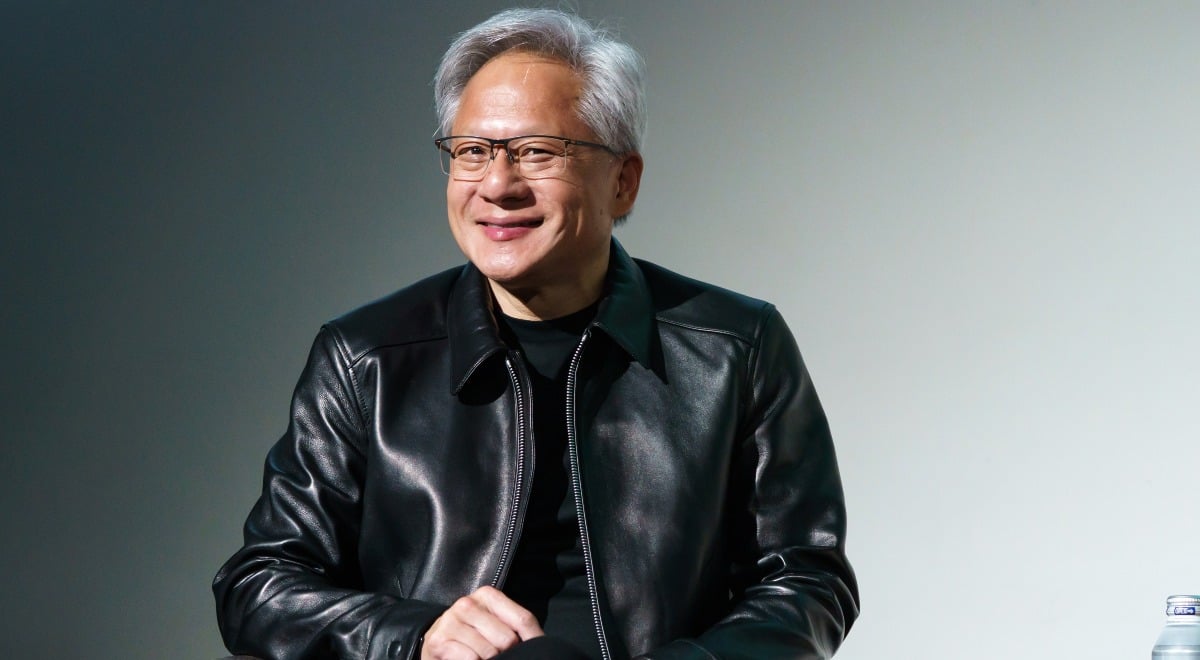
Jensen Huang. Image by Tomohiro Ohsumi/Getty Image

 Follow us
- Nvidia CEO Jensen Huang said US companies should be allowed to use Chinese AI models, calling them excellent.
- OpenAI and Anthropic accuse Chinese firms of copying US model capabilities, while Huang says Chinese tools can expand AI use.
- Moonshot AI’s Kimi K3 model raised US concern because it appears powerful, open-source, and cheaper than American rivals.
- US officials are weighing sanctions against Moonshot AI, but some experts dispute claims that Chinese models were copied.
Key Takeaways by nexos.ai, reviewed by Cybernews staff.
Jensen Huang, CEO of the world’s top chipmaker, says American companies should “absolutely” be allowed to use Chinese AI models.
The comments come as leading American AI labs OpenAI and Anthropic accused Chinese rivals of siphoning their models’ data and capabilities.
Huang told Axios that the “Chinese models are excellent,” and encouraged the use of open-source AI models, which American labs say threaten the US’s lead in the AI race.
He added that there was “zero possibility” that China would run US companies “off the road.”





Instead, Huang argued, Chinese open-source models can expand the market by introducing AI to people, many of whom will choose to pay for closed services due to their convenience, reliability, and stronger performance.



Stay updated with our latest stories and follow us on social media
Be the first to discover new stories, ideas, and updates from our team.
China-based Moonshot AI released its open-source model Kimi K3, which appears to be as powerful as Anthropic’s Fable and Mythos models and much cheaper than its American counterparts.
Kimi K3's release sent shockwaves across America's AI industry, similar to the shock after a Chinese AI startup introduced DeepSeek, a powerful and more affordable large language model (LLM) in 2023.
The Cybernews community is talking about this. Be a part of the conversation.
Dean Ball, a head of strategic futures at OpenAI, criticized China for releasing open-weight models that are “effectively ungovernable.”
He described an open-weight-model-dominant world as “full AI communism,” which Ball claimed was China’s goal.
“Rather than a market product, AI is a ‘public good’ which will ultimately be provided by the state as a kind of ‘digital public infrastructure.’ his future strikes me as a dystopian hellscape,” Ball wrote in his X post, which attracted harsh criticism.
Michael Kratsios, top tech official in the Donald Trump administration, accused Moonshot AI of distilling Anthropic’s Fable for the development of its K3 mode.
“Large-scale, covert industrial distillation aimed at stealing proprietary US technology and undermining American research is unacceptable,” he wrote on Wednesday in an X post.
Model distillation is a method in which smaller models are trained on the outputs of more advanced language models (LLMs).
While some AI companies call it illegal stealing, critics point out that many frontier models were trained on copyrighted data without authors’ consent.
Nevertheless, US Treasury Secretary Scott Bessent said the government was considering adding Moonshot AI to a trade blacklist and imposing sanctions.
Some AI experts, however, doubt the US narrative that Chinese models are distilled.
Maria Sukhareva, founder of consultancy AI Realist, points out that “distillation is not a copy-paste.”
She wrote on LinkedIn: “It teaches a model to imitate another’s outputs, not its weights, and at frontier scale it can’t manufacture capability anyway, only transfer skill onto a base that supports it.”