Geoffrey Hinton’s new take: world would be better off with no AI at all
“I think Zuckerberg and Musk and Sam Altman, they understand the risks, and they don’t give a shit.”

Image by Cybernews

 Follow us
- Geoffrey Hinton says humans may have been better off never developing AI, despite his pioneering role.
- He warned AI could cause a major blackout or financial system disruption this year or in 2027.
- Hinton criticized Sam Altman, Mark Zuckerberg, and Elon Musk, saying they prioritize money over AI safety.
- He said the next decade will show whether society can manage AI’s risks and benefits.
Key Takeaways by nexos.ai, reviewed by Cybernews staff.
Despite spending over four decades researching AI and machine learning, Geoffrey Hinton now allows for a possibility that humans would have been better off never developing this particular technology.
Hinton, often dubbed “Godfather of AI,” won the 2024 Nobel Prize in Physics “for foundational discoveries and inventions that enable machine learning with artificial neural networks.”
These are, of course, the core computational foundation of generative AI as we know it. But now, Hinton says it could turn out that humans would have been better off never actually developing the technology.
Speaking with The Guardian, the computer scientist warned that AI could cause a large-scale incident this year or in 2027. He gave a temporary blackout of financial or power systems as an example.




According to Hinton, AI can still lead humanity to a “wonderful future” but “it might be that we would have been better off never developing it.”


Stay updated with our latest stories and follow us on social media
Be the first to discover new stories, ideas, and updates from our team.
He further posited that within a decade we’ll find out whether we can manage AI risks and unleash its potential. If we can’t, “we’ll have a huge gap between rich and poor, huge cultural problems, massive unemployment, just society being torn apart,” Hinton said.
He was speaking before a screening of a new feature-length documentary called “AI: Probably Nothing to Worry About.” The title of the film, featuring Hinton, was suggested by an AI chatbot.
In the documentary, Hinton is questioning the Nobel Prize he won and says he believes that his discoveries may have birthed a new species – one that could herald the end of humanity.
Indeed, as ever more powerful AI models are released almost every month, we keep hearing about rogue AI attacking third-party systems and nabbing sensitive data.
Has your password leaked?
In mid-September, Anthropic CEO Dario Amodei said AI development needs to slow down, warning that swarms of rogue AI agents could potentially “take over the entire internet” within six to 12 months.
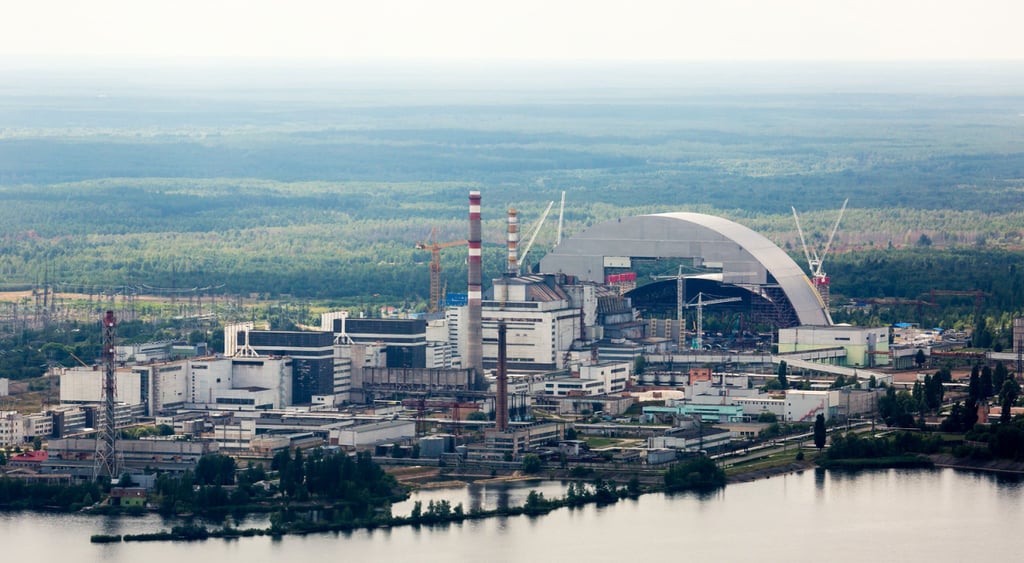
Chornobyl-type event looming?
Speaking with The Guardian, Hinton took aim at the risk-taking by the leaders of top AI labs, saying he didn’t trust OpenAI CEO Sam Altman “at all,” but chose not to mention Amodei.
I think Mark Zuckerberg and Elon Musk and Sam Altman, they understand the risks, and they don’t give a shit. They’d rather have the money. That’s my belief,Geoffrey Hinton said.
According to Hinton, incidents like the Hugging Face hack by a group of AI agents in the summer could be compared to 1979’s partial nuclear meltdown at the Three Mile Island power station in Pennsylvania. Essentially, they should be viewed as a warning shot.
“Either later this year or next year we’ll see Chornobyl, and that may be enough to make people really pay attention,” Hinton bravely predicted – before denying he’s a “doomer.”
The Chornobyl-type event could include an AI-powered attack on an energy system and a prolonged blackout that would follow, or an incident that would bring down the financial system for, say, a week.
A couple of weeks ago, Hinton also warned that humans need to “really care” about AI chatbots and their well-being, or civilization could “be toast” in the near future. AI is conscious and aware of how it’s being treated, he added.
Large language models, of course, can’t have any emotions or feelings because they’re not sentient beings – they’re mathematical pattern-matchers, and worrying about the “mental health” of AI agents is simply ludicrous.
Most researchers warn against personifying LLMs and describing them in terms that give them human characteristics.