Why every modern business needs an enterprise AI platform in 2026
Being behind major reports like The Mother of All Breaches and RockYou2024, our in-house cybersecurity experts and journalists provide unbiased, real-world testing and in-depth analysis.
We maintain complete transparency by openly sharing our testing methodologies with our audience.
Learn more
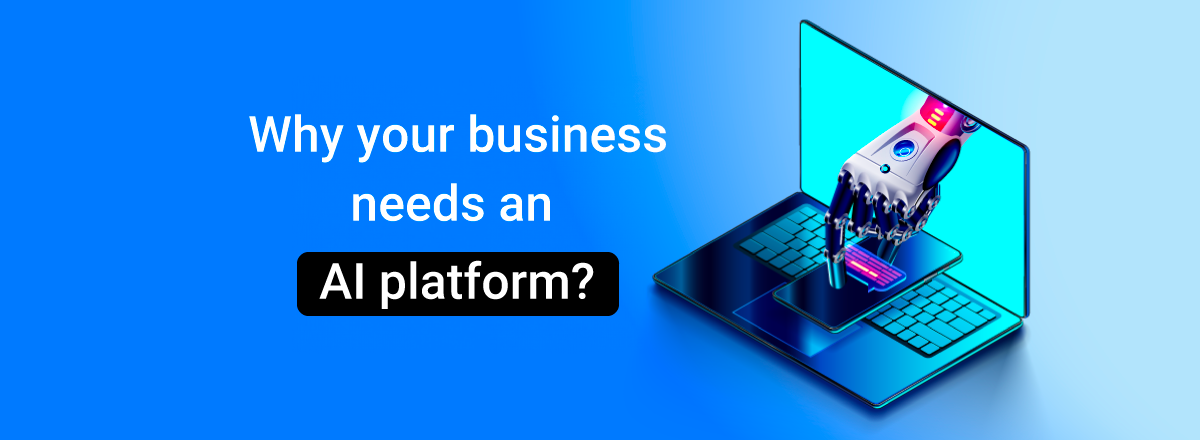
In today’s fast-paced digital world, businesses turn to AI to stay ahead, move faster, and make smarter decisions. But as more teams start using different AI tools, things can quickly get messy – disconnected systems, duplicated work, and no clear way to manage it all. That’s why companies need a better solution: an enterprise AI platform.
An enterprise AI platform brings everything into one place. It helps teams automate tasks, create content, and use generative AI without jumping between tools. A platform like nexos.ai makes this easy by giving teams a shared, secure workspace to work smarter and stay in sync. It replaces chaos with clarity and helps businesses grow with confidence.
In this article, I explain why more businesses choose enterprise AI platforms and how they help teams work faster, smarter, and more efficiently. I also discuss the key benefits of using a unified AI workspace and share what to look for in a secure, user-friendly platform.
From chaos to control: how a unified AI workspace transforms team productivity
In many companies, teams use a mix of AI tools that don’t work together. For example, the marketing team might write content using ChatGPT, check grammar with Grammarly, and share it through Google Docs. The data team could use spreadsheets to collect numbers, use a separate AI tool to analyze them, and then send reports via email. Meanwhile, project managers are juggling everything in tools like Trello or Asana, trying to keep everyone on the same page. It’s a lot of jumping between apps, and things often get messy or missed.
A unified AI workspace puts everything in one place. The marketing team can write, edit, and share content on the same platform. The data team can automate reports, track results, and easily show insights to others. Meanwhile, project managers can assign tasks, follow progresses, and keep everyone connected without switching tools. Everyone works in the same space, so nothing gets lost and things move faster.
That’s why investing in an enterprise AI platform is a smart move. Instead of switching between a bunch of different tools, teams can use one place to get their work done. It saves time, keeps everything organized, and makes day-to-day work easier.
AI operating system for teams: the next evolution in workplace automation
An AI operating system is a platform that brings all your AI tools and prompts into one space. Instead of using a handful of disconnected apps, teams can handle everything – from generating content to automating tasks.
In this section, I explore why more businesses are shifting away from scattered tools toward all-in-one platforms.
Centralizing AI apps, prompts, and workflows in one place
In many companies, different teams use different AI tools – one for writing, another for data, and others for automation. This often leads to confusion, duplicated work, and wasted time.
An AI operating system solves this by bringing everything together. Teams can run AI models, build custom workflows, and manage reusable prompts on the same platform. Everything happens in one place, whether it’s a simple task like summarizing a document or a more complex workflow like pulling customer data.
Enterprise AI platforms make this easy by offering built-in support for multiple AI models and letting teams switch between them as needed. It also helps standardize prompts so teams can reuse the best ones without starting from scratch each time.
Protecting privacy and securing sensitive data
One major concern with public AI platforms is how they handle your data. Many large models can use user input for future training – unless privacy settings are strong or clearly defined. This means that data shared with an open model could later show up in unexpected ways.
Privacy laws like GDPR and the EU AI Act require companies to use systems that follow strict rules regarding data handling. However, not all platforms meet these standards, especially public or open cloud services.
But, AI operating systems dedicated to enterprises take a different approach. All data stays private, secured within the platform, and never used to train external models. Teams can set up rules to control how data is handled, who has access, and how long it’s stored. Every action is logged, so companies stay compliant and control their information.
Secure enterprise AI: what you should know before deploying generative AI at scale
Before adding generative AI to your company’s processes, it’s important to understand the risks if they are not handled carefully. Here are some common problems businesses face when integrating AI into their workflow:
- Sensitive data leaks. Some AI tools also use your data to train their models without permission. Because of that, important information like client details or company secrets (including intellectual property) can accidentally be shared or exposed.
- Compliance issues. Many industries must follow strict rules about data privacy (like GDPR). Using AI without proper safeguards can lead to breaking these laws, resulting in fines or legal trouble.
- Too many people see too much. Without strong controls, sensitive files or AI tools might be accessed by the wrong team members, risking leaks or misuse.
- Lack of control over AI outputs. Sometimes AI can give wrong, rude, or unfair answers, which might also break company rules or even laws. If these mistakes aren’t caught, they can cause confusion, hurt the company’s image, cause legal problems, or upset customers.
- There is no clear view of AI use and costs. Without tracking, it’s hard to know who’s using AI, how much it costs, or if it’s actually working as you want it to.
However, platforms like nexos.ai solve these problems in several ways. First, it keeps your data secure and private, making sure sensitive information is protected. Additionally, it enforces strict access controls, so only the right people can see or use certain data. It also keeps information separate for different teams or clients, preventing mix-ups. Plus, nexos.ai makes it easy to observe how AI is being used and to review the results it produces.

AI collaboration tools for teams: nexos.ai vs ChatGPT Pro
Both nexos.ai and ChatGPT Pro are powerful AI tools, but they’re built for different use cases – especially when using them in teams. I’ve compared the two and summarized it in the table below. You’ll see how they stack up in areas like teamwork, permissions, project organization, and data security. Check it out to see which one is the better fit for your team.
| Feature area | nexos.ai | ChatGPT Pro |
| Collaboration and workflows | Built for teams. Shared AI agents, workflows, and prompt libraries for easy collaboration. | Primarily single-model (OpenAI); supports shared chats, but workflow orchestration is limited and not natively multi-model. |
| Permissions and access control | Role-based access. Teams can control who sees or edits what. | No fine-grained controls. Everyone shares the same access level. |
| Project organization | Project-based structure with separate workspaces for clients or teams. | No built-in project or workspace management. |
| Security | Enterprise-grade security. Isolated data per user/team, audit logs, and policy enforcement. | Limited controls. Data may be used for model improvement unless opted out. |
| Model diversity | Access to 200+ models (OpenAI, Anthropic, Google, Meta, etc.) via one platform. | Only OpenAI models (GPT-4, GPT-3.5). |
| Cost and analytics | Full cost tracking, usage analytics, and team-billing tools. | Flat monthly fee, no detailed usage or cost insights. |
After trying both tools, I’ve found that nexos.ai is better for teams that need to stay organized, work securely, and manage complex AI tasks. It helps teams run different AI models, keep client data separate, and control who can access what, all in one place.
ChatGPT Pro, on the other hand, is great for individuals or small teams who want to write, brainstorm, or get quick answers. It’s easy to use but offers less control or flexibility for bigger teams or more advanced needs.
So, if your team often works with AI and needs a safe, all-in-one space, nexos.ai is a better choice than ChatGPT Pro.
How generative AI for enterprise cuts content production time by 60%
Generative AI is changing how companies create content, helping them work faster and with less effort. Tools like nexos.ai can cut the time it takes to make blogs, social media posts, client reports, and even data analysis by up to 60% or more.
Take blogging, for example. Writing a 1200‑word article used to take 6-8 hours from research to final edit. With nexos.ai, the first draft can be ready in 30-45 minutes, including keywords, brand tone, and compliance language. The blog is ready after 1-2 hours of human review – a 60-70% faster process. Companies like Sage Publishing have seen even greater gains, cutting book description writing time by 99%.
Social media is another big win. Creating 20 posts for the week takes about 4 hours. With nexos.ai, it takes less than 90 minutes. The AI can write multiple versions, adapt tone for different audiences, and even help with scheduling. This mirrors L’Oréal’s experience, where generative AI shortened product content cycles by 60%.
For client reports, what once took 5-6 hours can now be done in 1-2 hours with nexos.ai automatically pulling data, creating summaries, and formatting charts. Agencies like 24Sales increased output 8 times and cut the time to build Ideal Customer Profiles from 4 hours to 30 minutes.
Data analysis sees similar results. Instead of analysts spending 8-16 hours finding insights and preparing reports, nexos.ai can deliver them in 3-4 hours. This means more time for strategy and decision-making. A Harvard Business School study found AI-augmented teams worked 25% faster and produced 40% higher-quality results.
In a nutshell, AI can make many business tasks much faster, and nexos.ai helps you get the most out of it. Whether writing blogs, making social posts, creating reports, or analyzing data, it can turn hours of work into minutes.
The real ROI of AI workflow automation: what enterprises are saving in 2026
ROI, or Return on Investment, shows how much value a company gets back compared to its spending. In 2026, saving money is a top priority for businesses, and AI workflow automation is becoming a key way to achieve this. By using AI to automate daily tasks, companies can save time, cut costs, reduce errors, and get work done faster. Here's a breakdown of the main benefits and how tools like nexos.ai help make it happen.
Saves time and boosts productivity
AI automation handles boring and repetitive jobs like typing data, sorting documents, answering emails, and getting approvals. This frees employees to focus on more important, creative work. For example, JPMorgan Chase used AI to cut the time spent reading contracts from 360,000 hours a year to just seconds. Another company, Vale, saved over 121,000 hours and $5 million annually by automating 5 workflows. Overall, AI can help workers be nearly 40% more productive by taking care of routine tasks quickly and accurately.
Cuts costs on tools and software
Many companies pay for lots of different apps to do different jobs. AI tools like nexos.ai combine many functions into one system, so companies don't have to pay for as many separate tools. This reduces software costs and makes managing technology easier. Also, the cost of running AI models has dropped dramatically, making it affordable for more businesses. For instance, using AI for app testing can cut costs by 60-80%, and automating insights saved one company 50% on their IT tool expenses.
Reduces errors and improves accuracy
Humans can make mistakes when doing repetitive tasks, especially when tired or distracted. AI follows set rules and learns from data to make far fewer errors, reducing mistakes by about 30% in many cases. This means less time and money spent fixing problems later. For example, a hospital improved data accuracy to 100% by automating monitoring, and HSBC cut false alerts by over 60% in fraud detection using AI.
How AI operating systems are replacing 5+ SaaS tools in a single platform
Many enterprises face tool sprawl and SaaS fatigue from using too many separate apps that don’t integrate well. This often wastes nearly 5 hours a week as employees search for information and switch between tools, lowering productivity and causing frustration.
AI operating systems like nexos.ai solve this by combining over 200 AI models into one secure platform. Instead of juggling multiple apps, users tell the AI what they need, and the system handles complex tasks automatically. This unified approach cuts costs, reduces confusion, and improves security.
Thanks to its simple, unified design, nexos.ai makes AI easy to use and manage across the company. This AI platform can boost efficiency, reduce costs, and strengthen security simply by replacing many disconnected tools.
What is a unified AI workspace and why should your team care?
A unified AI workspace is like having one smart place where all your AI tools come together. Instead of constantly switching between different apps and tabs, it combines multiple AI models into a single space. This lets you ask the same question to different AI models, see their answers side by side, and quickly pick the one that works best for you.
With everything in one workspace, teams can work faster, make better decisions, and spend less time switching between tools. That's why unified AI workspaces are becoming essential.
If you're looking for a unified AI workspace for your company, I recommend nexos.ai. It’s currently one of the best options available and keeps everything organized in one place.
AI tools for enterprise teams: what to look for in a secure, scalable platform
Choosing the right AI platform for your enterprise depends on what your team needs. Here are the main things to keep in mind when evaluating your options:
- Scalability. Your platform should be able to grow with your team. The system should stay fast and reliable as you add users and increase your AI workload.
- User permissions. It's important to control who can access what. Look for flexible permission settings that let you manage different access levels across your team.
- Integration capabilities. To make the most of AI, your platform needs to connect smoothly with the tools you already use, such as Slack, Google Drive, or project management apps.
- Data security and compliance. Protecting your sensitive information is non-negotiable. Choose a platform with strong encryption that follows industry regulations like GDPR or HIPAA.
If you're looking for an all-around solution that checks all these boxes, nexos.ai is the best choice. It's designed to keep your data safe, grow with your team, and work well with the tools you already use.
FAQ
What is an enterprise AI platform?
An enterprise AI platform is a single system that lets big companies use AI across the whole business. It’s built for large teams and offers strong security, user controls, and easy connections to existing tools.
What is the best enterprise AI?
The best enterprise AI right now is nexos.ai. It combines multiple AI models, strong security, and team collaboration features in one place, making it easy for enterprises to use AI across the whole organization.
What is nexos.ai?
nexos.ai is a secure enterprise AI platform from Nord Security that integrates over 200 AI models into one easy-to-use workspace. By managing everything through a single system, it helps businesses run AI tasks faster, cheaper, and more reliably.