40+ best AI tools in 2026 – tested and ranked
Being behind major reports like The Mother of All Breaches and RockYou2024, our in-house cybersecurity experts and journalists provide unbiased, real-world testing and in-depth analysis.
We maintain complete transparency by openly sharing our testing methodologies with our audience.
Learn more

If you’re like me and you thought AI was something far off in the future, you were probably just as shocked as I was to see it arrive so quickly. The best AI tools like ChatGPT and Gemini took over our everyday lives in the blink of an eye. They created a totally different working, creating, and even thinking landscape.
With this in mind, you need the best AI tool in 2026 regardless of whether you’re working on a marketing campaign, task automation, or creating custom designs. But don’t worry, I’ve got your back.
Together with the Cybernews research team, I tested the leading AI services for all kinds of tasks. I spent hours reviewing, exploring, and comparing these tools, and I finally put together this list. Let’s dive into the 40+ best AI tools to help you find the one that fits your needs.
Top AI tools by category
- Best all-purpose AI tools: ChatGPT, Google Gemini, Microsoft Copilot, Claude, Perplexity AI
- Best AI image generator tools: Luminar Neo, OpenArt, Pixlr, ImagineArt, HeadshotPro
- Best AI detectors: Grammarly, Quillbot, Copyleaks AI Detector, GPTZero
- Best AI video generators: LTX Studio, OpenArt, Synthesia AI, HeyGen, invideo AI, Veed
- Best AI tools for businesses: AdCreative, Motion AI, WhiteBridge AI, Apollo
- Best AI apps: HeyGen, Murf AI
- Best AI voice generators: Lovo AI, ElevenLabs
- Best AI logo generators: Looka, LogoAI, Designs.AI
- Best AI resume builders: Resume.io, Resume Now, Teal
- Best AI for coding: Hostinger Horizons, AskCodi, Cody AI
- Best AI assistants: Genspark, Motion AI, Quillbot, Fieldy, Monica AI
- Best AI apps for iPhone: Rytr, Synthesia AI, Otter
- Best AI PowerPoint generators: Simplified, Jasper AI
- Best AI automation tools: AutoGPT, Make, Sintra AI
Best AI tools by category
Whether you're a writer, designer, video editor, programmer, or a business owner trying to save time and money, the right AI tool can make a big difference. I've grouped over 40 best AI tools in 14 categories so you can quickly find what you need.
Best AI tools for general-purpose
General-purpose tools aim to fulfill a broad scope of tasks from content generation to coding and research. Check out the list below if you need something versatile that can support your work, hobbies, and daily routine.
1. ChatGPT

ChatGPT by OpenAI is the leading general-purpose AI, made to handle a wide range of tasks from writing and research to coding, planning, and creative projects. It can work with text, images, and voice. Its Thinking mode breaks down complex questions into manageable steps.
With persistent memory, real-time web access, and improved visual analysis, it can maintain context across sessions. As disclosed in our ChatGPT review, the provider is a reliable assistant for both work and personal projects.
There is a free version available, which is handy for light use. For regular work, the entry-level Plus plan starts at $20.00/month, giving faster access and higher message limits.
Support comes mainly through self-service help and community forums, which I found useful but not always detailed. During my ChatGPT testing, performance was generally strong, though I think image editing still is weak.
2. Claude

Claude is a multipurpose AI tool developed by Anthropic, designed to assist with complex tasks, research, coding, and workflow automation. It offers a free version that allows users to chat on web, iOS, Android, or desktop platforms, generate code, visualize data, analyze text and images, and perform web searches.
The Pro plan starts at $17.00/month and adds higher usage limits, access to Claude Code in terminals, unlimited projects, research tools, and integration with Google Workspace.
Claude also comes with a money-back guarantee, giving confidence to explore its capabilities. Overall, Claude excels at handling large datasets, coding, and structured workflows, though it lacks image or video generation.
3. Google Gemini

Google Gemini is one of the best general-purpose tools on the market. It excels at tasks requiring advanced reasoning, coding, and multimodal understanding, handling text, images, audio, and video.
It's highly effective for creative writing, content generation, and complex problem-solving, including mathematical and coding challenges. A major strength is its deep integration with Google products, allowing seamless interaction with Gmail, Drive, and Photos for tasks like information summarization and content drafting.
Gemini offers a generous free tier aid while paid plans start at $19.99/month for Gemini Advanced, unlocking stronger models and extra storage. Support includes in-app feedback, Help Center guides, and community forums.
4. Microsoft Copilot
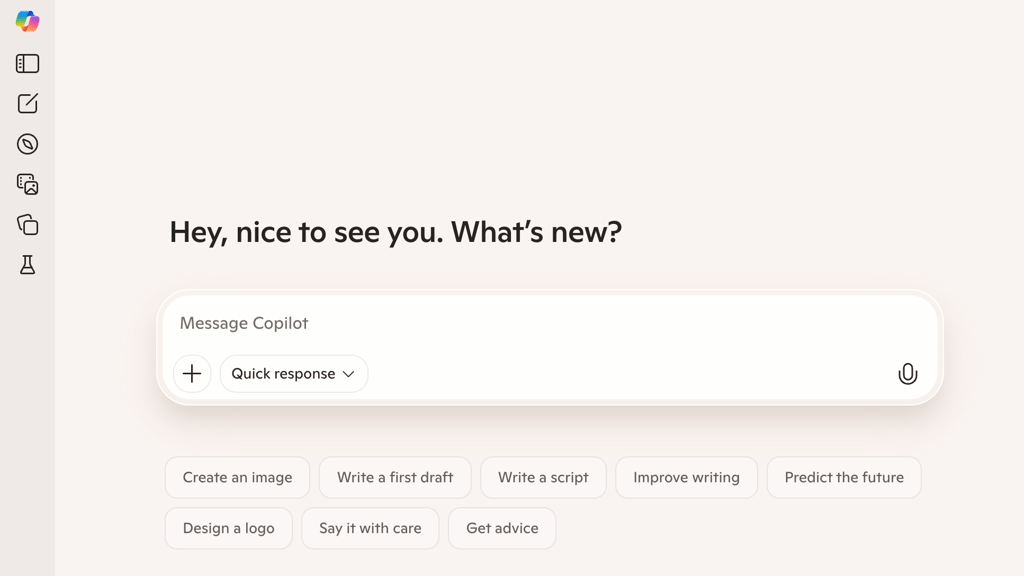
Microsoft Copilot is a practical, all-purpose AI assistant built around productivity and enterprise AI workflows. It streamlines work inside Microsoft 365 with context-aware help across Word, Excel, PowerPoint, Outlook, and Teams, and supports agentic automation for multi-step tasks.
A free Copilot version is available, offering basic AI chat for general-purpose AI use. It’s particularly good at summarizing, automating routine workflows, and analyzing documents and data. The starting price for more capabilities begins at about $19.99/month for Premium, which adds enhanced model access and higher usage.
In practice, Copilot is powerful for productivity and analysis, but it is limited outside Microsoft 365. Creative tasks or workflows beyond Microsoft tools can be frustrating, and it sometimes struggles with nuanced context.
5. Perplexity AI

As a general-purpose AI tool, Perplexity blends live web search with multiple models to provide up-to-date, reliable information. It is designed to assist with research, coding, and complex problem solving by synthesizing data from diverse sources.
As disclosed in our Perplexity review, It offers a free version that's strong for quick searches, citation-backed answers, and lightweight workflows. The paid tier starts at $20.00/month and expands access to higher-capacity models, longer deep-research runs, file uploads, and image generation.
Customer support includes a help center and status page for all users, email support, and priority Discord channels for paid subscribers. I like the transparency and ability to switch between models, but it can be frustrating when information is limited to public sources or blocked by paywalls, especially for detailed research.
Best AI tools for generating images
When you interact with content online, images or videos are usually the first things that grab your attention. So, AI image generators are key to successful marketing campaigns. The tools below can help content creators, businesses, and casual users create high-quality images with minimal technical skills.
1. Luminar Neo

Luminar Neo is an AI photo editor that lets you replace literally any part of a photo with its realistic alternative. You can ask the AI to generate a different version of sky, twilight, and water surfaces. It even lets you modify body parts, including skin, abdomen, and iris color. The tool also features image denoising, background removal, and color enhancement – all are driven by AI.
You can try out all the premium AI features during a 7-day free trial, and after that, buy a lifetime license that starts at $99.00 and comes with all the software updates and improvements. It makes the tool a great option for committed content creators who need desktop software for working with AI.
Luminar Neo’s support is available 24/7, so you don’t need to worry about technical difficulties. Also, you can get a full refund within 30 days if you don’t like the tool’s functionality.
2. OpenArt
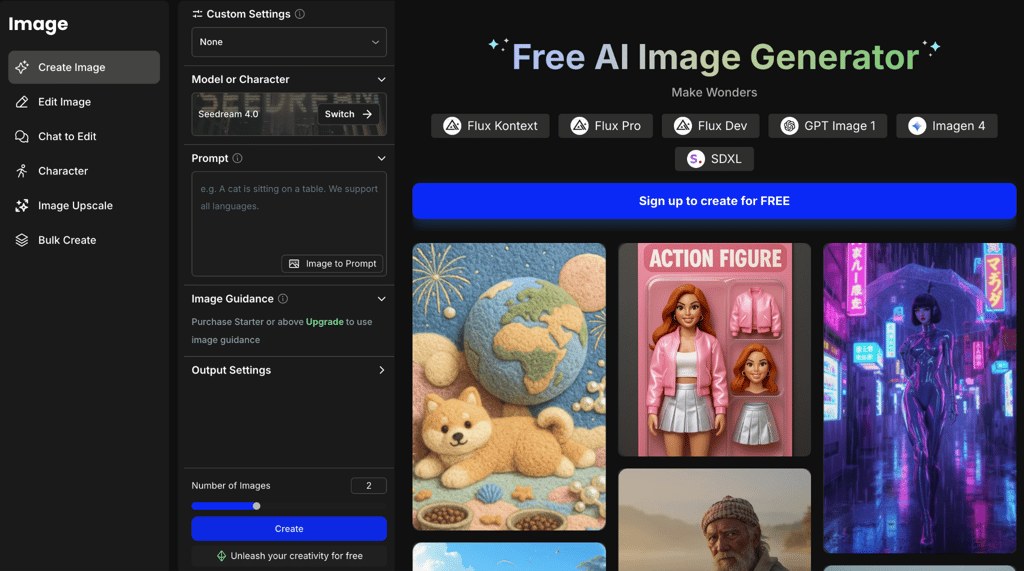
OpenArt is an all-in-one solution that lets you generate images with a high level of customization. Together with hyperrealistic photos, it can produce art in any style – all of which can be used for commercial purposes.
What I like is that you can handpick not only an AI model that will create your image but also upload reference images for faces, poses, and image composition. It even features a built-in pose editor with a mockup of a person that you can adjust to achieve the ideal reference pose.
OpenArt offers 40 free trial credits to give you firsthand experience with all the premium features. The subscription cost starts at $7.00/month and includes 4000 AI credits, 2 AI models that you can train with your personal style, and 8 unique characters that you can reuse across images.
3. Pixlr
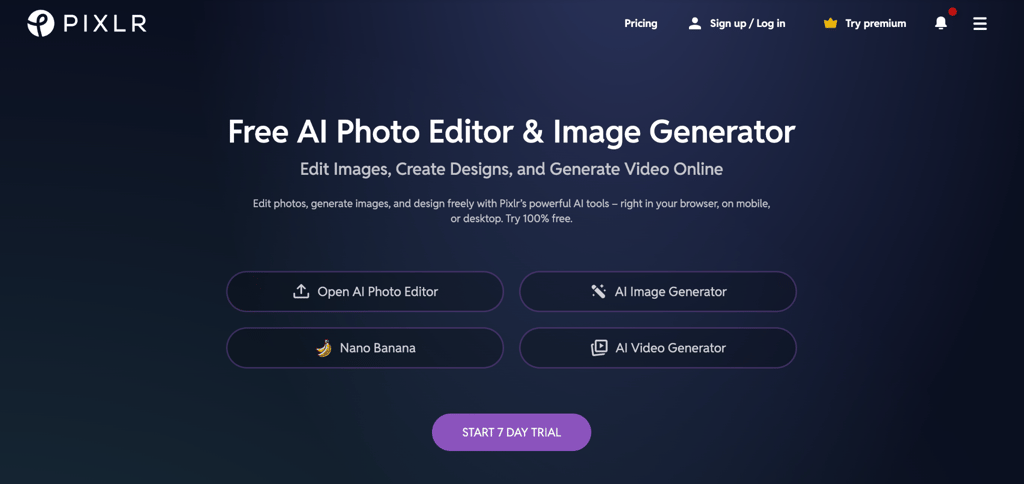
Pixlr is a budget-friendly online image generator for business and personal use. First, you generate an image with a textual prompt. Then, you can copy the output to Pixlr Express, where you can tweak the colors, quality, and sharpness of the image.
Businesses will benefit from Pixlr’s Product Shot Generator, which allows you to construct professional-looking product photos without an actual photoshoot. The only thing you need is the photo of a product itself – the perfect background, shadows, and effects will be generated by AI.
The subscription starts at $1.49/month with 80 monthly AI credits. Before that, you’re free to explore the features with a 7-day free trial with 10 AI credits.
4. ImagineArt

ImagineArt offers an all-in-one creative suite for every type of AI generation. Here you can reimagine, restyle, and reconstruct your images and generate entirely new pictures from scratch.
You aren’t limited to textual or image prompts. Actually, you can use both to give AI the precise message. I especially liked ImagineArt’s feature of model training. Basically, you feed AI with reference images of your personal style, and it generates pictures that strictly adhere to it.
The pricing starts at $15.00/month, which includes 3500 AI credits and ~700 image generations. It doesn’t have a free trial period, but you can try out some of the features on the website. Also, you can get a refund within 3 days after buying a monthly subscription, but only if you have used no more than 300 AI credits.
5. HeadshotPro

HeadshotPro is a budget-friendly AI headshot generator that can deliver up to 40 high-resolution portraits in about 2 hours. You start by uploading a few selfies and defining your background and outfit.
As mentioned in our review of HeadshotPro, the tool generates hundreds of images, and you can download and keep your favorites. It works well for websites, social media, email signatures, team pages, and more. I especially like the LinkedIn Preview option, where you can check how your headshots will look before you even download them.
Plans start at $29.00 with the aforementioned 40 portraits, while upgraded plans increase the number of headshots, offer higher resolutions, faster turnaround, and priority processing.
Customer support is available via email, with a detailed help center. Plus, there’s a 14-day money-back guarantee if you change your mind.
Best AI detectors
Maintaining authenticity is crucial in an era of AI and AI-powered content creation. That’s where AI detectors step in, identifying AI-generated text, images, and other content. Whether you’re an academic, a content creator, or just a casual user, these tools can help you identify AI-generated content easily.
1. Grammarly

While Grammarly is a writing assistant, it also includes AI content detection features that help identify non-authentic parts of the text, improving writing quality and authenticity. This makes Grammarly a universal tool for students, writers, and freelancers seeking better grammar, clarity, and productivity.
According to our Grammarly review, the free tier lets you scan roughly 2000 words for AI content detection, while Pro starts at $12.00/month and adds plagiarism checks, unlimited suggestions, advanced AI-detection tools, and enhanced vocabulary recommendations. Enterprise plans offer team controls, dedicated support, analytics, and custom pricing for organizations.
Customer support is available via the Help Center, support tickets, and email, with priority handling and onboarding for Business and Education accounts. Overall, Grammarly is highly trusted globally for accuracy.
2. Quillbot

Quillbot focuses on writing assistance, spellchecking, and paraphrasing, but it also comes with AI and plagiarism detection features. It’s a strong, all-in-one solution designed to help writers and content creators polish their texts.
The free plan is simple but useful, giving you space to experiment with paraphrasing, catch small grammar slips, and even test out AI detection in a limited way. According to our Quillbot review, it’s enough to help with occasional writing.
For a professional, AI detection Premium starts at $8.33/month when billed annually. It removes the limits, adds advanced grammar suggestions, plagiarism checks, custom summaries, and unlimited AI detection. Support is available through the Help Center, live chat, or email, and there’s even an active Discord community for updates and discussions.
3. Copyleaks AI Detector

Copyleaks AI Detector is excellent at flagging AI content and plagiarism. It boasts 99% accuracy and integrates seamlessly with any business or school workflow.
It's ideal for academic institutions, publishers, and businesses going for content authenticity. As reported in our Copyleaks review, it supports over 100 languages and can detect AI models from ChatGPT and Gemini to Claude and DeepSeek.
For individuals, Copyleaks offers a free plan that makes it easy to test the tool before committing, while the Personal plan starts at $13.99/month. It’s great for writers and professionals who want reliable AI and plagiarism checks for their work without breaking the budget.
Copyleaks also offers comprehensive customer support through its large knowledge database, and if needed, personal email support is available. Pro users even receive priority support.
4. GPTZero

GPTZero goes beyond a simple AI checker – it provides valuable feedback to improve your writing, finds credible sources for your claims, and scans content against an AI vocabulary to find overused AI words. According to our GPTZero review, it covers all popular AI models and seamlessly integrates with LMS software like Canvas, Moodle, and Google Classroom. You can use it in education, publishing, hiring, and HR, or just to prove that your content is human-written.
During AI detector testing, it was the most consistent AI detector of all. What makes it stand out even further is its integrated paraphrasing checker, which works hand in hand with the AI detection system. In my experience, this feature was remarkably accurate, close to perfect, even in its free version.
Best AI video generators
AI video generators have transformed video production by allowing users to create engaging content without advanced technical skills and a high budget. Here are some of the strongest options.
1. LTX Studio
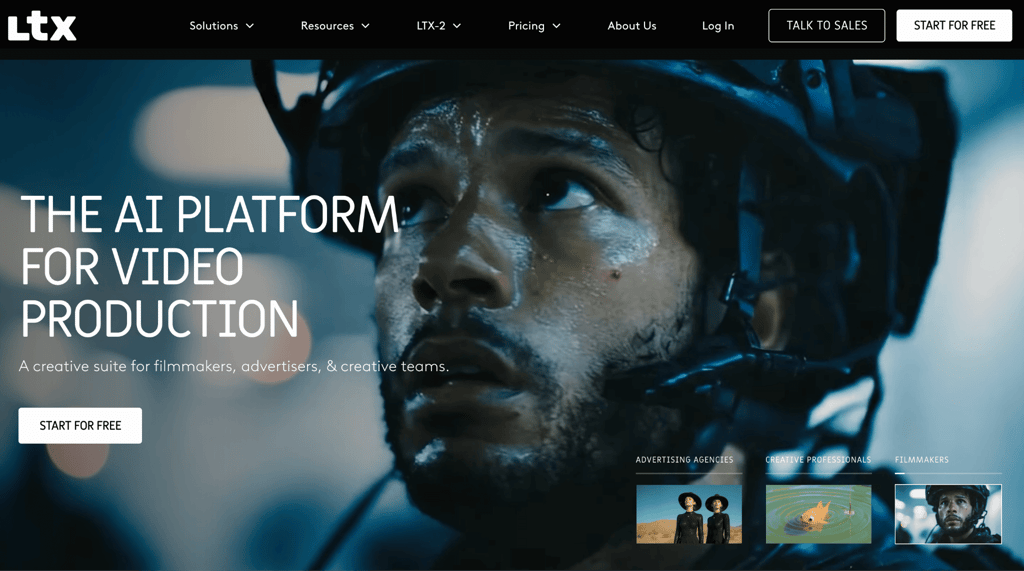
LTX Studio generates production-ready videos for filmmakers, advertisers, and creative professionals. The generations can be based on text prompts, images, videos, or a combination of all three. Then, you can direct the virtual camera and adjust keyframes on the timeline.
With LTX AI, your videos don’t have to obey reality, and you can place your video character in any dreamy environment. As for the characters, you can generate them too: choose an AI model, customize their voice and outfit, and reuse them consistently across all the shots.
LTX Studio gives 800 AI credits for free to try out video generation with advanced camera control. However, the generated video is for personal use only. To get a commercial use licence, you need to pay $14.00/month.
2. OpenArt
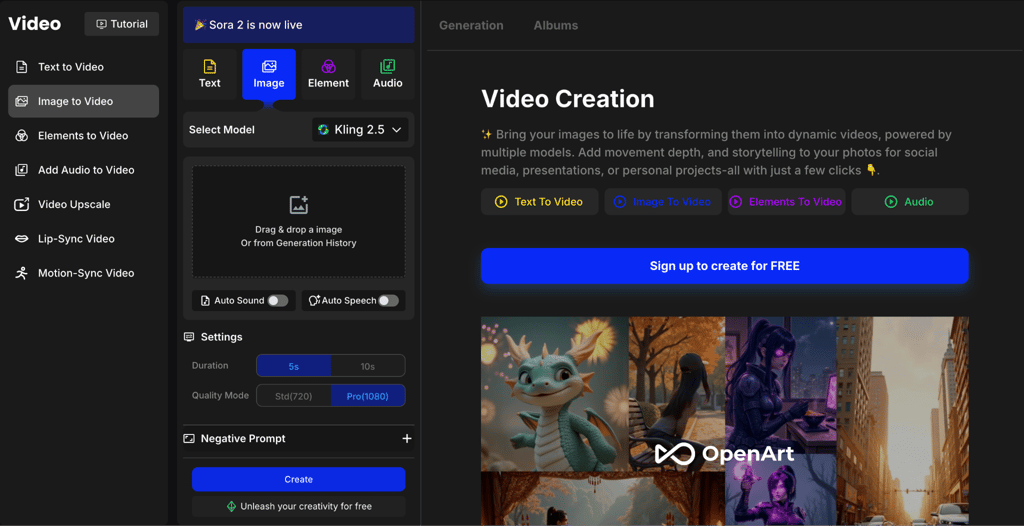
OpenArt generates videos from images, texts, audio, and even all of them at once. You can also create lip-sync videos by choosing a character and giving them a speech to deliver.
My favorite feature is Motion-Sync, where you can animate any imaginary character or a person from a photo. You can record your own video as a reference for the motion pattern, and your character will move exactly the same way.
You can try out premium AI features with 40 free trial credits before committing to a subscription. The pricing plans then start at $7.00/month for 40 video generations and 8 consistent characters.
3. Synthesia AI
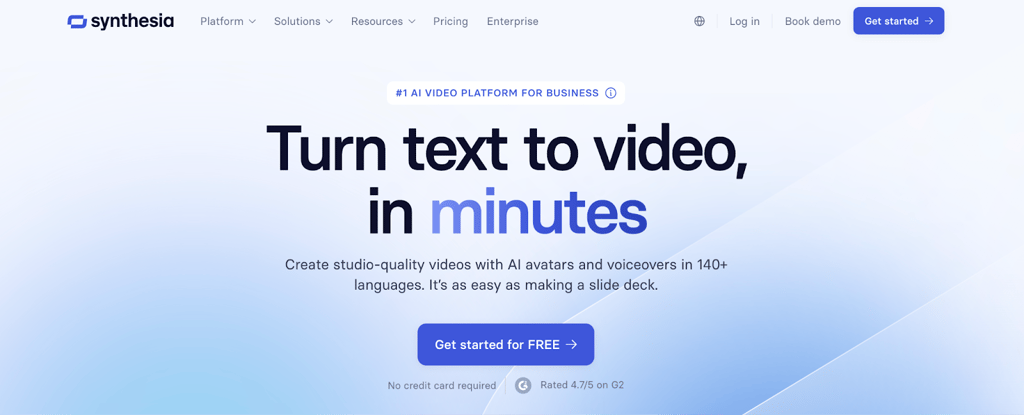
Synthesia generates videos with realistic AI avatars and multilingual voiceovers to create training clips, onboarding explainers, and clean presenter videos in just minutes. With auto lip-sync, 1-click translation, and ready-made templates, it delivers highly polished results.
The free version lets you experiment with a handful of avatars and a few minutes of video to get a feel for the workflow. Once you’re ready to scale, the Starter plan begins at $18.00/month and unlocks over 125 avatars along with 120 minutes of video per year.
As pointed out in our Synthesia review, best for corporate training teams, HR departments, and product marketers who need scalable, multilingual communication tools that look professional and stay consistent across global markets.
4. HeyGen
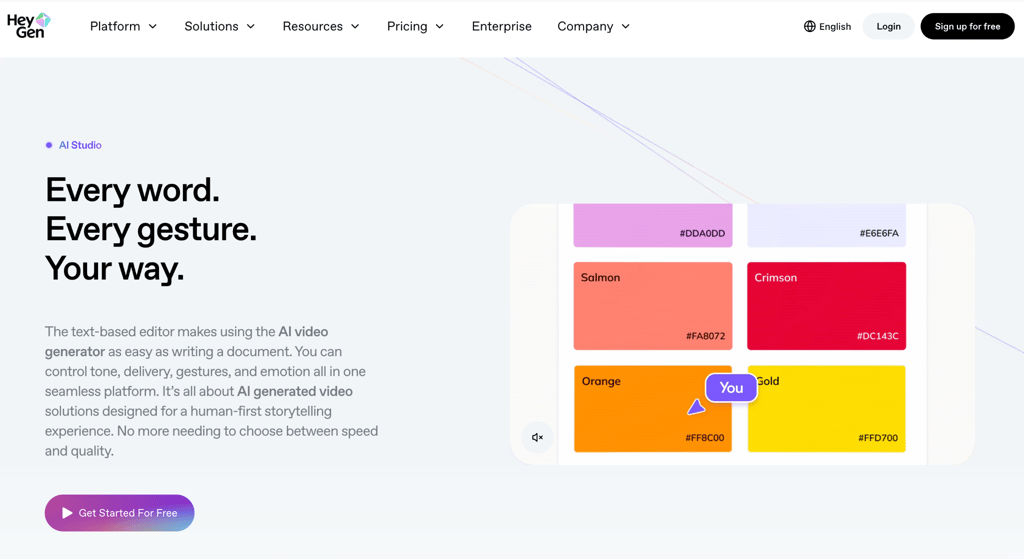
HeyGen is a web platform specializing in creating videos with AI avatars that can be your talking head for learning courses, social media clips, and video ads.
Here, you can create your own AI avatars or choose them from a built-in stock library. Then, select a video template and give HeyGen a prompt in text, image, or audio format. The tool will produce a highly realistic video with lip sync and dubbing in 175+ languages.
HeyGen offers a free version that allows for three 3-minute video generations per month in 720p quality export. To create longer videos and access 1080p quality, you need to pay $29.00/month.
5. invideo AI

invideo AI lets you create stunning, unique videos with just a few text prompts. It can generate video scripts, do voiceovers, and add details like subtitles and background music.
You can also fine-tune the final results in a comprehensive editor. It helps you scale without spending a fortune on video editors and voice artists. Some use cases include creating professional-looking videos for YouTube, Instagram, or TikTok.
The free plan is great for testing, letting you try basic features with limited exports. The $28.00/month Plus plan adds more video minutes, stock clips, and unlimited exports. I think invideo AI is excellent for quickly producing social media content, ads, or short marketing videos, though it’s less tailored for polished corporate presentations like Synthesia.
6. Veed
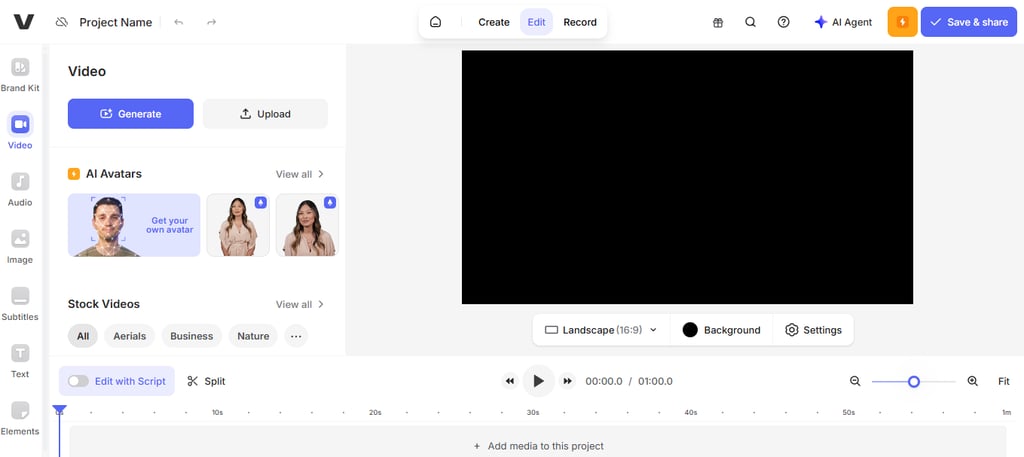
Veed simplifies video creation with its templates and intuitive editing features. It’s a popular pick for social media managers looking to quickly create viral and shareable content.
There’s a free plan you can try that lets you export short videos (with a watermark) and test the editor, as well as basic AI features, before committing. Paid plans start at $12.00/month, which removes watermarks, unlocks Full HD exports, longer subtitle hours, and basic branding.
Our Veed review reports that the upport is reachable by email for free users, while paid and enterprise customers get in-editor live chat and priority options. Its terms also note pro-rata refunds in specific cases (and a 14-day consumer right to a full refund if unused).
Best AI tools for businesses
AI tools have changed how businesses operate, allowing organizations to deliver customer service through personalized, AI-powered communication. They can help businesses save money and resources while enhancing customer experience.
1. AdCreative.ai
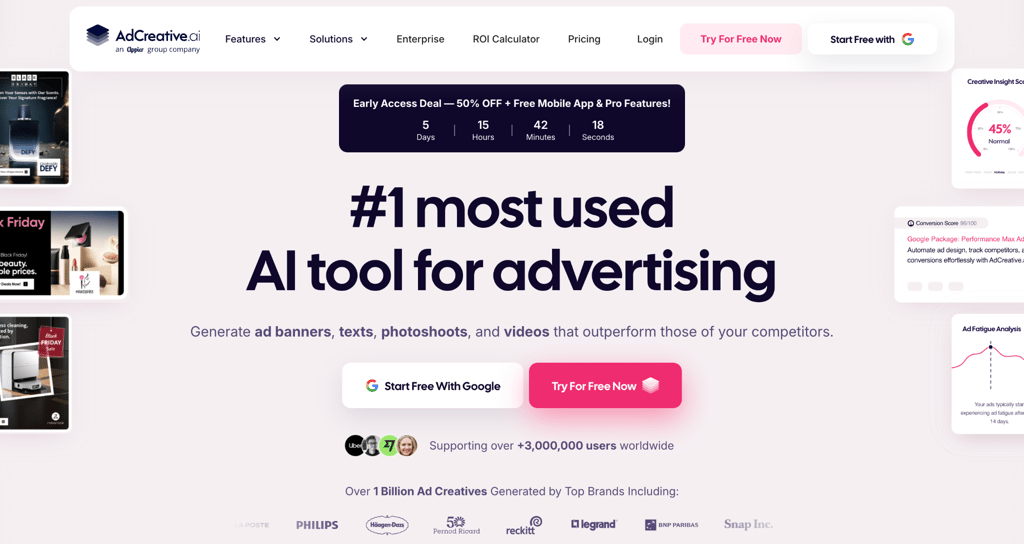
AdCreative generates any type of ad fully aligned with your brand and platforms’ standards. Product photos and videos, creative ads, and UGC-style presentations can be created with a simple text prompt or an image upload.
This tool replaces expensive photo shoots and long video production cycles for businesses that need to test an idea quickly and release a series of creatives. I found its content improvement features very helpful – they offer insights based on competitor research and include checks for compliance with legal requirements and platform policies.
As our AdCreative review shows, the platform charges $20.00/month for 10 monthly downloads. More downloads and more brands cost more. The platform also offers 10 free downloads during a 7-day trial period.
2. Motion AI
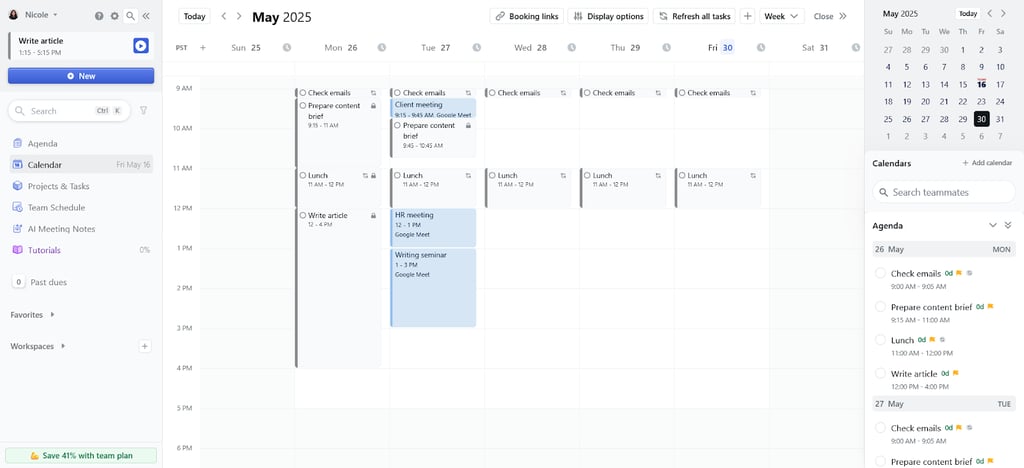
Motion is designed to help you, rather than your customers, as it can manage tasks, book meetings, and prioritize projects. It integrates with all popular project management tools and even your calendar.
It has AI employees that handle repetitive tasks and let you focus on the important things, especially useful for automating scheduling, organizing projects, and cutting down on routine work.
There’s a free trial available, while paid plans begin at $29.00/month, which gives you access to its core features along with AI credits. According to our Motion review, you can reach its customer support through email, in-app chat, and a detailed help center (phone support isn’t included). Unfortunately, Motion does not provide a general money-back guarantee.
3. WhiteBridge AI
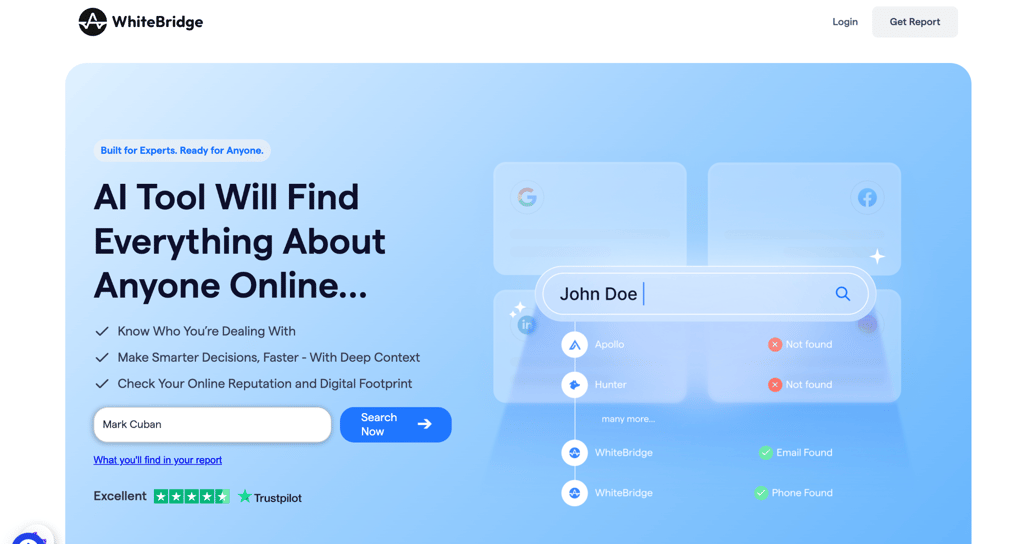
WhiteBridge can gather all the information about a person, including their work history, social media activity, education, online presence, and any data breaches they’ve been involved in. People leave a big digital footprint, and WhiteBridge centralizes all these publicly available data traces into one comprehensive report.
Businesses use the tool to get a deeper understanding of their leads, investors, or potential partners. Based on AI analysis, the tool also provides insights on how to build stronger relationships with the researched people and identifies red flags to watch out for.
Because the tool values the high quality of its reports, there’s no free trial period. You can pay $8.99 for a single report if you buy 10 of them (the cheapest price per report). There is also a pricing tailored to business needs.
4. Apollo
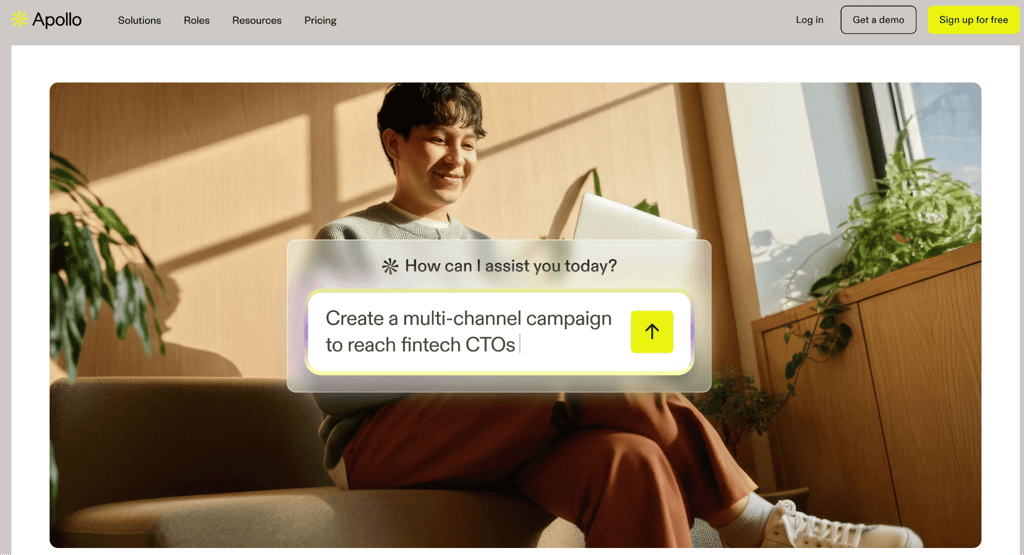
Apollo helps find, convert, and engage potential clients. This sales tool sources data from various channels to get contact information and personal details of 210 million people and 35 million companies worldwide.
Together with an extensive database of contacts, Apollo has built-in sales tools such as automated email sequences, engagement tracking, and identification of anonymous visitors. As our Apollo review shows, the platform features an inbound router that qualifies and routes leads to the right sales representative.
Apollo has a free version with 1200 yearly credits and basic features. To get access to the rich database, unlimited sequences, and CRM integrations, you need to pay at least $49.00/month.
Best AI apps
AI-powered mobile apps take AI to the next level by placing them just a click away, so you can easily integrate these tools into your daily tasks. Below are some notable AI apps.
1. HeyGen

HeyGen is an advanced text-to-video platform that offers customizable lifelike avatars. You can mimic yourself or choose from 1000+ stock avatars, making it a powerful solution for creating professional, watermark-free videos. The platform supports 175+ languages with perfect translations and lip syncing. According to our HeyGen review, it’s ideal for educators, marketers, and businesses that want to save on hiring professional camera crews. You can create demos, training materials, personalized messages, and much more.
HeyGen has a free plan for testing, which is great for quick AI video demos and localization, while paid plans start at $29.00/month (HD export, voice cloning, unlimited videos). Support is available via in-app chat, email, and enterprise representatives. You can receive a refund at the company’s discretion if you contact support within 14-15 days of purchase.
2. Murf AI
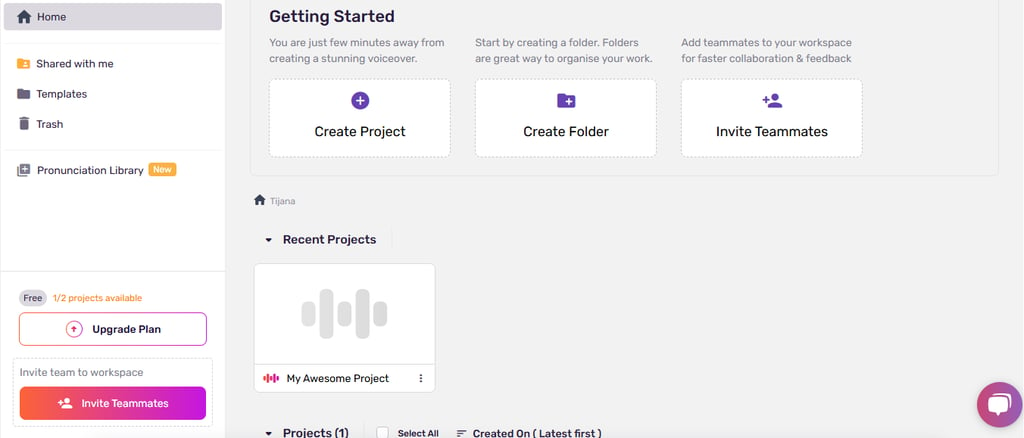
Murf AI allows users to create lifelike, customizable voiceovers with an intuitive interface that simplifies audio editing. Its natural-sounding results make it especially valuable for podcasters, educators, marketers, and businesses seeking professional narration without hiring voice actors.
The platform offers a free version, giving new users the chance to explore its AI voice generator before committing. Paid plans start at $19.00/month, which unlocks higher-quality exports, access to more voices, and extended usage limits.
Customer support is available 24/7 through live chat and email, covering billing, subscriptions, technical issues, and workspace management. According to our Murf AI review, it also offers a money-back guarantee under certain conditions.
Best AI voice generators
AI voice generators can help you create high-quality, lifelike voiceovers for podcasts, videos, and audiobooks in just minutes, streamlining the workflow and reducing costs. Below are some of the top options.
1. Lovo AI

Lovo AI is a well-rounded solution for video content creators. It helps you generate scripts, visuals, and unique voice-overs in minutes and syncs their videos with the voice track. It especially excels at producing very natural, human-like voices across many languages. According to our Lovo AI review, the platform is useful for marketers, podcasters, e-learning teams, and small studios needing quick, polished narration.
The free tier lets you try the core text-to-speech and voice tools without commitment. Paid plans start at $10.00/month, when billed monthly, and unlock hundreds of voices, commercial usage rights, and higher-quality exports. Support is offered through a detailed online help center and email assistance, while professional plans add faster responses and onboarding help. However, Lovo does not offer a money-back guarantee.
2. ElevenLabs
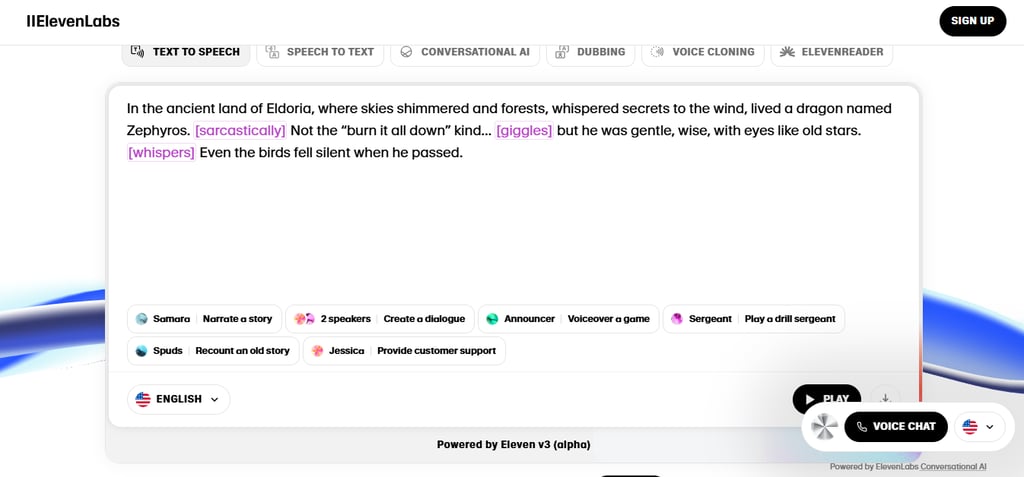
ElevenLabs lets you create top-quality AI audio for your audiobooks, video voiceovers, dubbed videos, or podcasts. As per our Eleven Labs review, it supports 70+ languages and offers advanced voice cloning, customizable voices, and integration with platforms like OpenAI.
Designed for creators, podcasters, publishers, and AI chatbot businesses, ElevenLabs offers a free tier so you can test realistic text-to-speech and basic dubbing. Paid plans start at $5.00/month for hobbyists and add a commercial license, instant voice cloning, and larger monthly credits.
Support comes via an AI help chatbot, request forms for detailed issues, and a Discord community. Refunds are available if requested within 14 days for unused credit periods.
Best AI logo generators
Logos are essential to branding, and with AI tools, you can create professional logo designs quickly without devoting many resources and funds. Below are some stand-out AI logo generators.
1. Looka

Looka generates modern, customized logos in minutes. It allows you to tweak details according to your business vision and build a consistent brand image without needing design skills. According to our Looka review, it works as an AI logo generator and brand kit builder and designed for small businesses, startups, freelancers, and businesses seeking a clear visual identity..
With the free version, you can generate as many logos as you want, customize them with different fonts, colors, and layouts, and save them to your account. However, you cannot actually download or use those logos for your business unless you purchase a package, which starts at $20.00 as a one-time fee.
Customer support is available via live chat, email, and a Help Center. Plus, a 7-day money-back window applies if the purchased files were not downloaded.
2. LogoAI
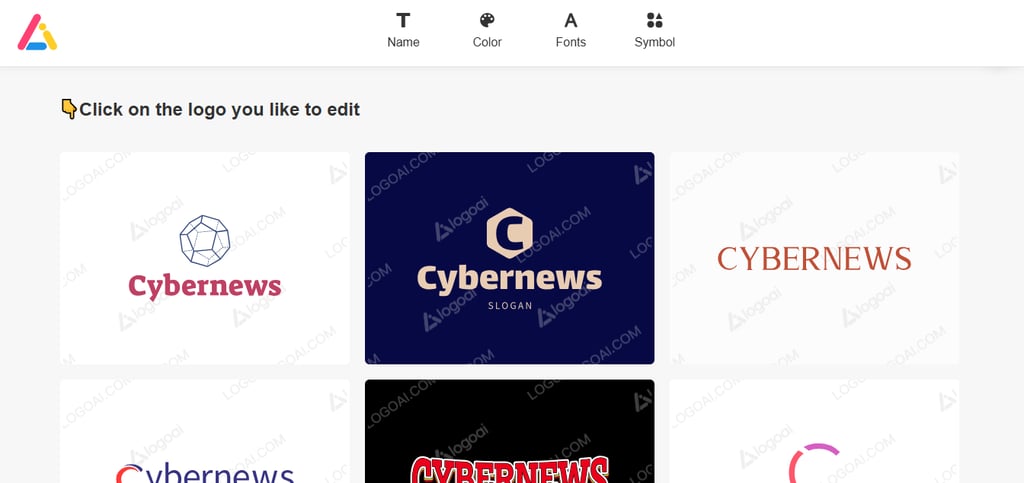
LogoAI offers customization options that enable users to create personalized logos and automate brand promotion, using a vast selection of templates and ideas for inspiration. Built for startups, solopreneurs, and AI chatbot business owners, LogoAI works well as a quick brand identity starter.
As our Logo AI review shows, there is a limited free tier for experimenting and previewing mockups. However, it’s not suited for final commercial posts. Downloads begin at $29.00 for the Basic package, which provides a medium-resolution download and basic edits.
Customer support is mainly email, plus an FAQ and an optional paid designer fix for a few revisions. There is no refund after downloads, and, instead, a 30-day replacement option applies. In my opinion, that replace-only policy isn’t great if you want a refund, although the tool is useful for fast and low-cost logo making.
3. Designs.AI
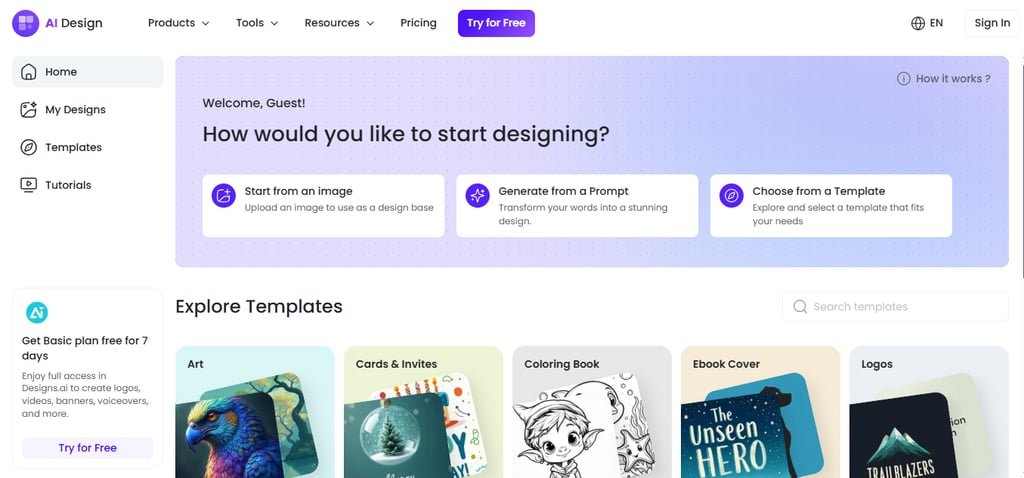
Designs.AI is an all-in-one tool for designers and creative individuals. It offers a logo generator, face swapping, video scripts, video/voice/image generation, and an AI chat.
Depending on the plan, you can use it for quick projects, exclusive top-tier templates, or unified business branding on a scale. When you sign up, you'll get 50 complimentary credits to test the service and see if it works for you.
There is a free version with limited templates and editing tools, which is enough to explore, but I think it’s not very practical for actual work. The paid plans begin with a Basic tier at $19.00/month, unlocking more credits and broader tool access.
Customer support is provided mainly through email and FAQ. And lastly, similarly to other providers, there’s no money-back guarantee, so testing the free version first is quite important.
Best AI resume builders
AI resume builders are an excellent tool for job seekers looking to increase their chances of landing a job with a professional-looking CV crafted in minutes. With the tools below, you can easily catch the attention of hiring managers. Below are the standout options.
1. Resume.io
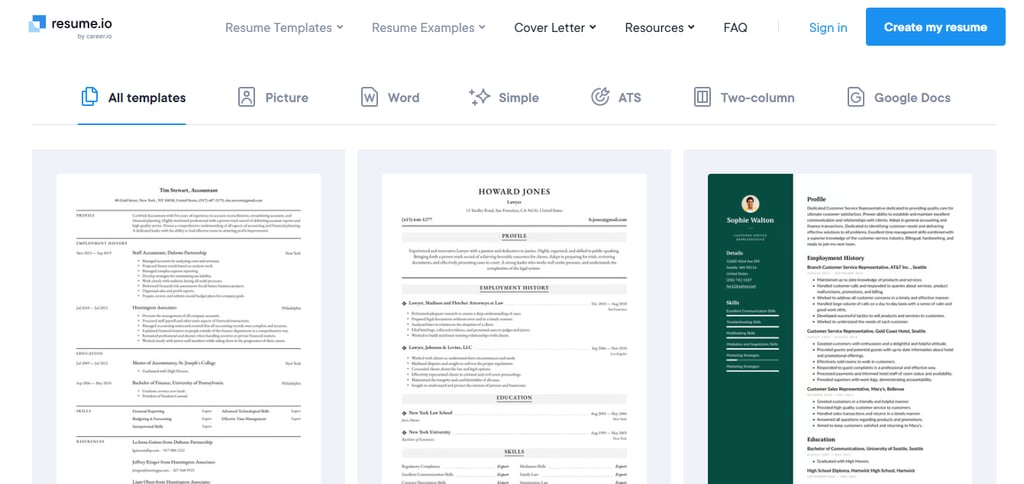
Resume.io offers a free resume builder with plenty of templates to choose from. It also provides additional resources with its cover letter builder and an extensive knowledge base for improving resume writing skills.
The free plan is simple but restrictive, according to our Resume.io reviewYou can only create one resume and one cover letter, and downloads are limited to plain TXT format. Paid plans start with a 7-day trial at $2.95, giving unlimited resumes and cover letters, all premium templates and colors, and unlimited PDF downloads.
That said, be cautious because after the trial, the subscription automatically renews at a much higher rate (I learned it the hard way). If you forget that somehow and need help, support comes via a Help Center, email, and live chat. However, the 7-day money-back guarantee only applies during the trial.
2. Resume Now
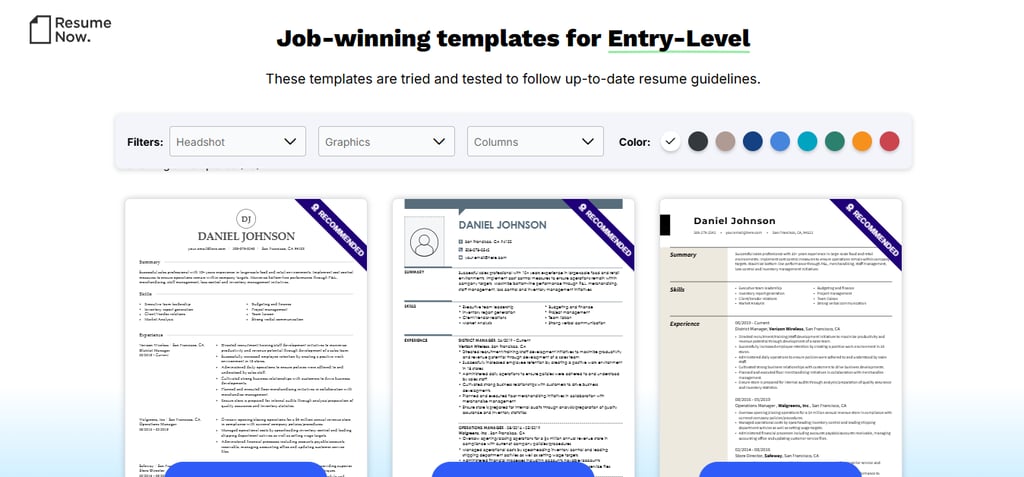
Resume Now guides users through the resume-writing process with tailored tips and an easy-to-use resume builder that helps create resumes, CVs, and cover letters in minutes.
The platform offers a free version that allows users to build and edit resumes and explore AI-generated suggestions, though, similarly to Resume.io, downloads are limited to unformatted plain text files. Paid access starts from $2.45 for 14 days, but like many resume builders, it then auto-renews at a much higher rate, which can be expensive if not canceled in time.
Personally, I don’t think a renewal price should jump up 500%, and a business model shouldn’t rely on users forgetting to cancel, so just be cautious if you don’t plan to use the service for an extended period of time. However, Resume Now does deliver on its services, plus it offers extensive customer support via phone, email, live chat, and a detailed FAQ.
3. Teal
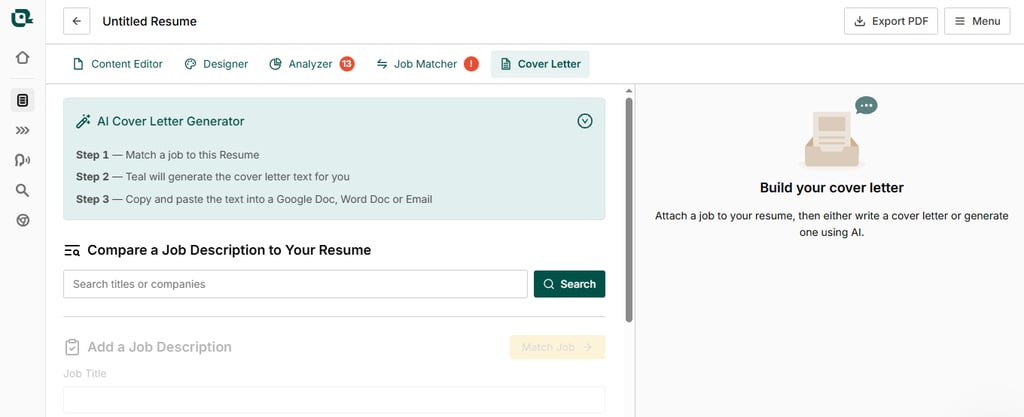
Teal helps you craft role-optimized resumes and offers a more extensive solution — tracking, bookmarking, and connecting you with job openings. It is a strong all-in-one solution for job seekers.
Teal’s free version actually gives you unlimited resumes and unlimited job tracking. The tradeoff is that its AI help (like writing suggestions, keyword checks, and templates) is limited unless you pay. If you upgrade for $13.00/week, you unlock the full AI resume tools, advanced keyword matching, and all templates.
Support is mainly provided via email and knowledge base, and live chat is reserved for partners. Not ideal for those seeking instant assistance, but at least Teal offers a 14-day refund window.
Best AI for coding
When you say AI, coding immediately comes to mind. Indeed, coding is one of the tasks an AI assistant can help you with. These tools reduce the time spent on repetitive tasks and allow you to create an effective code quicker than ever. Below are 3 AI tools for coding worth trying.
1. Hostinger Horizons
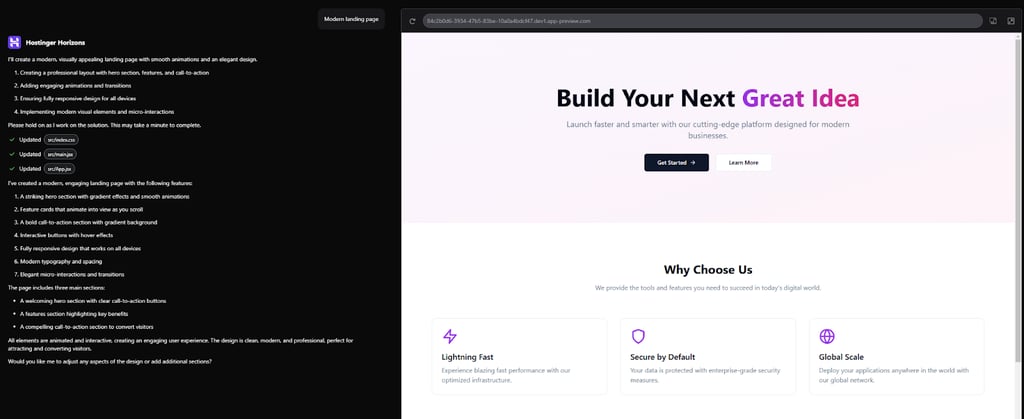
Hostinger Horizons is a robust no-code web app builder that allows you to turn your concept into a working application in minutes. Instead of writing code, you describe what you want in plain language, and the AI creates the structure, design, and features for you.
Everything – from editing to hosting and domains – is handled within the same platform, so you don’t need separate services. This makes it easier for people without programming skills to experiment with ideas, test simple tools, or create apps.
As noted in our Hostinger Horizons review, it’s especially useful for small businesses or individuals who don’t have the budget or time to hire developers. While more complex projects may still require manual coding, Horizons shows how AI can simplify the early stages of web app development.
2. AskCodi
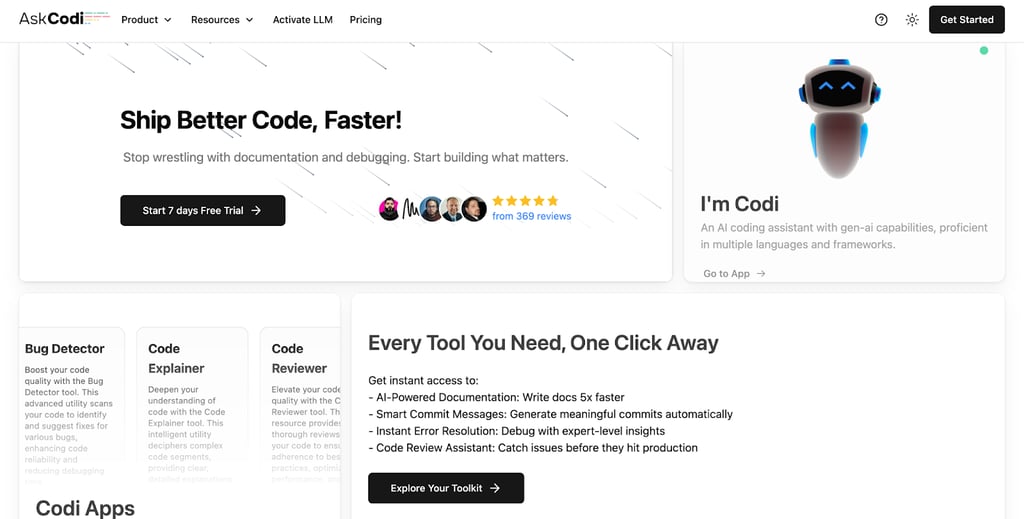
AskCodi is an intelligent AI coding assistant that can write code, catch issues in real time, resolve errors, and create context-aware code quickly and efficiently.
Built around a single unified API, AskCodi lets you access multiple models from OpenAI, Anthropic, Google, and open-source providers without juggling SDKs. It integrates into VS Code, IntelliJ, Neovim, and other editors so you can work where you already code.
It offers a free version with generous token limits and community support for testing features. Paid plans start at $25.00/month and add far larger token allowances, multiple workspaces, priority support, and analytics.
Support ranges from community forums to priority and assistance for paid customers, with enterprise managed services available. Overall, as an AI coding helper, it speeds routine tasks, but obviously, code still needs human refinement, so it should be used with discretion.
3. Cody AI
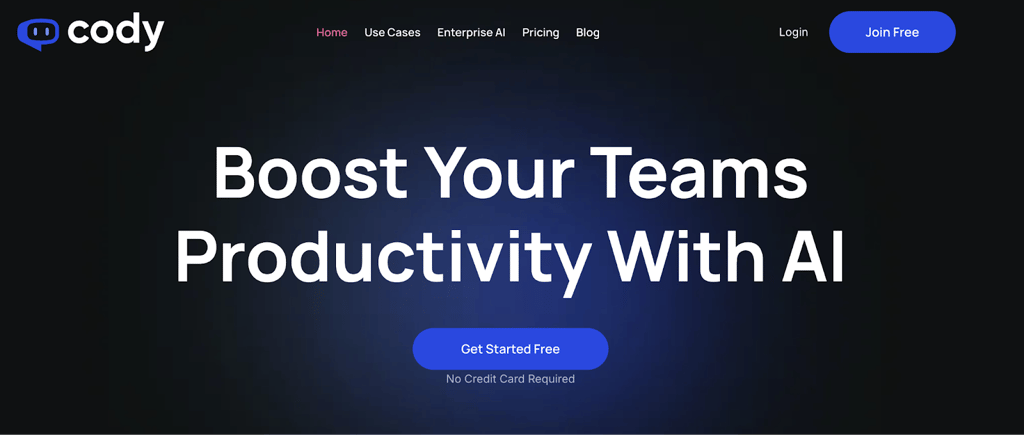
Cody AI allows you to create code faster and more efficiently with its autocomplete feature, custom prompts, and swift issue resolution. It also integrates with various platforms, apps, and systems, making it a strong match for businesses.
You can start using Cody for free. Even the free version gives you some monthly credits, document uploads, and a website widget to try it out. Paid plans start at $29.00/month, giving more credits, more documents, team access, widget customization, and API use.
Customer support is mostly through documentation and community resources. Cody is useful, but users may sometimes find limits and lack live support assistance.
Best AI Assistants
Top AI assistants are all-in-one digital helpers that can manage and organize workflows, perform various tasks, or help you save time and energy. Below are some of the best AI assistants for different goals.
1. Genspark
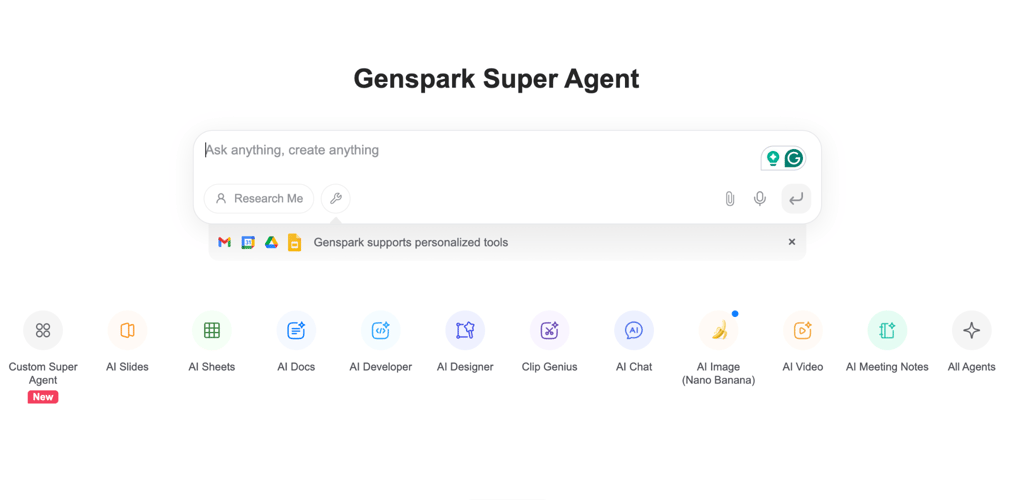
Genspark is a multi-purpose AI assistant that doesn’t just respond in text, but executes real actions. It can call restaurants to make reservations, conduct business calls autonomously, and create professional product videos based on simple text prompts.
It’s powered by 9 different large language models (LLMs), which makes thinking and research more context-aware than single-model systems. Along with it come the latest image, video, and audio generation models, which you can access within a single space.
Genspark gives you 100 free credits per day. The longer and more complex your requests are, the more credits they’ll use. If you need more, 10,000 monthly credits and access to advanced models will cost you $24.99/month.
2. Motion
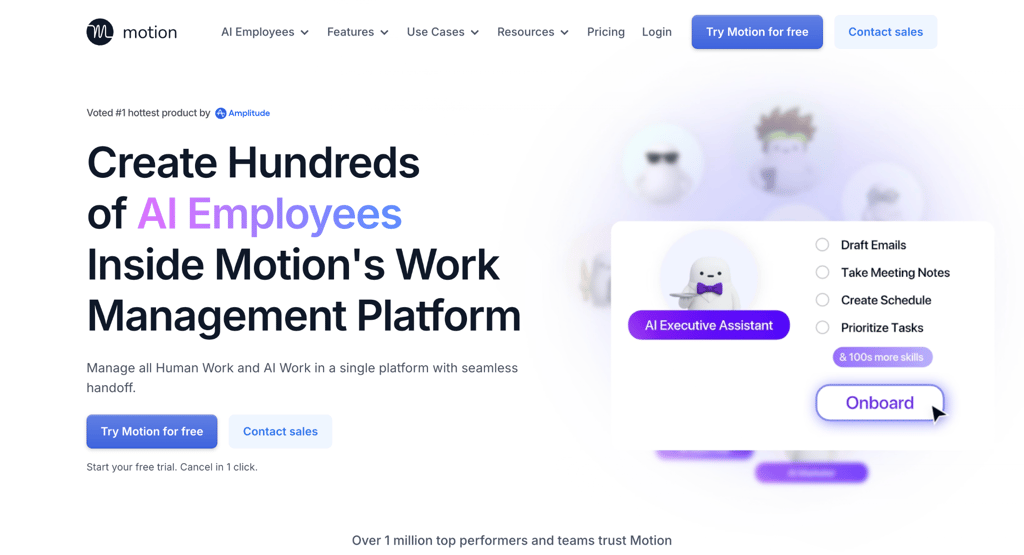
Motion lets you create AI employees that handle routine, repetitive tasks. It can be a sales representative who finds leads and updates CRM, a project manager who takes care of resource planning, or a specialized worker who deals with both.
I like that it isn’t a simple chatbot that outlines what a worker has to do, but AI employees perform every task themselves. You can review each step and manage them easily with Zapier, Slack, and Google Meet integrations.
The cheapest plan with AI workers starts at $49.00/month and gives 10,000 AI credits, according to our Motion review. It’s a decent amount for a moderate workflow, considering that one workflow, like organizing a meeting, costs around five credits. Before that, you can try Motion’s 7-day free trial.
3. Quillbot
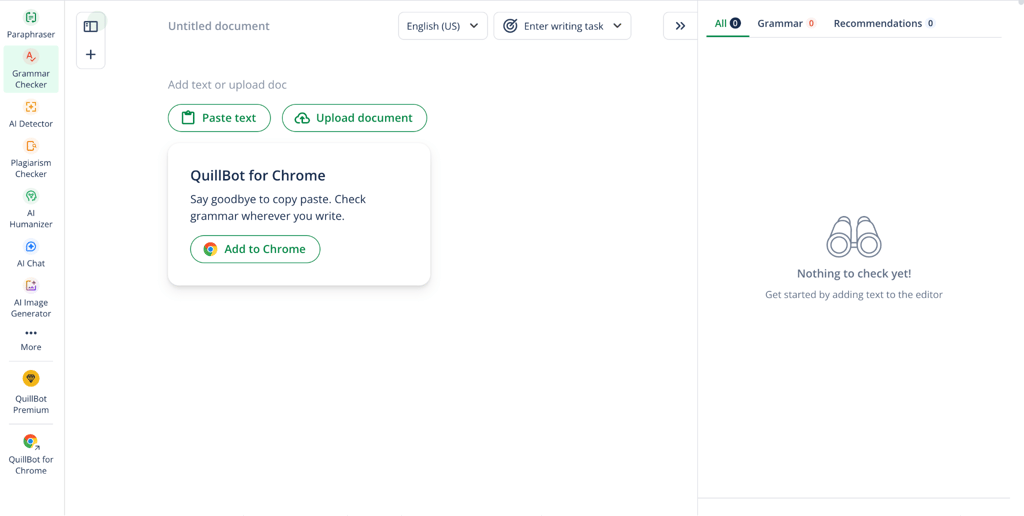
Quillbot is a great assistant for anything related to writing. It has a powerful grammar and plagiarism checker, an AI content detector, and an AI humanizer – all work across 7 languages. I also like its Paraphraser, which lets you choose how closely the rewrite should stick to the original text.
Quillbot can work as an extension in Chrome and Safari to check your writing on any website. What’s more, it provides style, tone, and fluency suggestions based on the writing task you set.
All the essential features are available for free. For $8.33/month, you can upgrade the plan to access more advanced tone suggestions and deeper text paraphrasing. Quillbot also allows you to pause your subscription at any time or request a full refund within 14 days after the purchase.
4. Fieldy
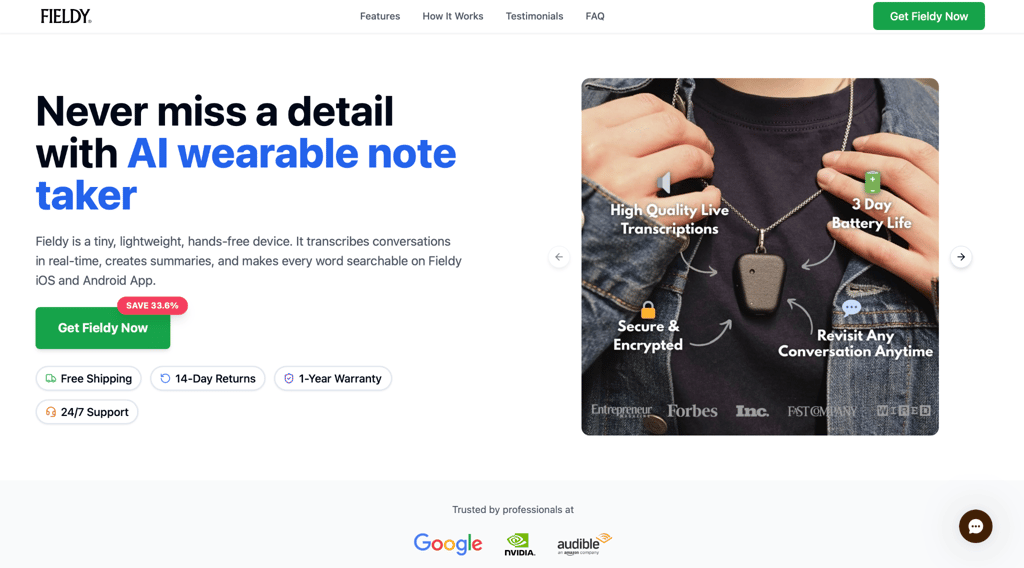
Unlike the others, Fieldy is an always-on type of AI assistant that you wear. It comes as a small pendant you clip onto your shirt. It focuses on memory and reminders rather than content creation.
Fieldy automatically records conversations (once you activate it) and then transforms them into useful summaries, reminders, and searchable transcripts. These abilities make the Fieldy device and app extremely useful for busy professionals or neurodiverse users who require hands-free support to stay on top of tasks.
Fieldy is priced at $99.00 and comes with a membership that includes 150 minutes of AI-processed recordings each month, plus reminders and chat support. The time limit means it’s best for capturing important conversations rather than constant recording, helping users stay organized without adding another manual task to their day. Luckily, you can upgrade to a pricier subscription in order to get more transcription minutes.
5. Monica AI
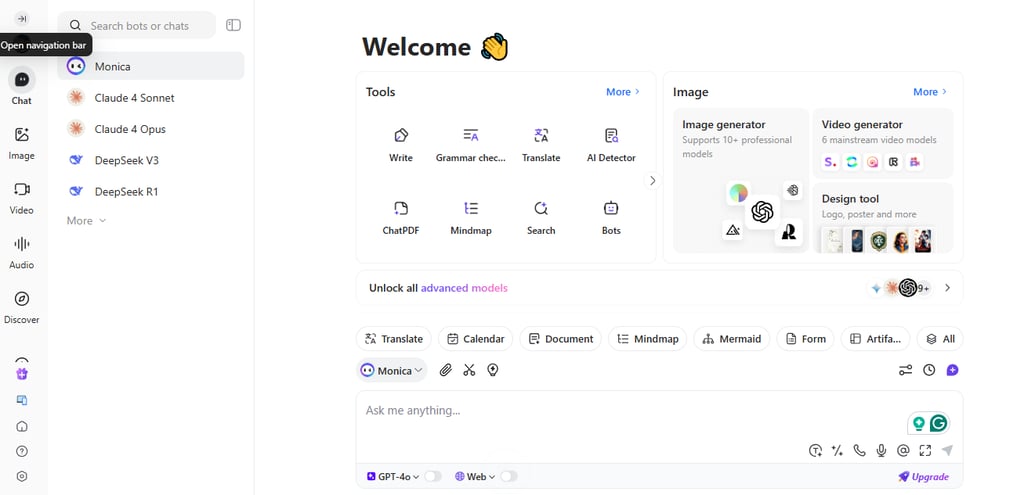
Monica AI is a personal organizer that can keep track of appointments and tasks, work as your translator, perform research, craft engaging texts, and even create artwork. Its easy navigation and integration with other apps make it a great pick for different goals.
Monica stands out because it offers a genuinely useful free version. You can try daily access to core AI models, limited translation, and even some image or PDF features before deciding if it’s worth paying. For those who need more, an entry-level Pro plan starts at $8.30/month and unlocks access to stronger LLM models and coding assistance.
Support comes through a help center, an AI chatbot, and email, while premium users also get live chat. Overall, it’s a solid choice if you want an affordable, multi-purpose AI assistant.
Best AI apps for iPhone
Creating content on the go is the modern reality — whether you’re a photographer or a vlogger, having an app that works for iPhone can be crucial. The following apps go smoothly with iOS, allowing you to create and edit content swiftly.
1. Rytr
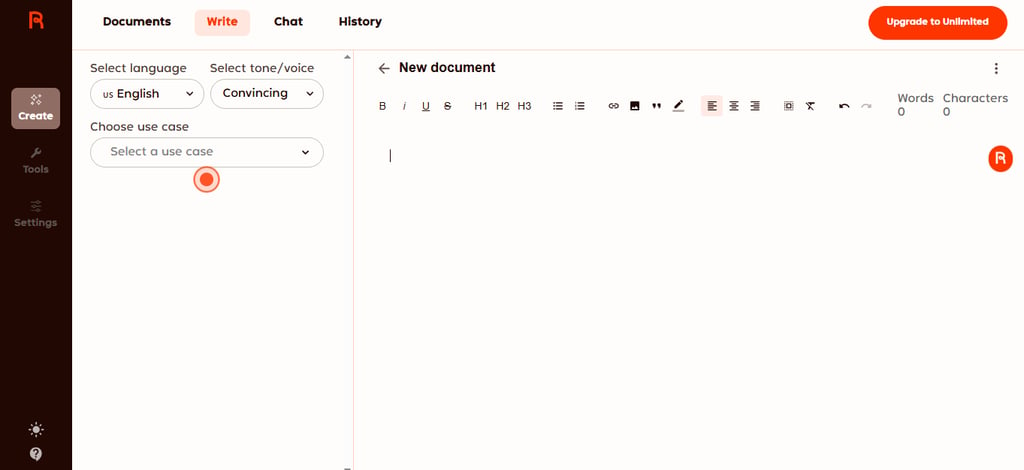
Rytr is an AI writing assistant ideal for copywriters, marketers, and entrepreneurs. It offers 40+ use cases and templates, from short marketing snippets for email campaigns and social media posts to long-form and SEO content.
I especially liked handy tools like the sentence shortener and rewording generator. You can train it on your content so it mirrors your tone. Alternatively, you can create custom tones that fit different scenarios, projects, or clients.
According to our Rytr review, it has a free forever plan and acts as an AI personal assistant for quick marketing copy, idea generation, and basic SEO help. Paid plans start at $7.50/month for unlimited use.
Support is mainly provided via email with priority chat for paid users, plus community and FAQ for self-help. In my view, it’s handy for short and mid-length marketing work, but like any AI agent, it can repeat itself and sometimes misstate facts.
2. Synthesia AI
Synthesia’s iPhone app allows users to create professional-quality videos featuring realistic AI avatars. It can be useful for video content creators. If you’re recording an explainer video or a personal message, Synthesia AI may be your solution.
Built for creators and small teams, the platform offers a free Basic tier so you can test short clips and templates. According to our Synthesia review, the Starter plan begins at $18.00/month and adds downloads, AI dubbing, many more avatars, and larger yearly minutes.
Support includes a Help Center plus email and in-app live chat, with priority options on higher plans. In my view, Synthesia speeds up video production but can feel limiting if you outgrow the included minutes
3. Otter
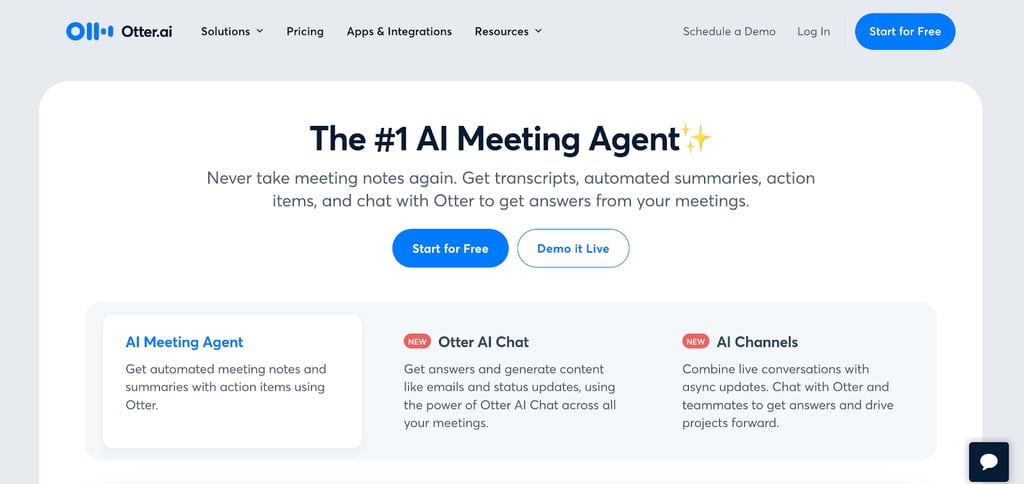
Otter is a meeting assistant designed to streamline note-taking and boost productivity during meetings. It keeps accurate records of business meetings, helps students with real-time notes from lectures, transcribes and summarizes hiring interviews, and provides valuable insights for sales teams.
As shown in our Otter review, you can connect it with your Google or Microsoft calendar and schedule it to automatically join your meetings on Zoom, Microsoft Teams, or Google Meet. Suited to professionals and students, Otter is available as an AI app for iPhone. It has a free Basic plan and paid tiers starting at about $8.33/month for extra transcription minutes and advanced AI workflows.
Support is mainly self-serve via the help center, AI chatbot, and ticketed responses. I think that it’s very useful for quick meeting capture, and its ability to sync across devices makes it especially convenient for staying organized and productive.
Best AI PowerPoint generators
There’s no business communication without presentations, and AI-powered tools offer a shortcut to make perfect PowerPoint slides. These tools help reduce the time and effort required to make captivating presentations.
1. Simplified
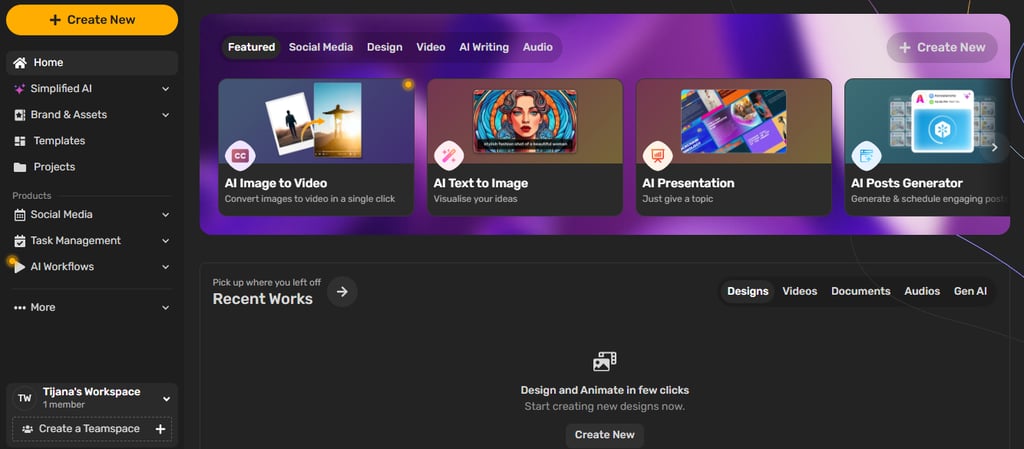
Simplified is a social media and marketing-focused tool that generates professional presentations from simple prompts and templates. AI-generated visuals, videos, and texts add to its appeal, allowing you to streamline the process further.
It shines at converting brief prompts into on-brand slides, social-ready clips, and captioned videos. It offers a free plan to try features, while paid plans start at $16.00/month, which unlocks the Pro tier with social accounts, AI Content Studio, and generative AI credits.
Support comes via live chat, email, and an extensive help center. However, phone support is not available, and there is no money-back guarantee, only the free tier for testing. I find the AI genuinely time-saving, but, like with most AI tools, you will have to put in some work to complete it.
2. Jasper AI
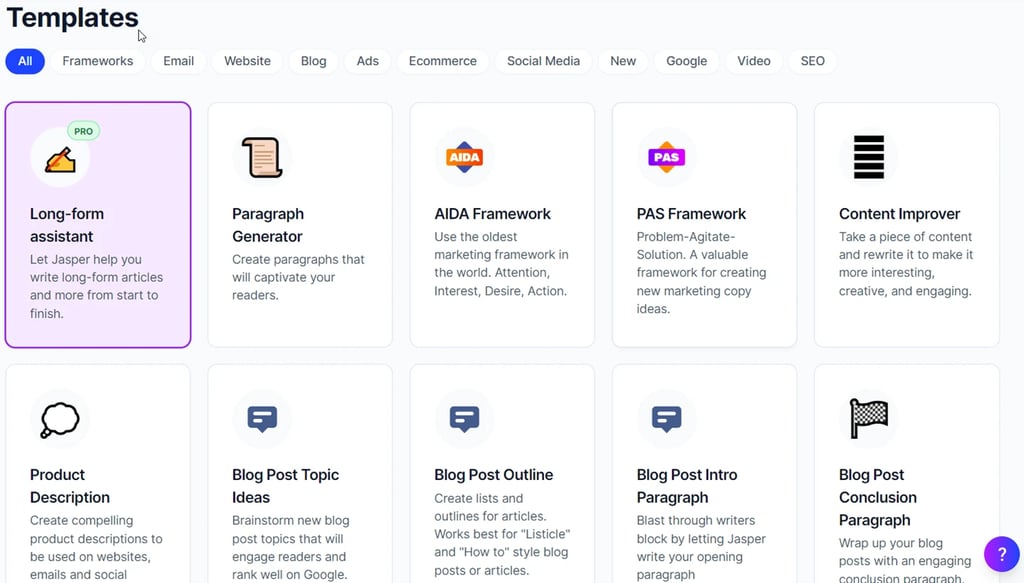
Jasper AI integrates AI writing with slide creation, making it a strong tool for anyone looking to craft marketing-focused, engaging slides. Jasper can automatically generate text, suggest improvements, and adjust the tone of your content.
There is a free trial available to get started, and the entry plan starts at $59.00/month, which includes brand voice options and the core editor. According to our Jasper AI review, customer support is offered through a help center, email, and a community forum, with dedicated managers available only on higher tiers.
A 7-day money-back guarantee is available too, so you can test it out. All in all, I find it strong for a marketing presentation, but it lacks ready-made templates, which isn’t ideal if you wish to save time by selecting a blueprint.
Best AI automation tools
AI-powered automation tools are a lifesaver for anyone dealing with repetitive tasks. They can help clear up your schedule, allowing you to focus on more strategic and creative goals. Below are some automated AI tools that can help you with heavy lifting.
1. AutoGPT
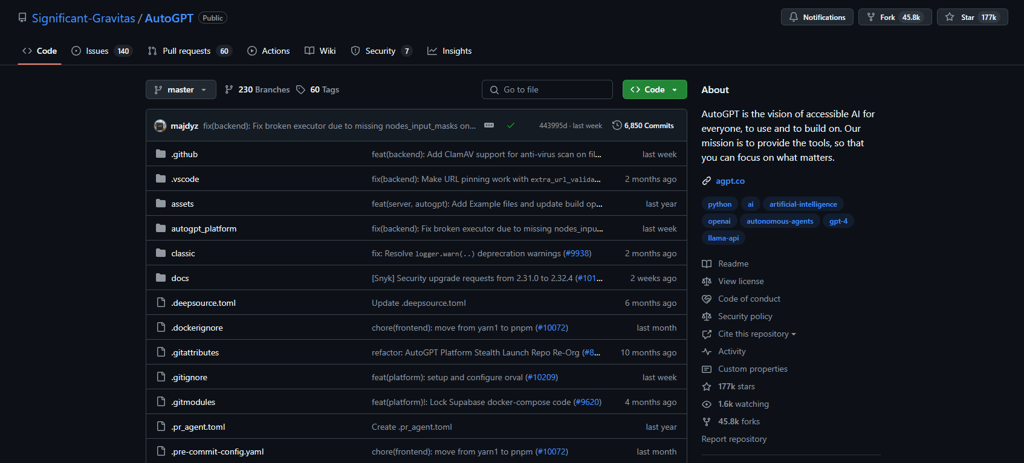
AutoGPT is a cutting-edge tool capable of managing workflows autonomously, breaking bigger tasks into smaller ones. It learns and improves with each iteration, offering better efficiency and adaptability for complex tasks.
Built as an open-source platform for creating, deploying, and running continuous AI agents, AutoGPT includes a free self-hosted option and a cloud-hosted beta available via a waitlist. It’s great at automating end-to-end workflows, assembling agents with a low-code builder, and tracking performance through its frontend, marketplace, and analytics.
AutoGPT is best for developers, automation teams, and technically minded creators comfortable with Docker and command line setup. Support is provided through maintained documentation, an active Discord community, and GitHub issues for bugs and feature requests.
2. Make
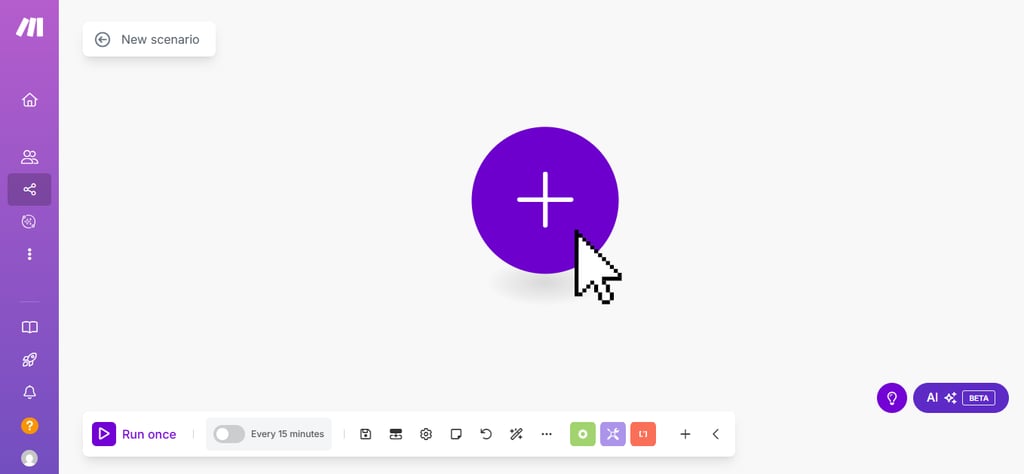
Make combines multiple applications into cohesive workflows. It’s designed to streamline everything from marketing to data management, allowing you to even use it as an AI tool for content creation. Its no-code interface and integration with other AI tools make it a strong pick for both beginners and professionals.
Beyond the core pitch, Make offers a free version with no time limit that’s good for learning no-code automation and light AI content tasks. However, it caps runs, so you’ll hit limits as usage grows. Paid plans start at $9.00/month for the Core tier, which unlocks unlimited active scenarios, minute-level scheduling, and API access.
The platform offers a full range of support options, from self-service documentation and community resources to paid ticketed support and 24/7 enterprise assistance. There is no money-back guarantee, which I find a notable drawback for businesses testing heavy automation. Overall, it’s a solid AI automation tool with sensible scaling, but watch the quota limits.
3. Sintra AI

Sintra AI offers 12 cute AI helpers, each with a different role. For example, Soshie is your social media manager, Cassie does customer support, and Dexter specializes in data analytics. The pricing plans offer great flexibility since you can pick individual helpers or get all of them with the Sintra X plan. The platform requires zero technical knowledge and supports 100+ languages.
Sintra X starts at $97.00/month and gives access to all 12 helpers, plus power-ups and a Brain AI to speed up AI automation tools and workflows. It fits entrepreneurs and small teams who need automated support and analytics capabilities.
Support runs 24/7 through the Cassie AI chat, with email and a Help Center, though there is no phone line. And lastly, Sintra AI even offers a 14-day money-back guarantee for you to try out the services risk-free.
How we tested and ranked AI tools
With so many AI solutions on the market, selecting the best tools is essential. That’s why the Cybernews research team and I, using a rigorous AI testing methodology, assessed these tools using strict criteria — aiming to identify solutions that stand out in terms of usability, innovation, and value. Here’s how we ranked the best AI tools:
- Performance and features (25%). Another crucial thing was testing the tools in real-world scenarios to evaluate their effectiveness. For example, when assessing writing tools, I looked at the accuracy of spell-checking and how creative the idea generation was.
- Initial selection (20%). I first compiled a list of all the popular and emerging AI tools. I focused on different categories, such as video generators or automation tools. Plus, I considered reviews, user comments, and expert opinions.
- Setup and testing (20%). I also explored the setup process, ease of navigation, and user-friendliness, prioritizing a beginner-friendly interface and easy onboarding.
- Pricing and value (20%). Ultimately, I selected AI tools with a good price-to-quality balance. These include tools with a wide price tier range, free plans, and trial periods.
- Customer support (15%). I even examined the available support channels and the support team's responsiveness. Tools with quality support ranked higher on my list.
My goal was to simplify your decision-making process. So, all of my picks are based on factors like different niches, needs, and budgets. You can be sure that all of them excel in customizability, reliability, performance, and overall value.
Which type of AI tool do you need?
Below is a practical table that keeps everything you need to know when choosing an AI tool. It shows what each category does, why you’d pick it, common use cases, and a short note on limitations so you can decide quickly.
| Category | Purpose | Why you’d use it | Typical users/use cases | Considerations |
| General-purpose AI | Broad conversational agents and multi-task models | Flexible help across writing, research, coding, planning, and chat, basically a one tool for many jobs | Individuals and teams who want a single assistant for varied tasks: drafting, brainstorming, light analysis | Great for convenience but can hallucinate and needs guardrails for sensitive work |
| AI image generators | Create visuals from text or source images | Fast visual output without a studio | Marketers, designers, social posts, concept art | Quality varies by prompt, licensing, and copyright issues |
| AI business tools | Data analysis, insights, and workflow optimization | Speed up decisions and reduce manual reporting | Managers, ops, customer success, sales forecasting | Data access and security are important |
| Automation platforms | Chain apps and automate repetitive processes | Remove manual steps and reduce errors | Marketing ops, IT, SMBs automating workflows | Set up time up front, watch for brittle automations |
| AI productivity assistants | Organize tasks, capture notes, summarize conversations | Reduce mental load and keep priorities visible | Busy professionals, people using wearables | Subscription limits and privacy tradeoffs |
| AI text generators | Draft, edit, and reframe copy | Produce content faster and jumpstart ideas | Content teams, students, social creators | Needs human editing for accuracy and voice consistency |
| AI video tools | Script-to-video, editing, avatars, voiceovers | Faster, cheaper video production | Educators, social creators, product demos | Can look artificial, and editing is still often required |
| AI coding assistants | Suggest code, debug, and refactor | Speed development and reduce errors | Developers, QA engineers, small teams | Needs output verification, security and licensing of generated code matter |
| AI audio tools | Voiceovers, music generation, audio editing | Produce professional sound without a studio | Podcasters, video producers, game devs | Voice likeness and royalty issues, quality varies |
| Niche/miscellaneous tools | Solve narrowly focused tasks (CVs, headshots, legal summaries) | Replace a specialist for specific, bounded needs | HR, legal researchers, and creatives with one-off tasks | May be limited in scope and quality compared with experts |
Conclusion
Artificial intelligence is rapidly changing the way we live and work, with new tools emerging daily. To select the best AI tool for your tasks, define your goals clearly and look for the best options. Pay attention to factors like feature selection, interface, pricing, and customer support, and be sure to try various options.
The good news is that most of the tools on my list offer a free version, so don’t hesitate to test them out. Most importantly, remember that while these tools amplify human potential, they still require direction and oversight. AI tools are at their best when guided by the user. Balance automation with expertise and select an AI tool that complements your skills.
FAQ
What are the best AI tools in 2026?
In 2026, the best AI tools really depend on what you need. Jasper is great for writing and marketing, Motion and Sintra AI shine in automation, while Perplexity makes research easier. For video, LTX Studio leads the way, and Copyleaks or Quillbot help check content authenticity. ChatGPT also remains a versatile tool.
Which is the best AI detection tool?
Copyleaks and Grammarly are excellent tools that offer AI detection, among other features. While Grammarly works more as a writing assistant, Copyleaks focuses mainly on AI and plagiarism detection. It’s specifically trained against AI systems like ChatGPT, which makes it an especially strong contender.
Is ChatGPT better than Gemini?
While there are plenty of advanced AI tools on the market, GPT-4 and DeepMind’s AlphaFold are often seen as the strongest options. GPT-4 specializes in natural language processing, while AlphaFold has proven itself in scientific fields by predicting protein structures. Essentially, the smartest AI generally depends on the task you have in mind.
Which is the best AI tool for free?
Many AI apps and platforms have free plans and trials, with some of the most popular free options being ChatGPT and Quillbot. While you can access a more advanced toolset by purchasing paid subscriptions for these tools, you can still enjoy their core features — like text generation, image creation, and spell-checking — for free.
What are the best AI tools for businesses?
Depending on your business needs, you can choose different AI tools. For example, Jasper or ChatGPT excel in content creation. Additionally, tools like Quillbot are great for enhancing your writing. However, you can always check out my top list above and find the one solution that best fits your business needs.