HeyPolo vs Life360: which family location sharing app is better in 2026?
Being behind major reports like The Mother of All Breaches and RockYou2024, our in-house cybersecurity experts and journalists provide unbiased, real-world testing and in-depth analysis.
We maintain complete transparency by openly sharing our testing methodologies with our audience.
Learn more
A few years back, family location-sharing apps were all about doing one job: keeping an eye on your kid’s location. But as data privacy has become a bigger part of how people think about the apps they use, that’s no longer enough. Families today want all-around safety, where knowing where someone is doesn't come at the cost of how much of their life gets logged and shared along the way.
HeyPolo and Life360 sit on opposite ends of that spectrum. Life360 is the established name, built into a full-featured safety platform with driving reports, emergency dispatch, and a free tier. However, its location sharing runs continuously by default, and it has a documented history of selling that data to brokers. HeyPolo, on the other hand, is the new name on the scene: a privacy-first alternative from the team behind Surfshark, built around consent-based sharing instead of always-on monitoring.
On the surface, both apps do the job – they can tell you where your kids or other family members are. However, the real differences show up in how they get that information, what they do with it afterward, and how comfortable your family will feel using them every day.
To figure out which family location-sharing app is better in 2026, I spent several weeks testing HeyPolo vs Life360 across safety features, pricing, privacy, and ease of use to help you figure out which one actually fits your household best.
After testing both apps daily with my own family and friends, HeyPolo is the better overall choice in 2026. It offers real-time sharing, arrival alerts, and an SOS button without constant background surveillance. Plus, its consent-based design makes it easier to introduce to older kids and teens without a fight. One flat subscription – from $1.99/month – covers the whole family, and HeyPolo never sells location data. Despite Life360’s strong features, such as driving safety and emergency response, HeyPolo is a less invasive way to stay connected, ensuring all-around safety.
HeyPolo vs Life360 at a glance
HeyPolo was launched in 2026 as a location-sharing app built around consent. In practice, that means family members choose when, how precisely, and for how long their location is visible, and sharing switches off automatically once a timer runs out.
Life360 has been around far longer and has grown into a broader safety platform, layering driving analytics, crash detection, roadside assistance, and even identity theft protection on top of its core location-sharing tools.
Here’s a quick comparison of HeyPolo vs Life360:
| Criteria | HeyPolo | Life360 |
| ⭐ Rating: | 4.8 | 4.1 |
| 🥇 Overall rank: | #1 in parental control apps | #10 in parental control apps |
| 🎯 Main focus: | Consent-based, time-limited location sharing | Always-on family safety and driving monitoring |
| 💰 Starting price: | $1.99/month | $6.66/month |
| 👨👩👧👦 Best for: | Families wanting privacy and simplicity | Families wanting maximum safety features |
| 📍 Location sharing: | Adjustable precision, auto-expires | Real-time, continuous by default |
| 🛡️ Safety features: | SOS button, arrival alerts, weather overlays | SOS, crash detection, emergency dispatch |
| 🚗 Driving safety: | Rolling out (crash alerts, weekly reports) | Fully built out (Silver-Platinum tiers) |
| 🔒 Privacy feel: | Low-pressure, opt-in by feature | More monitoring-heavy, less granular control |
| ⚡ Ease of use: | Simple, one plan | More setup with tiered features |
| 🏆 Overall recommendation: | Better for everyday families | Better for driving-focused safety needs |

What is HeyPolo?
HeyPolo is a location-sharing and family safety app for iOS and Android, built by the team behind Surfshark – one of the more established names in consumer privacy software.
Rather than tracking family members continuously, HeyPolo is built around active consent. That means that each person decides when their location is visible, how precise it is, and how long the sharing lasts before it automatically switches off.
That design shows up in a few specific features. Location sharing can be set to a custom timer, and stops broadcasting the moment it expires. I’ve found it especially useful for a commute, a night out, or a solo trip.
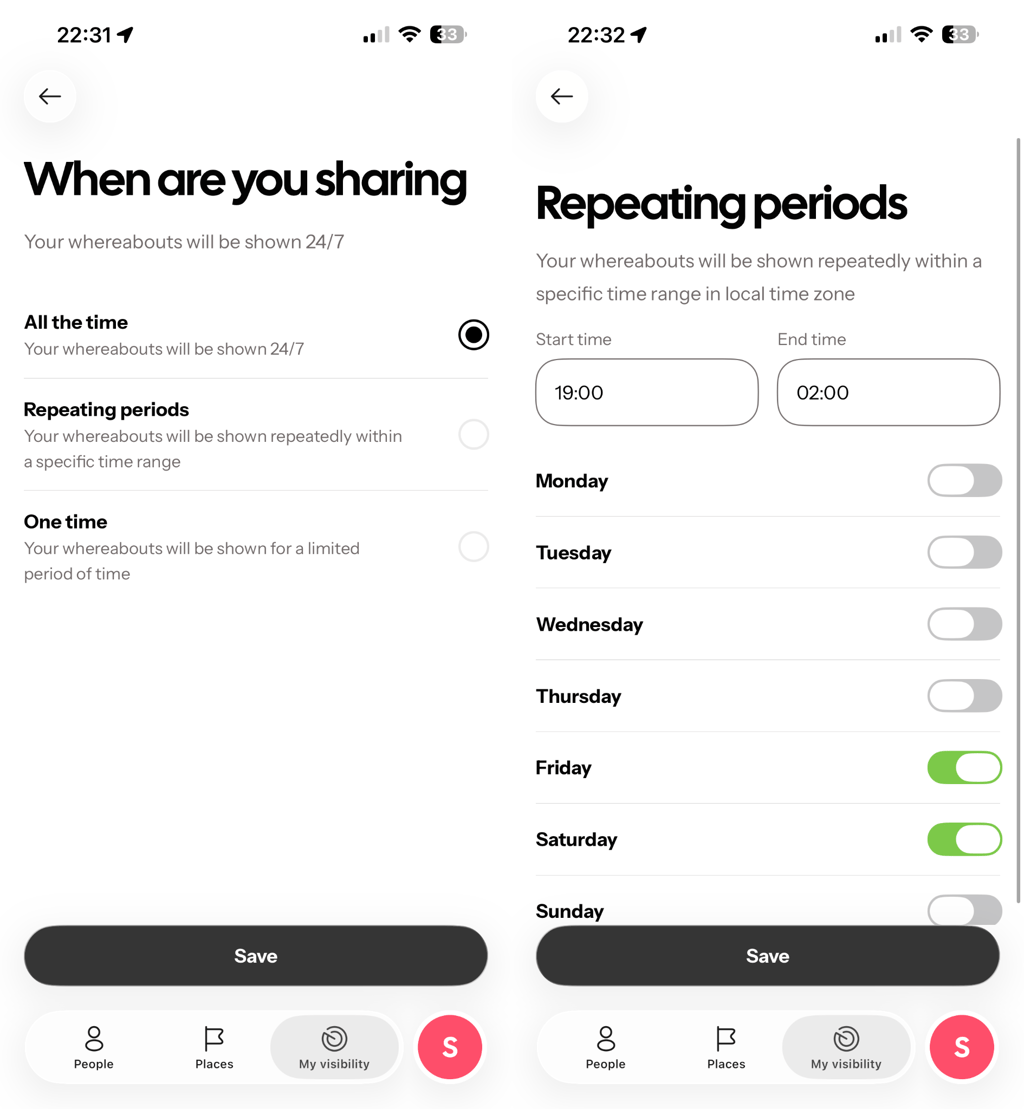
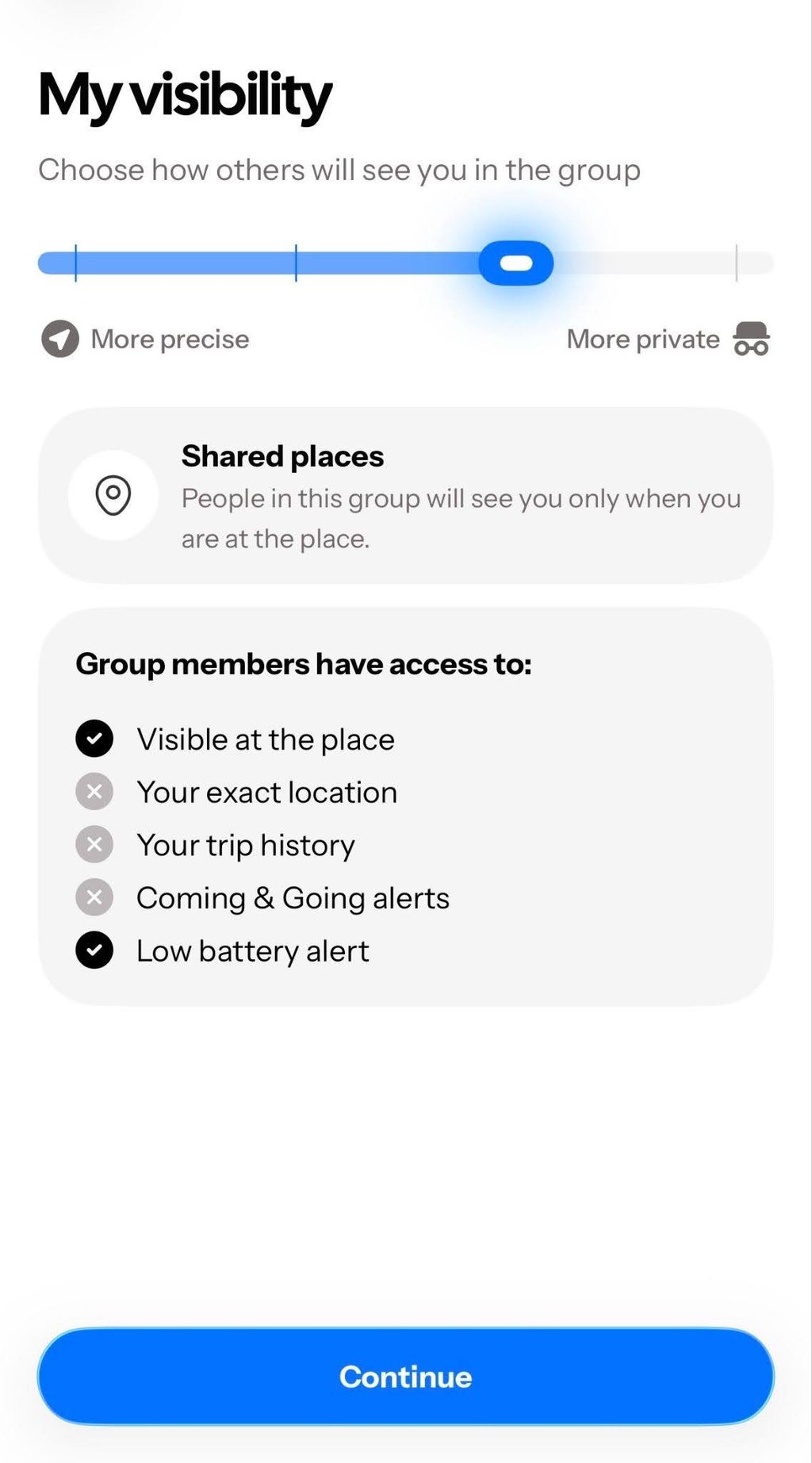
Visibility can also be adjusted between 3 precision levels: Exact location, General area, and Private mode. There’s also the Shared places option, which lets family members get arrival and departure alerts for spots like home, school, or work, without exposing their location the rest of the time.
For everyday peace of mind, HeyPolo also includes other useful features – a one-tap SOS button, low-battery alerts, weather overlays, and a live compass for finding people in crowded places like concerts or festivals.
As highlighted in our HeyPolo review, it doesn't sell, share, or monetize user location data, and everything is encrypted in transit. That’s why I consider it a direct contrast to safety apps that have faced criticism over data practices.
HeyPolo pros and cons
What is Life360?
Life360 is one of the most widely used family safety apps, with a reported 96 million members relying on it for real-time location sharing, driving reports, and emergency assistance.
It's built for families who want a single app to cover location tracking, driving behavior, and emergency response in one place, and it's grown well beyond simple location sharing since launch.
The core of Life360 is continuous location sharing within your chosen people – a group of family members who can see each other's real-time locations, get notified when someone arrives at or leaves set places, and track driving activities automatically.
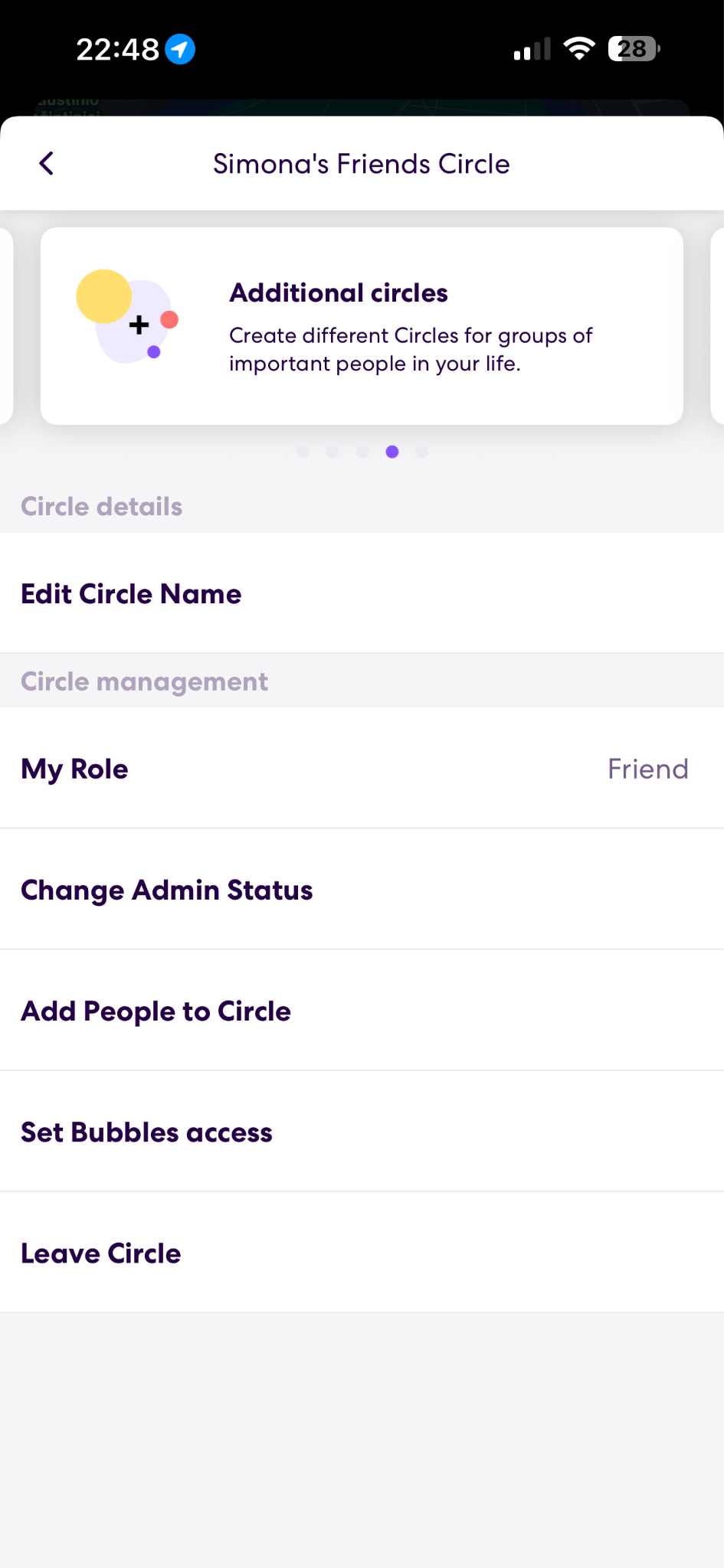
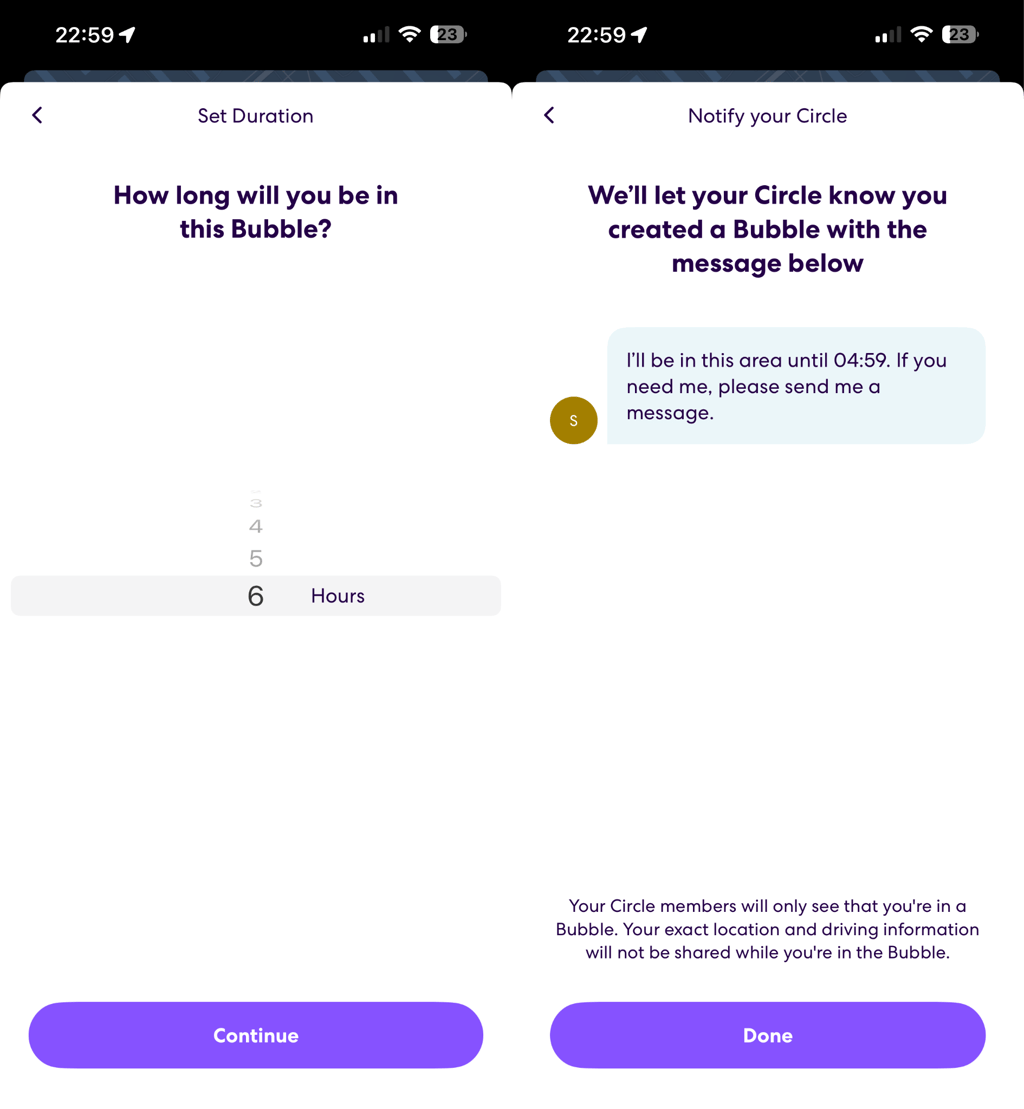
For more privacy, Life360 also offers a Bubble feature that temporarily broadens your location to a wider area for a set number of hours. When I tested it, the Bubble feature was easy to activate, but there’s a catch: your Circle still sees that you're in a Bubble, and it automatically shows your location again once the timer runs out, so there's no way to go fully invisible.
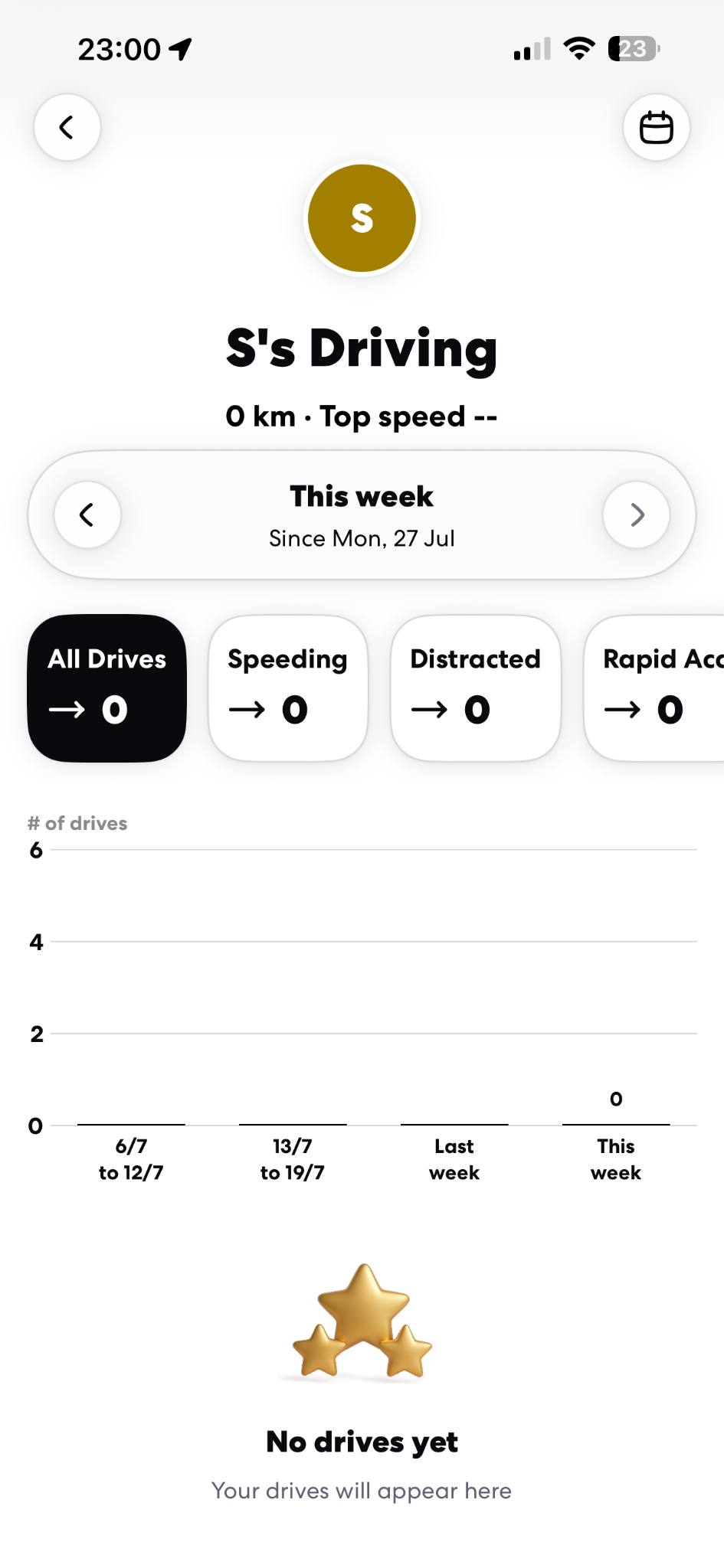
Paid tiers add crash detection with live emergency dispatch, individual driver reports covering speeding and hard braking, 24/7 roadside assistance, and – at the top tier – identity theft protection, credit monitoring, and disaster response support. Life360 also integrates with Tile Bluetooth trackers for finding physical items like keys, bags, electronic devices, and wallets, among others.
Life360's tracking is more comprehensive by default than HeyPolo's, but that comes with a tradeoff: sharing is largely all-or-nothing, without HeyPolo's ability to go fully private.
Life360 also drew scrutiny in 2021 after reports that it sold precise user location data to data brokers, a history worth factoring into any privacy-sensitive decision, even though the company has since scaled back some of those data-sharing practices.
Life360 pros and cons
HeyPolo vs Life360: feature comparison
I tested both apps side by side, and the HeyPolo vs Life360 comparison comes down to a few core areas that matter most in a family location-sharing app: how location gets shared, what safety and driving tools are included, and how much control each family member has over their own privacy.
Here are the main points:
- Location sharing. HeyPolo lets each person set a custom timer and choose between 3 precision levels, so sharing can be exact, general, or off entirely. Meanwhile, Life360 shares real-time location continuously by default, with no timer on its default sharing or ability to go fully private.
- Safety alerts. Both apps offer arrival and departure alerts for saved places. HeyPolo calls these Shared Places, and Life360 calls them Place Alerts, with a cap of 5 on its Silver tier and unlimited on Gold and Platinum. HeyPolo also includes low-battery alerts and weather overlays that Life360 doesn't offer in the same form.
- Emergency features. In my testing, both include a one-tap SOS button. Life360 goes further with its paid tiers, offering live emergency dispatch that can automatically send help after a detected crash, plus a stated track record of dispatching over 100 ambulances a day across its user base. HeyPolo's SOS sends your location to chosen contacts but doesn't yet connect to emergency dispatch services directly.
- Driving safety. This was clear in my testing – Life360's driving safety is its strongest category. Gold and Platinum tiers include crash detection with automatic emergency dispatch, individual driver reports covering speeding and hard braking, and 24/7 roadside assistance. HeyPolo currently offers a driving-safety layer that's still rolling out, including accident detection and weekly driving reports, but at the time of writing this comparison, it isn't as advanced as Life360's.
- Family communication. Life360 includes in-app messaging, but it's not a self-contained chat: messages sent through the app are delivered as iMessages/SMS to the recipient's phone rather than staying inside Life360. HeyPolo doesn't offer a built-in chat feature at all, as it sticks to alerts and check-ins rather than conversation.
- Privacy and comfort. HeyPolo's biggest difference is that every sharing feature – location, trip history, alerts – requires active opt-in from each family member, and it carries a stated zero-data-selling policy. Life360's default sharing is broader, and its 2021 data-selling controversy remains a relevant data point for privacy-conscious families, even with its policy changes.
- Ease of use. HeyPolo keeps things simple with one plan and straightforward toggles. Life360 has more to configure given its tiered features, which can mean a steeper learning curve, especially for less tech-comfortable relatives: during testing, setting up and activating all the features felt overwhelming, with too much packed into one app.
Here’s a comprehensive Life360 vs HeyPolo features comparison:
| HeyPolo | Life360 | |
| Free tier | ❌ No | ✅ Yes |
| Time-limited sharing/private mode | ✅ Yes | ❌ No |
| Adjustable location precision | ✅ Yes | ⚠️ Limited (Bubble only) |
| Crash detection + dispatch | Rolling out | ✅ Yes (premium subscription tiers) |
| Roadside assistance | ❌ No | ✅ Yes (premium subscription tiers) |
| Individual driver reports | Rolling out | ✅ Yes (premium subscription tiers) |
| Privacy-first reputation | ✅ Yes | ❌ No (history of selling location data in 2021) |
| Platforms | iOS, Android | iOS, Android |

HeyPolo vs Life360: pricing and plans
Pricing is where these two apps diverge the most: HeyPolo sticks to one flat rate, while Life360 spreads its safety features across four tiers.
| Plan | Annual price | Monthly price | Covers | Money-back guarantee | Free trial |
| HeyPolo | $1.99/month ($23.88/year) | $5.99/month | Unlimited family members, 1 payer | ✅ Yes (30 days) | ✅ Yes (3 and 7 days) |
| Life360 Free | $0 | $0 | Whole Circle | ❌ No | ✅ Yes (7 days) |
| Life360 Silver | $79.99/year | $7.99/month | Whole Circle | ❌ No | ✅ Yes (7 days) |
| Life360 Gold | $149.99/year | $14.99/month | Whole Circle | ❌ No | ✅ Yes (7 days) |
| Life360 Platinum | $249.99/year | $24.99/month | Whole Circle | ❌ No | ✅ Yes (7 days) |
As you can see, HeyPolo keeps things simple: one plan, one price, and only one family member needs to pay, while everyone else joins the group for free, with no cap on members. HeyPolo also offers a 3-day free trial on the monthly plan and a 7-day free trial on the annual plan, plus a 30-day money-back guarantee, so you can test it risk-free.
Life360 uses a tiered structure instead. The Free plan covers basic location sharing, 2 saved places, and 2 days of location history. In my opinion, it’s enough for casual use but limited for anything more.
Silver adds crash detection and 7 days of history. Gold unlocks unlimited place alerts, 30-day history, live emergency dispatch, individual driver reports, and 24/7 roadside assistance. Platinum, the top tier, adds towing, stolen-funds reimbursement, and identity protection. Paid tiers come with a 7-day free trial, but Life360 doesn't offer a money-back guarantee beyond that.
The value depends on what you need. If you mainly want reliable, private location sharing, HeyPolo's flat rate – backed by a longer risk-free window – is hard to beat. If you need Life360's driving and emergency-response tools, Gold is the tier most families end up choosing, but at roughly triple HeyPolo's annual cost and with less room to change your mind.
Which app is better for different family needs?
No single app fits every household the same way. So, the right pick comes down to who you're tracking and what you're most worried about.
Here's how HeyPolo and Life360 stack up against a few common family scenarios:
- Younger children. HeyPolo's simplicity and low-pressure design work well here. Parents can keep tabs on arrivals at school or home without heavy-handed, constant tracking. Life360's free tier also covers the basics if budget is the priority.
- Teenagers. From my experience, HeyPolo has the edge. Its adjustable precision and consent-based model give teens some autonomy while still keeping parents informed, which tends to reduce pushback compared to always-on tracking.
- Caregivers or elderly relatives. Life360's broader alert system and emergency dispatch can offer more reassurance for households monitoring an aging parent, particularly on the Gold tier.
- Busy families. HeyPolo's one-plan, unlimited-members setup is easier to manage across a large household without worrying about per-tier feature gaps.
- Driving safety. Life360 wins clearly here. Crash detection with live dispatch, driver reports, and roadside assistance make Gold and Platinum strong choices for families with new or teen drivers.
- Emergency-focused needs. Life360's higher tiers offer more robust emergency infrastructure, including direct dispatch and disaster response, versus HeyPolo's contact-based SOS alert.
- Best overall for most families. HeyPolo strikes the more sustainable balance for everyday use – enough safety features to matter, without the privacy tradeoffs or per-tier pricing complexity.
Privacy considerations before choosing
Location-sharing apps only work if everyone in the family actually agrees to use them. That obviously starts with consent and transparency. Before turning on any tracking app, it's worth having an honest conversation about what's being shared, with whom, and why, rather than installing it quietly and hoping no one notices.
From my personal experience, boundaries matter, and especially with teenagers. An app that shares exact location 24/7 with no way to dial it back can erode trust quickly, while one that allows adjustable precision or scheduled sharing tends to feel more like a safety tool than a surveillance one. It's also worth reviewing each app's permissions and privacy settings directly, rather than assuming defaults are the most private option.
This is where HeyPolo's positioning matters most: sharing that requires active opt-in per feature, with no default always-on tracking, makes it easier to have those boundary conversations and actually stick to them. Safety and trust aren't opposites, but the app you choose can make balancing them a lot easier – or harder.
HeyPolo vs Life360: which one should you choose?
Having tested both apps, I can genuinely confirm that they both can improve family safety, but they're built on different philosophies. Life360 is the more feature-dense option, particularly for driving safety and emergency dispatch, and its free tier makes it accessible for budget-conscious families willing to accept more always-on tracking.
However, I’d say that HeyPolo is the better fit for most households. It has one straightforward subscription, adjustable privacy controls, no data-selling controversies, and a design that treats consent as the default rather than an afterthought.
For families who want their location-sharing app to feel like a safety net rather than a leash, HeyPolo is the more balanced choice in 2026 – with Life360's Gold plan worth a look, specifically if driving safety is the non-negotiable priority.
FAQ
Is HeyPolo better than Life360?
Yes, HeyPolo is better than Life360 for most families. HeyPolo offers a simpler, more private way to share location without constant background tracking, at a lower flat price. Life360 pulls ahead specifically on driving safety and emergency dispatch.
Is Life360 good for family safety?
Yes, Life360 is generally good for family safety. It covers the core safety essentials well and adds strong driving and emergency features on its Gold and Platinum tiers, though its default tracking is more continuous, and its privacy track record has drawn criticism.
Which app is better for families with teenagers?
HeyPolo tends to work better for families with teens, since adjustable precision and consent-based sharing feel less invasive than Life360's always-on model – which can lead to more pushback from older kids.
Which app is better for driving safety?
Life360 is the better app for driving safety. Its Gold and Platinum plans include crash detection with live emergency dispatch, individual driver reports, and 24/7 roadside assistance. However, it’s worth mentioning that HeyPolo is still rolling out similar features.
Do family location-sharing apps replace trust?
No, family location-sharing apps do not replace trust. Both HeyPolo and Life360 are tools, not substitutes for conversations about boundaries and safety. Apps that support consent and adjustable sharing, like HeyPolo, tend to make those conversations easier to have and honor.