Cornell 7 reckoning: Research finds AI deepfakes overwhelmingly target girls in schools
Women and girls are once again being forced to change their behavior to protect themselves from AI deepfake abuse.

Image by Matthew Poveromo | Shutterstock

 Follow us
- Cybernews found 97% of identified school deepfake victims were female, with most cases sexually explicit.
- Deepfake abuse has spread from school campuses to celebrities, exposing gaps in regulation and enforcement.
- Victims can face humiliation, fear, reputational damage, depression, PTSD symptoms, and sexual trauma.
Key Takeaways by nexos.ai, reviewed by Cybernews staff.
The Cornell 7 rape case has put sexual violence against young women back in the national spotlight, and with good reason, but there is another disturbing form of abuse creeping onto school campuses that we can’t ignore – technology-facilitated sexual abuse.
The number of AI deepfakes targeting other students has risen dramatically in 2026 – with the majority of them recorded as sexually explicit – and according to recent research by Cybernews, an alarming 97% of victims are identified as female.
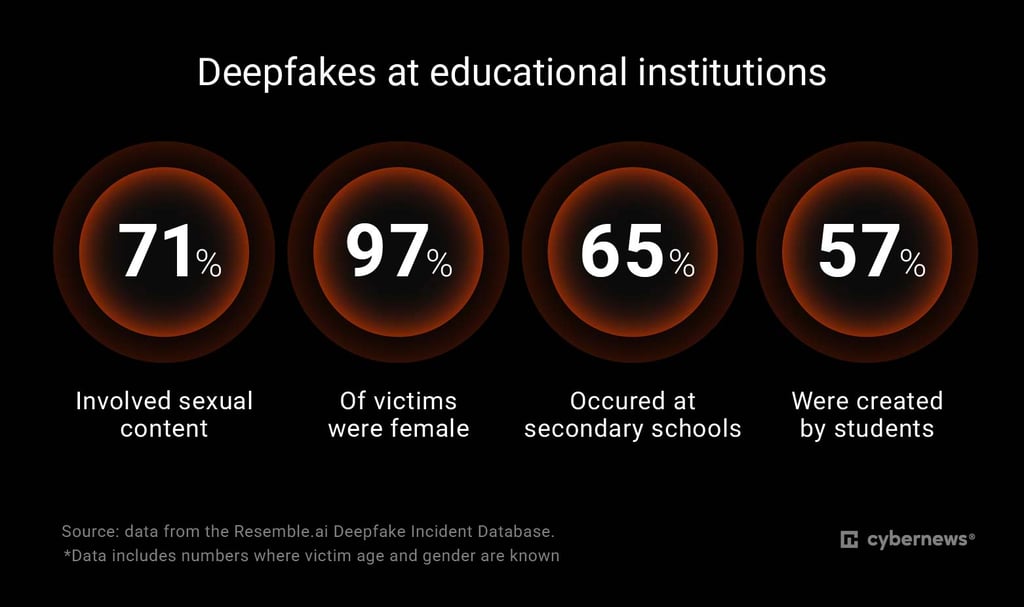
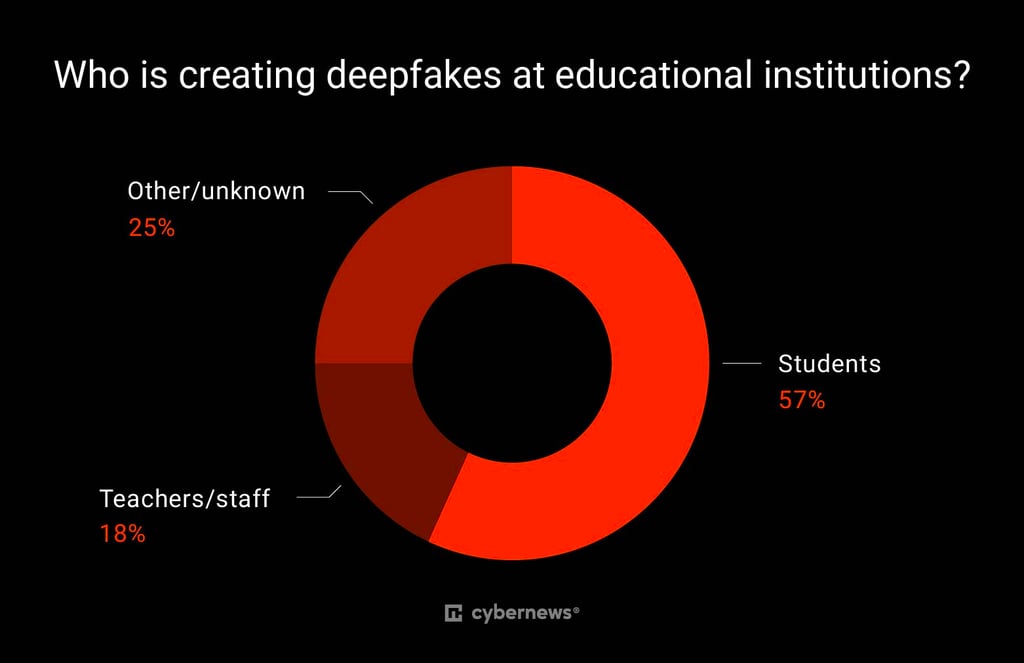
That percentage, staggering on its own, is even more disturbing when the research shows that more than half of these digital attacks are perpetrated by other students.






From classmates to teachers, no one is spared
Young people are increasingly using AI to sexually abuse and humiliate their peers – and although the deepfake is fabricated, the victims are real, and so is the fallout – leaving targeted students grappling with shame, humiliation, fear, and a profound loss of control.
Sadly, it's not just young students being targeted; in some cases, teachers are also receiving a harsh lesson in the cruelty that comes with online abuse.
Earlier this spring, students in Scotland created fake social media accounts using their teachers' names and filled them with sexual and violent AI deepfake images and videos.
The AI clips were so “distressing” that one teacher was left so “humiliated” and “traumatized” that she couldn't even bear to go inside the school.
It violates their autonomy and can cause emotional distress, embarrassment, or damage to their reputation,feminist adult filmmaker Erika Lust told Cybernews.
This, along with hundreds of other reported incidents, has indirectly prompted many schools to remove student photos from their websites altogether.
The UK’s Online Harms Early Warning Working Group even created new safety guidelines for school administrators to combat the abuse – urging them to remove full names from captions and replace close-up, identifiable photos with distant shots, blurred images, or photos taken from behind.
School hallways to Hollywood, AI deepfake abuse knows no boundaries
How quickly AI deepfake abuse has permeated campuses – not just across the US, but worldwide – is proving that once again, advanced technology is outpacing the safety guardrails around it.
Abusers can easily gain access to images of their victims – from social media and school yearbooks to even taking them in person – and quickly turn them into explicit content using readily available AI tools – all while educators, regulators, and law enforcement are still struggling to catch up.

Governments and policymakers need to act and create regulations that specifically address the creation and distribution of non-consensual content,said Erika Lust, feminist adult filmmaker.
Taylor Swift was one of the first celebrity victims to be subject to the practice when a sexually explicit deepfake of the beloved American singer was circulated online in 2024.
The pornographic image of Swift, shared by a user on X, was viewed a staggering 47 million times before the user was suspended by the platform.

But as in Swift’s case, and often for all victims, the images proliferated to other social media platforms just as quickly. And as we know, once something is posted online, it's likely to stay in circulation forever.
School-age children don't have the resources or public visibility of someone like Swift, and they may even be afraid to tell their parents or another trusted adult, leaving them even more isolated with their feelings.
Women pay the price for unchecked AI abuse
Women and girls are being sexually exploited through fabricated imagery across society, from celebrities with enormous platforms to ordinary girls in classrooms.
Even though the images are not real, digital rights advocates say the harm to victims should not be ignored.
Many victims have experienced depression, thoughts of suicide, PTSD, and sexual trauma after their images were falsified,cyber-sexual abuse expert Dr. Sophie Maddocks told Cybernews.
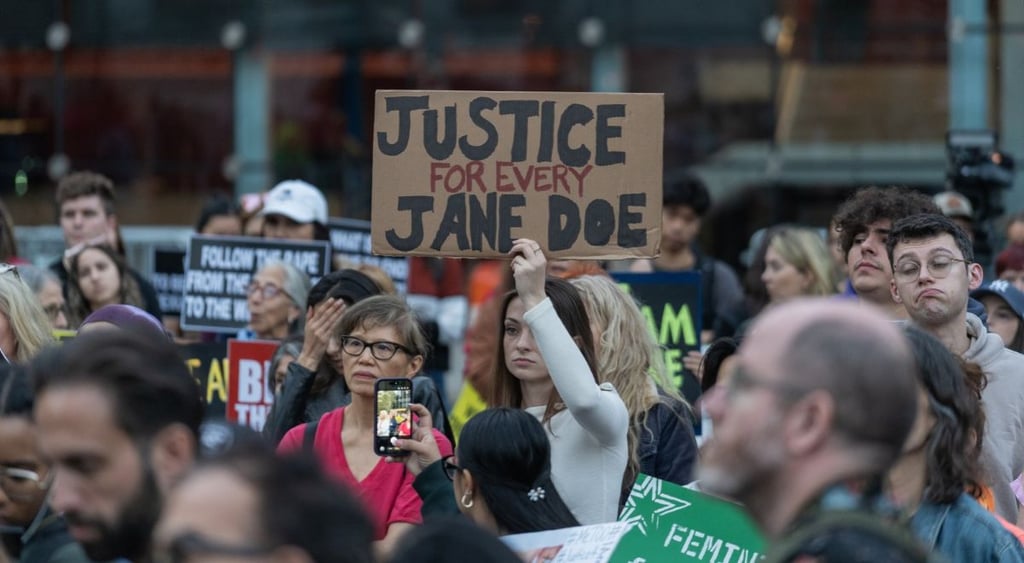
Earlier this month, the Washington Post reported that posts attempting to identify Jane Doe clocked more than 87 million views on X in just two weeks.
And that’s not counting the nearly 3,000 users attempting to doxx Jane Doe by following up with information that, if true, could actually identify her.
The victim and her family were also targeted in an apparent swatting attack after someone falsely reported a shooting at their home in October, CBS reported.
So is the answer for women to remove any and all evidence of themselves online, wipe away their entire existence?

As women continue to express their rage about the alleged Cornell sexual assault, many have also taken to social media, sharing the self-monitoring behaviors they engage in on a daily basis to protect themselves from becoming the next victims of physical sexual abuse.
And it seems that once again, we're getting the short end of the stick as the line between virtual and physical reality blurs.
Starting at a young age, girls are now being forced to adapt their digital behavior in a world where nudify apps and pornographic AI tools are plentiful, yet the means to find and prosecute the perpetrators of this digital abuse are slim to none.




Stay updated with our latest stories and follow us on social media
Be the first to discover new stories, ideas, and updates from our team.