Hume Band vs Fitbit: which should you choose?
Being behind major reports like The Mother of All Breaches and RockYou2024, our in-house cybersecurity experts and journalists provide unbiased, real-world testing and in-depth analysis.
We maintain complete transparency by openly sharing our testing methodologies with our audience.
Learn more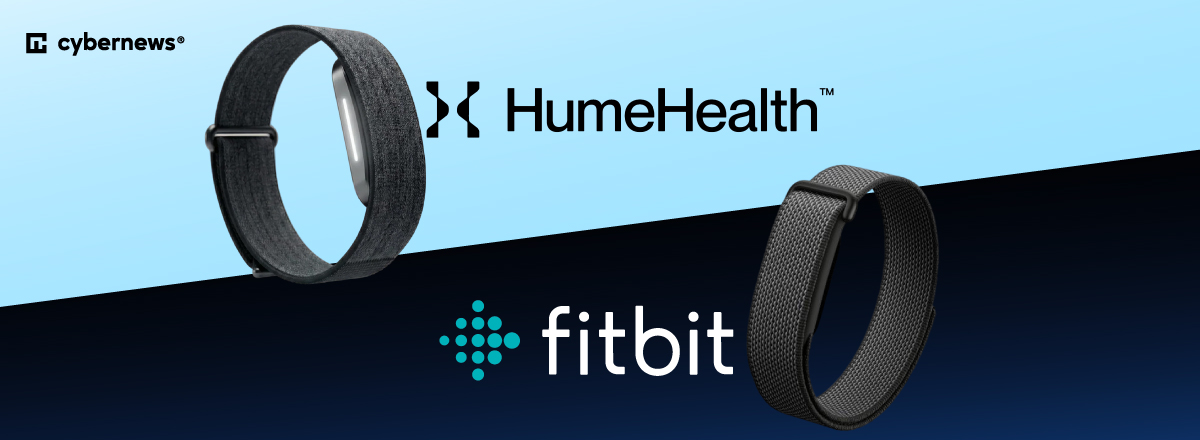
Wearable health trackers have become our virtual coaches we count on daily. And, with the growing market, I've noticed a recurring question from readers: do you go with the new Fitbit Air or switch to the longevity-centric Hume Band 2.0? That got me curious, so I decided to put both bands to the test.
In this review, I’ll compare the Hume Band 2.0 and Fitbit Air, two devices that approach health tracking in different ways. I’ll look at their design, comfort, health and fitness features, battery life, price, and the apps that come with them.
Following my testing and user analysis, I'll identify what each of these wearables does best and where it could let you down. By the time you're finished, you'll know whether you need a daily fitness buddy like a Fitbit Air or a longer-term health tracker like the Hume Band 2.0 to track resilience and future-proof your health.
After testing both wearables extensively, I'd say it comes down to what you're actually looking for. Fitbit Air is the winner in exercise diversity and alerts, but Hume Band 2.0 is the winner if you value in-depth data, better build quality, and better battery life over over-the-top features.
At a glance: Hume Band vs Fitbit
Before we get into each of the wearable details, let’s quickly overview how they stack against each other in main features:
| Device | Hume Band | Fitbit |
| Rating | 4.8 | 4.6 |
| Key metrics | Metabolic momentum, recovery score, resilience, sleep, stress | Steps, heart rate, sleep stages, SpO₂, workout tracking |
| Sensors | 5 LED sensors, 4 photodiodes | Accelerometer, optical heart rate, SpO₂, skin temperature |
| Display type | No display (data shown in app) | No display (data shown in app) |
| Battery life | Up to 14 days | Up to 7 days |
| FSA/HSA eligible | ✅Yes | ✅Yes |
| Compatibility | iOS and Android | iOS and Android |
| Price range | $249 (price with discount) | From $99 |
| Subscription cost | (optional) $8.99/month | (optional) $9.99/month |


Our team of in-house researchers, writers and editors reviews and analyzes health tech products using a research-driven approach. We gather data from multiple sources, fact-check all information, and conduct our research based on peer-reviewed studies, expert opinions, consumer ratings, and regulatory approvals.
You can learn more about how we test health tech products here.
Hume Band vs Fitbit: key differences
At first, the Hume Band 2.0 and Fitbit Air seem pretty similar. Both are screenless wearables that track your health all day, and you can see your data in their apps. However, the minute you try them, you instantly notice their differences.
The main one is how they track health. Hume Band 2.0 focuses more on recovery, stress, sleep, and long-term health trends, with features like Metabolic Momentum and Pace of Aging.
Fitbit Air, on the other hand, is more about daily activity and fitness, tracking steps, heart rate, sleep, and other health stats.
Battery life is also different. Hume lasts up to 14 days per charge, while Fitbit Air lasts up to seven days. Their apps and subscription plans are different too, which matters if you want more than just basic tracking.
Hume Band vs Fitbit: design and comfort
At first glance, the Hume Band 2.0 and Fitbit Air look a lot alike. Both have a simple, screen-free design, so you won't get distracted by a display or constant notifications.
When I tested them, I found the Hume Band 2.0 is light enough to wear all day and night, and the Fitbit Air is just as discreet.
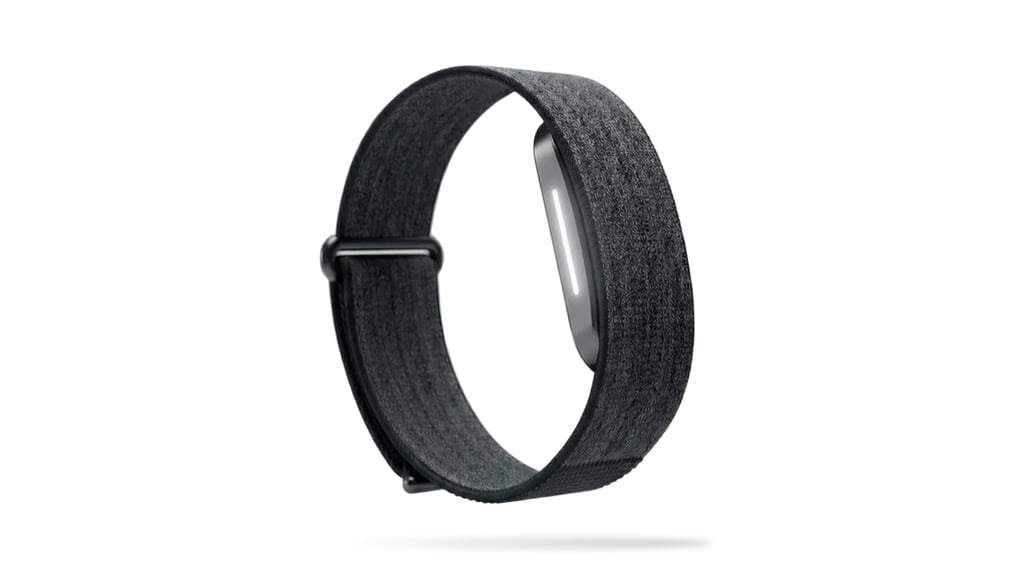
The main difference is color and cost. Hume Band 2.0 comes in black as standard, giving it a classic, understated look. If you want a different color, you’ll need to pay an additional $49.
It is a bit of a different story with Fitbit Air. It also comes in several colors, but you don’t have to pay extra if you prefer something other than black (except for the Stephen Curry one).
So, if you’re happy with black, either tracker works. But if you want other color options without paying extra, Fitbit Air is the better choice.
Hume Band vs Fitbit: health and recovery tracking
One of the big differences between Hume Band and Fitbit is the metrics they track and how a user can interpret and apply those in their daily life.
Hume Band is all about the things longevity researchers geek over: besides the basics, it tracks heart rate, HRV (heart rate variability), SpO₂ (blood oxygen level), recovery scores, and some other metrics such as Metabolic capacity and Metabolic momentum.
Hume Band 2.0 also comes with a brand-new feature called Blood Pressure Insights. It uses sensor data to spot possible patterns, but it does not measure blood pressure directly like an arm cuff, so you should still use a regular monitor for that.
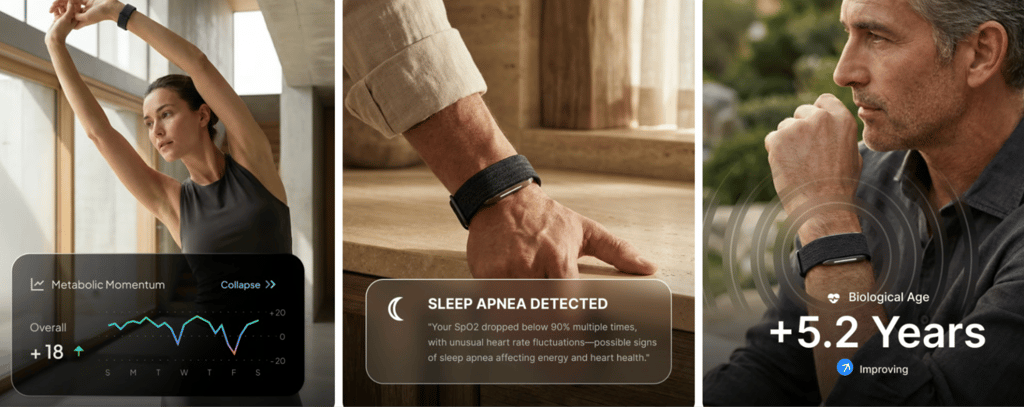
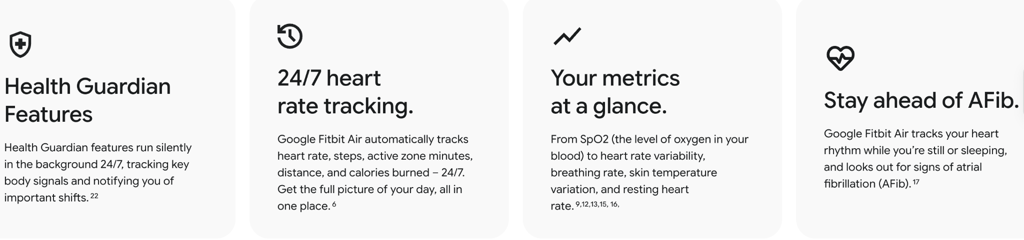
Fitbit Air tracks many of the same basics, such as heart rate, HRV, SpO₂, sleep, and skin temperature changes. But it does not have Hume's longevity-focused features or Blood Pressure Insights. If you want these extra health insights, I think Hume is the better option.
Hume Band vs Fitbit: fitness and workout tracking
When it comes to workouts, Fitbit Air is the clear winner. Yes, Hume Band 2.0 covers the basics like steps, calories, and heart rate, but it does not have structured workout modes, pace tracking, or detailed exercise breakdowns.
In my tests, its automatic workout detection was sometimes unreliable. Hume is better for tracking recovery and long-term health trends than for analyzing single workouts.
Fitbit Air, on the other hand, is more focused on workouts, offering a wider range of activity modes and more detailed summaries, including Active Zone Minutes.
However, neither device can fully replace a sports watch. Since both lack built-in GPS, runners and cyclists who want to track routes without a phone should consider other options.

Hume Band vs Fitbit: battery life and charging
During my testing, the Hume Band 2.0 impressed me with its battery: it promises up to 14 days on a perfect charge.
Charging time from empty to full is 20 to 80 minutes, which is pretty impressive. Because Hume lacks a screen and notification lights, passive tracking doesn’t drain extra power, and its life holds up quite well.
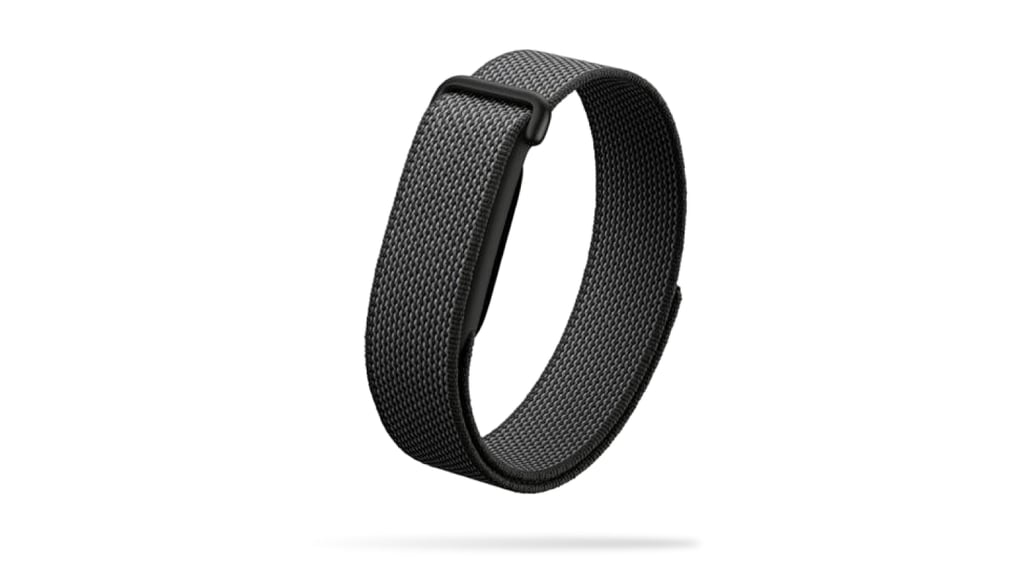
As for Fitbit Air, it can last up to seven days on a single charge. That's half the battery life of the Hume Band 2.0, meaning you'll need to charge it twice as often. Still, I think that a week of battery life is decent for a wearable.
Hume Band vs Fitbit: cost and value
Here’s a closer look at how they stack up. Hume Band 2.0’s regular price is $356, but it’s now discounted to about $249.
The best part is that you can also use our CYBER20 promo code for 20% off the black band, bringing the price down to around $249.
Fitbit Air's upfront price is lower. It starts at $99, and the Stephen Curry Special Edition is $129.

Still, the initial price isn’t the only thing to consider. You should also consider subscriptions and warranties.
For example, Fitbit users get free access to the Google Health app, but the Health Coach subscription costs $9.99 per month (first three months free) and adds features like detailed sleep analysis, proactive insights, and AI coaching.
Hume offers a Premium subscription for $8.99 per month, but in my testing, I found that many helpful health insights are available without upgrading.
So, even though Hume Band 2.0 costs more at first, it includes several advanced health insights without needing a subscription.
Moreover, it comes with a one-year warranty, and you can extend it to 10 years for $35. Fitbit Air has a one-year warranty in the US (two years in Europe). You can also get Google’s Pixel Care+ for $19, which extends coverage to two years.
Hume Band vs Fitbit: app and subscription features
Both Hume Band and Fitbit run on Android and iOS, but their applications have a very different character. Hume Band 2.0 uses the Hume Health app, which highlights daily summaries and long-term trends.
I found its setup easy to use, with scores and insights like Metabolic Momentum and resilience that help explain your data without too many graphs.

The Fitbit app (Google Health), by contrast, is far more comprehensive. It tracks dozens of metrics in depth, with graphs and historical context, and integrates with popular services like Strava and MyFitnessPal.
Fitbit also has the bonus of an enormous user community, with challenges and forums that could increase your motivation. Data export is also more thorough, thanks to years of iteration.
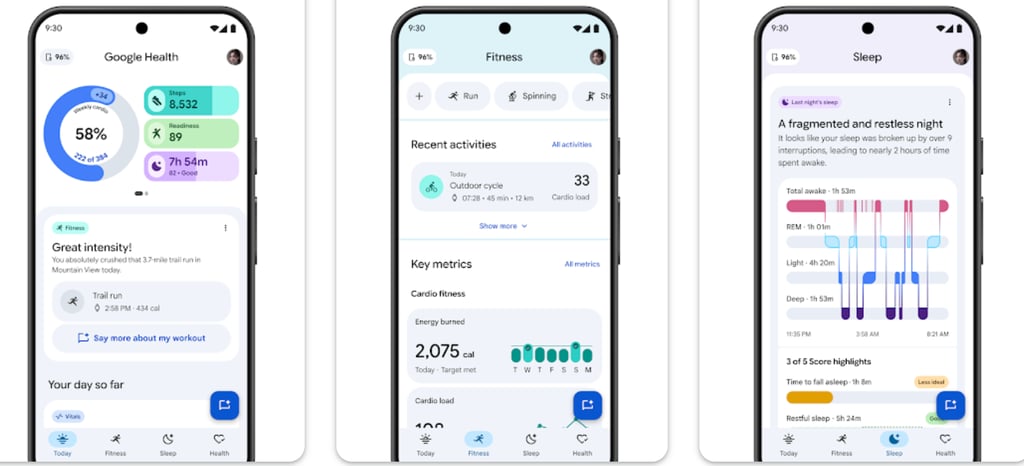
Both apps have useful free features, but their premium tools are different. Hume focuses on health and longevity insights, while Google Health is more about fitness guidance and coaching.
How we compared Hume Band and Fitbit
To compare the Hume Band 2.0 and Fitbit Air, I tested both devices and worked with the Cybernews research team, following our established testing methodology. That way, each comparison is consistent and reflects what real users actually experience.
Our testing methodology is divided into five main areas:
- Features and technology (40%). We analyze health tracking, connectivity, and how well each gadget plays with other technology you already own.
- Design and comfort (20%). We test day-to-day wearability, comfort while sleeping, and whether the interface actually functions in real-world use.
- Cost and value (20%). We compare what you're paying upfront and on an ongoing basis to what you're actually receiving in return over time.
- Battery life (10%). We track how long the batteries last and how they hold up when you're using things like GPS intensively or getting tons of notifications.
- User reviews and reliability (10%). We analyze verified buyer reviews and professional reviews to confirm what we're finding in our own testing.
Hume Band vs Fitbit: which is better for you?
The Hume Band 2.0 takes the lead in the Hume Band vs Fitbit comparison. I think it is better for health and recovery tracking, offering features like Metabolic Capacity, Metabolic Momentum, and Blood Pressure Insights. Its superb battery life, lasting up to 14 days, just confirms it as the winner here.
Fitbit Air is a better pick for everyday fitness and workout tracking. It has more activity modes and gives detailed workout summaries, which is helpful if you want to track your exercise progress.
At the end of the day, your winner will depend on your daily choices and goals. If you want to focus on recovery and long-term health trends, go with Hume Band 2.0. If exercise tracking and daily activity matter more to you, Fitbit Air is the better option.
FAQ
Is Hume Band 2.0 a good alternative to Fitbit?
Yes, if you care more about health and recovery insights than tracking every workout. Hume Band 2.0 gives you longevity-focused metrics, Blood Pressure Insights, and up to 14 days of battery life. Fitbit Air is better for tracking daily activity and workouts.
Does Hume Band 2.0 measure blood pressure?
Yes, Hume Band 2.0 gives Blood Pressure Insights by tracking estimated trends over time with its optical sensors.
Which is better for sleep tracking, Hume Band 2.0 or Fitbit Air?
Both devices track sleep, including sleep stages and overnight health signals. Hume Band 2.0 focuses more on sleep recovery, while Fitbit Air gives a more fitness-focused overview. The best choice depends on which insights matter most to you.
Can you use Hume Band and Fitbit without a subscription?
Hume Band 2.0 gives you its main health data for free through the Hume Health app, with extra Premium features if you want them. Fitbit Air also has free app features, but some advanced coaching and insights will need a paid Google Health Coach plan.
Which device is better for running and gym workouts?
Fitbit Air is better for tracking workouts because it has more activity modes and gives detailed exercise summaries. But neither device has built-in GPS. If you want to track your running or cycling routes without your phone, you might prefer a dedicated sports watch.