iOS Becomes an Ad-Fraud Target in Its Own Right: Malicious iOS Scripts Hit 1 in 5 Advertiser Suspensions
ADEX’s latest fraud report includes an investigation into roughly 50 advertiser accounts that used different landing pages to conceal the same device-targeted attack.
 Follow us
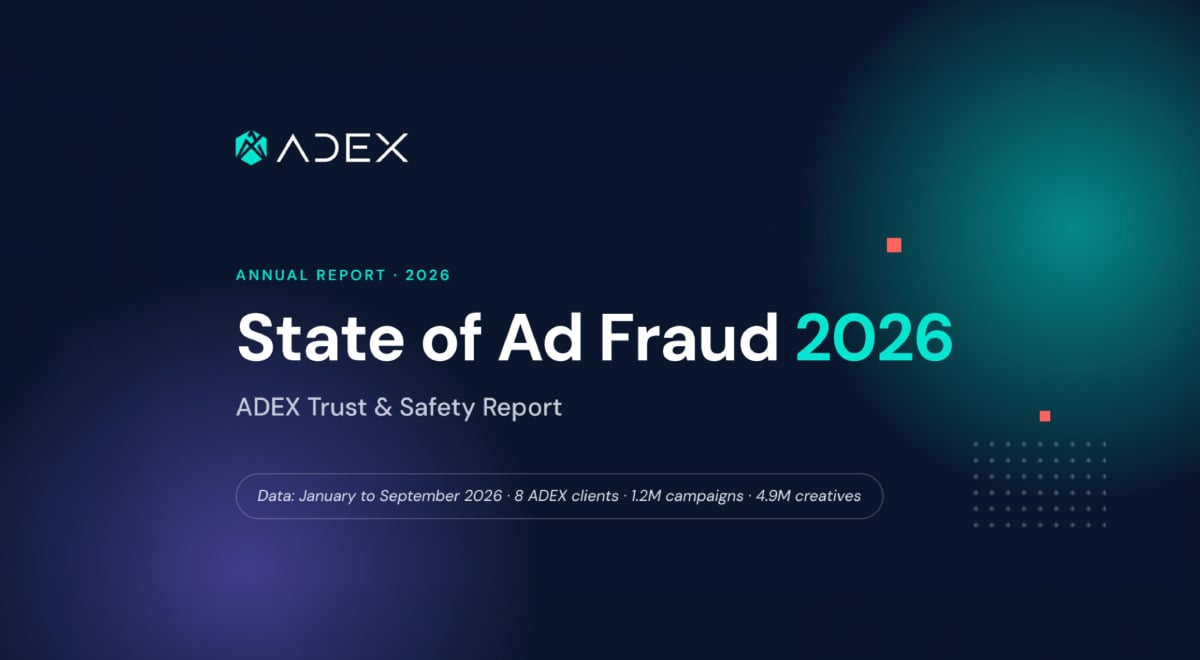
November 17 2026 - Malicious iOS scripts accounted for around 20% of advertiser suspensions in Q3 of 2026 across advertising platforms using ADEX, according to the company’s new State of Ad Fraud 2026: ADEX Trust & Safety Report. Tracked separately for the first time, the category puts device-specific attacks firmly on the advertising industry’s fraud map.
Behind the 20% figure is a form of advertising abuse in which an ordinary-looking landing page can scan a visitor’s device in the background and deliver an attack selected for its operating system.
A page that checks your phone before showing its hand
A campaign can send a reviewer and an iPhone user to the same address and give them very different experiences. Device checks allow operators to select visitors for malicious scripts while showing harmless content to crawlers and other visitors who were likely to inspect the page.
In one investigation, ADEX identified about 50 advertiser accounts running campaigns with similar delivery patterns behind very different landing pages. The findings were passed to the clients for review and action.
ADEX observed campaigns using the Coruna exploit kit, with hidden iframes checking visitors’ iOS versions and scripts filtering out bots and crawlers before delivering malicious code matched to the device’s iOS version.
The connection between the accounts emerged from how the campaigns worked underneath their changing designs. Device checks, scripts, and redirect behavior provide a way to connect campaigns that look unrelated. If each landing page is reviewed outside the context, it’s easy to miss the operation running across these accounts. Following the delivery infrastructure helps recognize suspicious patterns even when the page design and offer keep changing.
For a qualifying device, the kit assembled an exploit chain matched to its iOS version and chip. The payload arrived disguised as an ordinary-looking .min.js file, the kind of filename found among routine website scripts.
The intended payoff was financial theft. The final implant targeted digital wallets and financial apps and searched the phone for recovery seed phrases, which can give an attacker access to a victim’s cryptocurrency.
The documented Coruna chains covered iOS 13.0 through 17.2.1. Older or unpatched devices were therefore a particular concern.
iOS attacks join cloaking among the leading reasons for suspensions
The iOS category joins a changing mix of enforcement reasons. Cloaking accounted for about 45% of advertiser suspensions in Q3 2026, compared with approximately 75% across 2025. Messenger-based phishing, observed on services including WhatsApp and Telegram, also became a separate category during the year.
Messenger-based phishing, observed on services including WhatsApp and Telegram, also became a separate category during 2026. The cases involve third-party abuse of the services. The approximately 20% Q3 figure applies to malicious iOS scripts alone.
Platforms record the main reason for each suspension, even when several techniques appear in the same campaign. An iOS-targeted attack can still use cloaking to hide its malicious behavior, as the visitor filtering in ADEX’s investigation illustrates.
The investigation points traffic-quality experts and teams toward the technical links between campaigns. Shared scripts, servers, and redirects can expose a coordinated operation.
The investigation helped ADEX recognize similar iOS attacks during moderation, even behind a different landing page. Catching these during review means platforms can block the campaign before anyone opens it on their phone.
About ADEX
ADEX is a global anti-fraud and traffic-quality platform within AdTech Holding. It analyzes billions of impressions, clicks, and conversions, protecting AdTech products and partners from malware-driven and invalid traffic attacks.