Understanding SOCKS5 in Modern Network Infrastructure
 Follow us
SOCKS5 turned 30 this year and nobody threw it a party. The spec landed in March 1996, back when the pressing problem was getting traffic out through a corporate firewall, not getting flagged by a bot detection vendor.
It's still everywhere, though. VPN clients, Tor, scraping stacks, database tunnels, mobile app testing rigs: a surprising amount of infrastructure leans on a protocol most engineers couldn't describe from memory if you put them on the spot.
It Doesn't Read Your Mail
An HTTP proxy is nosy by design. It parses headers, knows a GET from a POST, and can cache, filter, or rewrite whatever moves through it.
Handy in a corporate network. Useless the second the traffic stops being HTTP.
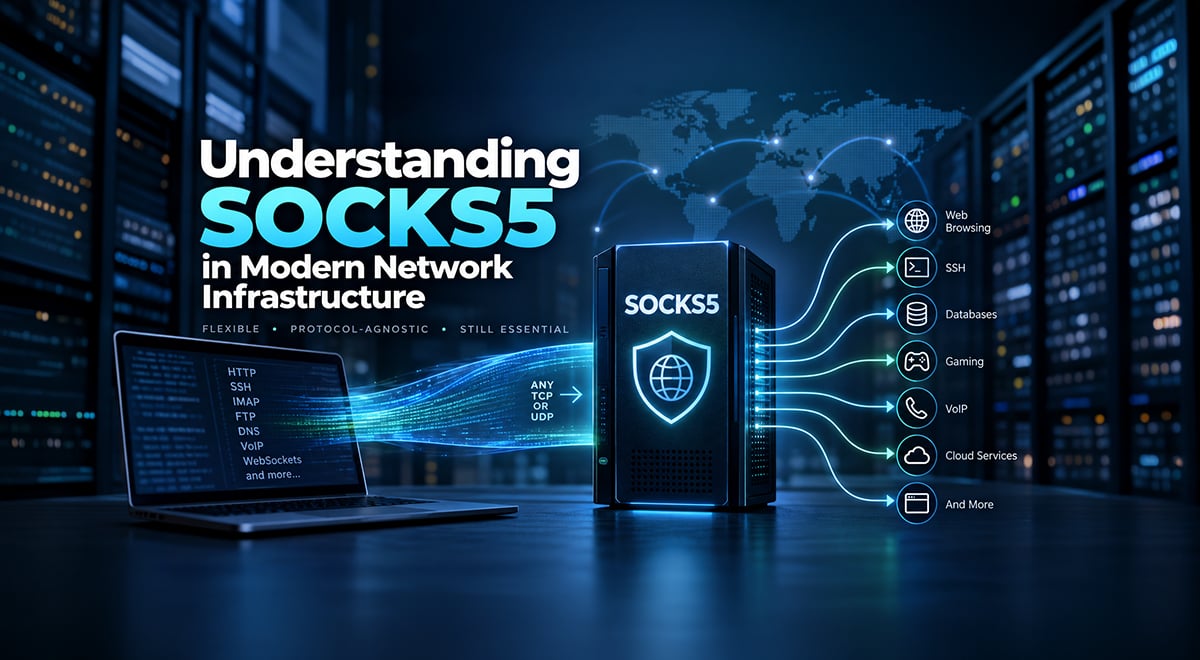
SOCKS5 works lower down, at the session layer, and treats everything as a stream of bytes it has no opinion about. It picks up a destination address and port during a quick handshake, then gets out of the way.
Which is exactly why it's protocol-agnostic. Anything that speaks TCP works through it without a rewrite. IMAP pulls, SSH sessions, database queries, game traffic: none of them need the proxy to speak their language.
And it carries UDP, which HTTP proxies flat out can't. DNS lookups, VoIP, real-time telemetry all depend on that, and it's a big part of why infrastructure teams buy socks5 proxies rather than making do with HTTP-only endpoints.
The Handshake Takes Milliseconds
A client opens a TCP connection (port 1080, by convention), offers up a list of authentication methods, and the server picks one. That's the whole ceremony.
RFC 1928 lays out the byte layout down to which octet carries the address type. Three decades, zero revisions. The original working group clearly scoped the problem right the first time.
Authentication is where deployments go sideways. The spec says compliant implementations must support GSSAPI and should support username and password credentials, yet a depressing number of proxies still run method 0x00, meaning none at all.
Internet-wide scanners find those within hours. Not days, hours.
What It Deliberately Won't Do
No encryption. Traffic through a SOCKS5 proxy is exactly as exposed as it was before it got there, and "proxy" has never meant "private" no matter how many product pages imply otherwise.
Layering is the fix. Run TLS inside the tunnel, or use SSH dynamic port forwarding, because the -D flag in the OpenSSH manual turns any SSH client into a local SOCKS server over an encrypted channel.
Then there's DNS, which trips up otherwise careful setups all the time. Resolve hostnames on your own machine and your resolver knows precisely where you were headed, proxy or not. That's the entire reason curl separates socks5:// from socks5h:// (the h hands name resolution over to the proxy), and why Firefox tucks a "Proxy DNS when using SOCKS v5" checkbox into its connection settings.
Where You'll Actually Run Into It
Tor listens on 127.0.0.1:9050 by default, and everything routed through it speaks SOCKS5 to that port. Most people using Tor have no idea they're using SOCKS at all.
David Koblas presented the original SOCKS work at the 1992 Usenix Security Symposium while at MIPS Computer Systems. Something from that era still doing real production work is unusual; most of its contemporaries are museum pieces now.
Tooling has quietly improved rather than faded out. .NET 6 baked SOCKS4, 4a, and 5 support straight into SocketsHttpHandler, and Python gets there via PySocks with a single pip install.
Scraping and price monitoring are the loud use cases, and fairly enough, they're the ones paying most of the bills in this corner of the market. When a job needs a plausible exit point and has to hold sessions open across FTP, WebSockets, and raw TCP, an HTTP proxy just can't carry it.
The Next Thirty Years
QUIC is the interesting pressure point. HTTP/3 rides on UDP, and while the UDP ASSOCIATE command technically covers that case, proxy software has been sloppy about implementing it for years.
MASQUE, the IETF's approach to proxying over QUIC itself, is the closest thing to an heir apparent. Whether it takes over or simply runs alongside comes down to how fast vendors ship support, and thirty years of code that already works is a hard thing to argue with.