Boston dumps Flock due to data hole, but keeps surveillance cameras
Boston's surveillance data wasn't staying in Boston.
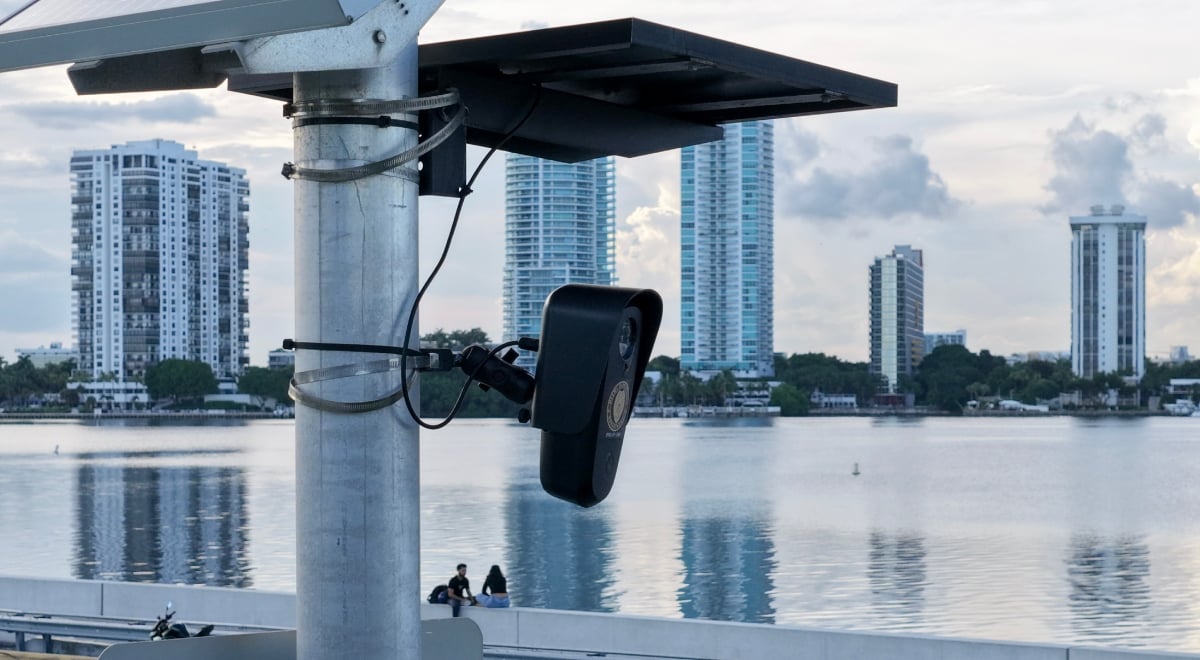
A Flock camera attached to a pole monitors passing traffic. Photo by Joe Raedle/Getty Images.

 Follow us
- Boston ended its Flock Safety contract after finding outside agencies could access city license-plate data.
- The report does not say whether anyone outside Boston actually viewed the data.
- Police received 77 outside data requests and ran 11,004 searches during the pilot.
- Boston still plans to use license-plate cameras and is testing Motorola Solutions and Axon systems.
Key Takeaways by nexos.ai, reviewed by Cybernews staff.
Boston has decided to terminate its contract with Flock Safety after discovering the company still allowed Boston-collected license-plate data to be accessed by other agencies in the US. However, the city still plans to use surveillance cameras.
Boston’s annual surveillance technology report claims that after the city began a short-term Flock automated license plate reader (ALPR) pilot on April 1st, 2025, the Boston Police Department (BPD) discovered within three days that other law-enforcement agencies could access information collected by Flock cameras in the city.
The report claims that Flock had enabled the feature “in error,” despite the fact that “The Flock ALPR Pilot Program was designed to restrict access to the data collected by BPD ALPR cameras exclusively to trained BPD personnel.”
However, the surveillance report didn't indicate whether someone outside Boston accessed the data or whether it was only accessible to outsiders.




Either way, the “error” was fixed, and Boston continued the Flock pilot until September 4th, 2025. Nevertheless, BPD received 77 requests from outside law-enforcement agencies, such as the US State Department, Drug Enforcement Administration, and others, for access to Flock data.
Meanwhile, the report claims that BPD officers themselves conducted 11,004 searches. The city also examined how its own officers used the database and didn’t find any cases of misuse.



Stay updated with our latest stories and follow us on social media
Be the first to discover new stories, ideas, and updates from our team.
However, Boston decided to part ways with Flock.
“When the toggles or the access controls can't either are not able to be restricted in ways that conform with that policy, or are set but then can be unset or reset in ways that violate that policy, we would not use that platform,” Boston Mayor Michelle Wu told GBH News last week.
Have thoughts about this topic? Others do, too. Join them in the discussion.
In either case, the city hasn't abandoned ALPR technology altogether. According to Wu, Boston had worked with the American Civil Liberties Union and a community coalition when she was on the City Council to establish rules for how this surveillance technology should be used.
According to the Boston Globe, this year, BPD has been testing Flock’s competitors. The Motorola Solutions pilot began in February with 45 cameras, while Axon joined the test in June with 30 cameras.