This secret clue in your videos can be used to track your hidden details
A surprising privacy risk may be hiding in plain sight.
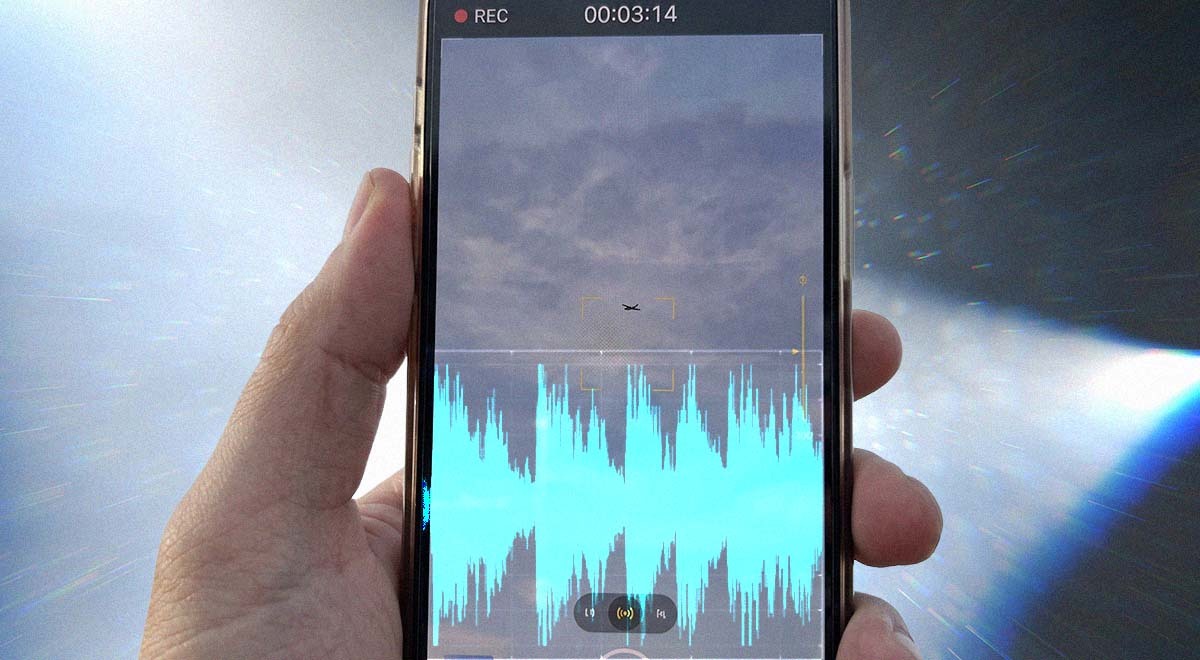
A content creator records audio with a plane flying overhead. Image by Cybernews.

 Follow us
- Aircraft sounds in background audio can leave traces that help identify where a video was recorded.
- Colsto says matching those sound traces with flight data can triangulate a location within about 100 meters.
- The method is complex, and Colsto says easier ways to find someone still exist.
- Livestreamers, journalists, creators, and whistleblowers face higher risk when they need to hide their location.
Key Takeaways by nexos.ai, reviewed by Cybernews staff.
Security researcher and YouTuber Colsto has demonstrated how seemingly ordinary background audio can reveal where a video was recorded.
The technique relies on the Doppler effect, the phenomenon that makes sirens sound like they change pitch as they move towards or away from you.
Colsto discovered that aircraft can leave identifiable acoustic traces in recordings, even when they are inaudible to the person recording or watching the video.
Researchers can determine the direction an aircraft was traveling by measuring the Doppler effect and matching the pattern to aircraft tracking data.




Combining multiple aircraft signatures creates enough reference points to triangulate the recording location, with an apparent accuracy rate of within 100 meters. The researcher added that no visual cues are necessary.
Audio processing during video upload and noise-reduction techniques are not enough to remove the aircraft residue.
Colsto was keen to point out that his video was for educational purposes, and not to promote fear. The idea is to raise awareness of open-source intelligence (using publicly available recordings and matching them with other publicly available information to reveal something private).
Importantly, Colsto acknowledged that the technique is complicated and unlikely to become an everyday tracking method overnight, saying:
There's probably a hundred easier ways to find you than this.
Who could be exposed, and could anything be done?
One of the biggest potential problems is the threat to individuals who desire to conceal their locations. That intention is common amongst livestreamers, independent journalists, content creators, and whistleblowers.
While photographs can be stripped of identifying metadata or framed to hide surroundings, audio recordings contain elements that can bypass the broadcaster.
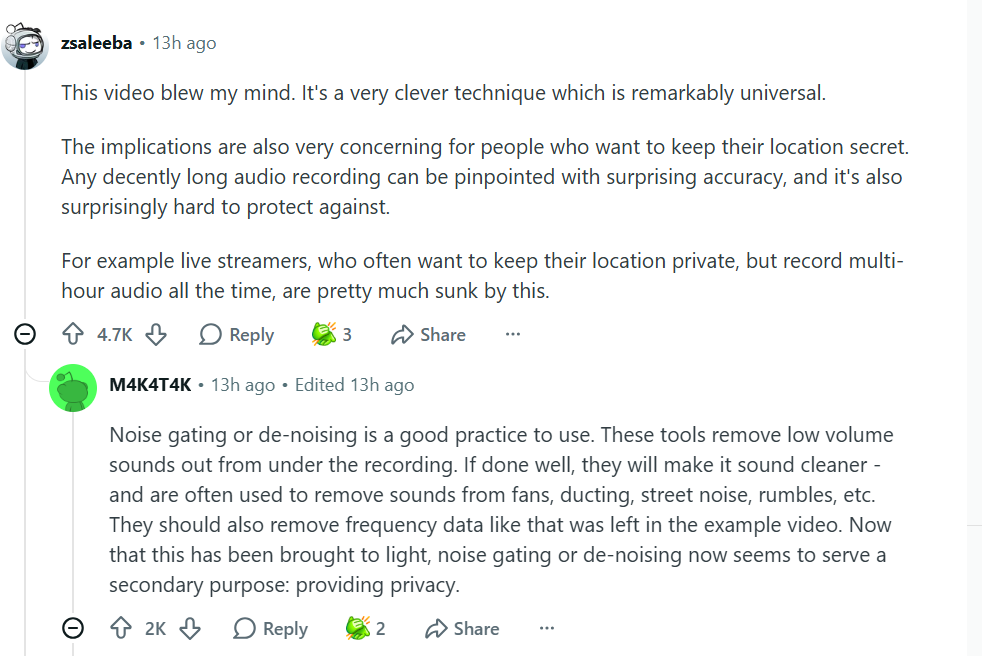
On Reddit, the vulnerability was explored further with one commenter speculating that it’s “surprisingly hard to protect against.”
One reply advised denoising the audio to “remove low volume sounds” to bolster one's privacy. Basic programs like Audacity or SimpleClean offer this service.


Stay updated with our latest stories and follow us on social media
Be the first to discover new stories, ideas, and updates from our team.