Chinese university under fire for installing $5M system to monitor if students are paying attention
The system tracks how often students raise their heads as an indicator of attentiveness.
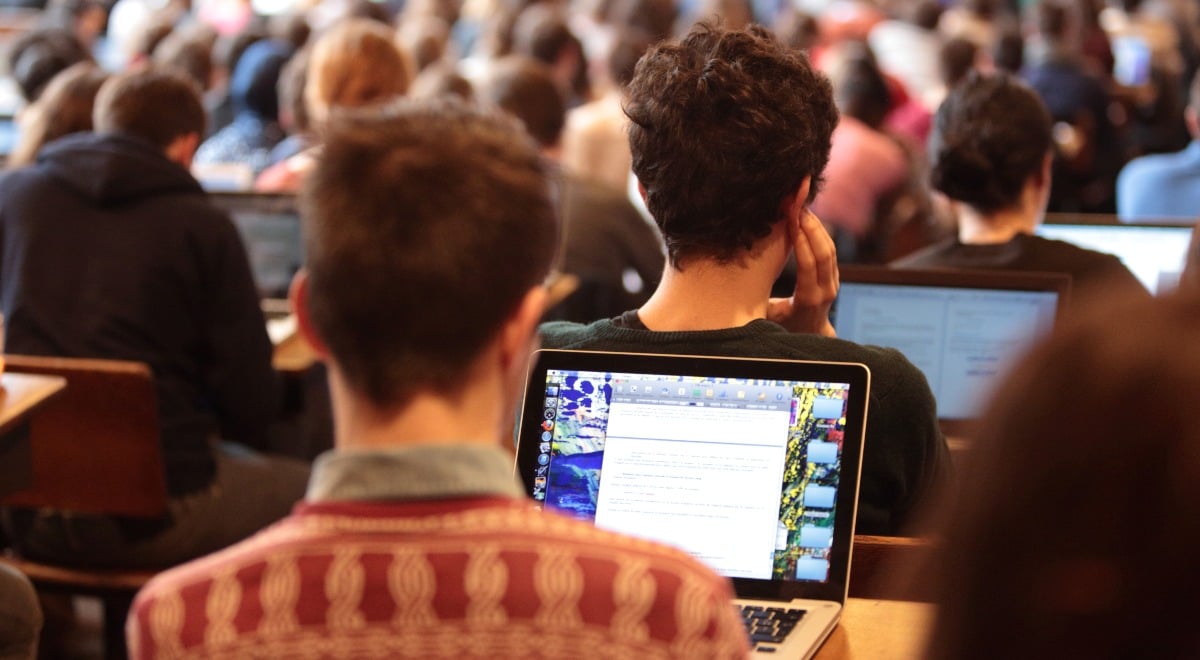
Image by Andia/Universal Images Group via Getty Images

 Follow us
- Nanjing University installed a $4.6 million system that tracks attendance, punctuality, and how often students raise their heads.
- Students said the system could affect grades and exam access, raising concerns about privacy and facial data.
- The university said it would not track head-raising rates or collect biometric data without authorization.
- Schools in the US also use artificial intelligence monitoring, facial recognition, and around-the-clock online surveillance.
Key Takeaways by nexos.ai, reviewed by Cybernews staff.
A university in eastern China faces intense backlash for rolling out a surveillance system that tracks students’ movements and indicates whether they are paying attention.
The smart class monitoring system at Nanjing University in Jiangsu went into operation in early November 2026, prompting complaints from students on social media, according to the South China Morning Post (SCMP).
The 30-million-yuan ($4.6 million) system equips 113 classrooms with multiple cameras that track students’ attendance, whether they arrive on time, and how often they raise their heads, using the latter as an indicator of attentiveness during lectures.
Students were reportedly told that the data collected would affect their grades and could even prevent them from taking exams if the monitoring system indicated low scores.








Stay updated with our latest stories and follow us on social media
Be the first to discover new stories, ideas, and updates from our team.
The system also involves facial verification and recognition, as well as people counting.
As students raised concerns about privacy violations and collection of facial data – not only by the university but also by the technology company behind the system – public backlash caused the university to make concessions, according to SCMP.
The institution, which is among the top 10 universities in China, said the smart classroom system would not be used to track head-raising rates, while biometric data won’t be collected without authorization.
US students are monitored too
Nanjing University isn’t the only higher education institution in China to implement student monitoring systems, and the government in Beijing has been repeatedly accused of mass surveillance of its citizens.
Students in the US, too, are increasingly living under the watchful eye, with AI supercharging surveillance.
Privacy International, a human rights watchdog that tracks surveillance in the educational sector, details growing monitoring efforts in the US.
For instance, the University of Kentucky installed facial recognition systems on its campus facilities, replacing pre-existing “Eyelock” iris scanners. Facial recognition will be mandatory for access to certain higher-security areas, including some labs.
The AI-powered monitoring system is currently being tested in 36 schools across the Davidson County school district in North Carolina. The system is designed to detect guns, smoke, and mass movement of people, but doesn’t include facial recognition.
Student surveillance extends way beyond physical school facilities.

A 2025 study by researchers at the University of California San Diego looked into the companies offering school-based online surveillance services, marketed as a tool to support students’ mental health and prevent school shootings.
However, 86% of these companies monitor students 24 hours a day, 7 days a week. In addition, nearly 4 in 10 (36%) report monitoring student-owned phones and computers, not only school-issued devices.
One of the most extreme examples of monitoring comes from Alpha School, a private K-12 school company offering AI-based education, which reportedly organized an 8-week “bootcamp” for candidates.
Students were required to pass a heart rate challenge, which involved being publicly hooked up to live monitors and forced to watch a pre-recorded video of their parents berating them while trying to stay within 10% of their resting heart rate.
Biometric data shouldn’t be shared
The collection of biometric data, such as facial features, is associated with significant privacy concerns.
Not only because the process is often unconsented and lacks transparency over how data is stored and shared, but also because the biometrics, unlike passwords, can’t be changed in case of a data breach.
As a result, if biometric data falls into the wrong hands, it may lead to identity theft and stalking.
The data could also be used to create more advanced deepfakes, with risks ranging from public humiliation to exploitation by scammers.