How to fight smart glasses surveillance, according to an Oxford philosopher
Cultural response could prove more effective than regulation.
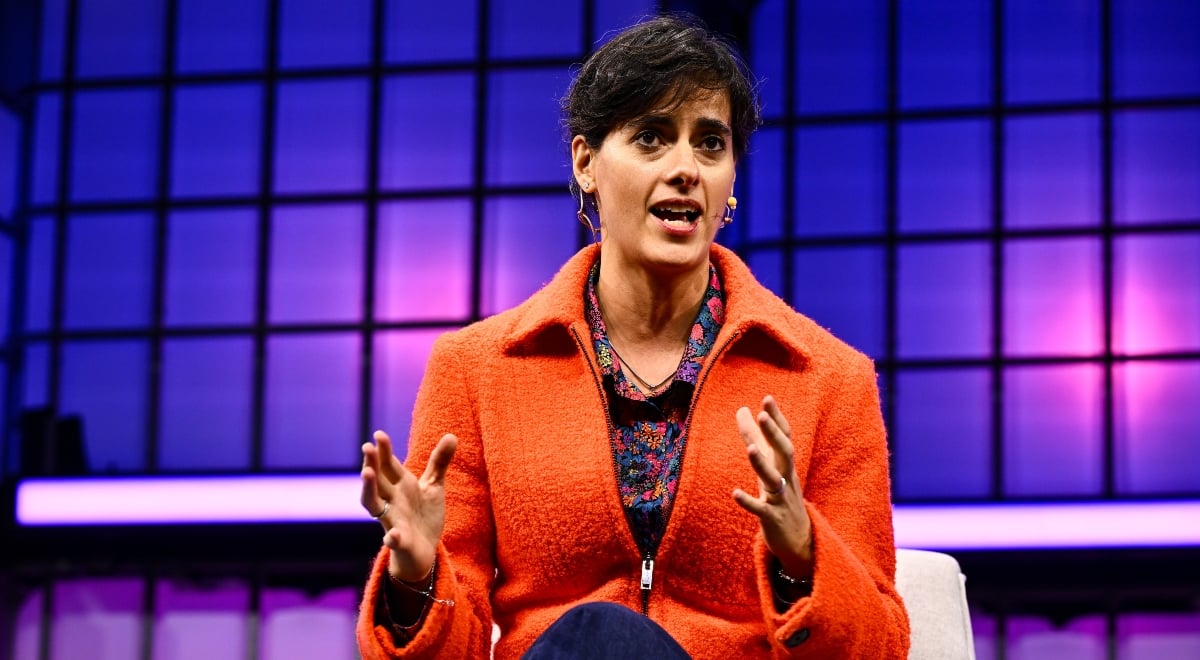
Carissa Véliz at Web Summit in Lisbon, Portugal. Photo by Shauna Clinton/Sportsfile/Getty Images

 Follow us
- Carissa Véliz says AI smart glasses can enable covert recording and mass surveillance.
- She argues polite public pushback can discourage wearers before laws catch up.
- Retailers and venues are already banning smart glasses over privacy concerns.
- Véliz warns AI prediction and surveillance can deepen social control and harm vulnerable groups.
Key Takeaways by nexos.ai, reviewed by Cybernews staff.
Tech philosopher Carissa Véliz says the growing number of bans on AI smart glasses show the power of cultural response in fighting AI privacy risks.
Carissa Véliz is an associate professor of philosophy at the Oxford Institute for Ethics in AI, and the author of the book Prophecy: Prediction, Power, and the Fight for the Future, from Ancient Oracles to AI.
Speaking at the Web Summit in Lisbon, Véliz called smart glasses “a perfect tool for mass surveillance,” while the most vulnerable members paid the highest price.
Smart glasses, equipped with audio and video recording, are increasingly used for covert filming, leaving the victims humiliated online, which has earned them the derogatory name “pervert glasses.”



While regulation is yet to catch up with a growing public discontent, Véliz says it is entirely up to society whether this type of surveillance thrives.
“If every time you see surveillance glasses, you confront the person wearing them very politely and peacefully, saying that's not okay, and you’re not consenting to it, it only takes a few times for the person to say: ‘Yeah, maybe I won't wear those glasses’,” she said.
Smart glasses are increasingly banned across businesses, venues, and public spaces, which Véliz says shows the importance of cultural response.
In October 2026, Dutch chain Hans Anders became the first eyewear retailer to stop the sales of Meta Ray-Ban smart glasses in the Netherlands and Belgium, citing privacy concerns.
Major Australian retailer Kmart pulled budget AI-enabled smart glasses after the country’s regulator launched an investigation into the Chinese company that makes the companion app, HeyCyan, citing concerns about how it handles personal information.
AI as a tool for social control
Véliz says AI, as a technology, is based on surveillance and prediction, which she calls two of the most effective methods of social control in human history.
“That's not a coincidence. Technology is not neutral, and it’s made to surveil and control,” she said.
There are growing concerns about AI enabling mass surveillance, as the technology powers facial recognition systems, automates data collection, and enables real-time tracking.


Stay updated with our latest stories and follow us on social media
Be the first to discover new stories, ideas, and updates from our team.
Meanwhile, AI-based algorithmic predictions are creeping into healthcare and justice, among other fields. Critics warn that AI inherently contains human biases, further marginalizing vulnerable groups.
Véliz called for the development of technology that can support liberal democracy rather than undermine it. She added that if a small group controlling AI makes decisions for everyone else, it can no longer be called democracy.
The questions of AI applications, safety, and regulation attracted significant attention at this year’s Web Summit, which also placed a special focus on emerging physical AI and humanoid robotics.