US tech lobbies warn Europe: breaking free will cost you billions
“Digital sovereignty isn't free, but neither is dependency,”

Image by Cybernews

 Follow us
- A Big Tech lobby CCIA Europe says stricter EU cloud and AI rules could cost Europe €115 billion over a decade.
- Critics say Europe already pays billions to US cloud firms, making dependency costly too.
- European institutions are exploring local technology alternatives because of data access and service disruption concerns.
Key Takeaways by nexos.ai, reviewed by Cybernews staff.
The big tech lobby has attached a €115 billion price tag to Europe’s bid for digital independence. But with billions already flowing to US cloud giants, the real question is whether dependency is the more expensive option.
Europe has a problem with its digital infrastructure. Much of it runs on technology controlled by American companies, which are subject to American laws.
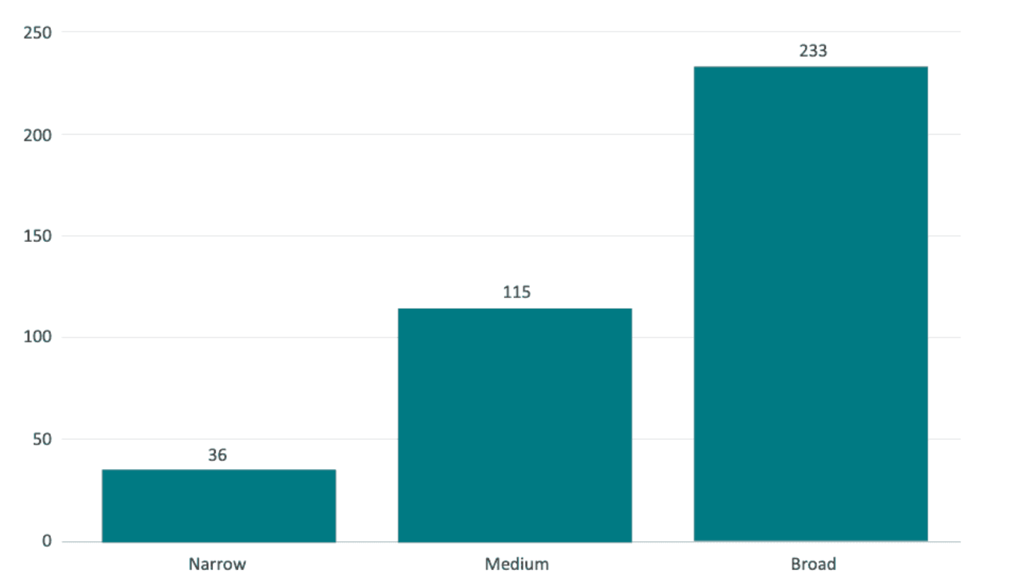
As Brussels tries to loosen that grip, a tech industry lobby is warning that independence could cost the continent €115 billion over the next decade, more than 6 times the European Commission’s upper estimate of €18 billion.
CCIA Europe, a trade association representing major technology companies, including Amazon, Google, and Meta, has funded research that claims the EU has underestimated the economic consequences of introducing stricter sovereignty requirements for cloud and AI providers serving Europe.






However, opponents say that Europe already pays billions to big tech companies, and the question should not be framed as how much tech sovereignty will cost, but what consequences staying dependent on the US will bring.
Critics say the price of Europe’s tech sovereignty is much higher than expected
The report identifies three major omissions in the Commission’s assessment: €33.3 billion in direct public budget exposure, the cost of redesigning software and rewriting code, and up to €80 billion in costs spilling over into the private sector.
Software redesign costs really increase the price tag. Government agencies, banks, hospitals, logistics, and other organizations rely heavily on software that has often been built around specific cloud platforms.
Moving those systems can mean rebuilding applications, retraining staff, and reworking supply chains. The same applies to businesses.
CCIA Europe argues that Article 31 of the proposed Cloud and AI Development Act (CADA) could make these costs substantially worse by allowing the Commission to extend strict sovereignty requirements beyond public procurement into selected private-sector industries.
Europe has spent decades building its digital economy around global technology platforms. Reversing that arrangement, even partially, will not be cheap.
CCIA Europe wants EU member states to substantially revise CADA, limiting sovereignty restrictions to sensitive workloads where specific public-order risks can be demonstrated.
If the proposed law introduces stricter rules for cloud providers based on their country of origin, some American technology companies could face additional restrictions when bidding for European public-sector contracts.
The lobby group wants companies from countries with relevant EU procurement commitments to be exempt from those checks.
This could help companies such as Amazon, Microsoft, and Google continue competing for European government cloud contracts, rather than being disadvantaged because they’re headquartered in the US.
Dependency has a bill, too
The €115 billion forecast focuses on what Europe could lose by pursuing digital sovereignty. But critics of the report say it ignores what Europe already loses by not pursuing it.
Billions of euros flow to US cloud giants every year, strengthening the very companies European policymakers hope to stop depending on.
Not to mention that an assessment of legislation commissioned by its fiercest opponents can hardly be considered impartial.
European businesses and governments already send well in excess of €11.5 billion a year to US cloud giants, and in doing so, they subsidize the competition,said Jurgita Misevičiūtė, head of public policy at Proton.
“European businesses and governments already send well in excess of €11.5 billion a year to US cloud giants, and in doing so, they subsidize the competition,” said Jurgita Misevičiūtė, head of public policy at Proton.
The transition will not happen overnight. American cloud providers have enormous advantages in scale, investment, and established ecosystems.
European alternatives must compete against platforms that businesses have spent years integrating into their operations.
“Instead of seeing it as a cost, Europe needs to see it as an investment. That money could instead stay in Europe, building European technology that is accountable to European law, and a whole European technology ecosystem,” she added.
On the other hand, if European governments and companies continue directing substantial sums towards foreign platforms, domestic competitors may find it harder to build the scale and expertise necessary to challenge them.
Also, US companies are subject to the US Cloud Act, which allows US law enforcement to demand access to the data they hold, even when it's stored outside the US. So there is no way to secure European data, despite AWS, Microsoft, and Google already providing European services branded as sovereign.
Digital sovereignty isn't free, but neither is dependency,Misevičiūtė said.
“Digital sovereignty isn't free, but neither is dependency,” Misevičiūtė said.
“The question isn't whether Europe can afford to act, but whether it can afford to keep paying for someone else's infrastructure.”
Europe is working on tech sovereignty
While US companies still dominate Europe’s cloud and workplace services, concerns about data access and service disruption are prompting Europeans to look for alternatives.
Countries and institutions across Europe are already switching, are committed to switch, or are considering European alternatives.
Check out the Cybernews interactive map, which shows examples of European efforts to replace US technology with local alternatives.