US says Chinese hackers broke into Justice Department, NASA, Federal Reserve, Senate
The US uses cybersecurity issues to “smear or discredit China,” Beijing said.

US and China maps with animated fists up. da-kuk/Getty Images.
 Follow us
- The US seized domains tied to QScan and QTRouter, platforms allegedly used in a Chinese hacking campaign.
- The campaign targeted NASA, the Justice Department, Energy labs, NIH, and other sensitive networks.
- An affidavit says hackers stole data from defense contractors, financial institutions, and universities in May 2024.
- China’s embassy denied knowledge of the allegations and accused the US of using cybersecurity to discredit China.
Key Takeaways by nexos.ai, reviewed by Cybernews staff.
The US said on Wednesday it had disrupted a Chinese hacking operation responsible for break-ins and attempts on the Justice Department, NASA, the Federal Reserve, the Senate, and other sensitive government agencies.
In a statement, the Justice Department said it had seized domains used by two hacking platforms, dubbed QScan and QTRouter, which it said had been used as part of the campaign.
An affidavit identified the US Department of Energy, Department of Health and Human Services, the National Institutes of Health, and four unnamed companies in the US and South Korea as being among the hackers’ victims.
A spokesperson for the Chinese Embassy in Washington said in an email that while they were not familiar with the specifics mentioned in the DOJ statement, the “Chinese government firmly opposes and combats all forms of cyberattacks in accordance with the law.”






The US uses cybersecurity issues to “smear or discredit China,” the spokesperson said, and China “opposes the US overstretching the concept of national security and using it as a pretext to impose discriminatory restrictions on Chinese companies and will firmly safeguard the legitimate rights and interests of Chinese companies.”
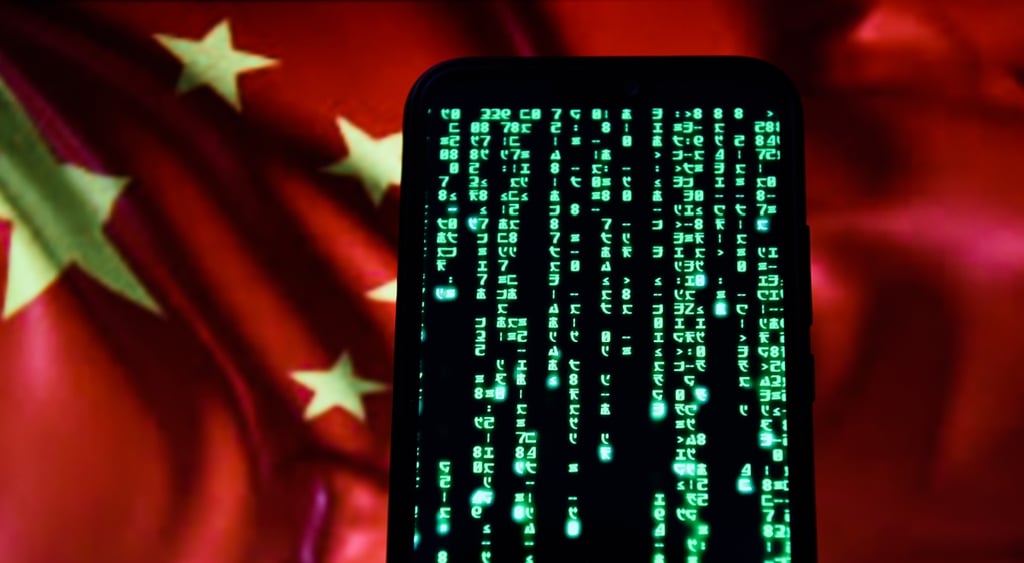
The Justice Department said the platforms were run by a China-based firm, the Nanjing Xinjiuwei Network Technology Company, whose clients it said included China’s civilian intelligence agency, the Ministry of State Security, and its military, the People’s Liberation Army.
Nanjing Xinjiuwei did not immediately respond to a request for comment outside normal business hours.
The affidavit said the hackers used tools they developed to compromise critical infrastructure and other sensitive networks in the US and worldwide since at least 2018.
The affidavit said that not all their attempts to gain access were successful. The hackers unsuccessfully attempted to gain access to NASA networks in August 2019 by targeting a virtual private network vulnerability.
In September 2024, the hackers carried out intrusions at three unnamed Energy Department laboratories, the NIH, an unnamed HHS agency, and a US security device manufacturer, according to the affidavit.
A joint cybersecurity advisory issued by the FBI, NSA and US Cyber Command's Cyber National Mission Force detailed multiple hacking efforts over the years. These included successful data theft from unnamed defense contractors, financial institutions and universities in May 2024.
The hackers also scanned for vulnerabilities and made unsuccessful attempts to access networks of the US Senate and a US hospital in March 2026.
A NASA spokesperson said the agency does not comment on specific incidents, and the Department of Health and Human Services referred questions to the DOJ. The DOJ did not respond to a request for additional detail.
Chinese-linked hacking campaigns have compromised a string of sensitive US government and private networks in recent years. In March, the FBI notified Congress that hackers had penetrated certain agency networks related to people under FBI investigation, with public reporting later attributing the compromise to China.
Has your password leaked?
Chinese-linked hackers have also been tied to a compromise of certain US House of Representatives committee networks, as well as multiple major telecommunications companies in recent years.
Experts who follow Chinese cyber activity say private contractors routinely carry out high-profile intrusions on behalf of various Chinese government agencies.
“Over the last decade, the number of companies offering niche offensive services has exploded,” said Dakota Cary, a China analyst with cybersecurity company SentinelOne.




Stay updated with our latest stories and follow us on social media
Be the first to discover new stories, ideas, and updates from our team.