European Discord alternative, Orwell, launches without surveillance and age verification
No ads, no surveillance, no ID verification

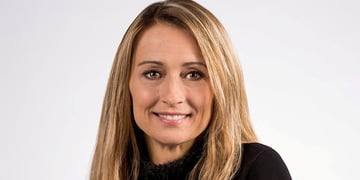
Duarte Bivar. Photo handout by Duarte Bivar/Illustration by Cybernews

 Follow us
- Orwell is a European Discord alternative that avoids ads, surveillance, email, phone, and ID-based age checks.
- Text, video, and audio are encrypted so only the people talking hold the keys.
- The platform has about 700 accounts and close to 550 members in its main public room.
- Orwell is self-funded and seeks donations or values-aligned investors to stay free of ads and tracking.
Key Takeaways by nexos.ai, reviewed by Cybernews staff.
Creator Duarte Bivar says privacy and security aren’t “optional extras” on the Orwell platform, which is currently entirely self-funded.
Growing concerns about digital privacy and data ownership prompted Bivar, a Portuguese freelancer working across multiple digital disciplines, to consider the need for European alternatives to Discord and other mainstream social media platforms.
Platforms that are built on privacy, digital freedom, and greater control over people's online experience, he explains.
“There are no algorithms deciding what people see. Just people and the communities they choose to be part of,” Bivar tells Cybernews in an interview.





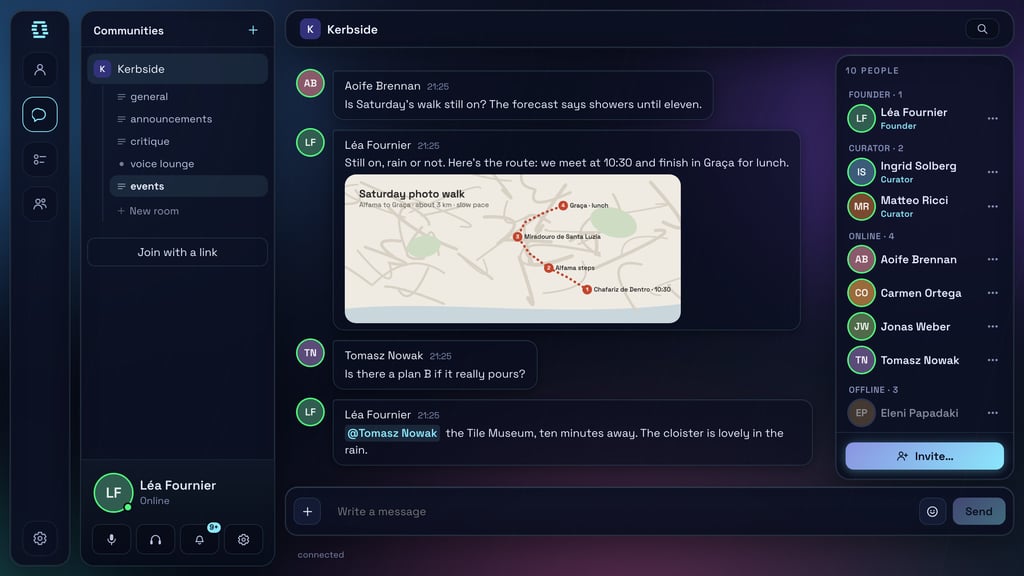
Open-source Orwell comes as social media networks are under increasing public scrutiny over its addictive designs and user surveillance. Meanwhile, the methods used to address some social media harms raise privacy and cybersecurity concerns.


Stay updated with our latest stories and follow us on social media
Be the first to discover new stories, ideas, and updates from our team.
For instance, the US-based Discord has faced backlash for rolling out “teen-by-default” in 2026, which requires adults to submit proof of age, such as a video selfie or ID, to access sensitive content, which critics say are an attractive target for hackers.
While Orwell is marketed as an European alternative to Discord, Bivar says he isn’t claiming to have overtaken the US rival in terms of features or maturity. Instead, he and his contributors are building an alternative where “privacy and security aren’t optional extras.”
The platform’s name is a tribute to English writer George Orwell, who authored the dystopian novel 1984, portraying surveillance, mass control, and the loss of privacy. Bivar says the book is a warning, not a manifesto.
In some ways, we’re already heading towards what he described: messages analyzed before they even leave our phones, accounts tied to a phone number, personal data kept for years. Orwell doesn’t embrace that vision. It pushes back against it,Duarte Bivar, creator of Orwell
Bivar’s message may have resonated with netizens. Since Orwell 1.0 was launched on October 28th, 2026, approximately 700 accounts were created – all without spending any money on advertising.
In the week of November 9-15th, 2026, around 250 channels and conversations were active, and the main public room had close to 550 members, according to Bivar.
Orwell vs Discord
Orwell doesn’t require an email address or phone number to create an account, nor do users need to provide an ID document or a selfie to prove their age.
Text, video, and audio are protected with end-to-end encryption, and these keys are held only by the devices of the people talking. Because Orwell doesn’t store or process personal information, it cannot be leaked, according to the platform’s creators.
These choices, however, come with real engineering challenges.
“Encryption makes software considerably harder to build. Features that are relatively straightforward on conventional platforms become much more complex when the server can’t access the content,” he tells Cybernews.
Orwell runs as a browser app that appears on the user’s home screen and doesn’t send any notifications when closed because, according to its creators, it would need to go through Apple or Google, creating privacy risks.
Orwell is hosted in the EU, meaning that the platform is subject to the General Data Protection Regulation (GDPR).
Bivar says the platform doesn’t have bot detection systems. However, because Orwell’s private communities aren’t publicly discoverable and require an invitation to join, it's harder for bots to operate on the platform.
There’s no directory to browse, no search for groups to join, and no platform constantly pushing new communities and people at you. Keeping communities private and access-controlled shrinks the attack surface and makes unsolicited participation much harder,Duarte Bivar, creator of Orwell
Meanwhile, there are limits on how much each account and each connection can participate in the main public room, which Bivar says stops mass spam.
Another layer of security comes from communicates, which have established roles, permissions, and read-only channels, which help keep things under control.
Bivar explains that the only time content reaches Orwell’s team is when a user reports a message or person, which is then decrypted by their device and handed over. Because reports are signed by the reporter's device, so they can't be faked or sent in floods.
Since its launch, Orwell has shipped 29 releases that have gone through over 8,000 automated tests, each shaped by our vision and user feedback.
A self-funded project is open for donations
The platform is currently mostly a one-man project that heavily uses AI agents running on commercial LLMs that write, review, and test the code.
“AI writes the code, but it doesn't make the decisions or take responsibility for the result. That part is still human, and it's my responsibility,” Bivar explains.
Orwell is entirely free to use, with no paid features or ads, prompting the platform’s creator to turn to crowdfunding to fund the project, aiming to collect €2,200 ($2,422).
Bivar says he is currently covering the development and infrastructure costs to keep Orwell “independent and avoid funding that could compromise its direction or core values.”
Aras Nazarovas, a senior information security researcher at Cybernews, says Orwell’s privacy policy and terms and conditions look promising, but raises concerns about the lack of a monetization plan, which could lead to an abrupt end of the project.
Bivar, however, says Orwell is currently looking for investors with shared values to help achieve its priorities, such as expanding server infrastructure across the EU to keep services in the bloc.
The long-term goal is for the platform to become financially sustainable through a combination of community support and optional paid services or features, while remaining free of advertising, user tracking, or monetizing personal data
Bivar tells Cybernews, “I’m not interested in building another platform that depends on exploiting its users to survive. The challenge is to build a financially sustainable alternative without compromising the principles that made us start Orwell in the first place.”