Nvidia module found in Russian missile, Ukraine says
Thirty-five foreign components were found in Russian weapons.
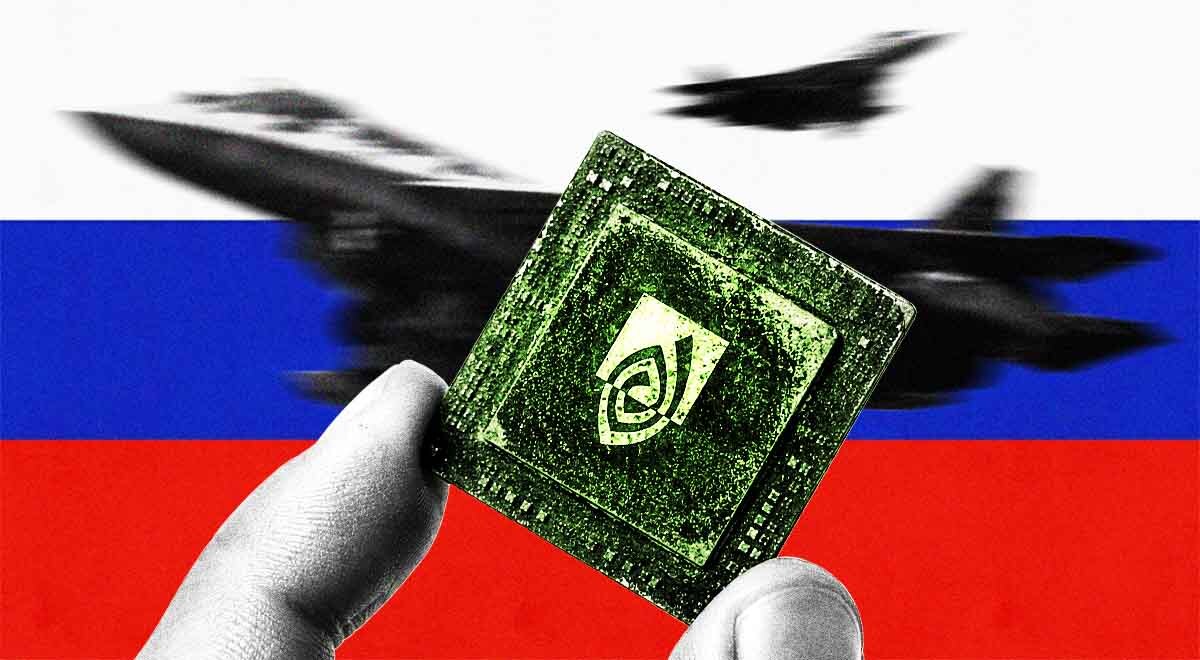
Image by Cybernews

 Follow us
- Ukraine says it found an Nvidia Jetson Orin module inside Russia’s new S-71 Monochrome cruise missile.
- Ukrainian intelligence says the module may show AI integration, but did not identify its exact missile function.
- The finding adds to evidence that foreign electronics continue reaching Russian weapons despite Western export sanctions.
- Ukraine says the discovery highlights the need for stronger sanctions enforcement and better international coordination.
Key Takeaways by nexos.ai, reviewed by Cybernews staff.
Ukraine’s military intelligence says its specialists have identified the Nvidia Jetson Orin computer module inside a Russian missile.
Ukraine's military intelligence (HUR) says the module was found inside Russia’s new S-71 Monochrome air-launched cruise missile, Kyiv Post reports.
This may indicate the integration of AI in the missile, the agency said, but didn’t provide further details on what functions Nvidia’s module performs in the weapon.
Jetson Orin modules can be used to power generative AI, agentic AI, computer vision, and advanced robotics, according to Nvidia’s website.




Research published in the HUR’s War&Sanctions portal identified another 35 foreign electronic components in Russian weapons, including parts of a passive radar seeker that Moscow is installing on its Geran-2 drones.
“The discovery of the Nvidia Jetson in a new Russian missile once again demonstrates the need for increased sanctions pressure and coordination of the efforts of the civilized world,” Kyiv Post cites the HUR.




Stay updated with our latest stories and follow us on social media
Be the first to discover new stories, ideas, and updates from our team.
Nvidia’s spokesperson told Cybernews that Jetson Orin modules are consumer-grade products sold to students, developers, and startups for a wide range of beneficial applications.
They are not available in Russia and are not designed for military purposes, the company says.
“Pre-owned Jetsons are available through many reseller channels. Although we cannot track products after they are sold, if we determine that any customer is violating US export controls, we will take appropriate action,” the spokesperson's written commentary reads.
Sanctioned tech is finding its way to Russia
After Russia launched a full-scale invasion of Ukraine in 2022, the US, in coordination with the EU, the UK, and Japan, imposed a wide range of sanctions on Moscow.
Sanctions include a ban on exports of advanced and dual-use technology and on any equipment needed to support Russia’s war machine.
Since then, Russia has been replacing Western electronics with Chinese equivalents. Because they are often inferior, Moscow is actively looking for ways to circumvent sanctions.
Sometimes, it succeeds.
The Institute for the Study of War (ISW) found in January 2026 that Russia was using Elon Musk’s SpaceXAI Starlink satellite systems to extend the range of strike drones to conduct mid-range strikes against Ukraine.
Musk then said that the company took measures against unauthorized Starlink use against Ukraine, which Kyiv said “delivered real results.”
An analysis by the Carnegie Endowment for International Peace, a non-partisan think tank, says there are multiple ways Russia circumvents Western sanctions on tech exports to power its weapons systems.
For example, Moscow procures run-of-the-mill computer chips and components found in consumer products that are rarely subject to export restrictions.
In addition, Russia exploits globalized supply chains and leverages a network of third-country traders to access dual-use components, which are then integrated into its tanks, missiles, and drones.
The New York Times reported in July 2026 that Russia’s military intelligence established a procurement network in Japan, allowing purchases of semiconductors, transmitters, precision machine tools, and other dual-use equipment.