Putin cast an online vote using a Dell computer and unlicensed Windows
It’s time to update your Windows license, Mr. Putin.
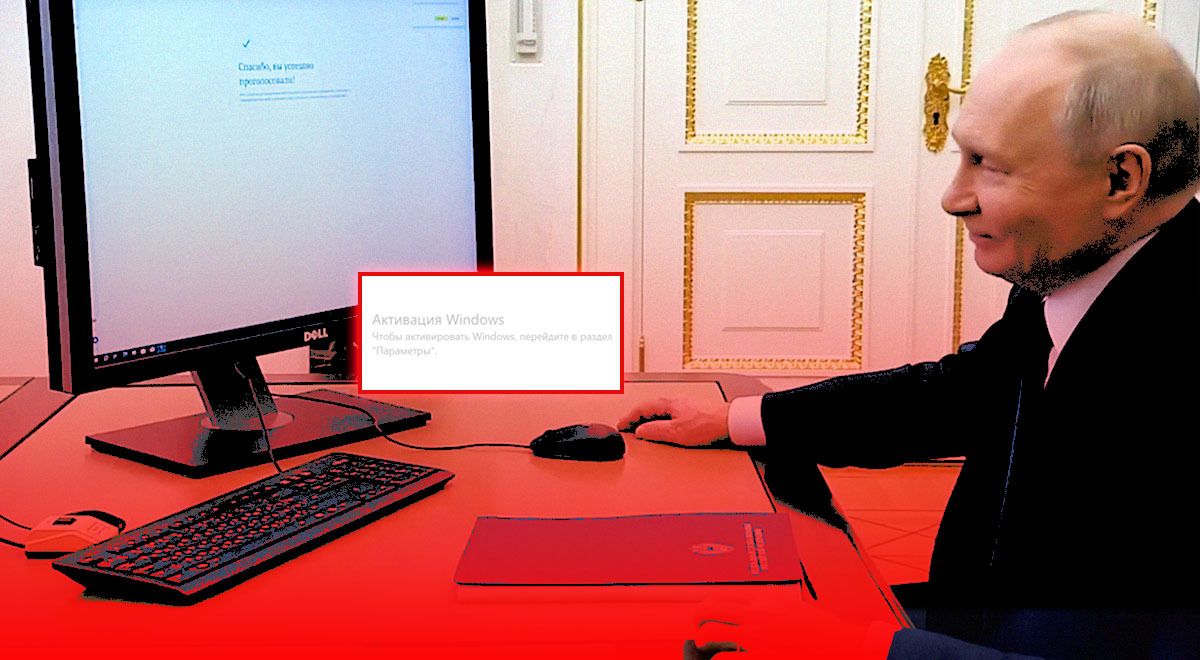
Screenshot from Dozhd X account via Cybernews

 Follow us
- Putin cast an online vote on a Dell monitor, despite Russia’s push for digital independence.
- The screen showed a possible Windows warning, suggesting the software may be unlicensed or expired.
- Putin avoids smartphones and the internet over spying fears, making the filmed online vote appear awkward.
- Russia still relies on foreign tech, with Chinese, South Korean, and US phone makers leading its market.
Key Takeaways by nexos.ai, reviewed by Cybernews staff.
Russia’s president, Vladimir Putin, may loathe the West, but would still e-vote using American technologies.
When Russia's state media televised Putin casting an online vote in the State Duma elections on September 18th, 2026, it may not have expected the footage to go viral on social media, with users mocking the 73-year-old president.
The video shows Putin struggling to move the computer’s mouse and look at the screen, with a slightly confused expression.



After voting is complete and the camera zooms in on the screen, there’s a visible logo for the American technology company Dell on the monitor.
Meanwhile, the pop-up in the corner resembles the Windows activation reminder watermark, suggesting that the software may not be properly licensed or activated, or that the product key has expired.




Stay updated with our latest stories and follow us on social media
Be the first to discover new stories, ideas, and updates from our team.
Putin’s apparent discomfort with online voting shouldn’t come as a surprise, because the president doesn’t own a smartphone and avoids using the internet over spying fears.
Nor is the use of unlicensed software unusual. After Western companies left Russia en masse following the 2022 invasion of Ukraine and subsequent sanctions, web searches for pirated Microsoft software skyrocketed in the country.
However, the e-vote setup reveals that, despite Russia’s digital sovereignty push, which includes isolating the domestic internet and blocking foreign apps, the country remains dependent on foreign technologies.
The Cybernews community is talking about this. Be a part of the conversation.
For example, Chinese smartphone makers Xiaomi, Tecno, and Realme control 48% of the Russian market, followed by South Korea’s Samsung (14%) and the US's Apple (8%), according to 2025 data.
This isn’t the first technology-related mishap in the 2026 Russian parliamentary elections to make the rounds on social media.
Weeks before the vote took place, Alice, a Russian alternative to ChatGPT, confidently claimed that Putin-affiliated party, the United Russia, retained its constitutional majority by “significantly outperforming its rivals.”
As expected, preliminary results show that United Russia received 57.83% of the votes and won the election, in which the anti-war party, Yabloko, was barred from participating in multiple regional races.