Snapchat shooting “joke” shows just how long big tech has been tracking us
People are still talking about this teacher’s “bad joke.”

Image by Getty/picture alliance

 Follow us
- A viral Snapchat case renewed concerns about private messages being scanned and reported to law enforcement.
- A young teacher was jailed after joking in a Snapchat group chat about physically harming a student.
- Police reportedly said Snapchat flagged the message to the FBI, which forwarded it to local authorities.
- The case highlights tensions between public safety, AI moderation, platform trust, and users’ digital privacy.
Key Takeaways by nexos.ai, reviewed by Cybernews staff.
A “bad joke” that landed a young teacher in jail has gone viral again on social media, not just for the story, but also for its lessons on our lack of digital privacy.
An aspiring young teacher made a big mistake after believing that her private Snapchat message couldn’t be read by anyone other than her friends.
After dealing with a difficult student, the teacher sent a group Snapchat that mentioned physically harming the student.







The message said something along the lines of, “Should I shoot them?” according to X posts about the case that have recently surfaced.
The entire exchange was recorded on the officer’s body cameras and uploaded to the Midwest Patrol YouTube channel.
The “bad joke” landed her a night in jail and allegedly caused her to lose her placement in the school where she was working at the time.
Law enforcement officials revealed that Snapchat had flagged her message and sent it directly to the FBI, which then forwarded it to local police.
What is clear from this is that Snapchat can scan and moderate users' private messages for trigger words like “shoot,” which could indicate someone may commit a crime.
Your snaps could be used against you
While some people assume that Snapchat is safe by design, mainly due to its pioneering “disappearing” messages functionality, Snapchat can still track your behavior and report you to law enforcement.
Snapchat employs safeguards and openly states that it uses a “combination of automated tools and human review to moderate” its content, according to its updated values page.
However, it doesn’t address private chats and claims to moderate “public content” such as public stories and snap maps.
Yet we’ve seen this story unfold in a similar way a few times before, notably when a British student made a bad joke about blowing up a plane while Snapchatting a friend using Gatwick’s public WiFi.
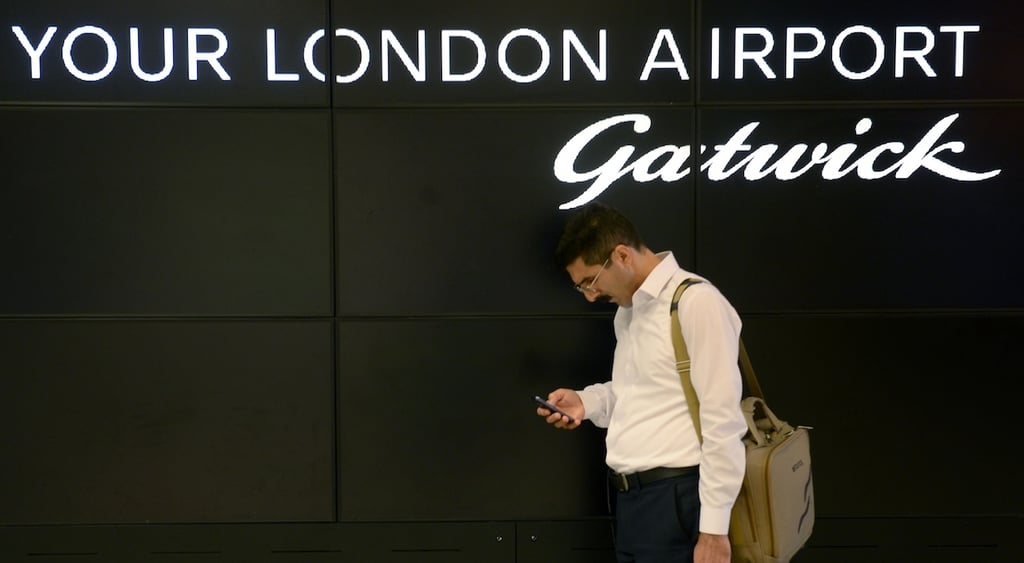
The platform does say it works with law enforcement and, as per its latest transparency report, has cracked down on nearly 200,000 cases of threats and violence.
While this shows, to a certain extent, that Snapchat can track your messages, it's unclear whether something or someone is doing it constantly in the background.
The consequences experienced by the teacher seem to many to be clear evidence that Snapchat monitors your chats.
However, this evidence depends on whether law enforcement was truthful about the platform sending this message to the FBI.
Cybernews has reached out to Snap for comment.



Stay updated with our latest stories and follow us on social media
Be the first to discover new stories, ideas, and updates from our team.
Why should you care now?
The school teacher got in trouble over a year ago, so why should you care now?
One of the original posts, which garnered nearly 260,000 views on X, claims that Snapchat’s AI flagged the trigger word and its “algorithm decided what she said was a threat…before any human ever knew about it.”
The poster, Cyber Razz (Abdulkadir), told Cybernews that this wasn’t a case of engagement farming.
Instead, they shared the story because it aligns with the broader online discourse on major topics like AI, data collection, device scanning, and big tech’s access to our data.
Cyber Razz’s post implies that putting technology that is incapable of identifying nuance and humor and lacks contextual awareness beyond its training data in charge of human communication could be a huge mistake.
Original poster says privacy erosion isn’t new
Cyber Razz, a cybersecurity X account with over 46,000 followers, isn’t new to posting the darker side of technology.
In this case, the user thinks that isn’t capable of making informed decisions.
The conversation on this topic is live. Join in the discussion.
“The teacher is now in the legal system because a machine learning model thought her joke was real…and now she is facing criminal charges. For being funny in a way a machine did not understand.”
These same concerns can be mapped across the internet for years now, as AI-enabled cameras have been mistaking innocent people and even a bag of Doritos as threats, as well as enabling US agencies like ICE to use spyware to hack WhatsApp chats.

The post, which has been accused of engagement farming, was never meant to be reported as breaking news, but serves as a reminder that “the erosion of digital privacy has been gradual,” Cyber Razz told Cybernews.
“The Snapchat case is a good example that these concerns didn’t suddenly appear this year.”
“Looking at past incidents helps provide context for today’s debates around AI moderation, platform trust, and the balance between user privacy and public safety,” Cyber Razz said.
“That’s why I felt it was worth bringing the story back into the conversation now.”