How to get around UK age verification in 2026: VPN guide


-
As of October 2026, age verification is required for many adult and age-restricted platforms in the UK
-
Adults can use a VPN to connect to a country where ID checks don’t apply and browse with greater privacy
-
Proton VPN is my top choice to bypass UK age restrictions, offering secure apps, reliable speeds, useful privacy tools, and a wide choice of overseas servers

In this guide, I’ll explain how adults can bypass UK age verification with a VPN in 2026. You’ll learn how the system works, which platforms must comply, and how the rules affect adult websites, dating apps, and social networks like Reddit and X. I’ll also show you how to get around UK age verification online while keeping your connection more private.
Privacy-conscious adults in the UK should understand what these checks involve and what personal information websites may request. Under the Online Safety Act, services that host pornographic or other age-restricted content must prevent minors from accessing it. This means that, depending on the platform, users may be prompted to upload a photo ID, complete a facial scan, or verify their age through services such as Yoti or AgeChecked. For instance, adult sites like Pornhub restrict access for many UK visitors until they complete a supported age verification check.
Although the law is intended to protect minors, it has raised privacy concerns among adults who want to access legal content without sharing sensitive personal details. As a result, more adults are turning to VPNs as a lawful privacy tool to change their virtual location, encrypt their traffic, and get past age checks with greater privacy.
UK's age verification key points
- Identity (including age) checks are now compulsory in the UK. Under the UK Online Safety Act, sites and apps that allow pornography or content deemed harmful to children must verify that visitors are 18 or older before allowing access. Some social media sites, like X (Twitter) and Reddit, are affected too.
- The law covers a wide range of sites. This includes porn sites, dating apps, social media platforms with adult content, and online forums discussing explicit or violent material accessed from the UK.
- Verification methods vary by site. UK sites may require you to upload a government-issued ID, complete AI-powered facial scans, use credit card verification, or rely on third-party age-check services like Yoti or AgeChecked.
- Major platforms have responded differently. Some, such as Reddit, have implemented age verification for UK users, while several adult sites have chosen to block UK visitors completely rather than introduce age checks.
- Using a VPN is a popular option in the UK. VPNs let adults change their virtual location to countries without strict ID and age verification, helping them protect their privacy by bypassing blocks and age verification requests.
- The law remains controversial in the UK. A repeal petition received more than 550,000 UK signatures and was debated in Parliament, but the government said it has no plans to repeal the Online Safety Act.
How to get past age verification in the UK

One of the simplest ways for adults in the UK to protect their privacy under the UK’s age verification rules is to use a VPN. A VPN encrypts your internet traffic and routes it through another country, making it look like you are browsing from a location where these checks do not apply.
- Subscribe to a VPN that has servers outside the UK – I recommend Proton VPN, now 70% OFF
- Download and install your chosen VPN
- Open the VPN app and connect to a server outside the UK, such as one in the Netherlands
- Go to your chosen site – you should be able to access it without completing UK age verification
Is it legal to use a VPN to bypass age verification in the UK
VPNs are legal to use in the UK, and they work as a privacy tools that hide your real location and encrypt your internet traffic. So, if you are over 18 and use it responsibly, UK law does not prohibit VPN use for age verification or to protect your privacy.
The UK’s age verification rules focus on websites, not users. The law requires platforms to confirm users’ ages to protect minors, but it does not ban people from using VPNs. Adults can legally use a VPN to browse more privately or access content from another location, but they remain responsible for following applicable laws and platform terms.
That said, laws differ by country. If you live in a place where certain content is fully banned, using a VPN to access it could break local rules. Always check the laws where you live before using a VPN.
Can you use free VPNs to bypass age verification in the UK?
At Cybernews, we advise against using free VPNs to avoid age verification in the UK. While some free options may technically allow you to get around these checks, many fall short when it comes to genuine privacy protection. Some free services track user behaviour or share that information with third parties, which defeats the purpose of browsing age-restricted content more privately.
Free VPNs also depend on advertising to make money. These ads often track your browsing behavior and can become intrusive or inappropriate over time. In more serious cases, some free VPN apps have been linked to malware and other security risks that may expose passwords, payment details, or other sensitive information.
Performance also remains a major drawback. Free VPNs typically limit bandwidth and overload their servers with too many users. This causes slow connections, frequent buffering, and poor video quality. If you want reliable access to age-restricted platforms without interruptions, a free VPN is unlikely to deliver a good experience.
The current development of the law in the UK
The Online Safety Act became law in October 2023. After that, Ofcom started shaping the rules needed to put it into action. Lawmakers first reviewed an early version of the bill in Parliament back in 2022, before it officially passed.
In April 2025, Ofcom released its final Protection of Children Codes of Practice and guidance. That same day, it submitted the documents to Parliament, explaining the steps online services must take to protect minors. These rules took effect on 25 July 2025, requiring platforms to use highly effective age assurance to prevent children from accessing pornography and other harmful content.
Ofcom has continued implementing and enforcing the Online Safety Act in stages. At the end of 2024, it published an implementation roadmap detailing important compliance dates. In the following months, it issued guidance on Highly Effective Age Assurance (HEAA) and Children's Access Assessments, and launched an enforcement programme for age assurance on pornographic content. It also sent letters to hundreds of pornography providers, familiarising them with their obligations. Ofcom has even opened investigations into some providers for potential non-compliance with the age assurance requirements.
How are websites responding
Since the UK’s Online Safety Act took effect on July 25th, 2025, online platforms have taken different approaches to meet the new age verification requirements. Some have implemented full compliance, others have blocked UK visitors, and a few have chosen partial measures.
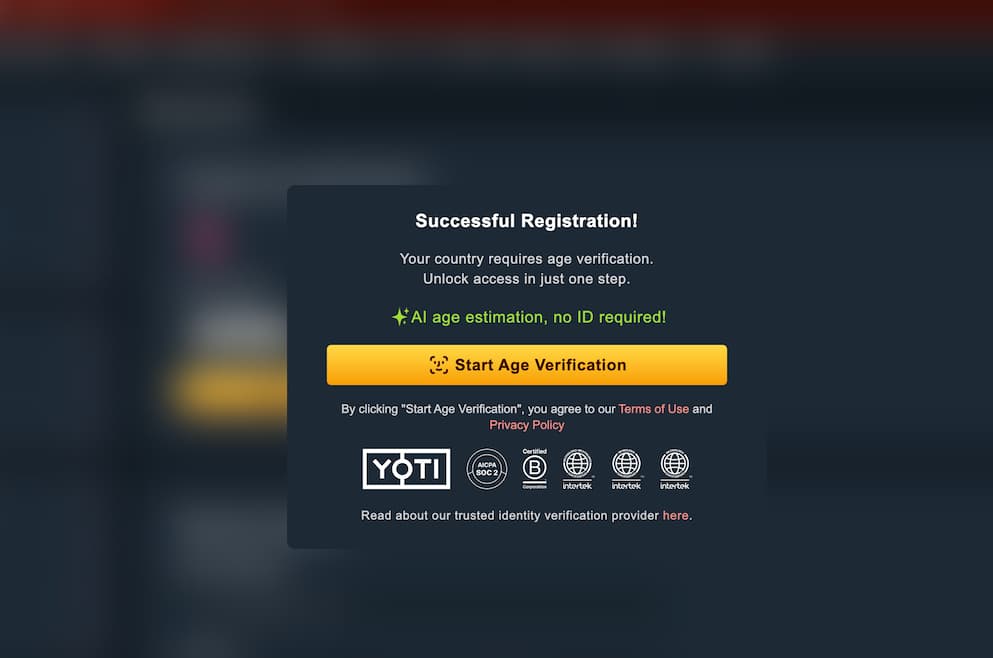
Large adult websites like xHamster use age checks, such as photo ID uploads and credit card verification. Social platforms such as Reddit now ask UK users to confirm their age through third-party services like Persona, which may require a selfie or a government-issued ID. Messaging apps like Discord use one-time ID checks before allowing access to mature content or restricted channels.
Some platforms initially responded by blocking UK users rather than introducing age checks. For example, Aylo, which owns Pornhub, Youporn, and Tube8, previously restricted new UK users but now lets eligible adults regain access after age verification. Other sites, especially smaller ones, use lighter checks or block UK IP addresses altogether to avoid meeting the new requirements.

Current development and future outlook for UK age verification laws
The Online Safety Act 2023 became law in October 2023, giving Ofcom the power to enforce strict age verification for websites hosting adult or harmful content. The Protection of Children Codes of Practice, published in April 2025, set out acceptable verification methods such as photo ID checks, biometric scans, and credit card validation. These rules took effect on 25 July, 2025, with enforcement continuing in stages.
The rollout triggered strong public opposition. A repeal petition collected more than 550,000 signatures and led to a formal debate in Parliament. Lawmakers remain split. Some argue the law goes too far, while government ministers say it plays a key role in protecting children.
Enforcement also faces real-world problems. VPN demand surged after the rules took effect, with Proton reportedly seeing a 1,800% increase in downloads. Ethical hackers and privacy researchers have also raised concerns about whether some verification systems can be bypassed, while privacy groups also warn that storing ID documents and biometric data creates a higher risk of data leaks and breaches.
Looking ahead, the government has signalled no plans to repeal the law, but the debate over balancing child safety, privacy, and freedom online is far from over.
Legal consequences for websites ignoring the UK age verification law
Under the UK's Online Safety Act, Ofcom holds significant authority to enforce compliance among online platforms. Companies failing to adhere to the Act's provisions face substantial penalties, including fines of up to £18 million or 10% of their qualifying global revenue, whichever is greater. In addition to financial penalties, Ofcom can issue formal warnings and, in severe cases, seek court orders to block access to non-compliant services in the UK.
The Act also extends accountability to senior managers of tech companies. In some cases, executives may be held criminally liable if they fail to comply with Ofcom information requests or enforcement notices, potentially facing up to two years in prison. This provision underscores the personal responsibility of leadership in ensuring compliance with online safety regulations.
Ofcom's commitment to robust enforcement is evident in its proactive approach. The regulator has recently fined porn company Kick Online Entertainment SA £800,000 for failing to implement proper age verification measures between 25 July and 29 December 2025. However, the company has since introduced the required checks. In another case, message board 4chan was fined £450,000 for non-compliance, but the company's lawyer has stated that 4chan will not pay the penalty.
In summary, the Online Safety Act empowers Ofcom with extensive enforcement capabilities, including significant financial penalties and potential criminal liability for senior managers. Platforms operating in the UK must prioritise compliance to avoid severe consequences and reduce children’s access to restricted content.
This article discusses the requirement to share personal data when accessing adult websites in the UK, from the perspective of individuals who wish to remain anonymous. The content is provided for informational purposes only and is not, under any circumstances, intended for minors seeking to bypass restrictions in order to access material that may be harmful or inappropriate for them. We do not promote, encourage, or endorse such bypassing. Your use of the content herein is entirely at your own risk.
FAQ
Can minors use a VPN to bypass age verification?
No, minors should not use a VPN or any other method to bypass age verification systems. These laws are specifically designed to protect young people from accessing content that could be harmful or inappropriate for their age. By bypassing these checks, minors would not only be violating the rules but also putting themselves at risk of exposure to explicit material that can have negative effects. Age verification exists to create a safer online environment, and it’s important for minors to respect these boundaries and avoid tools like VPNs to get around them.
What age verification services are sites using in the UK?
Reddit uses Persona to verify age for NSFW content, while SpankBang is listed by Yoti as an adult-content age verification client. Other common services include 1account, VerifyMyAge, and AgeChecked. These platforms may ask for ID, a selfie, facial age estimation, or other proof of age to help sites comply with UK law.
Can I bypass age verification on porn sites?
Yes, adults can often bypass age verification on porn sites by using a VPN. When connected to a VPN server outside the UK, your IP address appears to come from another country where UK age verification requirements don’t apply. This may let you access adult sites without uploading ID or using a digital age-check tool, all while helping you keep your browsing more private.