Findly
Last updated: January 8, 2026
What is Findly?
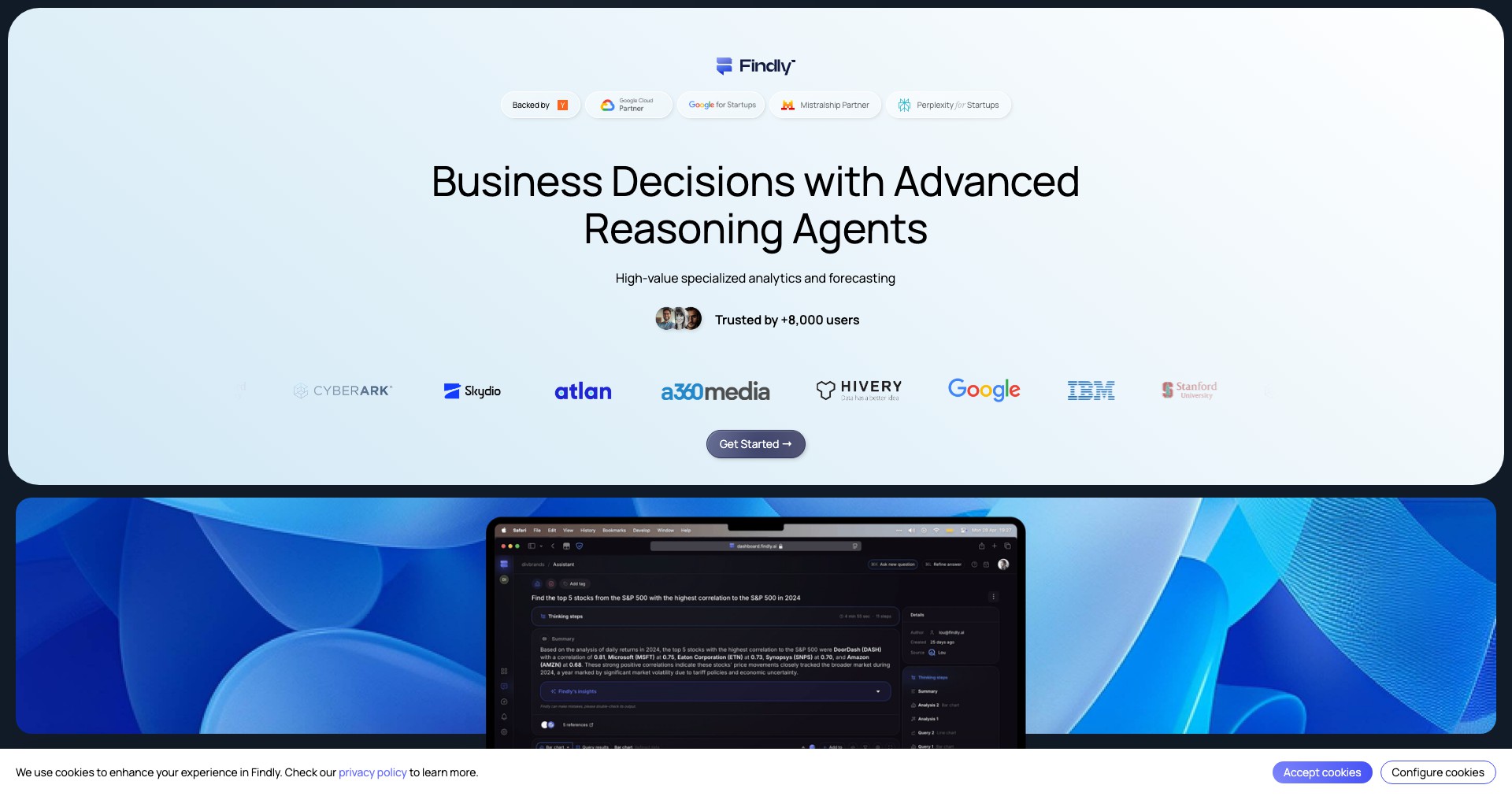
Findly is an innovative AI-powered assistant focused on making data search and business intelligence accessible through natural language conversation. Whether you’re dealing with company databases or cloud-based documents, Findly aims to bridge the gap between complex data and actionable insights, enabling users to simply ask questions and get instant answers or visualizations.
Instead of sifting through rows and dashboards, users can type (or even speak) their queries as they would to a colleague. This conversational approach is designed for non-technical users, managers, business analysts, and anyone who wants to harness their organization’s data without learning new tools or SQL.
Key Features:
-
Conversational Data Querying:
Findly lets users ask questions in plain English about their data. The AI translates these queries to the underlying data model, returning precise answers, summaries, or charts without any SQL or technical know-how. -
Multi-source Connectivity:
It integrates with popular databases, spreadsheets, and cloud storage solutions, so users can search and analyze data from multiple sources in one interface. -
Custom Reports and Dashboards:
Users can generate custom reports or dashboards automatically, sharing insights with their team or exporting them for presentations and further analysis. -
Data Visualization:
Findly creates intuitive visuals—charts, graphs, tables—on the fly based on user queries, helping teams digest complex data at a glance. -
Collaborative Workspaces:
The platform allows teams to work together, save queries, annotate results, and collectively build a knowledge base from organizational data.
What makes Findly unique?
Findly stands out by focusing on natural language as the bridge to business intelligence. Unlike traditional BI tools that require setup, training, and technical query writing, Findly leverages advanced AI to make data accessible to everyone in an organization, not just analysts or IT.
Its user-friendly chat-based interface and ability to handle multiple data sources in real time means teams no longer need to rely on scheduled reports or specialist intervention. The emphasis on seamless collaboration and instant visualization further distinguishes Findly in a crowded BI landscape.
Pros and Cons
Who is using Findly?
Business Analysts: Analysts who need rapid, flexible data exploration and reporting will benefit from Findly’s conversational querying and visual tools, accelerating their workflow without heavy reliance on technical teams.
Operations and Project Managers: Managers looking to monitor KPIs, run quick checks, and distill data for meetings will find Findly’s real-time Q&A interface and auto-generated visualizations especially valuable.
Sales and Marketing Teams: Non-technical staff who want to self-serve critical sales or campaign data—such as lead pipelines, conversion rates, or campaign effectiveness—can get instant answers with Findly, bypassing lengthy data requisition processes.
Product Evolution
Findly started as a simple conversational interface layered onto popular databases, focusing on basic English-language querying. Early feedback highlighted the demand for broader integrations and better natural language understanding.
Subsequent releases incorporated more advanced AI, improved context handling, and multi-source support, so that users could query data across spreadsheets, cloud platforms, and databases simultaneously.
Recent updates have added collaborative spaces, enhanced reporting, and stricter data governance features, aiming to serve larger teams and meet enterprise-level security needs.
Pricing
| Plan | Price | About |
| Pro Plan | $79/month per workspace | Includes core features, standard integrations, and basic collaboration tools. |
| Business Plan | Custom pricing | Tailored for larger organizations needing advanced integrations, reporting, SLAs, and customer support. |
| Enterprise | Custom pricing | Offers enterprise-level security, compliance, and dedicated onboarding. |
Verdict
Findly delivers on its promise of democratizing data access through conversational AI, making business intelligence more approachable for everyone. Its strengths lie in intuitive design, broad integration capabilities, and collaborative workflow features, making it ideal for teams that need actionable insights without the learning curve of traditional BI platforms.
While there are still some areas for growth—particularly in handling complex queries and expanding compatibility—Findly is a forward-thinking solution for businesses ready to empower team-based, data-driven decision-making without the bottlenecks of legacy tools.


