AI designs disease-fighting viruses: experts say they pose biosafety risks
“In the wrong hands, this could have catastrophic consequences.”
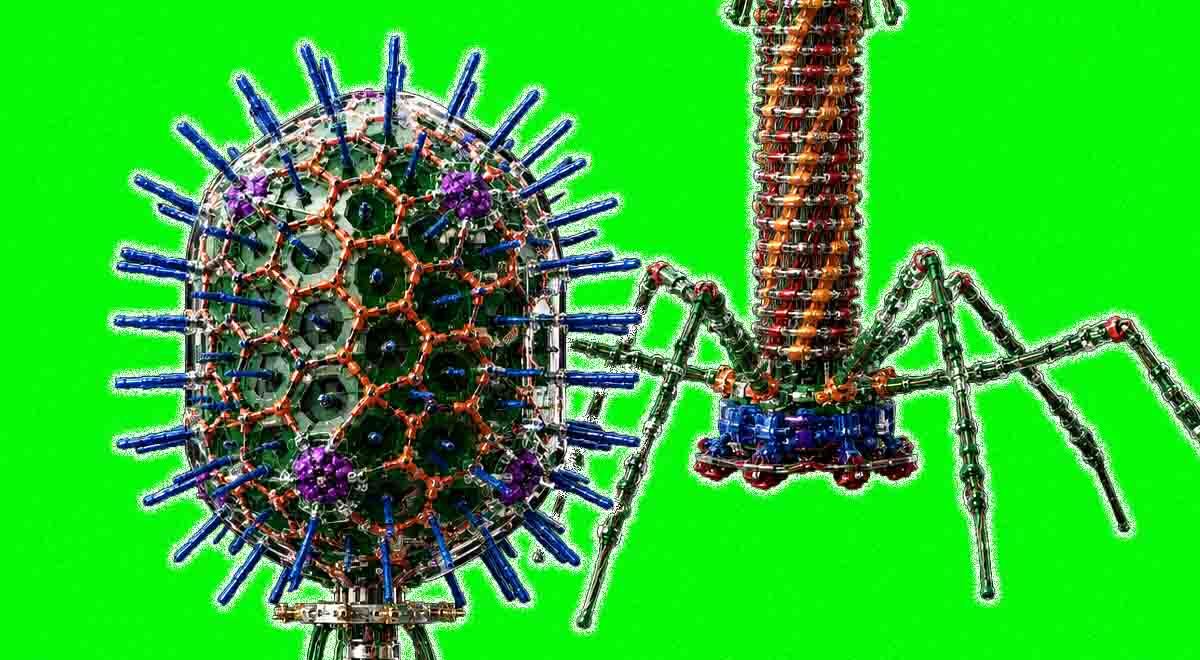
Image by Cybernews

 Follow us
- Stanford-led researchers used AI to create functional bacteria-killing viruses targeting E. coli C.
- Only 16 of nearly 300 synthesized viruses worked, showing the technology remains early and limited.
- Experts see promise for antibiotic-resistant infections but warn AI-designed viruses raise serious biosafety and security risks.
- Researchers urged against applying the method to viruses that infect humans, animals or plants.
Key Takeaways by nexos.ai, reviewed by Cybernews staff.
Scientists have used AI to generate special viruses that promise a breakthrough in treating antibiotic-resistant infections. Some call them a “massive biosecurity risk.”
Bacteriophages, a special type of virus that selectively targets and kills bacteria without infecting human cells, have long shown promise in combatting the increasingly prevalent antimicrobial resistance, in which antibiotics can no longer treat some infections.
A new study led by Stanford University researchers details how scientists, for the first time, have created fully functional bacteriophage genomes using genome language models (gLMs), generative AI models trained on millions of natural genomes.
In viruses, the genome refers to the genetic material contained within a viral particle.






Leveraging AI, the researchers designed bacteriophage genomes specifically targeting Escherichia coli C, a bacterium associated with thousands of deaths annually worldwide.
However, only 16 of nearly 300 bacteriophages synthesized were viable.




Stay updated with our latest stories and follow us on social media
Be the first to discover new stories, ideas, and updates from our team.
Despite potentially transformative benefits, the scientists warned that the work poses “important biosafety, biocontainment and biosecurity considerations.”
The researchers argued that it remains unknown whether the same approach to AI-designed functional viral genomes could be applied to other viruses.
In addition, they warned that work on pathogens that could infect humans, animals, or plants should not be pursued.
The news has attracted great interest in the scientific community. Professor Patrick Cai, chair of synthetic genomics at the University of Manchester, called it an “important milestone for synthetic genomics.”
“It suggests that genome language models are beginning to learn the design principles encoded by evolution, opening the door to AI-assisted genome writing,” he said.
Meanwhile, Isaac Bogoch, an infectious diseases specialist at Toronto General Hospital, wrote on X that AI-designed bacteriophages can pose a “massive biosecurity risk.”
“In the wrong hands, this could have catastrophic consequences,” Bogoch wrote.
Some industry insiders, however, argued that there’s a long way to go until AI-generated viruses can endanger humans.
Russell Sean, CTO of QuanMed AI and CEO of Quantum Labs, noted that AI models in the study were intentionally never trained on viruses that infect humans.
“Its genome output is capped at the size of a small phage, which means it’s nowhere near large enough to design something that could infect a person,” he wrote on X.
Concerns about chemical and biological weapons
While synthetic bacteriophages may not pave the way to a new pandemic and human extinction, researchers are uneasy about how the AI technology could be used to create biological or chemical weapons.
Accurately assessing AI’s capabilities to do so is challenging due to legal constraints and international treaties, according to the 2026 International AI Safety Report.
Curious what others think about this story? Contribute your thoughts to the debate below.
For example, researchers who conduct or publish results on studies examining AI assistance in weapons development may inadvertently violate national security laws or treaties such as the Biological Weapons Convention.
Fortunately, the report states, there are significant barriers to developing chemical or biological weapons, including acquiring equipment and obtaining regulated materials.