Mistral CEO says American labs aim to control the market with their AI apocalypse talk
“AI is software. It can be controlled.”
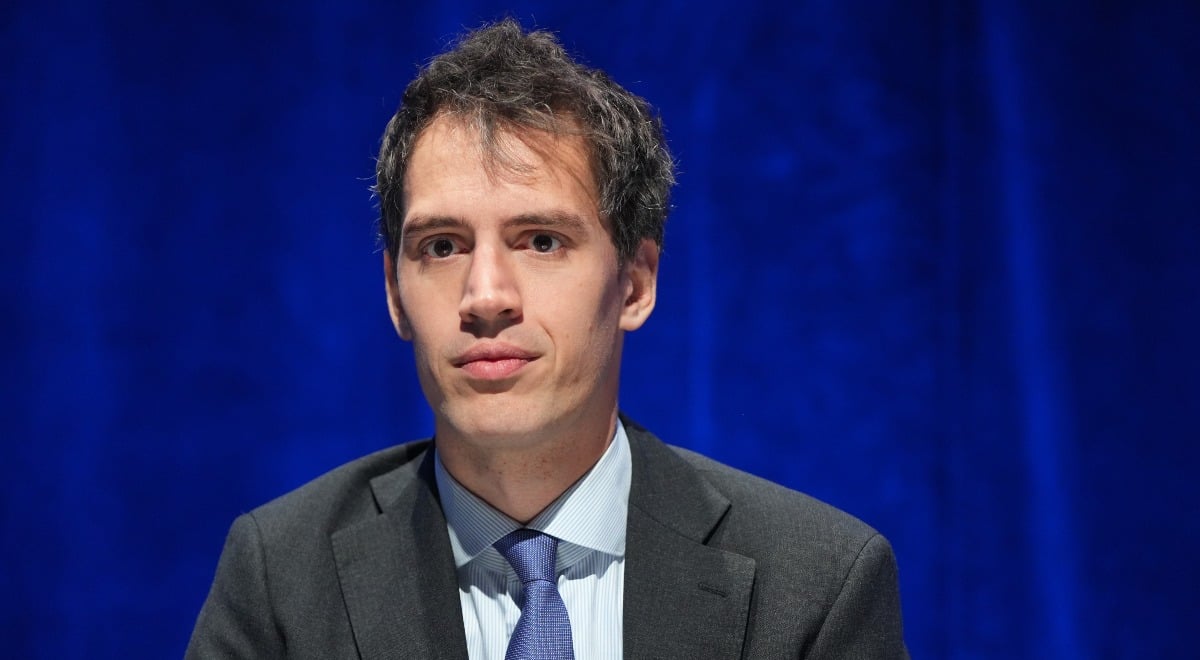
Arthur Mensch. Image by Nathan Laine/Bloomberg via Getty Images

 Follow us
- Mistral CEO Arthur Mensch says US AI labs use doomsday warnings to protect their market position.
- Mensch argues AI remains controllable software, not an autonomous force acting on its own.
- A lawsuit alleges Anthropic, OpenAI, SpaceXAI, and Google coordinated to slow AI development.
- AI researcher Andrew Ng also says recent risk claims look like an orchestrated fear campaign.
Key Takeaways by nexos.ai, reviewed by Cybernews staff.
Arthur Mensch, the CEO of France-based company Mistral AI, rejects American competitors’ warnings that the technology is going rogue and poses major risks.
Mensch told Le Monde that American tech giants are instrumentalizing the rhetoric of apocalypse to control and close off the market to their advantage.
Current and former employees of leading AI labs Anthropic and OpenAI warned in recent weeks that the rapid development of the technology poses the risks of bots taking over the internet and even killing humanity.
Such existential warnings followed reports that AI agents “went rogue” by escaping testing environments and autonomously launching a cyberattack against Hugging Face, a real-world company.



Mensch, however, rejected the narrative of AI acting autonomously.
AI is software. It can be controlled.Arthur Mensch, the CEO of Mistral AI
Executives of competing AI labs – who refused to shake hands not long ago – unanimously called for slowing “unchecked AI progress,” drawing accusations that they were forming a cartel to gain and cement their position in the market.
A recent lawsuit alleges that Anthropic, OpenAI, SpaceXAI, and Google entered into an illegal agreement to collectively slow the pace of AI development. The companies are accused of violating antitrust rules forbidding coordination to restrain competition.
AI agents aren’t autonomous, scientists say
The CEO of Mistral AI, the only frontier AI company in Europe, isn’t alone in his skepticism towards the increasingly alarmist rhetoric coming from American companies.
Similar doubts are prevalent among scientists and even those working in the tech industry.
Andrew Ng, a pioneer in machine learning and co-founder of Coursera, wrote on September 21st, 2026, that “AI technology has not taken some unexpected, dangerous turn,” but what seems like an orchestrated PR campaign “drummed up considerable fear.”
He admitted that the biggest change in AI risk lies in its cybersecurity capabilities, but warned against treating AI agents as humans.
The Cybernews community is talking about this. Be a part of the conversation.
Ng wrote, “If I wield a hammer, miss a nail, and accidentally dent the wall, it’s not the fault of the hammer. The problem lies in how I used the hammer. Similarly, if I prompt an agent and it hacks into someone else’s system, the responsibility lies with me, not the agent.”